Kirjojen hintavertailu – 12 903 725 kirjaa ja 27 kauppaa

Kirjailija

Carol Poh Miller

Kirjat ja teokset yhdessä paikassa: 4 kirjaa, julkaisuja vuosilta 2004–2009, suosituimpiin kuuluu Cleveland, Second Edition. Vertaile teosten hintoja ja tarkista saatavuus suomalaisista kirjakaupoista.

4 kirjaa

Kirjojen julkaisuvuodet: 2004–2009.

Cleveland, Second Edition

Cleveland, Second Edition

Carol Poh Miller; Robert Wheeler

Indiana University Press
2009
pokkari
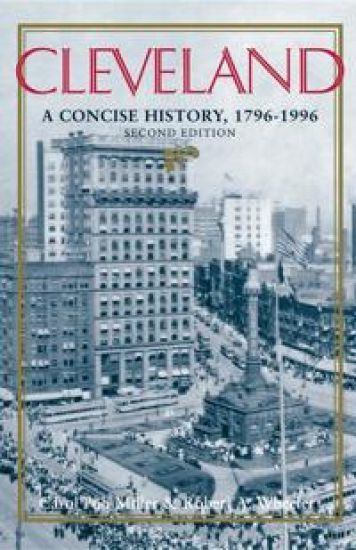
This highly successful short history of Cleveland has now been revised and brought up to date through 1996, the bicentennial year, including two new chapters, and new illustrations and charts.
Our Native Trees and How to Identify Them

Our Native Trees and How to Identify Them

Harriet L Keeler; Carol Poh Miller; Anne Raver

Kent State University Press
2005
nidottu
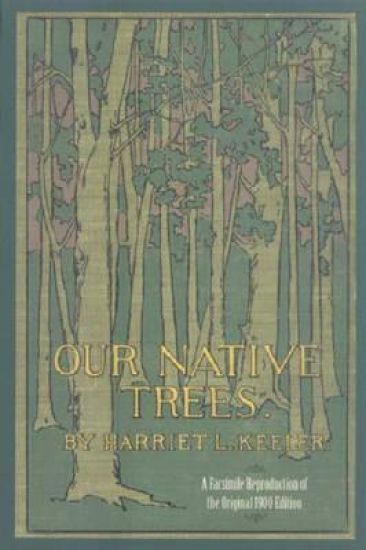
A facsimile reproduction of the original 1900 editionEducator, author, and naturalist Harriet L. Keeler (1844–1921) was a prominent figure in her time. With this facsimile reprint of her first book written for a national audience, she once again is brought to the public's attention. An 1870 graduate of Oberlin College, Keeler devoted her career to service as a teacher and administrator in the Cleveland public schools. She was active in Cleveland civic life as well and was a prominent champion of women's rights. But it was as a naturalist that she did her most distinctive work, preparing authoritative and literate field guides to native flora. Our Native Trees and How to Identify Them, first published by Charles Scriber's Sons in 1900, was warmly received at a time when America was rapidly urbanizing and public interest in conservation and the establishment of parks was growing. In her preface, Keeler explained that "the trees described . . . are those indigenous to the region ex-tending from the Atlantic Ocean to the Rocky Mountains and from Canada to the northern boundaries of the southern states; together with a few well-known and naturalized foreign trees." Profusely illustrated and with a biographical introduction by Carol Poh Miller that illuminates Keeler's life and accomplishments, this edition of Our Native Trees and How to Identify Them will aid a new generation eager to identify and thus better appreciate what they observe outdoors." The New York Times [in June 1900] pronounced it 'well-written and thoroughly interesting' . . . The reviewer concludes: 'The book . . . should add new interest to the coming summer for many to whom Nature is practically a sealed book, as well as heighten the pleasure of others to whom she has long been dear.'"—from the Introduction
A Second Voice

A Second Voice

Carol Poh Miller

Ohio University Press
2004
sidottu
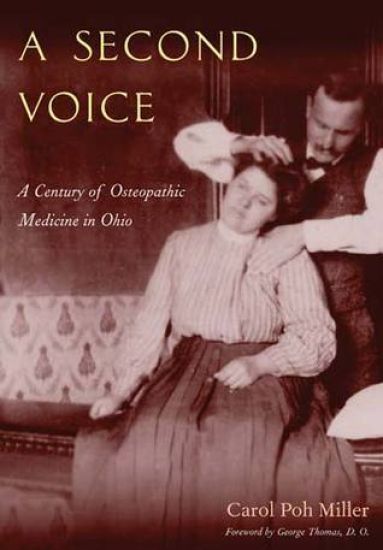
Doctors of osteopathy today practice side by side with medical doctors, employing the same diagnostic and curative tools of scientific—with a difference. A Second Voice: A Century of Osteopathic Medicine in Ohio is the story of that difference. Focusing on the historical experience of a pivotal midwestern state, historian Carol Poh Miller illuminates struggles common to osteopathic medicine nationwide as it fought to secure its place in American health care. First promulgated by Dr. Andrew Taylor Still in 1874, osteopathy was a reaction against the primitive medical practices of the period. Believing that the body had its own natural curative powers, Still manipulated vertebrae to free circulation and to remove pathology. Early osteopaths endured discrimination, as orthodox medicine and its allies sought to prevent the establishment of Still's new healing method. Written in conjunction with the one-hundredth anniversary of the Ohio Osteopathic Association, A Second Voice traces the origins and growth of the profession in Ohio. It recounts the early legal battles, the establishment of separate osteopathic hospitals, and the hard-fought campaigns to win equal practice rights and to build a state college of osteopathic medicine. Finally, it reconsiders the notorious murder trial of Cleveland osteopathic physician Sam Sheppard in the context of his family's contributions to the osteopathic profession and a prosecution that, evidence has shown, fingered the wrong man. A Second Voice is a valuable addition to the history of medicine in Ohio and the nation.

A Second Voice

A Second Voice

Carol Poh Miller

Ohio University Press
2004
pokkari
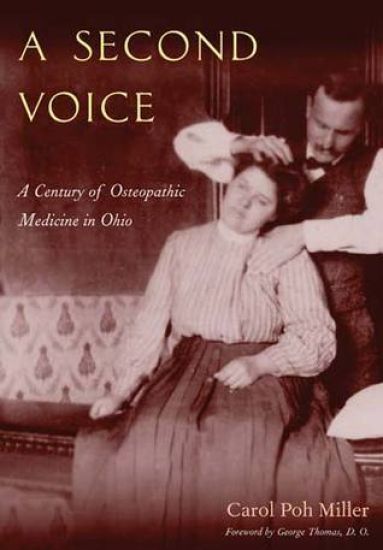
Doctors of osteopathy today practice side by side with medical doctors, employing the same diagnostic and curative tools of scientific—with a difference. A Second Voice: A Century of Osteopathic Medicine in Ohio is the story of that difference. Focusing on the historical experience of a pivotal midwestern state, historian Carol Poh Miller illuminates struggles common to osteopathic medicine nationwide as it fought to secure its place in American health care. First promulgated by Dr. Andrew Taylor Still in 1874, osteopathy was a reaction against the primitive medical practices of the period. Believing that the body had its own natural curative powers, Still manipulated vertebrae to free circulation and to remove pathology. Early osteopaths endured discrimination, as orthodox medicine and its allies sought to prevent the establishment of Still's new healing method. Written in conjunction with the one-hundredth anniversary of the Ohio Osteopathic Association, A Second Voice traces the origins and growth of the profession in Ohio. It recounts the early legal battles, the establishment of separate osteopathic hospitals, and the hard-fought campaigns to win equal practice rights and to build a state college of osteopathic medicine. Finally, it reconsiders the notorious murder trial of Cleveland osteopathic physician Sam Sheppard in the context of his family's contributions to the osteopathic profession and a prosecution that, evidence has shown, fingered the wrong man. A Second Voice is a valuable addition to the history of medicine in Ohio and the nation.