Kirjojen hintavertailu – 12 859 819 kirjaa ja 27 kauppaa
Kirjailija
Carole M. Cusack
Kirjat ja teokset yhdessä paikassa: 9 kirjaa, julkaisuja vuosilta 1998–2026, suosituimpiin kuuluu Anime, Religion and Spirituality. Vertaile teosten hintoja ja tarkista saatavuus suomalaisista kirjakaupoista.
George Ivanovitch Gurdjieff (c.1866-1949) is acknowledged as one of the most influential early teachers of a hybridised Eastern-Western esoteric spiritual tradition, and one of a few key influences on the contemporary New Age Movement and a myriad other alternative spiritualities and new religions. Positioning Gurdjieff's teachings within the field of New Religious Movements, this book examines the 'Work' (as Gurdjieff's system is commonly called), including his teachings presented in writings, music, and exercises known as 'Movements'. This critical introduction to the Gurdjieff tradition also provides an analysis of problems with unreliable sources and auto-mythology, examines major pupils and successors, and shows how the 'Work' functions in the contemporary spiritual marketplace. Offering an excellent introduction to anyone unfamiliar with Gurdjieff and his context, this book also provides further depth for scholars and an invaluable companion to literature examining Blavatsky, Steiner, Theosophy, and Anthroposophy.
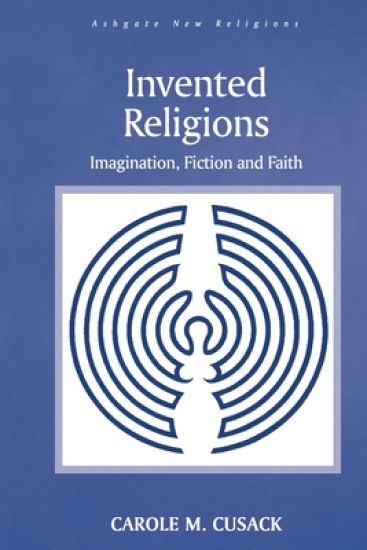
Utilizing contemporary scholarship on secularization, individualism, and consumer capitalism, this book explores religious movements founded in the West which are intentionally fictional: Discordianism, the Church of All Worlds, the Church of the SubGenius, and Jediism. Their continued appeal and success, principally in America but gaining wider audience through the 1980s and 1990s, is chiefly as a result of underground publishing and the internet. This book deals with immensely popular subject matter: Jediism developed from George Lucas' Star Wars films; the Church of the Flying Spaghetti Monster, founded by 26-year-old student Bobby Henderson in 2005 as a protest against the teaching of Intelligent Design in schools; Discordianism and the Church of the SubGenius which retain strong followings and participation rates among college students. The Church of All Worlds' focus on Gaia theology and environmental issues makes it a popular focus of attention. The continued success of these groups of Invented Religions provide a unique opportunity to explore the nature of late/post-modern religious forms, including the use of fiction as part of a bricolage for spirituality, identity-formation, and personal orientation.
The label 'Suicide Cults' has been applied to a wide variety of different alternative religions, from Jonestown to the Solar Temple to Heaven's Gate. Additionally, observers have asked if such group suicides are in any way comparable to Islamist suicide terrorism, or to historical incidents of mass suicide, such as the mass suicide of the ancient community of Masada. Organizationally and ideologically diverse, it turns out that the primary shared trait of these various groups is a common stereotype of religion as an irrational force that pushes fanatics to undertake acts of suicidal violence. Offering a valuable perspective on New Religious Movements and on religion and violence, Sacred Suicide brings together contributions from a diverse range of international scholars of sociology, religious studies and criminology.
Barely a century has passed since anime (Japanese animation) was first screened to a Western audience. Over time the number of anime genres and generic hybrids have significantly grown. These have been influenced and inspired by various historical and cultural phenomena, one of which -Japanese native religion and spirituality - this book argues is an important and dominant. There have always been anime lovers in the West, but today that number is growing exponentially. This is intriguing as many Japanese anime directors and studios initially created works that were not aimed at a Western audience at all. The mutual imbrication of the profane and sacred worlds in anime, along with the profound reciprocal relationship between 'Eastern' (Japanese) and 'Western' (chiefly American) culture in the development of the anime artistic form, form the twin narrative arcs of the book. One of the most significant contributions of this book is the analysis of the employment of spiritual and religious motifs by directors. The reception of this content by fans is also examined. The appeal of anime to aficionados is, broadly speaking, the appeal of the spiritual in a post-religious world, in which personal identity and meaning in life may be crafted from popular cultural texts which offer an immersive and enchanting experience that, for many in the modern world, is more thrilling and authentic than 'real life'. In the past, religions posited that after human existence on earth had ceased, the individual soul would be reincarnated again, or perhaps reside in heaven. In the early twenty-first century, spiritual seekers still desire a life beyond that of everyday reality, and just as passionately believe in the existence of other worlds and the afterlife. However, the other worlds are the fantasy landscapes and outer space settings of anime (and other popular cultural forms), and the afterlife of digital circuitry and the electronic impulses of the Internet. These important new understandings of religion and the spiritual underpin anime's status as a major site of new religious and spiritual inspiration in the West, and indeed, the world.
Barely a century has passed since anime (Japanese animation) was first screened to a Western audience. Over time the number of anime genres and generic hybrids have significantly grown. These have been influenced and inspired by various historical and cultural phenomena, one of which -Japanese native religion and spirituality - this book argues is an important and dominant. There have always been anime lovers in the West, but today that number is growing exponentially. This is intriguing as many Japanese anime directors and studios initially created works that were not aimed at a Western audience at all. The mutual imbrication of the profane and sacred worlds in anime, along with the profound reciprocal relationship between 'Eastern' (Japanese) and 'Western' (chiefly American) culture in the development of the anime artistic form, form the twin narrative arcs of the book. One of the most significant contributions of this book is the analysis of the employment of spiritual and religious motifs by directors. The reception of this content by fans is also examined. The appeal of anime to aficionados is, broadly speaking, the appeal of the spiritual in a post-religious world, in which personal identity and meaning in life may be crafted from popular cultural texts which offer an immersive and enchanting experience that, for many in the modern world, is more thrilling and authentic than 'real life'. In the past, religions posited that after human existence on earth had ceased, the individual soul would be reincarnated again, or perhaps reside in heaven. In the early twenty-first century, spiritual seekers still desire a life beyond that of everyday reality, and just as passionately believe in the existence of other worlds and the afterlife. However, the other worlds are the fantasy landscapes and outer space settings of anime (and other popular cultural forms), and the afterlife the digital circuitry and electronic impulses of the Internet. These important new understandings of religion and the spiritual underpin anime's status as a major site of new religious and spiritual inspiration in the West, and indeed, the world.
The label 'Suicide Cults' has been applied to a wide variety of different alternative religions, from Jonestown to the Solar Temple to Heaven's Gate. Additionally, observers have asked if such group suicides are in any way comparable to Islamist suicide terrorism, or to historical incidents of mass suicide, such as the mass suicide of the ancient community of Masada. Organizationally and ideologically diverse, it turns out that the primary shared trait of these various groups is a common stereotype of religion as an irrational force that pushes fanatics to undertake acts of suicidal violence. Offering a valuable perspective on New Religious Movements and on religion and violence, Sacred Suicide brings together contributions from a diverse range of international scholars of sociology, religious studies and criminology.
Utilizing contemporary scholarship on secularization, individualism, and consumer capitalism, this book explores religious movements founded in the West which are intentionally fictional: Discordianism, the Church of All Worlds, the Church of the SubGenius, and Jediism. Their continued appeal and success, principally in America but gaining wider audience through the 1980s and 1990s, is chiefly as a result of underground publishing and the internet. This book deals with immensely popular subject matter: Jediism developed from George Lucas' Star Wars films; the Church of the Flying Spaghetti Monster, founded by 26-year-old student Bobby Henderson in 2005 as a protest against the teaching of Intelligent Design in schools; Discordianism and the Church of the SubGenius which retain strong followings and participation rates among college students. The Church of All Worlds' focus on Gaia theology and environmental issues makes it a popular focus of attention. The continued success of these groups of Invented Religions provide a unique opportunity to explore the nature of late/post-modern religious forms, including the use of fiction as part of a bricolage for spirituality, identity-formation, and personal orientation.
Carole M. Cusack presents a study of the process of conversion among the Germanic people-including those in Scandinavia and Iceland-from the third to eleventh centuries. This book begins by examining previous scholarship on this conversion process. It then proceeds to develop a new model of conversion appropriate to the Germanic peoples. Cusack extends this model to compare six different Germanic conversions.
A study of mission and conversion among the Germanic kingdoms, this book traces the transformation of the late antique world into medieval Europe through the acceptance of Christianity. It is grounded in contemporary anthropological discourses, and focuses on the encounter between the Christian missionaries and the Germanic kings, an encounter which resulted in a shift in belief concerning the ultimate sources of power. The forms of Christianity developed by the converted are seen in the context of their pre-Christian beliefs and the need for continuity amongst change.