Kirjojen hintavertailu – 12 859 818 kirjaa ja 27 kauppaa

Kirjailija

Caroline A. Jones

Kirjat ja teokset yhdessä paikassa: 4 kirjaa, julkaisuja vuosilta 1989–2022, suosituimpiin kuuluu The Studio Reader – On the Space of Artists. Vertaile teosten hintoja ja tarkista saatavuus suomalaisista kirjakaupoista.

Nimi esiintyy myös muodoissa: Caroline A Jones

4 kirjaa

Kirjojen julkaisuvuodet: 1989–2022.

The Studio Reader – On the Space of Artists

The Studio Reader – On the Space of Artists

Mary Jane Jacob; Glenn Adamson; Svetlana Alpers; John Badlessari; Alice Bellony–rewold; Mary Bergstein; Walead Beshty; Andrea Bowers; Daniel Buren; Rochelle Feinstein; David J Getsy; Michelle Grabner; Rodney Graham; Amy Granat; Karl Haendel; Rachel Harrison; Caroline A Jones; Suzanne Lacy; Thomas Lawson; Lynn Lester Hershman; Shana Lutker; Annika Marie; Courtney Martin; Carrie Moyer; Bruce Nauman; Michael Peppiatt; David Reed; Lane Relyea; David Robbins; Judith Rodenbeck; Joe Scanlan; Brenda Schmahmann; Carolee Schneemann

University of Chicago Press
2010
nidottu
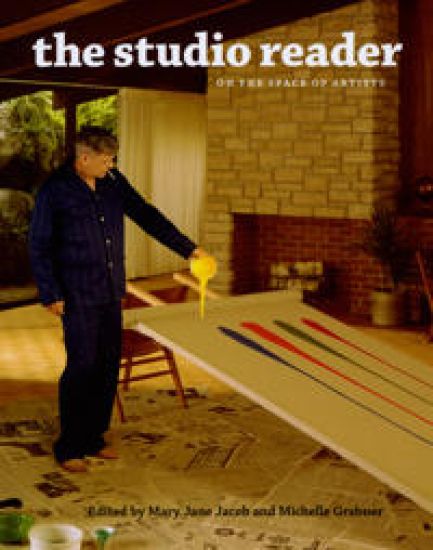
The image of a tortured genius working in near isolation has long dominated our conceptions of the artist's studio. Examples are abound: think Jackson Pollock dripping resin on a cicada carcass in his shed in the Hamptons. But times have changed; ever since Andy Warhol declared his art space a 'factory', artists have begun to envision themselves as the leaders of production teams, and their sense of what it means to be in the studio has altered just as dramatically as their practices. "The Studio Reader" pulls back the curtain from the art world to reveal the real activities behind artistic production. What does it mean to be in the studio? What is the space of the studio in the artist's practice? How do studios help artists envision their agency and, beyond that, their own lives? This forward-thinking anthology features an all-star array of contributors, ranging from Svetlana Alpers, Bruce Nauman, and Robert Storr to Daniel Buren, Carolee Schneemann, and Buzz Spector, each of whom locates the studio both spatially and conceptually - at the center of an art world that careens across institutions, markets, and disciplines. A companion for anyone engaged with the spectacular sites of art at its making, "The Studio Reader" reconsiders this crucial space as an actual way of being that illuminates our understanding of both artists and the world they inhabit.
Symbionts

Symbionts

Caroline A. Jones; Natalie Bell

MIT PRESS LTD
2022
nidottu
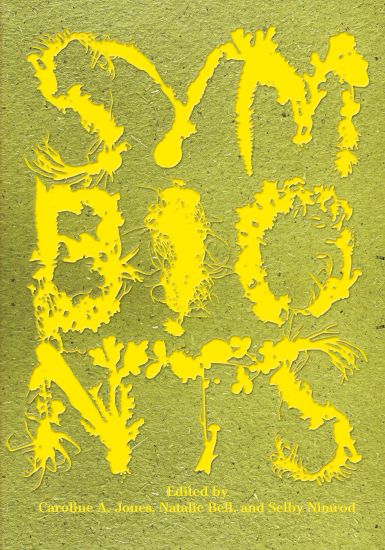
Essays, conversations, selected texts, and a rich collection of thought-provoking artworks celebrate a revolution in bio art. Expertly designed by Omnivore and printed on special papers, including chlorophyll cover and crush citrus and crush cocoa pages. The texts and artworks in Symbionts provoke a necessary conversation about our species and its relation to the planet. Are we merely “mammalian weeds,” as evolutionary biologist Lynn Margulis put it? Or are we partners in producing and maintaining the biosphere, as she also suggested? Symbionts reflects on a recent revolution in bio art that departs from the late-1990s code-oriented experiments to embrace entanglement and symbiosis (“with-living”). Combining documentation of contemporary artworks with texts by leading thinkers, Symbionts, which accompanies an exhibition at MIT List Visual Arts Center, offers an expansive view of humanity’s place on the planet. Color reproductions document works by international artists that respond to the revelation that planetary microbes construct and maintain our biosphere. A central essay by coeditor Caroline Jones sets their work in the context of larger discussions around symbiosis; additional essays, an edited roundtable discussion, and selected excerpts follow. Contributors explore, among other things, the resilient ecological knowledge of indigenous scholars and artists, and “biofiction,” a term coined by Jones to describe the work of such theoretical biologists as Jacob von Uexku¨ll as well as the witty parafictions of artist Anicka Yi. A playful glossary puts scientific terms in conversation with cultural ones.
The Global Work of Art

The Global Work of Art

Caroline A. Jones

University of Chicago Press
2017
sidottu

Halvin toimitettuna 76,90 €

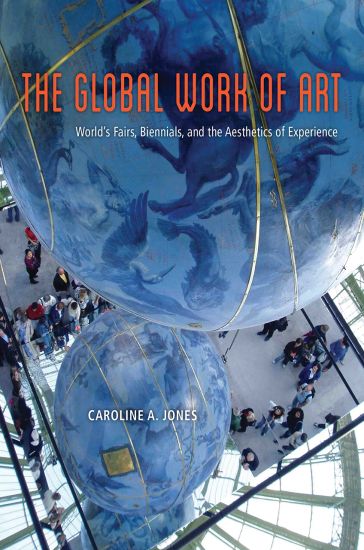
Global biennials have proliferated in the contemporary art world, but artists' engagement with large-scale international exhibitions has a much longer history that has influenced the present in important ways. Going back to the earliest world's fairs in the nineteenth century, this book argues that "globalism" was incubated in a century of international art contests, and today constitutes an important tactic for practicing artists. As world's fairs brought millions of attendees into contact with foreign cultures, products, and processes, artworks became juxtaposed in a "theater of nations," which challenged artists and critics to think outside their local academies for the first time. From Gustave Courbet's rebel pavilion near the official art exhibit at the 1855 French World's Fair to curator Beryl Madra's choice of London-based Cypriot Hussein Chalayan for the off-site Turkish pavilion at the 2006 Venice Biennale, artists have used these exhibitions to reflect on contemporary art, speak to their own governments back home, and challenge the wider geopolitical realm changing art and art history along the way. Ultimately, Caroline A. Jones argues, the modern appetite for experience and event structures, which were cultivated around the art at these earlier expositions, have now come to constitute contemporary art itself, producing encounters that transform the public and force us to reflect critically on the global condition.
Bay Area Figurative Art

Bay Area Figurative Art

Caroline A. Jones

University of California Press
1989
pokkari
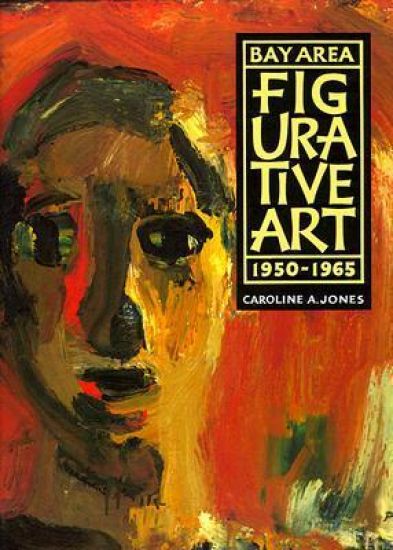
During the 1950s a few painters in the San Francisco Bay Area began to stage personal, dramatic defections from the prevailing style of Abstract Expressionism, creating what would come to be known as Bay Area Figurative Art. In 1949 David Park destroyed many of his nonobjective canvases and began a new style of consciously naive figuration. Soon Elmer Bischoff and Richard Diebenkorn joined Park and other painters such as Nathan Oliveira, Theophilus Brown, James Weeks, and Paul Wonner in the move away from abstraction and toward figurative subject matter. When artists such as Bruce McGaw, Manuel Neri, and Joan Brown emerged as a second generation of figurative artists, the momentum grew for a powerful new development in American painting. The achievement of Bay Area Figurative painters and sculptors has become directly relevant to current debates regarding abstraction and representation, as well as to discourses on modernism and postmodernism. Indeed, the historical phenomenon of the movement is an important case study in the evolution of modernism in America, serving as an early example of rupture in the formalist 'mainstream.' "Bay Area Figurative Art 1950-1965" was written to accompany an exhibition of the same name at the San Francisco Museum of Modern Art. Based on extensive archival research and interviews, it is the first study of the movement as a whole and is the broadest and most accurate account of the careers and interactions of ten Bay Area artists who worked in this new style.