Kirjojen hintavertailu – 12 859 828 kirjaa ja 27 kauppaa
Kirjailija
Caroline Moore
Kirjat ja teokset yhdessä paikassa: 7 kirjaa, julkaisuja vuosilta 2012–2026, suosituimpiin kuuluu Punk Rock Entrepreneur, 2nd Ed.. Vertaile teosten hintoja ja tarkista saatavuus suomalaisista kirjakaupoista.
William Thomas Okie; Angel Adams Parham; Joy Marie Clarkson; Erik Varden; Lore Ferguson Wilbert; Clare Coffey; Daniel J. D. Stulac; Greta Gaffin; Rhys Laverty; Casey Kleczek; Norann Voll; David McBride; Caroline Moore; Timothy J. Keiderling; Robert W. Crawford
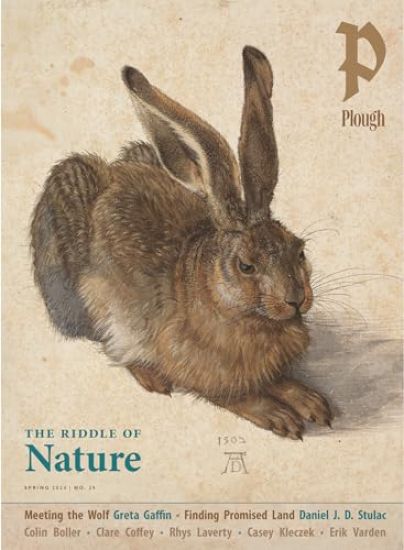
What is our place in nature? Since the Industrial Revolution, humans have has exercised unprecedented dominance over nature, with consequences that are now catching up with us. Many have pointed to Christianity as a culprit. Yet Christianity actually teaches that our relationship to nature should not be one of contempt or disassociation. Rather, according to ancient church tradition, nature is a book to be read, revealing truths about its creator and ours. At a time when many moderns are unsure of what difference, if any, marks us out from other living beings on our planet, and of what our place in the natural world ought to be, what might nature itself tell us about how to live within it? On this theme:Peter Mommsen asks if humans should live by nature’s laws. Colin Boller interviews farmers successfully shifting to regenerative agriculture. Caroline Moore introduces some of Britain’s amazing moths. Daniel Stulac wonders what the Promised Land means in Saskatchewan. Clare Coffey defends dandelions in lawns. Rhys Laverty reports on man’s battle with the sea at the Alderney breakwater. William Thomas Okie explores the old idea that plants reveal their uses. Greta Gaffin looks at our relationship to wolves, and Saint Francis’s. Norann Voll remembers lambing with her father. Tim Maendel finds peace by hunting. Erik Varden asks if the Christian teaching on chastity is unnatural. David McBride translates “The Leper of Abercuawg,” an old Welsh poem. Maureen Swinger watches meteor showers. Plough Quarterly features stories, ideas, and culture for people eager to apply their faith to the challenges we face. Each issue includes in-depth articles, interviews, poetry, book reviews, and art.
William Thomas Okie; Angel Adams Parham; Joy Marie Clarkson; Erik Varden; Lore Ferguson Wilbert; Clare Coffey; Daniel J D Stulac; Greta Gaffin; Rhys Laverty; Casey Kleczek; Norann Voll; David McBride; Caroline Moore; Timothy J Keiderling; Robert W Crawford
This volume represents the last work on a publication done by Mrs. Caroline T. Moore, author of the three volumes of Abstracts of the Wills of the State of South Carolina, a fourth volume Abstracts of the Wills of Charleston District 1783-1800, and an additional volume Abstracts of the Records of the Secretary of the Province 1692-1721, published in the period 1960-1978. The present volume contains information about wills and estates and a list of marriage licenses 1812-1823. With few exceptions, the original loose wills and estates papers for Charleston District did not survive from this period. Therefore, much of the information in this record cannot be found elsewhere. As is the case with many records, there is information included from an earlier time, sometimes many years earlier. A number of soldiers died in 1815, and people from other districts in South Carolina were called on to administer their estates. A full-name index adds to the value of this work.(2002), 2022, 6x9, paper, index, 218 pp.
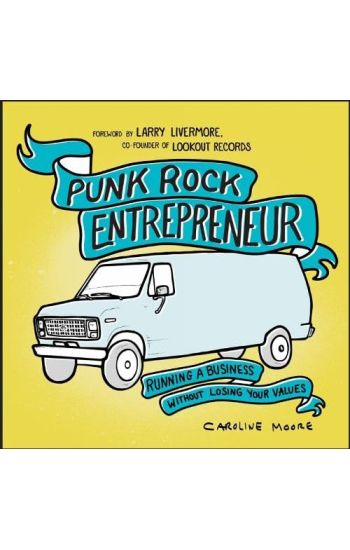
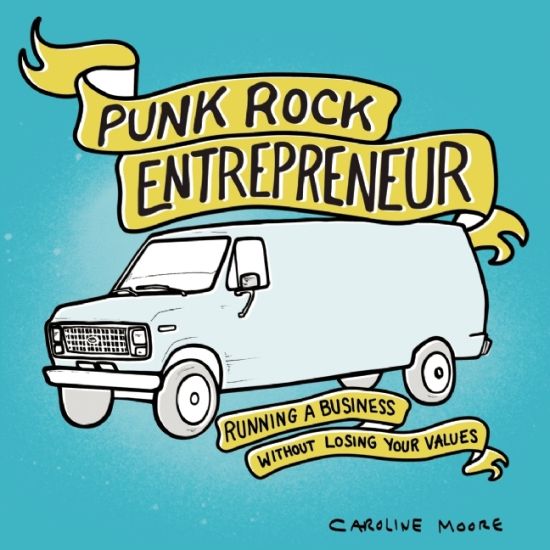
Do you have an idea for something that you want to share with the world but don't know where to start? Want to make a living without selling your soul? Have a business plan but can't afford to buy anything up front? This book is for you. Punk Rock Entrepreneur is a guide to launching your own business using DIY methods that allow you to begin from wherever you are, right now. Caroline Moore talks (and illustrates ) you through the why and how of business operations that she learned over years booking bands, organizing fests, sleeping on couches, and making a little go a long way. Engaging stories and illustrations show you the ropes, from building a network and working distribution channels to the value of community and being authentic. With first hand accounts from touring bands and small business owners, this book gives you the inspiration and down-to-earth advice you'll need to get started working for yourself.
Dr Johnson sums up the case against Milton: "the want of human interest is always felt." It is the apparent distance of Paradise Lost from ordinary humanity that has thrilled or repelled critics throughout the ages. While many readers are carried away by Milton's sublimity, others are daunted by his grandeur, scope and learning. Milton himself declared that he would not begin to write until he had "completed the full circle of my private studies". The Greek word for a circle of learning is the root of "encyclopaedia"; and Milton's erudition is encyclopaedic. Paradise Lost draws on both ancient learning and the scholarship of his day, displaying not only his deep knowledge of the Bible and Biblical scholarship, and his passionate assimilation of the classics, but also his absorption in astronomy, cosmology, geography, numerology and science. Yet many critics of Paradise Lost argue that all this circling lacks a human centre. Who, after all, is the hero? Adam and Eve in their unfallen state are too remote from us; Christ is not yet incarnate; God cannot be a character. Which leaves us with the magnificently problematic figure of Satan. In this fascinating study of Milton's great poem, Caroline Moore suggests that, contrary to what these critics argue, the core of Paradise Lost is extraordinarily human. Milton himself believed that poetry excelled at describing "the wily subtleties and refluxes of man's thought from within". This is precisely what Paradise Lost does. If, to a generation raised on the novel, Milton's methods of psychological exploration seem strange, this only intensifies the effect: Paradise Lost is a poem that explores the dark byways and infinite strangeness of the human heart.