Kirjojen hintavertailu – 12 859 829 kirjaa ja 27 kauppaa

Kirjailija

Caroline O.N. Moser

Kirjat ja teokset yhdessä paikassa: 3 kirjaa, julkaisuja vuosilta 1998–2009, suosituimpiin kuuluu Urban Poverty and Violence in Jamaica. Vertaile teosten hintoja ja tarkista saatavuus suomalaisista kirjakaupoista.

Nimi esiintyy myös muodoissa: Caroline O. N. Moser

3 kirjaa

Kirjojen julkaisuvuodet: 1998–2009.

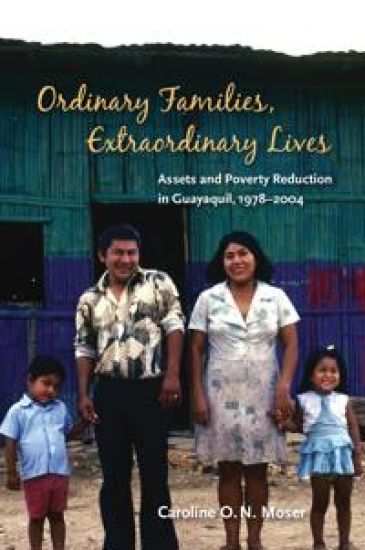
Ordinary Families, Extraordinary Lives

Ordinary Families, Extraordinary Lives

Caroline O.N. Moser

Brookings Institution
2009
nidottu
"Fifty years after Oscar Lewis's famous depiction of five Mexican families caught in a ""culture of poverty,"" Caroline Moser tells a very different story of five neighborhood women and their families strategically accumulating assets to escape poverty in the Ecuadoran city of Guayaquil. In Ordinary Families, Extraordinary Lives, Moser shows how a more sophisticated understanding of the complexities of asset accumulation as well as poverty itself can help counter inaccurate stereotypes about global poverty. It provides invaluable insight into strategies that may help people in developing countries improve their wellbeing. The similar socioeconomic characteristics and economic circumstances of the Guayaquil families in 1978, when Moser began her research, set the stage for a natural experiment. By 2004, these circumstances varied widely. Moser captures the causes and consequences of these developments through economic data, anthropological narrative, and personal photos. She then places this compelling story within the broader context of political, economic, and spatial changes in Guayaquil and Ecuador. Moser describes how households in a Third World urban slum relentlessly and systematically fought to accumulate human, social, and financial capital assets. Her longitudinal account of their odyssey captures long-term trends and changes in perception that are missed in snapshot assessments. Chapters in this holistic story cover diverse issues such as housing and infrastructure, community mobilization and political negotiation, employment, family dynamics, violence, and emigration."
Violence in a Post-conflict Context

Violence in a Post-conflict Context

Caroline O.N. Moser; Cathy McIlwaine; World Bank

World Bank Publications
2000
nidottu
In 1996, the Government of Guatemala and the guerrilla army known as the Guatemalan National Revolutionary Unity (URNG), signed the final Peace Accords ending both the United Nations monitored peace process and 36 years of internal conflict. This civil war caused untold internal and external displacement in the region as well as the deaths of over 150,000 people, the majority of whom were from indigenous groups. The legacy of this conflict which includes increasing urban violence, social exclusion, and weak levels of social capital, presents challenges for the country's post-conflict peace-building agenda. Violence in a Post-Conflict Context addresses the perceptions of violence by the people living in poor communities in Guatemala. It provides the results of a participatory study of violence conducted in urban low-income communities. The book identifies the categories of violence affecting poor communities, the costs of different types of violence, the effects of violence on social capital, the interventions employed by people to deal with the violence, and the causes and effects of social exclusion. Violence in a Post-Conflict Context incorporates the rarely heard voices of the poor by using the participatory appraisal methodology which emphasizes local knowledge and enables locals to make their own analysis of the problems that they face and identify their own solutions.