Kirjojen hintavertailu – 12 903 725 kirjaa ja 27 kauppaa

Kirjailija

Caroline Sweetman

Kirjat ja teokset yhdessä paikassa: 19 kirjaa, julkaisuja vuosilta 1994–2004, suosituimpiin kuuluu Ending Violence Against Women. Vertaile teosten hintoja ja tarkista saatavuus suomalaisista kirjakaupoista.

19 kirjaa

Kirjojen julkaisuvuodet: 1994–2004.

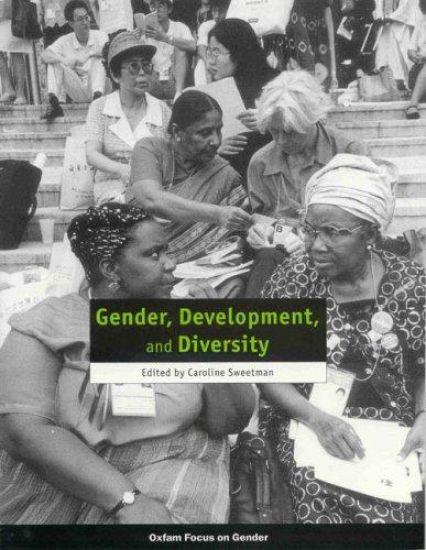
Gender, Development, and Diversity

Gender, Development, and Diversity

Caroline Sweetman

Oxfam
2004
nidottu
Each one of us lives life as a carrier of multiple identities - including gender, race, class and age. The sum of these identities determines our opportunities in life, and empowers or disempowers us, depending on our context. This collection of articles focuses on the implications that this has for development goals of poverty alleviation and human rights. In particular, critiques from Southern women challenge development organisations for their inadequate and inappropriate policy and practice. Development programmes have addressed gender inequality as a key concern, but most organisations have yet to understand how other aspects of difference intersect with gender to unite and divide groups of women from each other. Improving development policy and practice means understanding inequality in its complexity, and developing ways of working which acknowledge difference, rather than suppress it. It means practising as we preach, by transforming our own organisational cultures. This entails confronting issues of power and inequality, and challenging racism, sexism and other forms of discrimination. Contributors to this issue include Ranjani K Murthy, Everjoice Win, and Dorine Plantenga. Case studies come from India, Zimbabwe, Latin America and the UK.
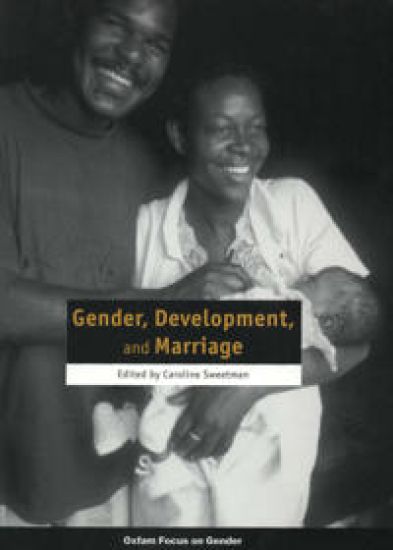
Gender, Development, and Marriage

Gender, Development, and Marriage

Caroline Sweetman

Oxfam
2003
nidottu
Marriage is now acknowledged as an institution of key relevance to development policy, practice, and research. The vast majority of women and men get married at least once, and in many places life outside marriage is almost impossible for either sex to contemplate. Yet marriage experienced by men is very different from marriage for women. This is because marriage is, in all male-dominated societies, an institution imbues with inequality, in which husbands and fathers rule the roost. Many cultures and legal systems still permit the control and punishment of unruly wives, through violence ranging from genital mutilation to domestic beatings. Within marriage there exist clear roles for women and men to perform, as they create and maintain a family. The conventional assumption that these roles are natural and divinely ordained determines the inequality that prevails between men and women. It also helps to set the terms on which women participate in wider society, and colours perceptions of the political and economic contribution that they make. The collection of articles traces the economic and social impact of inequality in marriage on women, men, and wider society, and considers its implications for development. Topics include child marriage; the link between women's economic contribution and equality within marriage; NGO responses to domestic violence; and the need to understand particular forms of marriage as prerequisite for appropriate development policy
Women Reinventing Globalisation

Women Reinventing Globalisation

Caroline Sweetman

Oxfam
2003
nidottu
The Association for Women's Rights in Development's (formerly AWID) International Forum is the largest international summit on gender equality outside of the United Nations system. It provides an unparalleled opportunity to develop strategies, share ideas, build skills and provide support - all to advance gender equality and social justice. At the 2002 Forum in Guadelajara, Mexico, hundreds of leaders, scholars and practitioners considered the economic, political, social, ecological and cultural implications of globalization. They set out to strategize for viable alternatives to its current unsustainable, undemocratic and exploitative forms. Contributors to this volume analyse current approaches to economic and political change and propose ways of ensuring that their ideas are translated into concrete actions in the years to come. The aim is to re-politicize the gender and development community and examine work that transforms rather than reacts. This volume provides a solutions-oriented approach to profound global changes and their effects on the lives of women. It looks at globalization through women's eyes, engages in thought-provoking debates, and finds energizing ideas.
Gender, Development and Health

Gender, Development and Health

Caroline Sweetman

Oxfam Professional
2001
nidottu
What are the differences between women's and men's experiences of health, sickness and health care? How does our gender identity affect our physical and mental wellbeing? Despite improvements in health indicators in many countries, developing countries are currently facing a health crisis. New diseases like HIV and drug-resistant strains of diseases including malaria, pneumonia and tuberculosis, are spreading. Many people in developing countries have never had access to formal medical services. Others have lost their access due to reductions in public spending as a result of structural adjustment policies, international debt repayments and the de-prioritisation of health against other sectors. This book argues that two fundamental changes are needed if both women and men are to achieve better health. The first of these is to ensure equal access to all the resources that men and women need for healthy minds and bodies: not only to medical care, but to food, water, shelter, a source of income and a sense of control over ones life. The second is to ensure that health services and resources enable women and men to meet all their physical and mental health needs. Articles included here focus on understandings of reproductive health; integrating gender issues into infectious disease prevention; the impact of HIV/AIDS on women; working with communities to promote health and on the monitoring and evaluation of health projects from a gender perspective.
Ending Violence Against Women

Ending Violence Against Women

Francine Pickup; Suzanne Williams; Caroline Sweetman

Oxfam
2000
sidottu
Violence, and women's fear of it, limits women's choices in virtually all spheres of life. It has long-term, as well as short-term consequences on women's physical and emotional well-being. It detrimentally affects women's ability to gain an education, earn a livelihood, develop human relationships and participate in public activities, including development programmes. In this book addressing violence against women, development workers go to the heart of how members of communities relate to one another and how they are able to shape their own lives. The first section of the book examines the many different definitions of violence against woman and offers theories about why it happens in all societies across the world. It discusses the current momentum around the issue and asks why development organizations have been slow to take up the struggle to end violence against woman. The second section focuses on strategies to counter violence against women and support the survivors. Case studies come from times of peace and times of armed conflict. Sections suggest strategies for transforming attitudes and beliefs in different societies that condone such violence; for supporting individual survivors; and to ensure that governments and NGOs fulfil their duty to protect women.
Ending Violence Against Women

Ending Violence Against Women

Francine Pickup; Suzanne Williams; Caroline Sweetman

Oxfam
2000
nidottu
Violence and women's fear of it limits women's choices in virtually all spheres of life. It has long-term as well as short-term consequences on women's physical and emotional well-being. It detrimentally affects women's ability to gain an education, earn a livelihood, develop human relationships and participate in public activities, including development programmes. In this book addressing violence against women development workers go to the heart of how members of communities relate to one another and how they are able to shape their own lives. The first section of the book examines the many different definitions of violence against woman and offers theories about why it happens in all societies across the world. It discusses the current momentum around the issue and asks why development organizations have been slow to take up the struggle to end violence against woman. The second section focuses on strategies to counter violence against women and support the survivors. Case studies come from times of peace and times of armed conflict. Sections suggest strategies for transforming attitudes and beliefs in different societies that condone such violence, for supporting individual survivors and to ensure that governments and NGOs fulfil their duty to protect women.
Women, Land and Agriculture

Women, Land and Agriculture

Caroline Sweetman

Oxfam
1999
nidottu
A collection of essays considering women's access to land and their role in food production in developing countries. Contributors assert that women's contribution to global agricultural production for food and for profit continues to be largely unacknowledged and undervalued and that their ability to farm is constrained by lack of control over land, agricultural inputs, credit and other essential resources.
Gender, Education and Training

Gender, Education and Training

Caroline Sweetman

Oxfam
1998
nidottu
This collection of articles by development workers and researchers focuses on learning opportunities for women offered by education and training. There is a continuing imbalance in educational participation - women make up an estimated two-thirds of the world's illiterate people - and writers reflect on the causes and consequences of this. While this lack of opportunity to learn is shocking in itself, equal access to existing services is not sufficient to make education empowering for women. Too often the formal education system serves merely to confirm gender stereotypes and school women for subordination. Some writers examine the scope offered by non-formal education to challenge male-biased systems, including training for challenging gender-based inequality.
Gender and Migration

Gender and Migration

Caroline Sweetman

Oxfam
1998
nidottu
The articles in this collection explore the wide range of reasons why women and men decide to move within and outside their native countries, whether it be for employment, upon marriage or in response to conflict. The authors stress the importance of seeing an individual migrant in her or his context as a member of a social network, spanning different locations. Understanding these links helps us to understand migration as part of a wider strategy for making a living. The articles also explore how migration may offer women a chance to challenge oppressive gender relations: migrants are exposed to different ways of being and doing, which show that culture is neither universal or fixed. Conversely, migration may be a route into continuing gender-based discrimination, because women become isolated from their support systems.
Violence against Women

Violence against Women

Caroline Sweetman

Oxfam
1998
nidottu
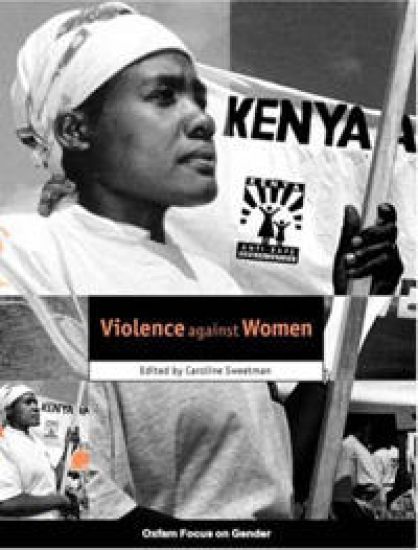
This is a collection of articles from development practitioners and feminist activists placing violence against women, both direct and indirect, in the context of development. Violence is both a human rights issue and an obstacle to women's participation in development. Writers here focus on campaigning and advocacy work as well as work with women who have experienced violence in countries including Russia, Guinea-Bissau and India. It includes accounts of work with women who have been sexually assaulted and those who have undergone cultural practices such as female genital mutilation and early marriage.
Gender, Religion and Spirituality

Gender, Religion and Spirituality

Caroline Sweetman

Oxfam
1998
nidottu
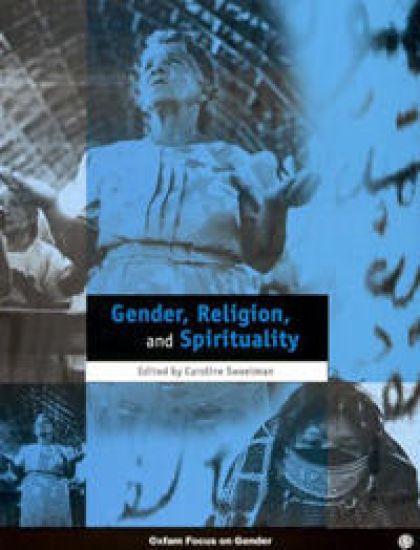
Religion and spirituality are central to the lives of women and men across the world yet mainstream development policy and practice rarely take account of this fact. This collection of articles explores the complex links between social and economic development and religious and spiritual belief and assesses the cost to development of ignoring these links. Writers of many faiths, and those with none, explore the scope for promoting women's rights and needs offered by religious belief and practice and analyse feminist responses to fundamentalist regimes which use religious doctrine to justify women's oppression.
Men and Masculinity

Men and Masculinity

Caroline Sweetman

Oxfam
1997
nidottu
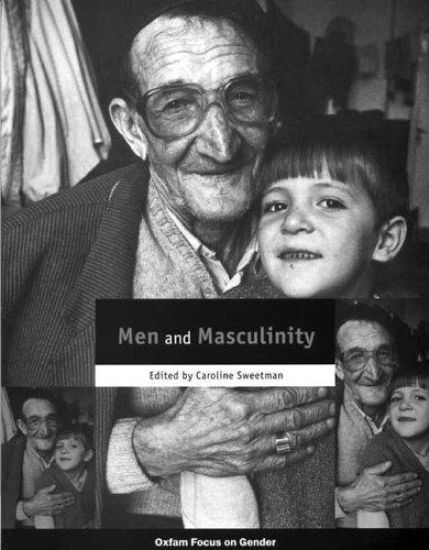
A collection of articles by development practitioners and theorists, which considers the implications of male gender identities on the rights of both women and men, and on gender-equitable development. Gender studies have often concentrated on the woman's role in the family, community and society. Men and Masculinity argues that male gender identities need to be studied in detail too if power relations between the sexes are to be changed for the better, and the potential of individuals of both sexes is to be realised. The articles, written by development practitioners worldwide, assess the implications for gender and development policy and practice of looking at male gender identities, as the issues of men and masculinity have often been marginalised. The focus of this work is on male gender identity and the effect this has on the society and community around them. Case studies from countries around the world look in detail at the issues surronding this subject, and attempt to answer the question ? What does it mean to be a man today in different cultures? This book was originally part of Oxfam's Gender and Development Journal, and therefore has an academic bias. However it is useful for those interested in seeing how men act...
Women and the Family

Women and the Family

Caroline Sweetman

Oxfam
1996
nidottu
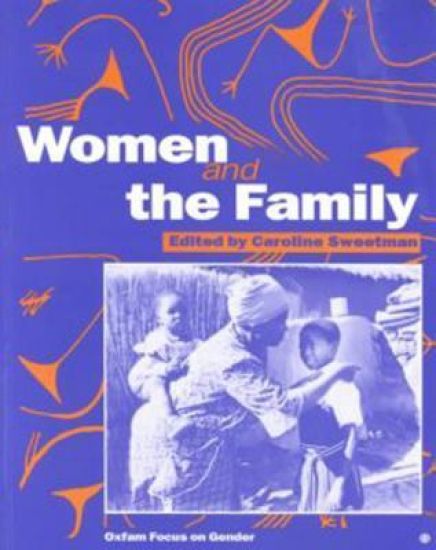
Looking at factors as diverse as the persuasiveness of patriarchy, changing family forms, female infanticide, and land reform policies, this collection of articles considers the family from a gender perspective, and how the socially prescribed roles of men and women within the family can constrain women's opportunities. Contributors include Suad Joseph and Ranjani Krishnamurthy.
Societies in Transition

Societies in Transition

Caroline Sweetman

Oxfam
1996
nidottu
The Focus on Gender series makes available in book form the contents of the Oxfam journal Gender and Development. Highlighting practice as well as theory, the thematic series makes the resource available to students, researchers, practitioners and policy makers interested in particular topics. Change and upheaval are a way of life for millions of women and men throughout the world, who survive conflict, economic and political crises in addition to life-cycle transitions such as ageing. The articles in this work assert that, while transition creates hardship and trauma, it can give women an opportunity to challenge the negative aspects of relations between the sexes.
Women and Urban Settlement

Women and Urban Settlement

Caroline Sweetman

Oxfam
1996
nidottu
This text studies the various aspects of urban life from a gender perspective, drawing together social, technical and political aspects of urban life to provide a resource for researchers and planners. Articles cover issues such as gender-sensitive urban planning; work migration; community urban regeneration schemes; health care for poor urban women; and the dislocation and loss of home experienced by refugees.
Women and Rights

Women and Rights

Caroline Sweetman

Oxfam
1995
nidottu
The "Focus on Gender" series makes available in book form the contents of the Oxfam journal "Gender and Development". Highlighting practice as well as theory, the thematic series makes the resource available to students, researchers, practitioners and policy makers interested in particular topics. "Women's rights are human rights" was one of the messages to come out of the UN Human Rights Conference in Vienna in 1993. This work explores the issue of women's rights in a variety of different contexts. Focusing on women's rights involves the recognition that, throughout the world, legal systems aiming to guarantee rights have their roots in cultures which discriminate against women. Development and human rights are closely linked, and the empowerment of women to claim their full rights will enable them to take full advantage of development processes.
North-South Co-operation

North-South Co-operation

Caroline Sweetman

Oxfam
1995
nidottu
This book looks at co-operation for development: between North, South, and East; women's organizations and funding agencies; development practitioners, academics, and civil society; politicians and economists; and men and women. Currently the world is in a state of economic and political crisis, of which escalating conflict is a symptom. In this book, writers from South and North stress that such crisis can only be resolved if we recognise that we are all involved in a global system which perpetuates poverty and inequality, not only in the South and East, but also in the North. The book explores how essential it is for Northern funding agencies to foster multiculturalism and gender equality within their own structures, as well as in their work with Southern counterparts.
Population and Reproductive Rights

Population and Reproductive Rights

Caroline Sweetman

Oxfam
1994
nidottu
This book highlights the need for an approach to population control which is based on reproductive rights, and stresses the importance of offering family-planning services and information in the context of women's empowerment. Issues covered are new contraceptive technologies; unsafe abortion and its cost in terms of women's lives and health; the cultural norms underlying attitudes to women's sexuality; and rape as an assertation of male power.