Kirjojen hintavertailu – 12 859 828 kirjaa ja 27 kauppaa

Kirjailija

Carolyn Hoyle

Kirjat ja teokset yhdessä paikassa: 6 kirjaa, julkaisuja vuosilta 1998–2019, suosituimpiin kuuluu Debating Restorative Justice. Vertaile teosten hintoja ja tarkista saatavuus suomalaisista kirjakaupoista.

6 kirjaa

Kirjojen julkaisuvuodet: 1998–2019.

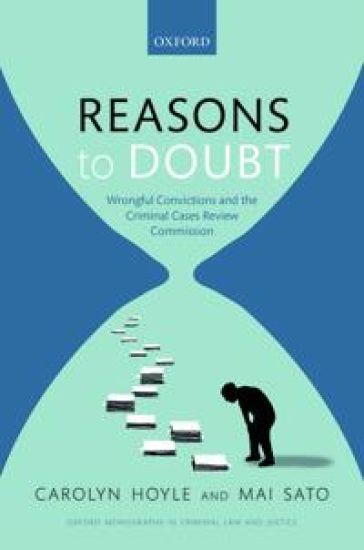
Reasons to Doubt

Reasons to Doubt

Carolyn Hoyle; Mai Sato

Oxford University Press
2019
sidottu
This book reveals what happens to applications for post-conviction review when those in England, Wales, and Northern Ireland who believe they are wrongfully convicted apply to the Criminal Cases Review Commission, the only body that can refer a case back to the Court of Appeal once appellants opportunities for direct appeal are exhausted. While the Court is obliged to hear all such referrals, the Commission can only refer a case where it believes there is a real possibility that the Court will quash the conviction. The first empirical study of all stages of decision-making within the Commission, this book starts from the premise that the test applied by the Commission (the real possibility test) is not inflexible. Though created by statute and refined through case law, it must be determined on a case-by-case basis, drawing too on cultural and structural variables, alongside fresh evidence gathered by the Commission. Through in-depth analysis of case files and interviews, Hoyle and Sato scrutinize the Commissions operational practices, its working rules and assumptions, considering how these influence its understanding of the real possibility test. Situating their rich empirical data within a framework of the Commissions social, organizational, and legal contexts, this book demonstrates that in its open-ended investigations there is considerable scope for discretion; for thorough exploration of all possible avenues or for choosing a more superficial consideration of a case. It emerges that while structured internal guidance, drawing heavily on Court jurisprudence, shapes decision-making, creating consistency in approach, there remains some variability across cases, over time, that can be accounted for by the different professional backgrounds and personalities of Commission staff.
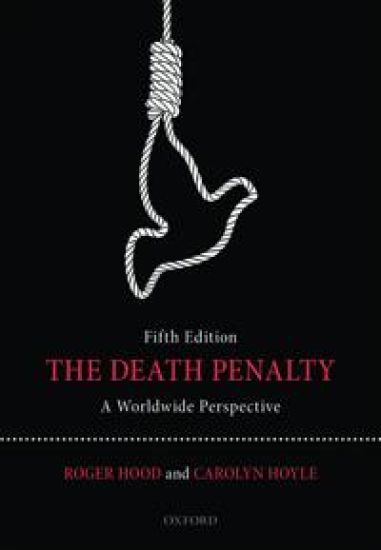
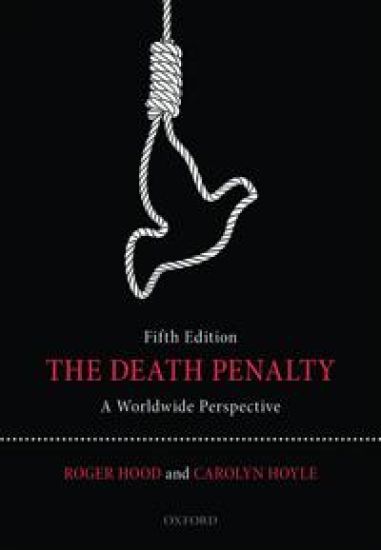
The Death Penalty

The Death Penalty

Roger Hood; Carolyn Hoyle

Oxford University Press
2015
nidottu
The fifth edition of this highly praised study charts and explains the progress that continues to be made towards the goal of worldwide abolition of the death penalty. The majority of nations have now abolished the death penalty and the number of executions has dropped in almost all countries where abolition has not yet taken place. Emphasising the impact of international human rights principles and evidence of abuse, the authors examine how this has fuelled challenges to the death penalty and they analyse and appraise the likely obstacles, political and cultural, to further abolition. They discuss the cruel realities of the death penalty and the failure of international standards always to ensure fair trials and to avoid arbitrariness, discrimination and conviction of the innocent: all violations of the right to life. They provide further evidence of the lack of a general deterrent effect; shed new light on the influence and limits of public opinion; and argue that substituting for the death penalty life imprisonment without parole raises many similar human rights concerns. This edition provides a strong intellectual and evidential basis for regarding capital punishment as undeniably cruel, inhuman and degrading. Widely relied upon and fully updated to reflect the current state of affairs worldwide, this is an invaluable resource for all those who study the death penalty and work towards its removal as an international goal.
The Death Penalty

The Death Penalty

Roger Hood; Carolyn Hoyle

Oxford University Press
2015
sidottu
The fifth edition of this highly praised study charts and explains the progress that continues to be made towards the goal of worldwide abolition of the death penalty. The majority of nations have now abolished the death penalty and the number of executions has dropped in almost all countries where abolition has not yet taken place. Emphasising the impact of international human rights principles and evidence of abuse, the authors examine how this has fuelled challenges to the death penalty and they analyse and appraise the likely obstacles, political and cultural, to further abolition. They discuss the cruel realities of the death penalty and the failure of international standards always to ensure fair trials and to avoid arbitrariness, discrimination and conviction of the innocent: all violations of the right to life. They provide further evidence of the lack of a general deterrent effect; shed new light on the influence and limits of public opinion; and argue that substituting for the death penalty life imprisonment without parole raises many similar human rights concerns. This edition provides a strong intellectual and evidential basis for regarding capital punishment as undeniably cruel, inhuman and degrading. Widely relied upon and fully updated to reflect the current state of affairs worldwide, this is an invaluable resource for all those who study the death penalty and work towards its removal as an international goal.
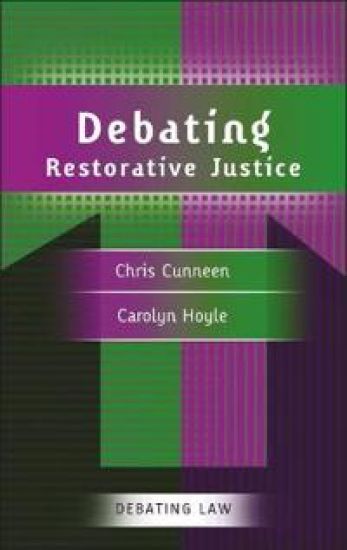
Debating Restorative Justice

Debating Restorative Justice

Carolyn Hoyle; Chris Cunneen

Hart Publishing
2010
nidottu
Debating Law is a new, exciting series that gives scholarly experts the opportunity to offer contrasting perspectives on significant topics of contemporary, general interest. In this first volume of the series Carolyn Hoyle argues that communities and the state should be more restorative in responding to harms caused by crimes, antisocial behaviour and other incivilities. She supports the exclusive use of restorative justice for many non-serious offences, and favours approaches that, by integrating restorative and retributive philosophies, take restorative practices into the 'deep end' of criminal justice. While acknowledging that restorative justice appears to have much to offer in terms of criminal justice reform, Chris Cunneen offers a different account, contending that the theoretical cogency of restorative ideas is limited by their lack of a coherent analysis of social and political power. He goes on to argue that after several decades of experimentation, restorative justice has not produced significant change in the criminal justice system and that the attempt to establish it as a feasible alternative to dominant practices of criminal justice has failed. This lively and valuable debate will be of great interest to everyone interested in the criminal justice system.
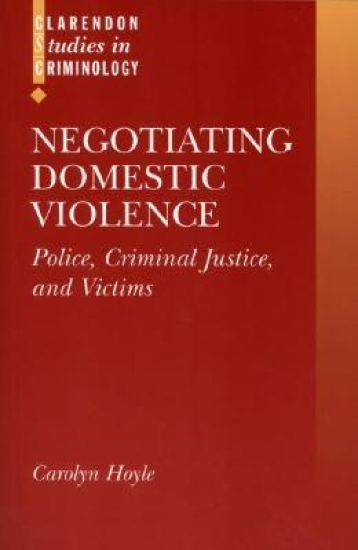
Negotiating Domestic Violence

Negotiating Domestic Violence

Carolyn Hoyle

Oxford University Press
2000
nidottu
This book examines the factors which shape the criminal justice response to domestic violence in the light of policy changes at the beginning of the 1990s which aimed to increase arrest rates. In particular, the book discusses the needs and expectations of victims and examines how their choices impact on decisions made by police and prosecutors. Many books on the criminal justice response to domestic violence start from the premise that withdrawal of complaints by victims and the subsequent discontinuance of cases, represents some kind of failure on the part of the agencies involved and that victims would benefit from greater determination by police to prosecute offenders wherever possible. Implicit in this approach is the assumption that the criminal justice system as it presently operates is capable of responding effectively to the needs of victims of domestic violence. This book throws doubt on the validity of these assumptions.
Negotiating Domestic Violence

Negotiating Domestic Violence

Carolyn Hoyle

Clarendon Press
1998
sidottu
This book examines the factors which shape the criminal justice response to domestic violence in the light of policy changes at the beginning of the 1990s which aimed to increase arrest rates. In particular, the book discusses the needs and expectations of victims and examines how their choices impact on decisions made by police and prosecutors. Many books on the criminal justice response to domestic violence start from the premise that withdrawal of complaints by victims and the subsequent discontinuance of cases, represents some kind of failure on the part of the agencies involved and that victims would benefit from greater determination by police to prosecute offenders wherever possible. Implicit in this approach is the assumption that the criminal justice system as it presently operates is capable of responding effectively to the needs of victims of domestic violence. This book throws doubt on the validity of these assumptions.