Kirjojen hintavertailu – 12 903 724 kirjaa ja 27 kauppaa

Kirjailija

Carolyn M. Callahan

Kirjat ja teokset yhdessä paikassa: 4 kirjaa, julkaisuja vuosilta 2006–2017, suosituimpiin kuuluu Assessment in the Classroom: The Key to Good Instruction (the Practical Strategies Series in Gifted Education). Vertaile teosten hintoja ja tarkista saatavuus suomalaisista kirjakaupoista.

4 kirjaa

Kirjojen julkaisuvuodet: 2006–2017.

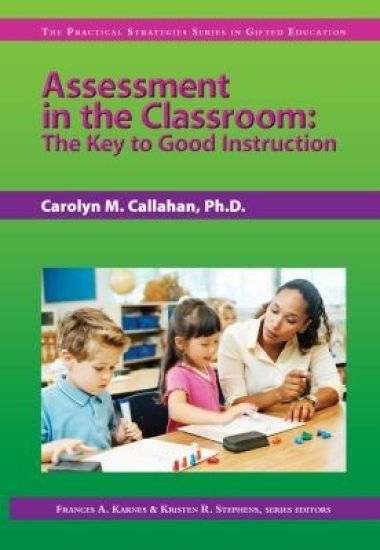
Assessment in the Classroom: The Key to Good Instruction (the Practical Strategies Series in Gifted Education)
The goal of all classrooms is to maximize the learning of all students; therefore, correctly assessing what students have learned is an integral part of good instruction. By keeping the goal of good, strong assessment in mind, a teacher can clearly see his or her desired outcomes for a lesson, activity, or unit. It is critical to take into account a student's level of knowledge, understanding, beliefs, skills, dispositions, and learning styles when planning for good classroom instruction and assessment. Carolyn Callahan, a leader in the field of gifted education, guides teachers toward answering these questions about their students and planning for quality classroom assessment. In addition, the book provides an overview of the most common and successful assessment methods, including formal and informal assessments, student self-assessments, and preassessment strategies for planning instruction.
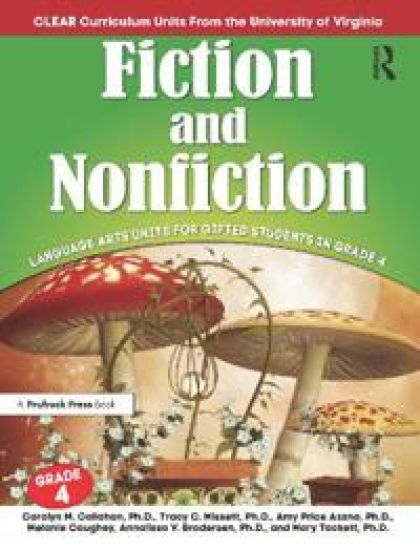
Fiction and Nonfiction

Fiction and Nonfiction

Carolyn M. Callahan; Tracy C. Missett

Prufrock Press
2017
nidottu
The CLEAR curriculum, developed by University of Virginia's National Research Center on the Gifted and Talented, is an evidence-based teaching model that emphasizes Challenge Leading to Engagement, Achievement, and Results. In Fiction and Nonfiction: Language Arts Units for Gifted Students in Grade 4, students will read and analyze short stories and write their own short story in the fiction unit. In the nonfiction unit, students will study nonfiction (and creative nonfiction) texts to examine how writers use many of the same devices to tell nonfiction stories. Students will read a variety of texts and will write their own memoirs. These units focus on critical literacy skills, including reading diverse content, understanding texts as reflections of culture, and finding bias in fiction and nonfiction. Grade 4
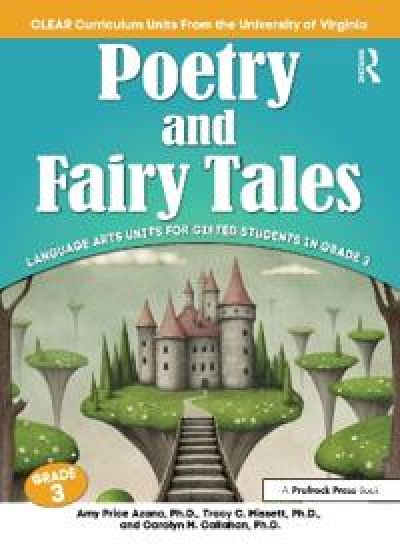
Poetry and Fairy Tales

Poetry and Fairy Tales

Amy Price Azano; Tracy C. Missett; Carolyn M. Callahan

Prufrock Press
2015
nidottu
The CLEAR curriculum, developed by University of Virginia's National Research Center on the Gifted and Talented, is an evidence-based teaching model that emphasizes Challenge Leading to Engagement, Achievement, and Results. In Poetry and Fairy Tales: Language Arts Units for Gifted Students in Grade 3 students will read and analyze various forms of poetry and write their own poetry anthology. They will learn how to identify and use figurative language to create concrete images from abstract ideas. In the fairy tales unit, students will study fairy tales and folklore to understand how and why societal norms and mores are culturally transmitted. These units focus on critical literacy that includes reading diverse sources, understanding bias and cultural contexts, and creating informed consumers of information. Grade 3
Critical Issues and Practices in Gifted Education: What the Research Says

Critical Issues and Practices in Gifted Education: What the Research Says

Jonathan A. Plucker; Carolyn M. Callahan

Prufrock Press
2007
nidottu
A gifted education Legacy Award winner, Critical Issues and Practices in Gifted Education: What the Research Says is the definitive reference book for those searching for a summary and evaluation of the literature on giftedness and gifted education. The book presents almost 50 summaries of important topics in the field, providing relevant research and a guide to how the research applies to gifted education. Sample topics addressed include alternative assessment, counseling, early childhood, highly gifted students, homeschooling, parenting, and policy and advocacy. Each chapter adopts a rigorous, empirically grounded approach to inform the reader's understanding of the research in gifted education. Despite a century of research on giftedness, the enthusiasm and rhetoric surrounding various programs, models, and approaches often exceed the level of available support--or even contradict the available evidence. This book provides an objective assessment of the status of available knowledge in each area, offers guidance in the application of the research, and suggests areas of needed research.