Kirjojen hintavertailu – 12 859 818 kirjaa ja 27 kauppaa

Kirjailija

Carrie J. Preston

Kirjat ja teokset yhdessä paikassa: 7 kirjaa, julkaisuja vuosilta 2011–2025, suosituimpiin kuuluu Learning to Kneel. Vertaile teosten hintoja ja tarkista saatavuus suomalaisista kirjakaupoista.

7 kirjaa

Kirjojen julkaisuvuodet: 2011–2025.

Intercultural Japanese Noh Theatre

Intercultural Japanese Noh Theatre

Ashley Thorpe; Allan Marett; Greg Giovanni; Jannette Cheong; Deborah Brevoort; Carrie J. Preston

BLOOMSBURY PUBLISHING PLC
2025
nidottu
Discover Japanese culture and one of the world's oldest performance artforms in an exhilarating new way: through English-language noh theatre. Intercultural Japanese Noh Theatre: Texts and Analyses of English-language Noh provides a unique perspective on intercultural engagement with Japanese noh, a classical dance-drama that has been performed since the 14th century. Unlike many projects approaching noh from the 'outside in,' this volume dives 'inside out,' tapping into the expertise of both professional Japanese noh performers and dedicated non-indigenous practitioners. Through selected play texts and insightful essays, this collection introduces a new realm of noh to global readers, academics, and theatre enthusiasts interested in Japanese culture. The opening chapters, guided by Akira Matsui, a master actor of the Kita school of noh, offer a contemporary view from within the professional noh world: the subsequent seven playtexts, chosen for their representation of shifts in practice and global resonance, are introduced by the writers, providing insights into their creative motivations. Following each play, experts analyse its performance aspects, from movement and music to costume and language, exploring the implications of integrating Japanese noh professionals with international amateurs. This volume not only contextualizes the chosen noh texts but also serves as a window into a dynamic form of intercultural engagement with noh theatre. By blending tradition with global perspectives, it illuminates the multifaceted nature of noh in a globalized context. For those interested in the longevity of performance art and new intercultural approaches, this book offers a comprehensive exploration of English-language noh and its rich complexity on the global stage.
Intercultural Japanese Noh Theatre

Intercultural Japanese Noh Theatre

Ashley Thorpe; Allan Marett; Greg Giovanni; Jannette Cheong; Deborah Brevoort; Carrie J. Preston

BLOOMSBURY PUBLISHING PLC
2025
sidottu
Discover Japanese culture and one of the world's oldest performance artforms in an exhilarating new way: through English-language noh theatre. Intercultural Japanese Noh Theatre: Texts and Analyses of English-language Noh provides a unique perspective on intercultural engagement with Japanese noh, a classical dance-drama that has been performed since the 14th century. Unlike many projects approaching noh from the 'outside in,' this volume dives 'inside out,' tapping into the expertise of both professional Japanese noh performers and dedicated non-indigenous practitioners. Through selected play texts and insightful essays, this collection introduces a new realm of noh to global readers, academics, and theatre enthusiasts interested in Japanese culture. The opening chapters, guided by Akira Matsui, a master actor of the Kita school of noh, offer a contemporary view from within the professional noh world: the subsequent seven playtexts, chosen for their representation of shifts in practice and global resonance, are introduced by the writers, providing insights into their creative motivations. Following each play, experts analyse its performance aspects, from movement and music to costume and language, exploring the implications of integrating Japanese noh professionals with international amateurs. This volume not only contextualizes the chosen noh texts but also serves as a window into a dynamic form of intercultural engagement with noh theatre. By blending tradition with global perspectives, it illuminates the multifaceted nature of noh in a globalized context. For those interested in the longevity of performance art and new intercultural approaches, this book offers a comprehensive exploration of English-language noh and its rich complexity on the global stage.
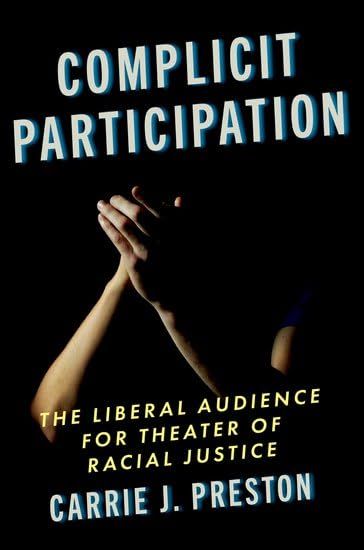
Complicit Participation

Complicit Participation

Carrie J. Preston

OXFORD UNIVERSITY PRESS INC
2024
nidottu
In this incisive critique of the ways performances of allyship can further entrench white privilege, author Carrie J. Preston analyses her own complicit participation and that of other audience members and theater professionals, deftly examining the prevailing framework through which white liberals participate in antiracist theater and institutional “diversity, equity, and inclusion” initiatives. The book addresses immersive, documentary, site-specific, experimental, street, and popular theatre in chapters on Jean Genet's The Blacks, Branden Jacobs-Jenkins's An Octoroon, George C. Wolfe's Shuffle Along, Lin-Manuel Miranda's Hamilton, Anna Deavere Smith's Notes from the Field, and Claudia Rankine's The White Card. Far from abandoning the work to dismantle institutionalized racism, Preston seeks to reveal the contradictions and complicities at the heart of allyship as a crucial step toward full and radical participation in antiracist efforts.
Complicit Participation

Complicit Participation

Carrie J. Preston

OXFORD UNIVERSITY PRESS INC
2024
sidottu
In this incisive critique of the ways performances of allyship can further entrench white privilege, author Carrie J. Preston analyses her own complicit participation and that of other audience members and theater professionals, deftly examining the prevailing framework through which white liberals participate in antiracist theater and institutional “diversity, equity, and inclusion” initiatives. The book addresses immersive, documentary, site-specific, experimental, street, and popular theatre in chapters on Jean Genet's The Blacks, Branden Jacobs-Jenkins's An Octoroon, George C. Wolfe's Shuffle Along, Lin-Manuel Miranda's Hamilton, Anna Deavere Smith's Notes from the Field, and Claudia Rankine's The White Card. Far from abandoning the work to dismantle institutionalized racism, Preston seeks to reveal the contradictions and complicities at the heart of allyship as a crucial step toward full and radical participation in antiracist efforts.
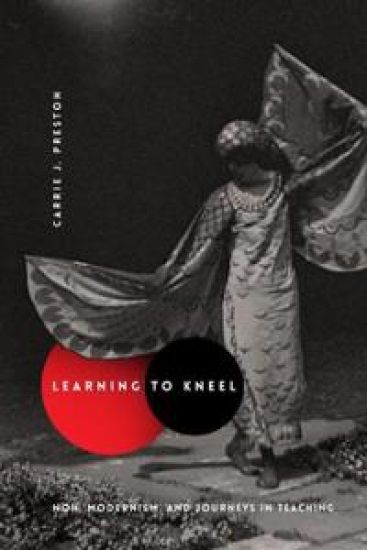
Learning to Kneel

Learning to Kneel

Carrie J. Preston

Columbia University Press
2017
pokkari
In this inventive mix of criticism, scholarship, and personal reflection, Carrie J. Preston explores the nature of cross-cultural teaching, learning, and performance. Throughout the twentieth century, Japanese noh was a major creative catalyst for American and European writers, dancers, and composers. The noh theater's stylized choreography, poetic chant, spectacular costumes and masks, and engagement with history inspired Western artists as they reimagined new approaches to tradition and form. In Learning to Kneel, Preston locates noh's important influence on such canonical figures as Pound, Yeats, Brecht, Britten, and Beckett. These writers learned about noh from an international cast of collaborators, and Preston traces the ways in which Japanese and Western artists influenced one another. Preston's critical work was profoundly shaped by her own training in noh performance technique under a professional actor in Tokyo, who taught her to kneel, bow, chant, and submit to the teachings of a conservative tradition. This encounter challenged Preston's assumptions about effective teaching, particularly her inclinations to emphasize Western ideas of innovation and subversion and to overlook the complex ranges of agency experienced by teachers and students. It also inspired new perspectives regarding the generative relationship between Western writers and Japanese performers. Pound, Yeats, Brecht, and others are often criticized for their orientalist tendencies and misappropriation of noh, but Preston's analysis and her journey reflect a more nuanced understanding of cultural exchange.
Learning to Kneel

Learning to Kneel

Carrie J. Preston

Columbia University Press
2016
sidottu
In this inventive mix of criticism, scholarship, and personal reflection, Carrie J. Preston explores the nature of cross-cultural teaching, learning, and performance. Throughout the twentieth century, Japanese noh was a major creative catalyst for American and European writers, dancers, and composers. The noh theater's stylized choreography, poetic chant, spectacular costumes and masks, and engagement with history inspired Western artists as they reimagined new approaches to tradition and form. In Learning to Kneel, Preston locates noh's important influence on such canonical figures as Pound, Yeats, Brecht, Britten, and Beckett. These writers learned about noh from an international cast of collaborators, and Preston traces the ways in which Japanese and Western artists influenced one another. Preston's critical work was profoundly shaped by her own training in noh performance technique under a professional actor in Tokyo, who taught her to kneel, bow, chant, and submit to the teachings of a conservative tradition. This encounter challenged Preston's assumptions about effective teaching, particularly her inclinations to emphasize Western ideas of innovation and subversion and to overlook the complex ranges of agency experienced by teachers and students. It also inspired new perspectives regarding the generative relationship between Western writers and Japanese performers. Pound, Yeats, Brecht, and others are often criticized for their orientalist tendencies and misappropriation of noh, but Preston's analysis and her journey reflect a more nuanced understanding of cultural exchange.
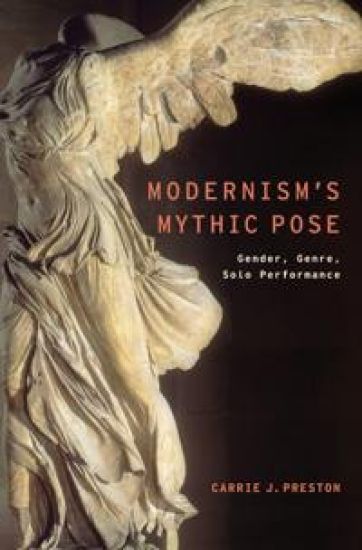
Modernism's Mythic Pose

Modernism's Mythic Pose

Carrie J. Preston

Oxford University Press Inc
2011
sidottu
Modernism's Mythic Pose recovers the tradition of Delsartism, a popular international movement that promoted bodily and vocal solo performances, particularly for women. This strain of classical-antimodernism shaped dance, film, and poetics. Its central figure, the mythic pose, expressed both skepticism and nostalgia and functioned as an ambivalent break from modernity.