Kirjailija
Carter Godwin Woodson
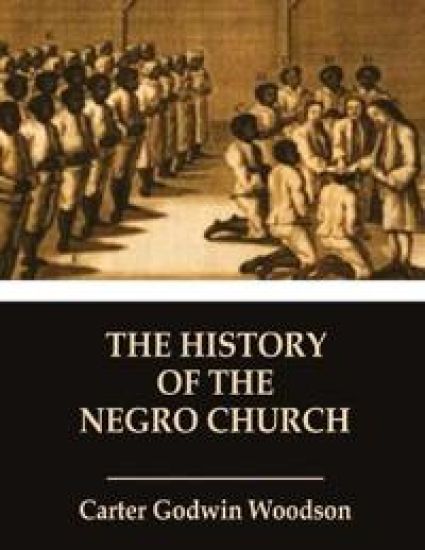
Kirjat ja teokset yhdessä paikassa: 62 kirjaa, julkaisuja vuosilta 1921–2026, suosituimpiin kuuluu The History of the Negro Church (Cram Edition). Vertaile teosten hintoja ja tarkista saatavuus suomalaisista kirjakaupoista.
62 kirjaa
Kirjojen julkaisuvuodet: 1921–2026.
The importance of the church in the life of the Negro justifies the publication of this brief account of the development of the institution. For many years the various denominations have been writing treatises bearing on their own particular work, but hitherto there has been no effort to study the achievements of all of these groups as parts of the same institution and to show the evolution of it from the earliest period to the present time. This is the objective of this volume. Whether or not the author has done this task well is a question which the public must decide. This work does not represent what he desired to make it. Many facts of the past could not be obtained for the reason that several denominations have failed to keep records and facts known to persons now active in the church could not be collected because of indifference or the failure to understand the motives of the author. Not a few church officers and ministers, however, gladly cooperated with the author in giving and seeking information concerning their denominations. Among these were Mr. Charles H. Wesley, Prof. J. A. Booker, and Dr. Walter H. Brooks. For their valuable assistance the author feels deeply grateful.
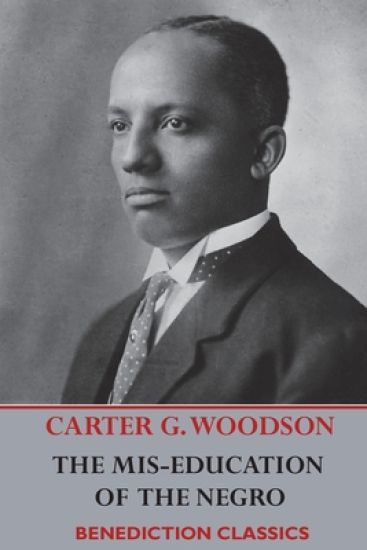
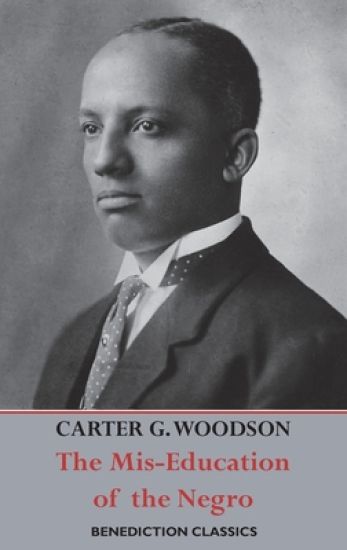
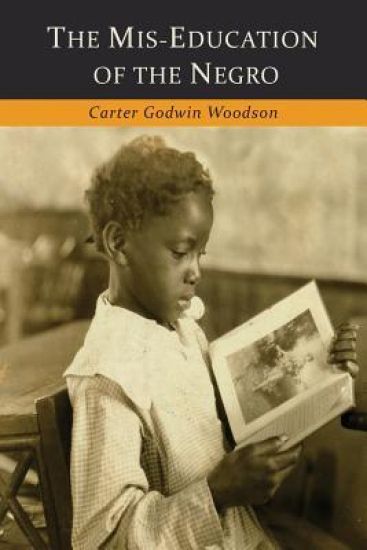
"When you control a man's thinking, you do not have to worry about his actions. You do not have to tell him not to stand here or go yonder. He will find his 'proper place' and will stay in it. You do not need to send him to the back door. He will go without being told." - Carter G. Woodson. Carter Godwin Woodson (December 19, 1875 - April 3, 1950) was an African American historian, author, journalist. He was the son of former slaves. Being eager to gain an education, he attended high school part time while mostly working in the coal mines of Kentucky. After a period of teaching, he went onto Berea College, which remarkably was co-educational, interracial, and charged no fees. Later he would attend the University of Chicago and then Harvard University, where, in 1912, he was the first child of former slaves to earn a doctorate. He had several teaching and governing roles in academia, including one in teaching in the Philippines and one as Dean of the College of Liberal Arts at Howard University, Washington D. C. Woodson passionately believed in the importance of the study of African American history and culture. His conviction that the way these topics were approached by both whites and non-whites was detrimental to the African American cause led him to found The Journal of Negro History (now The Journal of African American History). In February 1926 he launched the celebration of "Negro History Week", the precursor of Black History Month. He wrote thirty varied works on the African diaspora. He never married, quipping that he was married to his work. In The Mis-Education of the Negro, first published in 1933, Woodson argues that the Negro education of his time was aimed at maintaining the position of the Negro as a second class citizen in an apparently more benevolent way than the Jim Crow laws. It is an accessible, informative, and passionate book; essential reading for the understanding of race relations. This edition is set in a clear easy to read 11 point font.
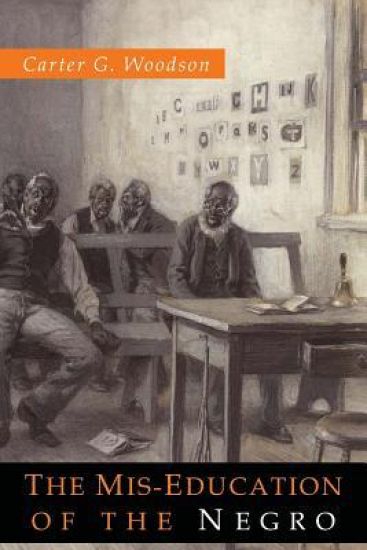
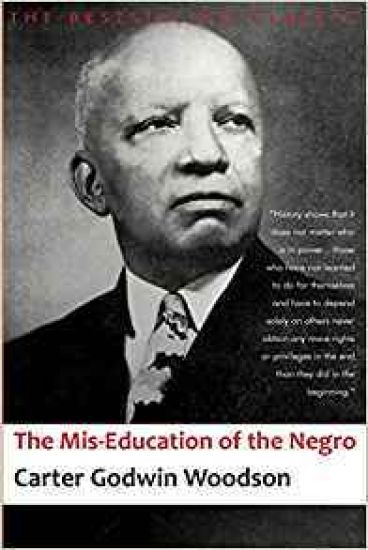
The Mis-Education of the Negro is a book originally published in 1933 by Dr. Carter G. Woodson. The thesis of Dr. Woodson's book is that blacks of his day were being culturally indoctrinated, rather than taught, in American schools. This conditioning, he claims, causes blacks to become dependent and to seek out inferior places in the greater society of which they are a part. He challenges his readers to become autodidacts and to "do for themselves", regardless of what they were taught: History shows that it does not matter who is in power... those who have not learned to do for themselves and have to depend solely on others never obtain any more rights or privileges in the end than they did in the beginning. Here is a quote from the book: "When you control a man's thinking you do not have to worry about his actions. You do not have to tell him not to stand here or go yonder. He will find his 'proper place' and will stay in it. You do not need to send him to the back door. He will go without being told. In fact, if there is no back door, he will cut one for his special benefit. His education makes it necessary."
"When you control a man's thinking you do not have to worry about his actions. You do not have to tell him not to stand here or go yonder. He will find his 'proper place' and will stay in it. You do not need to send him to the back door. He will go without being told. In fact, if there is no back door, he will cut one for his special benefit. His education makes it necessary." Overcoming extreme poverty, racism, and other adversities Carter Godwin Woodson rose through the ranks of U. S. education and academia to discover that the representation of Black History and culture was not taught to students. Furthermore, even within Black academic circles, there was apathy and resistance to setting the historical record straight. With The Mis-Education of the Negro, Woodson strove to challenge the misconceptions and cultural amnesia prevalent in his day. This controversial book was a call-to-arms for society and the educational system: "The so-called modern education, with all its defects, however, does others so much more good than it does the Negro, because it has been worked out in conformity to the needs of those who have enslaved and oppressed weaker people." He saw a system that distorted the identity of Black American students; a racist curriculum that internalized the humiliation and failures of their ancestors, rather than praising those ancestor's achievements. Mis-Education acts as a sharp critique and a pathway towards a new pedagogy that informed Black students about their own history and addressed their unique challenges. This is the book that launched a thousand afro-centric curricula across institutions and decades, and whose revolutionary message continues to act as a challenge and a warning to the current U. S. educational system.
The Education of the Negro Prior to 1861
Carter Godwin Woodson
Createspace Independent Publishing Platform
2017
nidottu
The Education of the Negro Prior to 1861 By Carter Godwin Woodson
A Century of Negro Migration
Carter Godwin Woodson
Createspace Independent Publishing Platform
2017
nidottu
A Century of Negro Migration
Carter Godwin Woodson
Createspace Independent Publishing Platform
2015
nidottu
A Century of Negro Migration By Carter Godwin Woodson
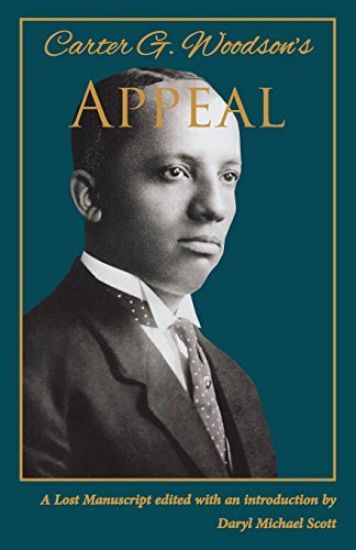
Carter G. Woodson's Appeal
Carter Godwin Woodson
Assoc for the Study of African American Life and H
2014
pokkari
The Mis-Education of the Negro
Carter Godwin Woodson
Createspace Independent Publishing Platform
2014
nidottu
The Mis-Education of the Negro is a book by Dr. Carter G. Woodson. The thesis of Dr. Woodson's book is that African Americans of his day were being culturally indoctrinated, rather than taught, in American schools. This conditioning, he claims, causes African Americans to become dependent and to seek out inferior places in the greater society of which they are a part. He challenges his readers to become autodidacts and to "do for themselves", regardless of what they were taught. Here is a quote from the book: "When you control a man's thinking you do not have to worry about his actions. You do not have to tell him not to stand here or go yonder. He will find his 'proper place' and will stay in it. You do not need to send him to the back door. He will go without being told. In fact, if there is no back door, he will cut one for his special benefit. His education makes it necessary."
The Story of the Negro Retold
Carter Godwin Woodson; Charles Harris Wesley
Literary Licensing, LLC
2012
sidottu
The Story of the Negro Retold by Carter G. Woodson is a comprehensive and enlightening book that chronicles the history of African Americans from their origins in Africa to the present day. The book is divided into several sections, each of which covers a different period in African American history. The first section explores the origins of African Americans and their early civilizations in Africa. The book then discusses the transatlantic slave trade and the brutal conditions that enslaved Africans were forced to endure. The next section covers the Civil War and Reconstruction, including the role of African Americans in the Union Army and the struggles for freedom and equality in the post-Civil War era. The book also covers the rise of Jim Crow laws and the Civil Rights Movement of the 20th century, including the Montgomery Bus Boycott, the March on Washington, and the Voting Rights Act. Throughout the book, Woodson highlights the contributions of African Americans to American society, including their cultural achievements, scientific discoveries, and political activism. Overall, The Story of the Negro Retold is an important and inspiring book that sheds light on the struggles and triumphs of African Americans throughout history. It is a must-read for anyone interested in African American history and the ongoing fight for equality and justice. This scarce antiquarian book is a facsimile reprint of the old original and may contain some imperfections such as library marks and notations. Because we believe this work is culturally important, we have made it available as part of our commitment for protecting, preserving, and promoting the world's literature in affordable, high quality, modern editions, that are true to their original work.