Kirjojen hintavertailu – 12 859 827 kirjaa ja 27 kauppaa

Kirjailija

Cary J. Nederman

Kirjat ja teokset yhdessä paikassa: 11 kirjaa, julkaisuja vuosilta 1997–2022, suosituimpiin kuuluu Den politiske filosofis historie. Vertaile teosten hintoja ja tarkista saatavuus suomalaisista kirjakaupoista.

Nimi esiintyy myös muodoissa: Cary J Nederman

11 kirjaa

Kirjojen julkaisuvuodet: 1997–2022.

Den politiske filosofis historie

Den politiske filosofis historie

Claus Bryld; Ditlev Tamm; Hans Fink; Gert Posselt; Amnon Lev; Christian Høgel; Gorm Harste; Bent Nielsen; Bodil Due; Niels Grønkjær; Heine Hansen; Jørgen Delman; Anders Dahl Sørensen; Carl Henrik Koch; Tue Emil Öhler Søvsø; Joachim Wiewiura; Esben Korsgaard Rasmussen; Kresten Lundsgaard-Leth; Clara Marie Westergaard; Saer El-Jaichi; Cary J. Nederman; June Dahy; Karen Green; Tine Ravnsted-Larsen Reeh; Anna Becker; Jakob Leth Fink

Gyldendal
2022
nidottu
Den politiske filosofis historie – frem til 1600 er den største kortlægning af den politiske filosofis historie på dansk. Bogen introducerer en bred palet af vigtige tænkere med en eller flere særligt udvalgte passager fra dennes forfatterskab, ledsaget af en indledende tekst, der sætter forfatterskabet i perspektiv. Her vil tænkeren og teksten blive introduceret i en bredere historisk kontekst, med særligt henblik på de argumenter, pointer og diskussioner, som det pågældende tekstuddrag lægger op til. Bogen illustrerer bredden og dybden i den politiske filosofis historie og giver inspiration til videre fordybelse, der rækker ud over værket selv. Bogen er blandt andre tiltænkt studerende på statskundskab, sociologi, filosofi, idéhistorie o.l., men værket vil også finde anvendelse i andre sammenhænge og henvende sig til et bredere publikum. Den politiske filosofis historie er redigeret af Joachim Wiewiura (f. 1987), ph.d. i politisk filosofi fra Københavns Universitet. Han er ansat ved Humanomics Research Centre, Institut for Kommunikation og Psykologi på Aalborg Universitet. Han har bl.a. redigeret bøgerne Offentlighedens rum (2019), Simmel: Sociologiens eventyrer (2019) og If Schools Didn’t Exist, der udkom på MIT Press i 2020.
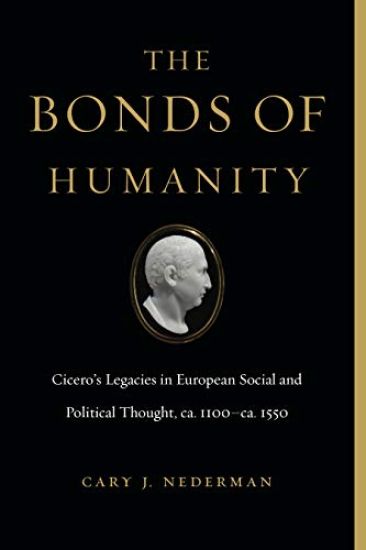
The Bonds of Humanity

The Bonds of Humanity

Cary J. Nederman

Pennsylvania State University Press
2021
pokkari

Halvin toimitettuna 39,40 €

Of the great philosophers of pagan antiquity, Marcus Tullius Cicero is the only one whose ideas were continuously accessible to the Christian West following the collapse of the Roman Empire. Yet, in marked contrast with other ancient philosophers, Cicero has largely been written out of the historical narrative on early European political thought, and the reception of his ideas has barely been studied. The Bonds of Humanity corrects this glaring oversight, arguing that the influence of Cicero’s ideas in medieval and early modern Europe was far more pervasive than previously believed. In this book, Cary J. Nederman presents a persuasive counternarrative to the widely accepted belief in the dominance of Aristotelian thought. Surveying the work of a diverse range of thinkers from the twelfth to the sixteenth century, including John of Salisbury, Brunetto Latini, Marsiglio of Padua, Christine de Pizan, and Bartolomé de Las Casas, Nederman shows that these men and women inherited, deployed, and adapted key Ciceronian themes. He argues that the rise of scholastic Aristotelianism in the thirteenth century did not supplant but rather supplemented and bolstered Ciceronian ideas, and he identifies the character and limits of Ciceronianism that distinguish it from other schools of philosophy. Highly original and compelling, this paradigm-shifting book will be greeted enthusiastically by students and scholars of early European political thought and intellectual history, particularly those engaged in the conversation about the role played by ancient and early Christian ideas in shaping the theories of later times.
The Bonds of Humanity

The Bonds of Humanity

Cary J. Nederman

Pennsylvania State University Press
2020
sidottu
Of the great philosophers of pagan antiquity, Marcus Tullius Cicero is the only one whose ideas were continuously accessible to the Christian West following the collapse of the Roman Empire. Yet, in marked contrast with other ancient philosophers, Cicero has largely been written out of the historical narrative on early European political thought, and the reception of his ideas has barely been studied. The Bonds of Humanity corrects this glaring oversight, arguing that the influence of Cicero’s ideas in medieval and early modern Europe was far more pervasive than previously believed. In this book, Cary J. Nederman presents a persuasive counternarrative to the widely accepted belief in the dominance of Aristotelian thought. Surveying the work of a diverse range of thinkers from the twelfth to the sixteenth century, including John of Salisbury, Brunetto Latini, Marsiglio of Padua, Christine de Pizan, and Bartolomé de Las Casas, Nederman shows that these men and women inherited, deployed, and adapted key Ciceronian themes. He argues that the rise of scholastic Aristotelianism in the thirteenth century did not supplant but rather supplemented and bolstered Ciceronian ideas, and he identifies the character and limits of Ciceronianism that distinguish it from other schools of philosophy. Highly original and compelling, this paradigm-shifting book will be greeted enthusiastically by students and scholars of early European political thought and intellectual history, particularly those engaged in the conversation about the role played by ancient and early Christian ideas in shaping the theories of later times.
The Western Perception of Islam Between the Middle Ages and the Renaissance

The Western Perception of Islam Between the Middle Ages and the Renaissance

Marica Costigliolo; Cary J Nederman

Pickwick Publications
2017
sidottu
In the Middle Ages, as Christian sources on the Islamic world show, Muslim culture was perceived as extremely threatening: there were many defenses of Christianity, like the treatise on the ""mistakes"" of the followers of Allah. This book shows, through an analysis of the works of Nicholas of Cusa and of other authors, that in the course of time this textual attitude was modified, as European authors aimed to point out the Christian truth in comparison with the ""falsity"" of Islamic theology, in order to reinforce Christian identity through the presupposition of its own absolute truth. The apologetic aim was gradually replaced by a systematic comparison based on partial translations of the Qur'an. The comparison with the ""other"" was also the basis for reinforcing identity, in order to demonstrate the truth and consequently the supremacy of one's own theoretical position. ""Marica Costigliolo has given us a remarkable and insightful book. It offers fresh, precise studies of Nicholas of Cusa's two extraordinary works on Christian-Muslim relations, and links them to his political and theological writings. As Costigliolo examines Nicholas's sources and discusses Renaissance and Byzantine writers on Islam, she redefines medieval interreligious dialogue, and traces shifting Western perceptions of Islam from 'enemy' to 'other.' This book thus has an ambitious agenda, and fulfills it admirably."" --Donald F. Duclow, Professor of Philosophy Emeritus, Gwynedd Mercy University Marica Costigliolo received her PhD in Political Thought from the University of Genoa, Italy. She is the author of several articles on the history of philosophy. Her research is focused on the perception of alterity in the course of history.
The Western Perception of Islam Between the Middle Ages and the Renaissance

The Western Perception of Islam Between the Middle Ages and the Renaissance

Marica Costigliolo; Cary J Nederman

Pickwick Publications
2017
pokkari
In the Middle Ages, as Christian sources on the Islamic world show, Muslim culture was perceived as extremely threatening: there were many defenses of Christianity, like the treatise on the ""mistakes"" of the followers of Allah. This book shows, through an analysis of the works of Nicholas of Cusa and of other authors, that in the course of time this textual attitude was modified, as European authors aimed to point out the Christian truth in comparison with the ""falsity"" of Islamic theology, in order to reinforce Christian identity through the presupposition of its own absolute truth. The apologetic aim was gradually replaced by a systematic comparison based on partial translations of the Qur'an. The comparison with the ""other"" was also the basis for reinforcing identity, in order to demonstrate the truth and consequently the supremacy of one's own theoretical position. ""Marica Costigliolo has given us a remarkable and insightful book. It offers fresh, precise studies of Nicholas of Cusa's two extraordinary works on Christian-Muslim relations, and links them to his political and theological writings. As Costigliolo examines Nicholas's sources and discusses Renaissance and Byzantine writers on Islam, she redefines medieval interreligious dialogue, and traces shifting Western perceptions of Islam from 'enemy' to 'other.' This book thus has an ambitious agenda, and fulfills it admirably."" --Donald F. Duclow, Professor of Philosophy Emeritus, Gwynedd Mercy University Marica Costigliolo received her PhD in Political Thought from the University of Genoa, Italy. She is the author of several articles on the history of philosophy. Her research is focused on the perception of alterity in the course of history.
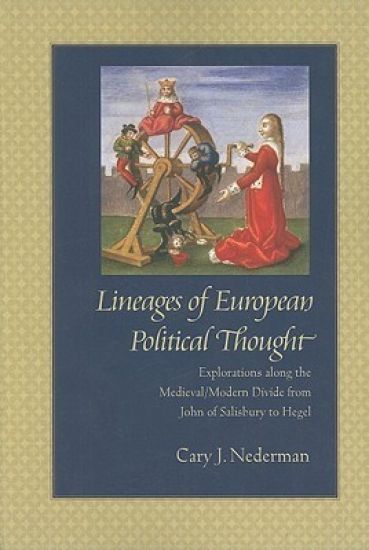
Lineages of European Political Thought

Lineages of European Political Thought

Cary J. Nederman

The Catholic University of America Press
2009
nidottu
This book examines some of the salient historiographical and conceptual issues that animate current scholarly debates about the nature of the medieval contribution to modern Western political ideas. On the one hand, scholars who subscribe to the 'Baron thesis' concerning civic humanism have asserted that the break between medieval and modern modes of political thinking formed an unbridgeable chasm associated with the development of an entirely new framework at the dawn of the Florentine Renaissance. Others have challenged this hypothesis, replacing it with another extreme: an unbroken continuity in the intellectual terrain between the twelfth and the seventeenth centuries (or later). The present book seeks to qualify both of these positions. Cary J. Nederman argues for a more nuanced historiography of intellectual continuity and change that depends upon analyzing a host of contextual as well as philosophical factors to account for the emergence of the European tradition of political theory in the medieval and early modern periods. He finds that categories such as 'medieval' and 'modern' can and should be usefully deployed, yet always with the understanding that they are provisional and potentially fluid. The book opens with an introduction that lays out the main issues and sources of the debate, followed by five sets of interrelated chapters. The first section critically assesses some of the leading scholars who have contributed to the current understanding of the relationship between medieval and modern ideas. The central part of the book includes three sections that address salient themes that illuminate and illustrate continuity and change: Dissent and Power, Empire and Republic, and Political Economy. The volume closes with a few examples of the ways in which medieval political doctrines were absorbed into and transformed during the modern period up to the nineteenth century.
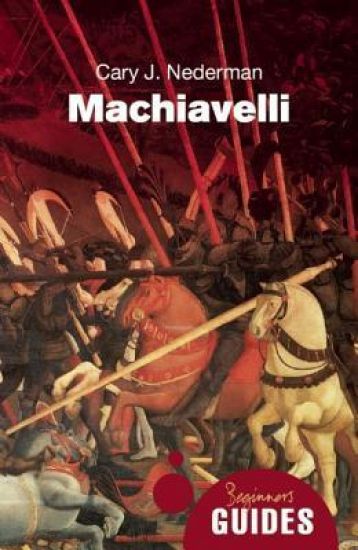
Machiavelli

Machiavelli

Cary J. Nederman

Oneworld Publications
2009
pokkari
Machiavelli has been among the most commented upon, criticized and feared thinkers of the modern world. Infamous for his support of brutality and repression as valid political instruments, he is often portrayed as the pantomime villain of political theorists. In this whirlwind tour of Machiavelli’s writings and eventful life, Nederman highlights the complexities in his thought, showing that he actually advocated democracy as much as dictatorship, debate as much as violence, depending upon prevailing political conditions.
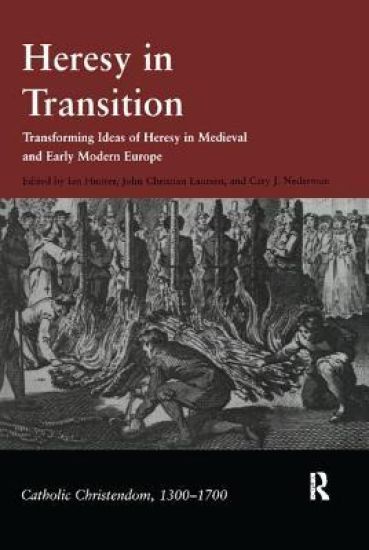
Heresy in Transition

Heresy in Transition

John Christian Laursen; Cary J. Nederman

Ashgate Publishing Limited
2005
sidottu
The concept of heresy is deeply rooted in Christian European culture. The palpable increase in incidences of heresy in the Middle Ages may be said to directly relate to the Christianity's attempts to define orthodoxy and establish conformity at its centre, resulting in the sometimes forceful elimination of Christian sects. In the transition from medieval to early modern times, however, the perception of heresy underwent a profound transformation, ultimately leading to its decriminalization and the emergence of a pluralistic religious outlook. The essays in this volume offer readers a unique insight into this little-understood cultural shift. Half of the chapters investigate the manner in which the church and its attendant civil authorities defined and proscribed heresy, whilst the other half focus on the means by which early modern writers sought to supersede such definition and proscription. The result of these investigations is a multifaceted historical account of the construction and serial reconstruction of one of the key categories of European theological, juristic and political thought. The contributors explore the role of nationalism and linguistic identity in constructions of heresy, its analogies with treason and madness, the role of class and status in the responses to heresy. In doing so they provide fascinating insights into the roots of the historicization of heresy and the role of this historicization in the emergence of religious pluralism.
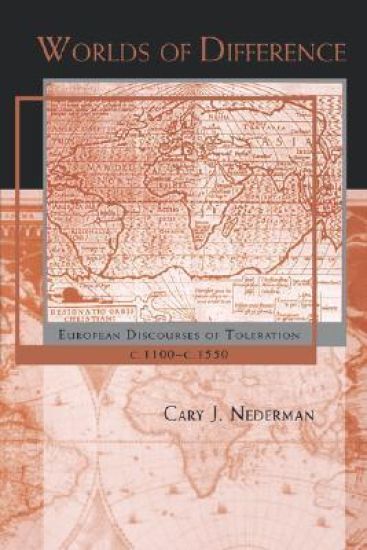
Worlds of Difference

Worlds of Difference

Cary J. Nederman

Pennsylvania State University Press
2000
pokkari
Toleration has become a keystone of liberal political philosophy, but with liberalism under attack today as inadequate for dealing with all the problems of a pluralistic world, other resources are needed. Cary Nederman directs our attention to the creative thinking about toleration that preceded the rise of liberalism and canvasses the diverse ideas proposed then within Christianity as a response to religious, cultural, national, and ethnic differences.
Worlds of Difference

Worlds of Difference

Cary J. Nederman

Pennsylvania State University Press
2000
sidottu
Toleration has become a keystone of liberal political philosophy, but with liberalism under attack today as inadequate for dealing with all the problems of a pluralistic world, other resources are needed. Cary Nederman directs our attention to the creative thinking about toleration that preceded the rise of liberalism and canvasses the diverse ideas proposed then within Christianity as a response to religious, cultural, national, and ethnic differences.
Medieval Aristotelianism and its Limits
This volume deals with the development of moral and political philosophy in the medieval West. Professor Nederman is concerned to trace the continuing influence of classical ideas, but emphasises that the very diversity and diffuseness of medieval thought shows that there is no single scheme that can account for the way these ideas were received, disseminated and reformulated by medieval ethical and political theorists.