

Kirjailija
Catherine Coquery-Vidrovitch
Kirjat ja teokset yhdessä paikassa: 14 kirjaa, julkaisuja vuosilta 1972–2024, suosituimpiin kuuluu Rébellions et Révolutions au Zaïre (1963-1965). Vertaile teosten hintoja ja tarkista saatavuus suomalaisista kirjakaupoista.
14 kirjaa
Kirjojen julkaisuvuodet: 1972–2024.

L'histoire africaine en Afrique
Chantal Chanson-Jabeur; Catherine Coquery-Vidrovitch
Groupe Afrique Noire
2022
nidottu


Politiques d'équipement et services urbains dans les villes du Sud
Chantal Chanson-Jabeur; Catherine Coquery-Vidrovitch; Odile Goerg
Editions L'Harmattan
2020
nidottu
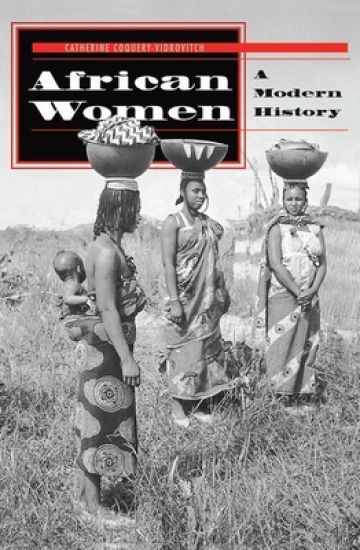
Over the last century, the social and economic roles played by African women have evolved dramatically. Long confined to home and field, overlooked by their menfolk and missionaries alike, African women worked, thought, dreamed, and struggled. They migrated to the cities, invented new jobs, and activated the so-called informal economy to become Afr

Africa and the Africans in the Nineteenth Century: A Turbulent History
Catherine Coquery-Vidrovitch; Mary Baker
Routledge
2009
nidottu
Halvin toimitettuna 84,20 €
Most histories seek to understand modern Africa as a troubled outcome of nineteenth century European colonialism, but that is only a small part of the story. In this celebrated book, beautifully translated from the French edition, the history of Africa in the nineteenth century unfolds from the perspective of Africans themselves rather than the European powers. It was above all a time of tremendous internal change on the African continent. Great jihads of Muslim conquest and conversion swept over West Africa. In the interior, warlords competed to control the internal slave trade. In the east, the sultanate of Zanzibar extended its reach via coastal and interior trade routes. In the north, Egypt began to modernize while Algeria was colonized. In the south, a series of forced migrations accelerated, spurred by the progression of white settlement. Through much of the century African societies assimilated and adapted to the changes generated by these diverse forces. In the end, the West's technological advantage prevailed and most of Africa fell under European control and lost its independence. Yet only by taking into account the rich complexity of this tumultuous past can we fully understand modern Africa from the colonial period to independence and the difficulties of today.

Africa and the Africans in the Nineteenth Century: A Turbulent History
Catherine Coquery-Vidrovitch; Mary Baker
Routledge
2009
sidottu
Most histories seek to understand modern Africa as a troubled outcome of nineteenth century European colonialism, but that is only a small part of the story. In this celebrated book, beautifully translated from the French edition, the history of Africa in the nineteenth century unfolds from the perspective of Africans themselves rather than the European powers. It was above all a time of tremendous internal change on the African continent. Great jihads of Muslim conquest and conversion swept over West Africa. In the interior, warlords competed to control the internal slave trade. In the east, the sultanate of Zanzibar extended its reach via coastal and interior trade routes. In the north, Egypt began to modernize while Algeria was colonized. In the south, a series of forced migrations accelerated, spurred by the progression of white settlement. Through much of the century African societies assimilated and adapted to the changes generated by these diverse forces. In the end, the West's technological advantage prevailed and most of Africa fell under European control and lost its independence. Yet only by taking into account the rich complexity of this tumultuous past can we fully understand modern Africa from the colonial period to independence and the difficulties of today.

History of African Cities South of the Sahara
Catherine Coquery-Vidrovitch
Markus Wiener Publishing Inc
2005
nidottu
Urban cities have existed in Africa since antiquity. Using archival records and field research, this text analyses and describes the rich history of African cities from long before colonization began until the time of urban reorganization during industrialization.
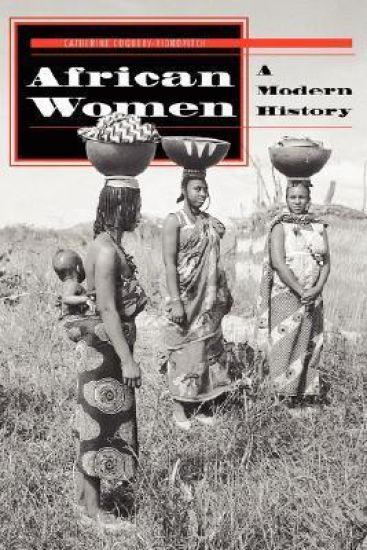
Over the last century, the social and economic roles played by African women have evolved dramatically. Long confined to home and field, overlooked by their menfolk and missionaries alike, African women worked, thought, dreamed, and struggled. They migrated to the cities, invented new jobs, and activated the so-called informal economy to become Africa's economic and social focal point. As a result, despite their lack of education and relatively low status, women are now Africa's best hope for the future. This sweeping and innovative book is the first to reconstruct the full history of women in sub-Saharan Africa. Tracing the lot of African women from the eve of the colonial period to the present, Catherine Coquery-Vidrovitch explores the stages and forms of women's collective roles as well as their individual emancipation through revolts, urban migrations, economic impacts, social claims, political strength, and creativity. Comparing case studies drawn from throughout the region, she sheds light on issues ranging from gender to economy, politics, society, and culture. Utilizing an impressive array of sources, she highlights broad general patterns without overlooking crucial local variations. With its breadth of coverage and clear analysis of complex questions, this book is destined to become a standard text for scholars and students alike.

This masterful synthesis explains how Africa has come to be a land torn by incessant conflict among its impoverished peoples and countries, a continent living through the gravest social revolution of its history, experiencing the world's fastest demographic growth. Weaving together four major themes - population, political power, the peasantry, and the new growth of the cities - Coquery-Vidrovitch demonstrates the need to recognize the extremely complex heritage of African societies if one is to understand the present or act upon the future of the continent.

Rébellions et Révolutions au Zaïre (1963-1965)
Catherine Coquery-Vidrovitch
Editions LHarmattan
1987
Nidottu

Rébellions et Révolutions au Zaïre (1963-1965)
Catherine Coquery-Vidrovitch
Editions LHarmattan
1987
Nidottu

Le Congo au temps des grandes compagnies concessionnaires 1898-1930
Catherine Coquery-Vidrovitch
Walter de Gruyter
1972
sidottu