Kirjojen hintavertailu – 12 903 725 kirjaa ja 27 kauppaa

Kirjailija

Catherine D. Marcum

Kirjat ja teokset yhdessä paikassa: 8 kirjaa, julkaisuja vuosilta 2016–2024, suosituimpiin kuuluu A Guide to Graduate School Success for Criminal Justice, Public Safety, and Administration of Justice Students. Vertaile teosten hintoja ja tarkista saatavuus suomalaisista kirjakaupoista.

8 kirjaa

Kirjojen julkaisuvuodet: 2016–2024.

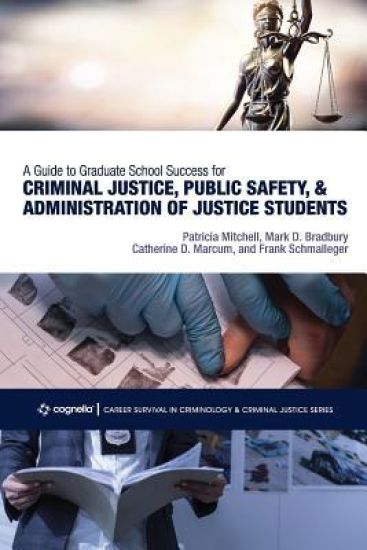
A Guide to Graduate School Success for Criminal Justice, Public Safety, and Administration of Justice Students

A Guide to Graduate School Success for Criminal Justice, Public Safety, and Administration of Justice Students

Frank Schmalleger; Patricia Mitchell; Catherine D. Marcum; Mark Bradbury

Cognella, Inc
2018
nidottu
A Guide to Graduate School Success for Criminal Justice, Public Safety, and Administration of Justice Students helps criminal justice undergraduates think through the myriad decisions related to pursuing a graduate or related degree. The book begins by encouraging readers to assess their career goals to determine if graduate school is the logical next step, then provides practical advice for selecting a school and a program. It emphasizes the behaviors and attitudes imperative for success and suggests students treat every interaction like an interview or training opportunity. The text includes practical advice for developing key skill sets, including effective information retention, quality notetaking, communicating well through the written word, and more. The book closes by addressing how the choices a student makes in their personal or professional life during graduate school and beyond can influence their chosen career path, either positively or negatively. A Guide to Graduate School Success for Criminal Justice, Public Safety, and Administration of Justice Students is an ideal resource for any undergraduate student interested in pursuing a graduate or related degree.
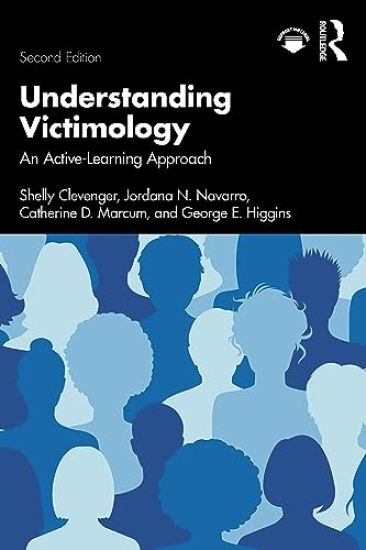
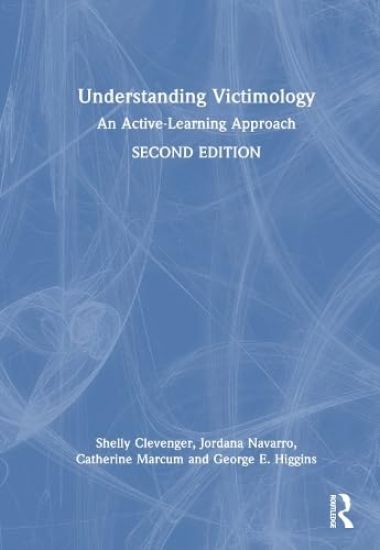
Understanding Victimology

Understanding Victimology

Shelly Clevenger; Jordana N. Navarro; Catherine D. Marcum; George E. Higgins

TAYLOR FRANCIS LTD
2024
nidottu
Understanding Victimology: An Active Learning Approach is the only textbook with extensive discussion of both online and offline victimization reinforced by group and individual learning activities. Our textbook offers instructors a variety of active learning exercises – in the book itself and in the authors’ ancillaries – that engage students in the material and shed light on the experiences of marginalized social groups. Through these activities, students become engaged with the material at a higher level of learning. They learn how victimization happens and the challenges people who experience crime face in acquiring assistance from the criminal-legal system at a more intimate level instead of simply reading about it. Students also build their abilities to work with others in a collaborative learning environment, encouraging professional socialization for the future. The chapters in this second edition address gaps in information typically presented in victimology that ignore prevention or intervention, even though these topics are currently at the forefront of the national conversation going on about sexual violence in higher education. New to this edition are added coverage of immigrants and minorities and a new chapter on the media and victimization. Instructor resources are available online. Suitable for undergraduate courses in victimology, this book also serves the needs of sociology and women’s studies courses and can be taught university-wide as part of diversity and inclusion initiatives.
Understanding Victimology

Understanding Victimology

Shelly Clevenger; Jordana N. Navarro; Catherine D. Marcum; George E. Higgins

TAYLOR FRANCIS LTD
2024
sidottu

Halvin toimitettuna 240,40 €

Understanding Victimology: An Active Learning Approach is the only textbook with extensive discussion of both online and offline victimization reinforced by group and individual learning activities. Our textbook offers instructors a variety of active learning exercises – in the book itself and in the authors’ ancillaries – that engage students in the material and shed light on the experiences of marginalized social groups. Through these activities, students become engaged with the material at a higher level of learning. They learn how victimization happens and the challenges people who experience crime face in acquiring assistance from the criminal-legal system at a more intimate level instead of simply reading about it. Students also build their abilities to work with others in a collaborative learning environment, encouraging professional socialization for the future. The chapters in this second edition address gaps in information typically presented in victimology that ignore prevention or intervention, even though these topics are currently at the forefront of the national conversation going on about sexual violence in higher education. New to this edition are added coverage of immigrants and minorities and a new chapter on the media and victimization. Instructor resources are available online. Suitable for undergraduate courses in victimology, this book also serves the needs of sociology and women’s studies courses and can be taught university-wide as part of diversity and inclusion initiatives.
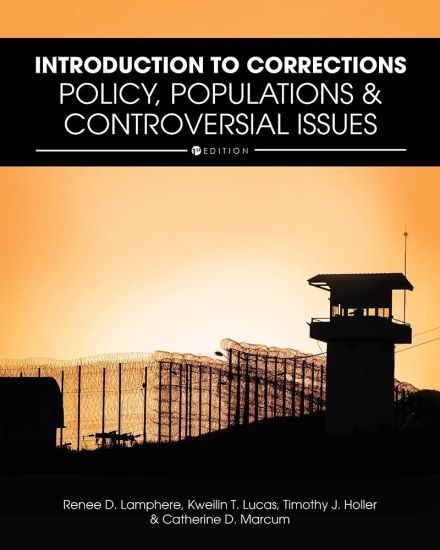
Introduction to Corrections

Introduction to Corrections

Renee D. Lamphere; Kweilin T. Lucas; Timothy J. Holler; Catherine D. Marcum

Cognella, Inc
2021
nidottu
Introduction to Corrections: Policy, Populations, and Controversial Issues provides students with a holistic introduction to contemporary corrections practice and the opportunities and challenges they are likely to face within their future professional careers. The text is divided into three distinct units. Unit I examines the evolution of contemporary corrections and philosophies of punishment, correctional administration, probation and parole, and reentry and reintegration. In Unit II, students learn about the constitutional rights of incarcerated individuals, prison culture, and correctional programming. Dedicated chapters explore the characteristics of incarcerated female, juvenile, and vulnerable populations—including LGBTQ persons, elderly persons, and individuals who suffer from mental illness—as well as how these characteristics can impact their incarceration experiences. The final unit speaks to modern controversies in corrections such as racial equity, wrongful conviction, the death penalty, and the prison industrial complex. Throughout, case studies, discussion questions, and application exercises facilitate greater student learning and retention. Written to provide students with a solid knowledge base within the discipline, Introduction to Corrections is an ideal textbook for courses in corrections, administration of justice, and criminal justice.
Introduction to Corrections: Policy, Populations, and Controversial Issues

Introduction to Corrections: Policy, Populations, and Controversial Issues

Renee Lamphere; Kweilin T. Lucas; Catherine D. Marcum

Cognella Academic Publishing
2021
sidottu
Introduction to Corrections: Policy, Populations, and Controversial Issues provides students with a holistic introduction to contemporary corrections practice and the opportunities and challenges they are likely to face within their future professional careers. The text is divided into three distinct units. Unit I examines the evolution of contemporary corrections and philosophies of punishment, correctional administration, probation and parole, and reentry and reintegration. In Unit II, students learn about the constitutional rights of incarcerated individuals, prison culture, and correctional programming. Dedicated chapters explore the characteristics of incarcerated female, juvenile, and vulnerable populations-including LGBTQ persons, elderly persons, and individuals who suffer from mental illness-as well as how these characteristics can impact their incarceration experiences. The final unit speaks to modern controversies in corrections such as racial equity, wrongful conviction, the death penalty, and the prison industrial complex. Throughout, case studies, discussion questions, and application exercises facilitate greater student learning and retention. Written to provide students with a solid knowledge base within the discipline, Introduction to Corrections is an ideal textbook for courses in corrections, administration of justice, and criminal justice.
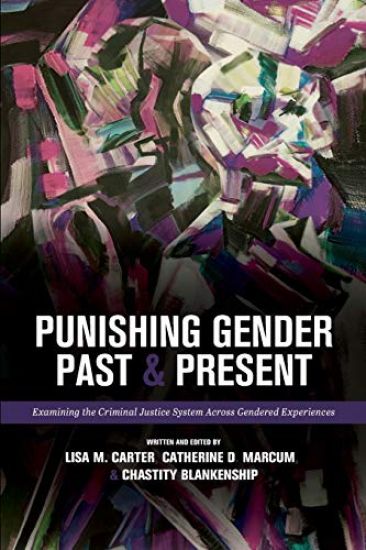
Punishing Gender Past and Present

Punishing Gender Past and Present

Lisa M. Carter; Catherine D. Marcum; Chastity Blankenship

Cognella, Inc
2020
nidottu
Featuring contributed chapters written by experts within the discipline alongside valuable original material, Punishing Gender Past and Present: Examining the Criminal Justice System across Gendered Experiences exposes the disparities in how individuals within the system are treated according to gender. In Unit 1, chapters cover police misconduct victimization, the experiences of female sex workers, and discrimination and sexual harassment endured by female police officers. Unit II speaks to the sentencing and punishing of incarcerated women, differential treatment by the courts, delinquency and criminalization of girls, and disparities in death sentencing and execution according to gender. In Unit III, readers learn about gender and victimization with chapters that discuss intimate partner violence, sexual assault, femicide, and more. Unit IV addresses the reformatory model for women and girls, the impact of incarceration on fathers and their families, and issues related to LGBTQI offenders and prison management. Unit V addresses special populations, including mothers in prison, female sex offenders, male victims, white-collar offenders, and individuals with mental health issues. The final unit is dedicated to future considerations, including inclusivity and equity in criminal justice programming and practices across genders, as well as considering boys and men in the feminist pathways perspective.
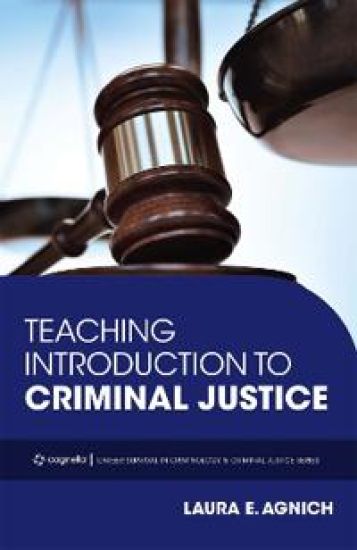
Teaching Introduction to Criminal Justice

Teaching Introduction to Criminal Justice

Laura E. Agnich; Catherine D. Marcum

Cognella, Inc
2018
nidottu
Teaching Introduction to Criminal Justice provides instructors with evidence-based and innovative strategies for teaching introductory criminal justice courses. The text emphasizes the importance of introductory criminal justice courses in providing a strong educational foundation for criminal justice and criminology majors. It offers instructors teaching tools and strategies to engage students and help them learn a wide range of content efficiently and effectively. The book begins with discussions about curriculum planning, student-centered pedagogy, and selecting effective course materials. Subsequent chapters address creating a course syllabus that clearly states course goals, learning objectives, and course policies, as well as how to approach the first day of class and set the tone for the term. The book offers strategies for teaching large classes, teaching hybrid or online classes, and implementing innovative teaching and learning methods, including problem-based, collaborative, and experiential learning. It concludes with an overview of various approaches to student assessment, including backward design, formative and summative assessments, and high- and low-stakes assessments. Featuring practical advice and innovative teaching approaches, Teaching Introduction to Criminal Justice is an effective resource for novice and tenured instructors alike.
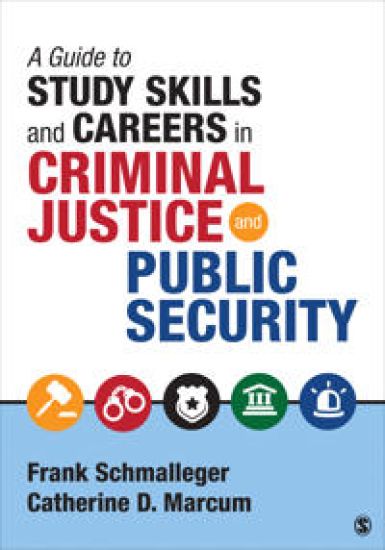
A Guide to Study Skills and Careers in Criminal Justice and Public Security

A Guide to Study Skills and Careers in Criminal Justice and Public Security

Frank A. Schmalleger; Catherine D. Marcum

SAGE Publications Inc
2016
nidottu
"…I feel it is an excellent supplement to textbooks that discuss process, concepts, theories and all elements of the criminal justice system. This book would only improve student chances of success." —Terry Campbell, Kaplan University A Guide to Study Skills and Careers in Criminal Justice and Public Security is the ultimate how-to resource for success in the study of criminal justice. Renowned author Frank Schmalleger, who has over 40 years of field experience, has teamed up with researcher and educator Catherine D. Marcum to introduce students to the field of criminal justice, break down its many components, and describe a variety of employment opportunities available to criminal justice graduates. Students will learn how to effectively approach the study of criminal justice; communicate successfully with professors, peers, and potential employers; choose classes that will assist with career goals; develop good study habits and critical thinking skills; and write effectively in criminal justice. Additionally, as their academic careers advance, students will gain insights into how to best prepare for successful careers. .