Kirjojen hintavertailu – 12 859 828 kirjaa ja 27 kauppaa

Kirjailija

Catherine Drinker Bowen

Kirjat ja teokset yhdessä paikassa: 6 kirjaa, julkaisuja vuosilta 1986–2012, suosituimpiin kuuluu Four Talks for Bibliophiles. Vertaile teosten hintoja ja tarkista saatavuus suomalaisista kirjakaupoista.

6 kirjaa

Kirjojen julkaisuvuodet: 1986–2012.

Friends and Fiddlers: Memoirs

Friends and Fiddlers: Memoirs

Catherine Drinker Bowen

Literary Licensing, LLC
2011
sidottu
""Friends and Fiddlers"" is a memoir written by Catherine Drinker Bowen, a Pulitzer Prize-winning author. The book is a collection of personal anecdotes and memories from Bowen's life, including her experiences with some of the most prominent literary and musical figures of the 20th century. Bowen writes about her friendships with authors such as Ernest Hemingway, James Joyce, and Thomas Mann, as well as her encounters with musicians like Pablo Casals and Jascha Heifetz. The book also details Bowen's own career as a writer, including her struggles to balance her personal life with her professional aspirations. Throughout the memoir, Bowen reflects on the role that friendship and music have played in her life, and how they have helped her navigate the challenges of both her personal and professional life. ""Friends and Fiddlers"" is a compelling and intimate portrait of a remarkable woman and her relationships with some of the most influential figures of her time. This scarce antiquarian book is a facsimile reprint of the old original and may contain some imperfections such as library marks and notations. Because we believe this work is culturally important, we have made it available as part of our commitment for protecting, preserving, and promoting the world's literature in affordable, high quality, modern editions, that are true to their original work.
Francis Bacon

Francis Bacon

Catherine Drinker Bowen

Fordham University Press
1993
pokkari
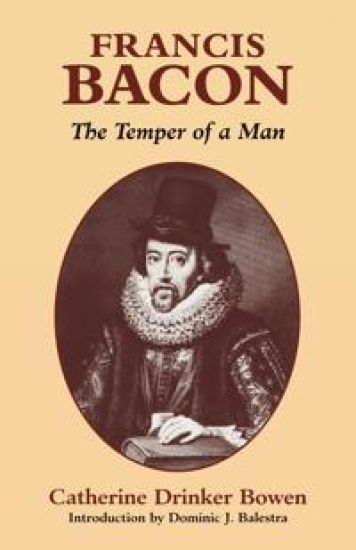
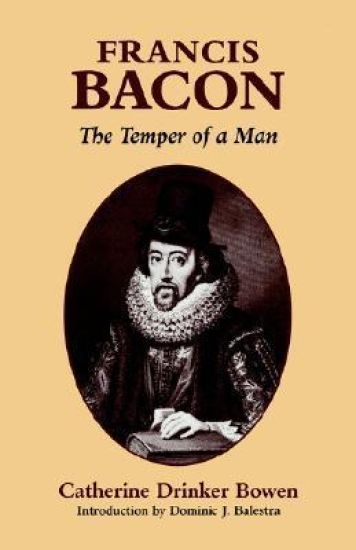
The portrait Bowen paints of this controversial man, Francis Bacon (1561-1626), balances the outward life and actions of Bacon with the seemingly contradictory aspects of his refined philosophical reflections. When Bacon's more notorious attributes are set in historical context, his actions seem less personally vindictive against the backdrop of an entire age seemingly devoted to the very vanity and ingenuousness with which he is so often accused. As Lord Chancellor of England, Bacon was impeached by Parliament for taking bribes in office, convicted, and banished from London an the law courts. In a prayer Bacon composed during the interval following his punishment, he reveals that the dichotomy of his existence was no more deeply felt than by himself, and he readily admits that his obligations to society were not as suited to his nature as the study of philosophy, science and law. Modem scholars hold Bacon's philosophical works, "Novum Organum", "Advancement of Learning" and "New Atlantis" as his greatest achievements. Bowen's story reveals a man whose genius it was not to immerse himself in the rigour of scientific experimentation, but to realise what questions science should ask, and thereby reach beyond the status quo and appeal to the wider imagination of his generation. In his writings, Bacon challenged established social and religious orders, raised questions about mind/body relation and the role of dreams, and foresaw the day when scientists at colleges and universities would share experimentation. It is Bacon's legacy to have gone beyond his age and, out of pure intuition, anticipate the concerns of future generations.

Francis Bacon

Francis Bacon

Catherine Drinker Bowen

Fordham University Press
1993
sidottu
The portrait Bowen paints of this controversial man, Francis Bacon (1561-1626), balances the outward life and actions of Bacon with the seemingly contradictory aspects of his refined philosophical reflections. When Bacon's more notorious attributes are set in historical context, his actions seem less personally vindictive against the backdrop of an entire age seemingly devoted to the very vanity and ingenuousness with which he is so often accused. As Lord Chancellor of England, Bacon was impeached by Parliament for taking bribes in office, convicted, and banished from London an the law courts. In a prayer Bacon composed during the interval following his punishment, he reveals that the dichotomy of his existence was no more deeply felt than by himself, and he readily admits that his obligations to society were not as suited to his nature as the study of philosophy, science and law. Modem scholars hold Bacon's philosophical works, "Novum Organum", "Advancement of Learning" and "New Atlantis" as his greatest achievements. Bowen's story reveals a man whose genius it was not to immerse himself in the rigour of scientific experimentation, but to realise what questions science should ask, and thereby reach beyond the status quo and appeal to the wider imagination of his generation. In his writings, Bacon challenged established social and religious orders, raised questions about mind/body relation and the role of dreams, and foresaw the day when scientists at colleges and universities would share experimentation. It is Bacon's legacy to have gone beyond his age and, out of pure intuition, anticipate the concerns of future generations.