Kirjojen hintavertailu – 12 859 819 kirjaa ja 27 kauppaa

Kirjailija

Catherine E Karkov

Kirjat ja teokset yhdessä paikassa: 10 kirjaa, julkaisuja vuosilta 2001–2022, suosituimpiin kuuluu Cross and Culture in Anglo-Saxon England. Vertaile teosten hintoja ja tarkista saatavuus suomalaisista kirjakaupoista.

Nimi esiintyy myös muodoissa: Catherine E. Karkov

10 kirjaa

Kirjojen julkaisuvuodet: 2001–2022.

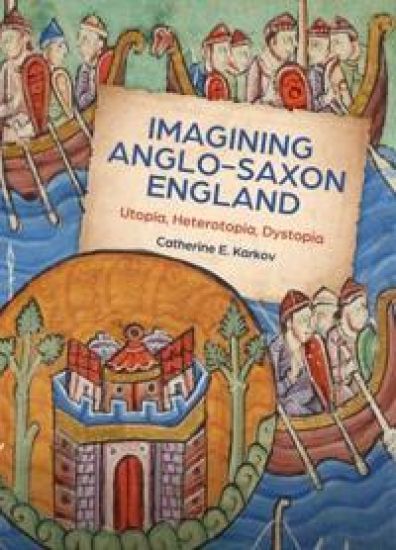
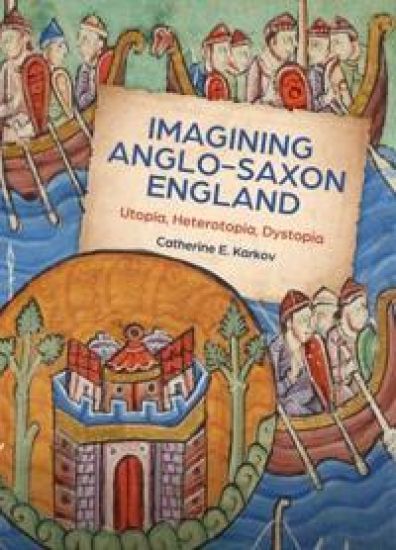
Imagining Anglo-Saxon England

Imagining Anglo-Saxon England

Catherine E Karkov

BOYDELL BREWER LTD
2022
pokkari
A fresh approach to the construction of "Anglo-Saxon England" and its depiction in art and writing. This book explores the ways in which early medieval England was envisioned as an ideal, a placeless, and a conflicted geography in works of art and literature from the eighth to the eleventh century and in their modern scholarly and popular afterlives. It suggests that what came to be called "Anglo-Saxon England" has always been an imaginary place, an empty space into which ideas of what England was, or should have been, or should be, have been inserted from the arrival of peoples from the Continent in the fifth and sixth centuries to the arrival of the self-named "alt-right" in the twenty-first. It argues that the political and ideological violence that was a part of the origins of England as a place and the English as a people has never been fully acknowledged; instead, the island was reimagined as a chosen land home to a chosen people, the gens Anglorum. Unacknowledged violence, however, continued to haunt English history and culture. Through her examination here of the writings of Bede and King Alfred, the Franks Casket and the illuminated Wonders of the East, and the texts collected together to form the Beowulf manuscript, the author shows how this continues to haunt "Anglo-Saxon Studies" as a discipline and Anglo-Saxonism as an ideology, from the antiquarian studies of the sixteenth century through to the nationalistic and racist violence of today.
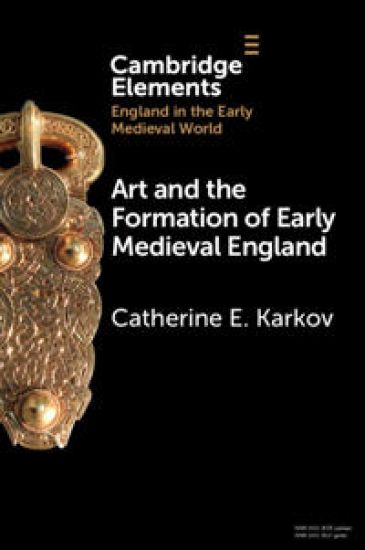
Art and the Formation of Early Medieval England

Art and the Formation of Early Medieval England

Catherine E. Karkov

Cambridge University Press
2022
pokkari
This Element covers the art produced in early medieval England from the departure of the Romans to the early twelfth century, an art that shows the input of multi-ethnic artists, patrons, and influences as it develops over the centuries. Art in early medieval England is an art of migrants and colonisers and the Element considers the way in which it was defined and developed by the different groups that travelled to or settled on the island. It also explores some of the key forms and images that define the art of the period and the role of both material and artist/patron in their creation. Art is an expression of identity, whether individual, regional, national, religious, or institutional, and this volume sheds light on the way art in early medieval England was and continues to be used to define particular identities, including that of the island on which it was produced.
Disturbing Times

Disturbing Times

Catherine E Karkov

Punctum Books
2020
pokkari
From Kehinde Wiley to W. E. B. Du Bois, from Nubia to Cuba, Willie Doherty's terror in ancient landscapes to the violence of institutional Neo-Gothic, Reagan's AIDS policies to Beowulf fanfiction, this richly diverse volume brings together art historians and literature scholars to articulate a more inclusive, intersectional medieval studies. It will be of interest to students working on the diaspora and migration, white settler colonialism and pogroms, Indigenous studies and decolonial methodology, slavery, genocide, and culturecide. The authors confront the often disturbing legacies of medieval studies and its current failures to own up to those, and also analyze fascist, nationalist, colonialist, anti-Semitic, and other ideologies to which the medieval has been and is yoked, collectively formulating concrete ethical choices and aims for future research and teaching. In the face of rising global fascism and related ideological mobilizations, contemporary and past, and of cultural heritage and history as weapons of symbolic and physical oppression, this volume's chapters on Byzantium, Medieval Nubia, Old English, Hebrew, Old French, Occitan, and American and European medievalisms examine how educational institutions, museums, universities, and individuals are shaped by ethics and various ideologies in research, collecting, and teaching.
Imagining Anglo-Saxon England

Imagining Anglo-Saxon England

Catherine E Karkov

The Boydell Press
2020
sidottu
A fresh approach to the construction of "Anglo-Saxon England" and its depiction in art and writing. This book explores the ways in which early medieval England was envisioned as an ideal, a placeless, and a conflicted geography in works of art and literature from the eighth to the eleventh century and in their modern scholarly and popular afterlives. It suggests that what came to be called "Anglo-Saxon England" has always been an imaginary place, an empty space into which ideas of what England was, or should have been, or should be, have been inserted from the arrival of peoples from the Continent in the fifth and sixth centuries to the arrival of the self-named "alt-right" in the twenty-first. It argues that the political and ideological violence that was a part of the origins of England as a place and the English as a people has never been fully acknowledged; instead, the island was reimagined as a chosen land home to a chosen people, the gens Anglorum. Unacknowledged violence, however, continued to haunt English history and culture. Through her examination here of the writings of Bede and King Alfred, the Franks Casket and the illuminated Wonders of the East, and the texts collected together to form the Beowulf manuscript, the author shows how this continues to haunt "Anglo-Saxon Studies" as a discipline and Anglo-Saxonism as an ideology, from the antiquarian studies of the sixteenth century through to the nationalistic and racist violence of today.
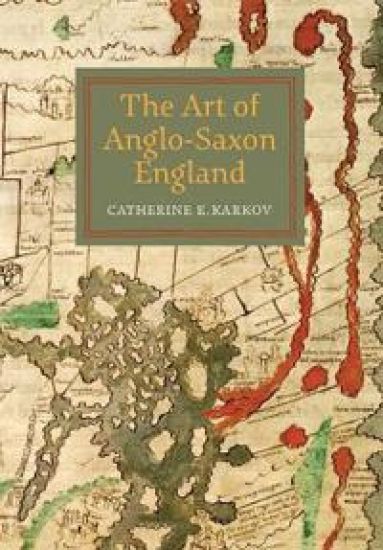
The Art of Anglo-Saxon England

The Art of Anglo-Saxon England

Catherine E Karkov

The Boydell Press
2016
pokkari
A fresh appraisal of the art of Anglo-Saxon England, focusing on art as an aesthetic vehicle and art as an active political force. Two particular perspectives inform this wide-ranging and richly illustrated survey of the art produced in England, or by English artists, between c. 600 and c.1100, in a variety of media, manuscripts, stone and wooden sculpture, ivory carving, textiles, and architecture. Firstly, from a post-colonial angle, it examines the way art can both create and narrate national and cultural identity over the centuries during which England was coming into being, moving from Romano-Britain to Anglo-Saxon England to Anglo-Scandinavian England to Anglo-Norman England. Secondly, it treats Anglo-Saxon art as works of art, works that have both an aesthetic and an emotional value, rather than as simply passive historical or archaeological objects. This double focus on art as an aesthetic vehicle and art as an active political force allows us to ask questions not only about what makes something a work of art, but what makes itendure as such, as well as questions about the work that art does in the creation of peoples, cultures, nations and histories. Professor Catherine Karkov teaches in the School of Fine Art, University of Leeds.
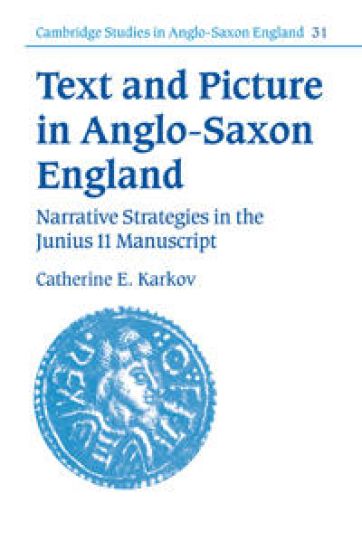
Text and Picture in Anglo-Saxon England

Text and Picture in Anglo-Saxon England

Catherine E. Karkov

Cambridge University Press
2009
pokkari
This book explores the complex interrelationship between texts and drawings in the late tenth or early eleventh-century Junius II manuscript, the only surviving illustrated Anglo-Saxon poetic manuscript. The book, which contains a plate section of sixty-one illustrations, focuses on the way in which the drawings both illustrate the text and translate it into a new visual language. Poems and illustrations work to create a carefully crafted and unified manuscript, but both also use formulaic language, iconography and compositions to construct a web of intertextual and intervisual references that open the poems to readings far more diverse than those of the biblical books on which they are based. Together poems and drawings create a new and unique version of biblical history, and suggest ways in which biblical history relates to Anglo-Saxon history and the manuscript's Anglo-Saxon audience - a process which has been extended by the manuscript's many editors to include contemporary history and the contemporary reader.
Cross and Culture in Anglo-Saxon England

Cross and Culture in Anglo-Saxon England

Karen L. Jolly; Catherine E. Karkov; Sarah Larratt Keefer

West Virginia University Press
2008
nidottu
As Volume One in the Sancta Crux/Halig Rod series, this collection of new research offers fascinating glimpses into how the way the cross, the central image of Christianity in the Anglo-Saxon period, was textualized, reified, visualized, and performed. The cross in early medieval England was so ubiquitous it became invisible to the modern eye, and yet it played an innovative role in Anglo-Saxon culture, medicine, and popular practice. It represented one of the most powerful relics, emblems, and images in medieval culture because it could be duplicated in many forms and was accessible to every layer of society. The volume speaks to critical issues of cultural interpretation for Anglo-Saxonists, medievalists of all disciplines, and those interested in cultural studies in general.
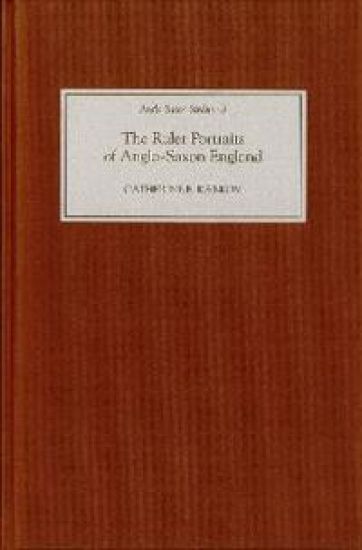
The Ruler Portraits of Anglo-Saxon England

The Ruler Portraits of Anglo-Saxon England

Catherine E Karkov

The Boydell Press
2004
sidottu
Analysis of a group of images of kingship and queenship from Anglo-Saxon England explores the implications of their focus on books, authorship and learning. Between the reign of Alfred in the late ninth century and the arrival of the Normans in 1066, a unique set of images of kingship and queenship was developed in Anglo-Saxon England, images of leadership that centred on books, authorship and learning rather than thrones, sword and sceptres. Focusing on the cultural and historical contexts in which these images were produced, this book explores the reasons for their development, and their meaning and functionwithin both England and early medieval Europe. It explains how and why they differ from their Byzantine and Continental counterparts, and what they reveal about Anglo-Saxon attitudes towards history and gender, as well as the qualities that were thought to constitute a good ruler. It is argued that this series of portraits, never before studied as a corpus, creates a visual genealogy equivalent to the textual genealogies and regnal lists that are so mucha feature of late Anglo-Saxon culture. As such they are an important part of the way in which the kings and queens of early medieval England created both their history and their kingdom. CATHERINE E. KARKOV is Professorof Art History at the University of Leeds.
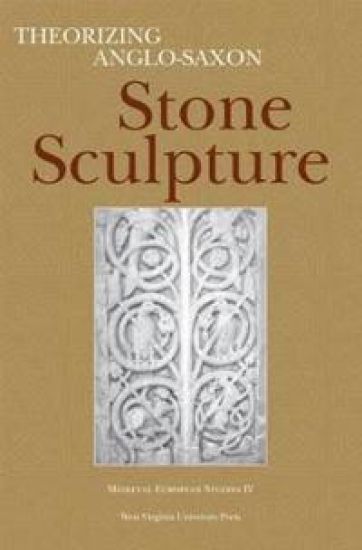
Theorizing Anglo-Saxon Stone Sculpture

Theorizing Anglo-Saxon Stone Sculpture

Catherine E. Karkov; Fred Orton

West Virginia University Press
2003
nidottu
Theorizing Anglo-Saxon Stone Sculpture significantly advances the complex study of Anglo-Saxon carved monuments, such as the Ruthwell Cross, by adopting more explicit theoretical approaches to the subject. Scholars included here are explicit in describing how their approaches complement (or, more often, contradict) the work of others. This book comes as a shot across the bow of these vessels. Contributors include the best scholars on this subject matter in England, Ireland, and America.
Text and Picture in Anglo-Saxon England

Text and Picture in Anglo-Saxon England

Catherine E. Karkov

Cambridge University Press
2001
sidottu
This book explores the complex interrelationship between texts and drawings in the late tenth or early eleventh-century Junius II manuscript, the only surviving illustrated Anglo-Saxon poetic manuscript. The book, which contains a plate section of sixty-one illustrations, focuses on the way in which the drawings both illustrate the text and translate it into a new visual language. Poems and illustrations work to create a carefully crafted and unified manuscript, but both also use formulaic language, iconography and compositions to construct a web of intertextual and intervisual references that open the poems to readings far more diverse than those of the biblical books on which they are based. Together poems and drawings create a new and unique version of biblical history, and suggest ways in which biblical history relates to Anglo-Saxon history and the manuscript's Anglo-Saxon audience - a process which has been extended by the manuscript's many editors to include contemporary history and the contemporary reader.