Kirjojen hintavertailu – 12 903 724 kirjaa ja 27 kauppaa

Kirjailija

Catherine Hall

Kirjat ja teokset yhdessä paikassa: 18 kirjaa, julkaisuja vuosilta 1992–2025, suosituimpiin kuuluu The Proof of Love. Vertaile teosten hintoja ja tarkista saatavuus suomalaisista kirjakaupoista.

18 kirjaa

Kirjojen julkaisuvuodet: 1992–2025.

Lucky Valley

Lucky Valley

Catherine Hall

Cambridge University Press
2025
pokkari
Why does Edward Long's History of Jamaica matter? Written in 1774, Long's History, that most 'civilised' of documents, attempted to define White and Black as essentially different and unequal. Long deployed natural history and social theory, carefully mapping the island, and drawing on poetry and engravings, in his efforts to establish a clear and fixed racialized hierarchy. His White family sat at the heart of Jamaican planter society and the West India trade in sugar, which provided the economic bedrock of this eighteenth-century system of racial capitalism. Catherine Hall tells the story behind the History of a slave-owning family that prospered across generations together with the destruction of such possibilities for enslaved people. She unpicks the many contradictions in Long's thinking, exposing the insidious myths and stereotypes that have poisoned social relations over generations and allowed reconfigured forms of racial difference and racial capitalism to live on in contemporary societies.
Lucky Valley

Lucky Valley

Catherine Hall

Cambridge University Press
2024
sidottu

Halvin toimitettuna 45,40 €

Why does Edward Long's History of Jamaica matter? Written in 1774, Long's History, that most 'civilised' of documents, attempted to define White and Black as essentially different and unequal. Long deployed natural history and social theory, carefully mapping the island, and drawing on poetry and engravings, in his efforts to establish a clear and fixed racialized hierarchy. His White family sat at the heart of Jamaican planter society and the West India trade in sugar, which provided the economic bedrock of this eighteenth-century system of racial capitalism. Catherine Hall tells the story behind the History of a slave-owning family that prospered across generations together with the destruction of such possibilities for enslaved people. She unpicks the many contradictions in Long's thinking, exposing the insidious myths and stereotypes that have poisoned social relations over generations and allowed reconfigured forms of racial difference and racial capitalism to live on in contemporary societies.

Let Us Give Thanks

Let Us Give Thanks

David Holeton; Catherine Hall; Gregory Kerr-Wilson

Wipf Stock Publishers
2020
pokkari
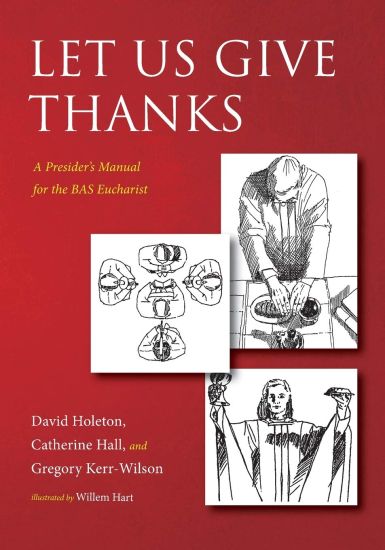
This is a basic "how-to" book, primarily for presiders, but also helpful for lay readers in the parish. The book "walks through" the BAS Eucharist, discussing the various activities and how they might be most effectively accomplished. Helpful information on history, shape, and structure for the various parts of the liturgy is provided, as well as practical details to aid parish communities in preparing for the Sunday liturgy week by week.
Let Us Give Thanks

Let Us Give Thanks

David Holeton; Catherine Hall; Gregory Kerr-Wilson

Wipf Stock Publishers
2020
sidottu
This is a basic "how-to" book, primarily for presiders, but also helpful for lay readers in the parish. The book "walks through" the BAS Eucharist, discussing the various activities and how they might be most effectively accomplished. Helpful information on history, shape, and structure for the various parts of the liturgy is provided, as well as practical details to aid parish communities in preparing for the Sunday liturgy week by week.
Family Fortunes

Family Fortunes

Leonore Davidoff; Catherine Hall

Routledge
2018
nidottu

Halvin toimitettuna 87,50 €

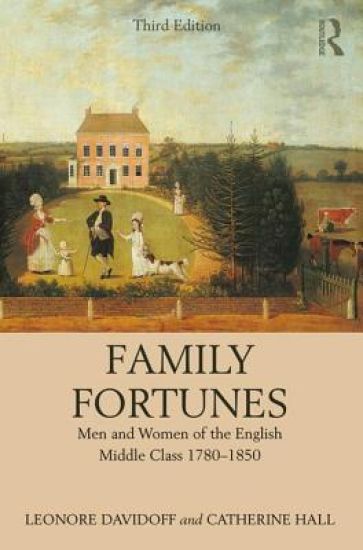
First published to wide critical acclaim in 1987, Family Fortunes has become a seminal text in class and gender history, and its influence in the field continues to be extensive today. The book explores the middle-class family and its place in the development of capitalist society. It argues that gender and class need to be thought about together – that class was always gendered and gender always classed. Divided into three parts, the book covers religion and ideology, economic structure and opportunity, and gender in action across two main case studies: the rural counties of Suffolk and Essex and the industrial town of Birmingham. This third edition contains a new introductory section by Catherine Hall, reflecting on some of the major developments in historical thinking over the last fifteen years and discussing the evolution of key themes such as the family. Providing critical insight into the perception of middle-class society and gender relations between 1780 and 1850, this volume is essential reading for students of eighteenth- and nineteenth-century British social history.
Family Fortunes

Family Fortunes

Leonore Davidoff; Catherine Hall

Routledge
2018
sidottu
First published to wide critical acclaim in 1987, Family Fortunes has become a seminal text in class and gender history, and its influence in the field continues to be extensive today. The book explores the middle-class family and its place in the development of capitalist society. It argues that gender and class need to be thought about together – that class was always gendered and gender always classed. Divided into three parts, the book covers religion and ideology, economic structure and opportunity, and gender in action across two main case studies: the rural counties of Suffolk and Essex and the industrial town of Birmingham. This third edition contains a new introductory section by Catherine Hall, reflecting on some of the major developments in historical thinking over the last fifteen years and discussing the evolution of key themes such as the family. Providing critical insight into the perception of middle-class society and gender relations between 1780 and 1850, this volume is essential reading for students of eighteenth- and nineteenth-century British social history.
Legacies of British Slave-Ownership

Legacies of British Slave-Ownership

Catherine Hall; Nicholas Draper; Keith McClelland; Katie Donington; Rachel Lang

Cambridge University Press
2016
pokkari
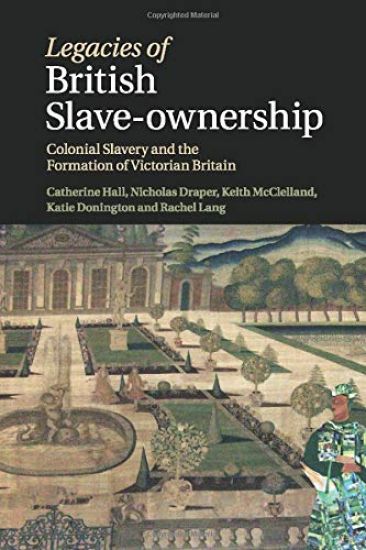
This book re-examines the relationship between Britain and colonial slavery in a crucial period in the birth of modern Britain. Drawing on a comprehensive analysis of British slave-owners and mortgagees who received compensation from the state for the end of slavery, and tracing their trajectories in British life, the volume explores the commercial, political, cultural, social, intellectual, physical and imperial legacies of slave-ownership. It transcends conventional divisions in history-writing to provide an integrated account of one powerful way in which Empire came home to Victorian Britain, and to reassess narratives of West Indian 'decline'. It will be of value to scholars not only of British economic and social history, but also of the histories of the Atlantic world, of the Caribbean and of slavery, as well as to those concerned with the evolution of ideas of race and difference and with the relationship between past and present.
Legacies of British Slave-Ownership

Legacies of British Slave-Ownership

Catherine Hall; Nicholas Draper; Keith McClelland; Katie Donington; Rachel Lang

Cambridge University Press
2014
sidottu
This book re-examines the relationship between Britain and colonial slavery in a crucial period in the birth of modern Britain. Drawing on a comprehensive analysis of British slave-owners and mortgagees who received compensation from the state for the end of slavery, and tracing their trajectories in British life, the volume explores the commercial, political, cultural, social, intellectual, physical and imperial legacies of slave-ownership. It transcends conventional divisions in history-writing to provide an integrated account of one powerful way in which Empire came home to Victorian Britain, and to reassess narratives of West Indian 'decline'. It will be of value to scholars not only of British economic and social history, but also of the histories of the Atlantic world, of the Caribbean and of slavery, as well as to those concerned with the evolution of ideas of race and difference and with the relationship between past and present.
Macaulay and Son

Macaulay and Son

Catherine Hall

Yale University Press
2012
sidottu
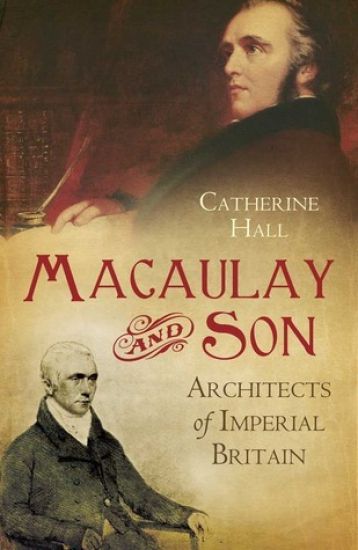
Thomas Babington Macaulay’s History of England was a phenomenal Victorian best-seller defining a nation’s sense of self, its triumphant rise to a powerfully homogenous nation built on a global empire and its claim to be the modern nation, marking the route to civilization for all others. In this book Catherine Hall explores the emotional, intellectual, and political roots of Zachary Macaulay, the leading abolitionist, and his son Thomas’s visions of race, nation, and empire. The contrasting moments of evangelical humanitarianism and liberal imperialism are read through the writings and careers of the two men.
The Proof of Love

The Proof of Love

Catherine Hall

Granta Books
2012
nidottu
By the time the summer holidays begin, Spencer Little is keen to put the events of the past term at Cambridge behind him and a remote village in the Lake District seems to offer the perfect escape. But it's not so easy to remain anonymous in a small community and, after striking up a friendship with ten year old Alice, Spencer also finds himself being drawn into other people's lives. As the summer heatwave intensifies and a web of complicity tightens around him, Spencer realizes that he will eventually be forced to choose between loyalty and truth, between logic and passion.
Days Of Grace

Days Of Grace

Catherine Hall

Granta Books
2010
nidottu
My memories of Grace never added up to how she really was. She was always impossible to pin down, dancing just out of my reach, exactly as she did when she was alive. Nora was a girl of twelve when the war broke out and she was forced to join the train-loads of evacuees leaving London's East End for rural Kent. Her surrogate family, the Rivers, are unlike anyone she has met before and she soon comes to love her new life with them, and in particular with twelve-year-old Grace. Over the next few years, as the dogfights rage ever more fiercely over head and it becomes clear that the Rivers marriage contains deep and irreparable cracks, Nora and Grace grow as close as sisters - though, to Nora's confusion, even this is not quite as close as she would like ... What happened next is a secret that will gnaw away at Nora for the rest of her life - a secret that she can only begin to tell when she is certain that she is approaching the end.
Civilising Subjects

Civilising Subjects

Catherine Hall

University of Chicago Press
2002
nidottu
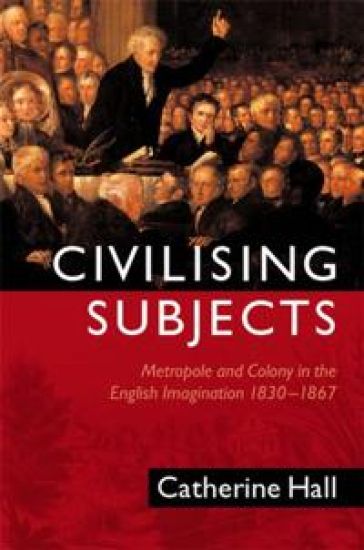
How did the English get to be English? Catherine Hall argues that the idea of empire was at the heart of mid-19th century self-imagining. This study of Englishness explores the cultural agenda of self-construction and home and abroad.
Civilising Subjects

Civilising Subjects

Catherine Hall

Polity Press
2002
nidottu
This volume argues that the empire was at the heart of 19th-century Englishness. It tells intertwined stories of a particular group of Englishmen and women who constructed themselves as colonizers. It then uses these studies as a means of exploring wider colonial and cultural issues.
Civilising Subjects

Civilising Subjects

Catherine Hall

Polity Press
2002
sidottu
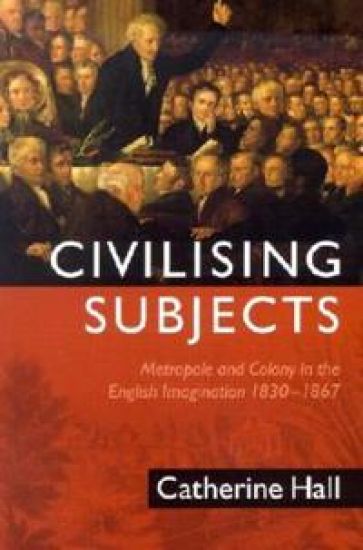
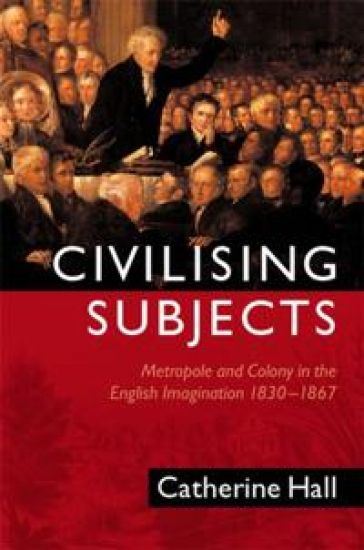
Winner of the Morris D. Forkasch prize for the best book in British history 2002 Civilising Subjects argues that the empire was at the heart of nineteenth-century Englishness. English men and women in the mid-nineteenth century imagined themselves at the centre of a great empire: their mental and emotional maps encompassed 'Aborigines' in Australia, 'negroes' in Jamaica, 'coolies' in the Indies. This sense of the other provided boundaries and markers of difference: ways of knowing who was 'civilised' and who was 'savage'. This fascinating book tells intertwined stories of a particular group of Englishmen and women who constructed themselves as colonisers. Hall then uses these studies as a means of exploring wider colonial and cultural issues. One story focuses on the Baptist missionaries in Jamaica and their efforts to build a new society in the wake of emancipation. Their hope was to make Afro-Jamaican men and women into people like themselves. Disillusionment followed as it emerged that the making of 'new selves' was not as simple as they had thought, and that black men and women had minds and cultural resources of their own. The second story tells the tale of 'the midland metropolis', Birmingham, and the ways in which its culture was infused with empire. Abolitionist enthusiasm dominated the town in the 1830s but by the 1860s the identity of 'friend of the negro' had been superseded by a harsher racial vocabulary. Birmingham's 'manly citizens' imagined the non-white subjects of empire as different kinds of men from themselves. These two detailed studies, of Birmingham and Jamaica, are set within their wider context: the making of metropole and colony and of coloniser and colonised. The result is an absorbing study of the 'racing' of Englishness, which will be invaluable for students and scholars of British imperial and cultural history.
Defining the Victorian Nation

Defining the Victorian Nation

Catherine Hall; Keith McClelland; Jane Rendall

Cambridge University Press
2000
sidottu
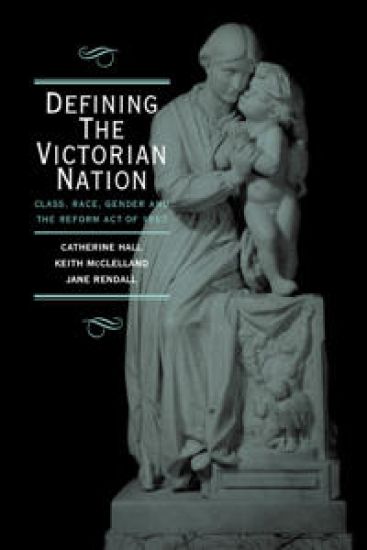
Defining the Victorian Nation offers a fresh perspective on one of the most significant pieces of legislation in nineteenth-century Britain. Catherine Hall, Keith McClelland and Jane Rendall demonstrate that the Second Reform Act of 1867 was marked not only by extensive controversy about the extension of the vote, but also by new concepts of masculinity and the masculine voter, the beginnings of the movement for women’s suffrage, and a parallel debate about the meanings and forms of national belonging. The chapters in this book draw on recent developments in cultural, social and gender history, broadening the study of nineteenth-century British political history and integrating questions of nation and empire. Fascinating illustrations illuminate the argument, and a detailed chronology, biographical notes and selected bibliography offer further support to the student reader. Students and scholars in history, women’s studies, cultural studies, and postcolonial studies will find this book invaluable.
Defining the Victorian Nation

Defining the Victorian Nation

Catherine Hall; Keith McClelland; Jane Rendall

Cambridge University Press
2000
pokkari

Halvin toimitettuna 55,60 €

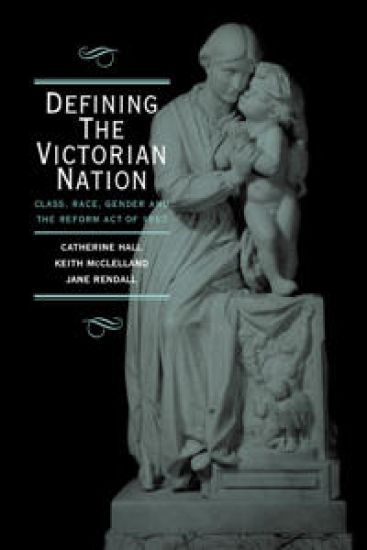
Defining the Victorian Nation offers a fresh perspective on one of the most significant pieces of legislation in nineteenth-century Britain. Catherine Hall, Keith McClelland and Jane Rendall demonstrate that the Second Reform Act of 1867 was marked not only by extensive controversy about the extension of the vote, but also by new concepts of masculinity and the masculine voter, the beginnings of the movement for women’s suffrage, and a parallel debate about the meanings and forms of national belonging. The chapters in this book draw on recent developments in cultural, social and gender history, broadening the study of nineteenth-century British political history and integrating questions of nation and empire. Fascinating illustrations illuminate the argument, and a detailed chronology, biographical notes and selected bibliography offer further support to the student reader. Students and scholars in history, women’s studies, cultural studies, and postcolonial studies will find this book invaluable.
White, Male and Middle Class

White, Male and Middle Class

Catherine Hall

Polity Press
1992
nidottu
What are the relations between feminism and history, feminist politics and historical practice? What are the connections between gender and class? What part have racial identities and ethnic difference played in the construction of Englishness? Through a series of provocative and richly detailed essays, Catherine Hall explores these questions. She argues that feminism has opened up vital new questions for history and transformed familiar historical narratives. Class can no longer be understood outside of gender, or gender outside of class. But English identities have also been rooted in imperial power. White, Male and Middle Class explores the ways in which middle-class masculinities were rooted in conceptions of power over dependants - whether black or female.