Kirjojen hintavertailu – 12 903 725 kirjaa ja 27 kauppaa

Kirjailija

Catherine Higgs

Kirjat ja teokset yhdessä paikassa: 7 kirjaa, julkaisuja vuosilta 1997–2026, suosituimpiin kuuluu In India and East Africa E-Indiya Nase East Africa. Vertaile teosten hintoja ja tarkista saatavuus suomalaisista kirjakaupoista.

7 kirjaa

Kirjojen julkaisuvuodet: 1997–2026.

Sisters for Justice

Sisters for Justice

Catherine Higgs

UNIVERSITY OF WISCONSIN PRESS
2026
sidottu
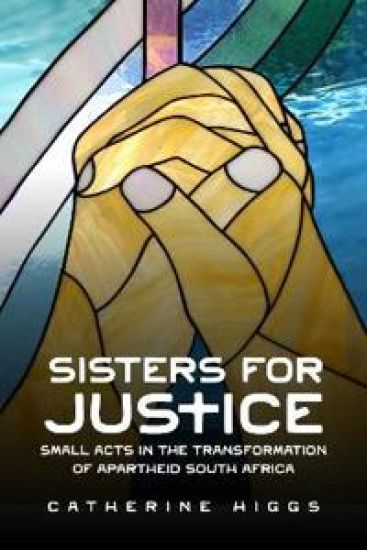
Sisters for Justice explores the activism of a select number of Catholic religious sisters in South Africa, beginning in the 1960s. Catherine Higgs analyzes how these individuals’ seemingly small actions in a variety of spheres helped shift policy and contribute to the dismantling of the apartheid state. As she reveals, they helped provide basic medical services to displaced Africans, opened private convent schools to children of all races despite segregationist laws, advocated for African pension rights, served on justice and peace commissions, and joined protests—all while working within the context of a hierarchical male-led church initially hesitant to criticize a state openly hostile to Catholics. Based on extensive oral history interviews with white and Black sisters as well as deep archival research, this groundbreaking book reveals a largely untold story, nested within the broader literature of women’s activism in South Africa. The result is a new perspective that expands and intensifies our understanding of a dramatic period during which individual actions, in the aggregate, contributed to social change.
Willis's Practice and Procedure for the Quantity Surveyor

Willis's Practice and Procedure for the Quantity Surveyor

Allan Ashworth; Catherine Higgs

JOHN WILEY AND SONS LTD
2023
nidottu
WILLIS’S PRACTICE AND PROCEDURE FOR THE QUANTITY SURVEYOR The most up-to-date edition of the gold standard in introductory quantity surveying textbooks In the newly revised Fourteenth Edition of Willis’s Practice and Procedure for the Quantity Surveyor, the authors provide a comprehensive and authoritative introduction to the core skills required by quantity surveyors. This latest edition is thoroughly updated to emphasize the use of information technology in construction, and contains new pedagogical features, new learning outcomes, and key learning points that relate the material specifically to the RICS Assessment of Professional Competence (APC). Historically employed to estimate and measure the likely material requirements for any building project, the role of the modern quantity surveyor is diverse and dynamic, with rapid change featuring across quantity surveying practice. The book echoes this dynamic environment, covering quantity surveying in private practice, public service, and in contracting organizations. Readers will also find: In-depth discussions of the use of IT in construction New and improved teaching and instruction features in the text, including new learning outcome sections and key learning points to highlight crucial concepts Tighter alignment with the requirements of the RICS Assessment of Professional Competence Perfect for undergraduate students studying quantity surveying, Willis’s Practice and Procedure for the Quantity Surveyor, 14th Edition is also an indispensable resource for practicing surveyors and inspectors seeking a one-stop handbook to the foundational principles of quantity surveying.
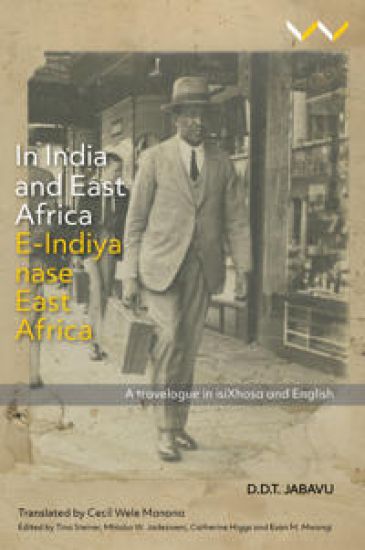
In India and East Africa E-Indiya Nase East Africa

In India and East Africa E-Indiya Nase East Africa

Davidson Don Tengo Jabavu; Tina Steiner; Mhlobo Jadezweni; Catherine Higgs; Evan M. Mwangi

Wits University Press
2020
pokkari
A politician's journey to bring home Mahatma Gandhi's teachings home to South Africa in the wake of WWII In November 1949, Davidson Don Tengo (D. D. T.) Jabavu, the South African politician, Methodist lay preacher and retired professor of African languages and Latin at Fort Hare University in the Eastern Cape, set out on a four-month trip to attend the World Pacifist Meeting in India. The conference brought together delegates from over thirty countries to reflect on how Mahatma Gandhi's life and teachings could inform pacifist work in the post-World War II era. Jabavu wrote an isiXhosa account of his journey up the east coast of Africa and to different parts of India which was first published in 1951 by Lovedale Press. His narrative contains wide-ranging reflections on the fauna and flora of the changing landscape, on intriguing social interactions during his travels, and on the conference itself, where he considered what lessons Gandhian principles might yield for oppressed South Africans engaged in struggles for freedom and dignity. He incorporates accounts of chance meetings with important figures of post-independence India and of the anti-colonial struggle in East Africa, as well as with members of the American civil rights movement. His commentary on non-violent resistance, and on the dangers of nationalism when coupled with militarism and racism, enriches the existing archive of intellectual and political exchange between Africa and India from a black South African perspective. This new edition includes Jabavu's travelogue in the original isiXhosa, with an English translation by the late anthropologist Cecil Wele Manona. Tina Steiner's introductory chapter examines the networks of international solidarity and friendship that Jabavu helped to strengthen in the course of his travels. A chapter by Mhlobo W. Jadezweni, whose updating of the original isiXhosa orthography has made Jabavu's text accessible to new generations of readers, considers the richness of Jabavu's isiXhosa style as a contribution to the archive of great African-language literature. Catherine Higgs provides biographical sketches of D. D. T. Jabavu and Cecil Wele Manona which situate this travelogue within the broader context of their lives. Evan M. Mwangi's Afterword is a reflection on the historical and political significance of making African-language texts available to readers across Africa.
In India and East Africa E-Indiya Nase East Africa

In India and East Africa E-Indiya Nase East Africa

Davidson Don Tengo Jabavu; Tina Steiner; Mhlobo Jadezweni; Catherine Higgs; Evan M. Mwangi

WITS UNIVERSITY PRESS
2019
sidottu
A politician's journey to bring home Mahatma Gandhi's teachings home to South Africa in the wake of WWII In November 1949, Davidson Don Tengo (D. D. T.) Jabavu, the South African politician, Methodist lay preacher and retired professor of African languages and Latin at Fort Hare University in the Eastern Cape, set out on a four-month trip to attend the World Pacifist Meeting in India. The conference brought together delegates from over thirty countries to reflect on how Mahatma Gandhi's life and teachings could inform pacifist work in the post-World War II era. Jabavu wrote an isiXhosa account of his journey up the east coast of Africa and to different parts of India which was first published in 1951 by Lovedale Press. His narrative contains wide-ranging reflections on the fauna and flora of the changing landscape, on intriguing social interactions during his travels, and on the conference itself, where he considered what lessons Gandhian principles might yield for oppressed South Africans engaged in struggles for freedom and dignity. He incorporates accounts of chance meetings with important figures of post-independence India and of the anti-colonial struggle in East Africa, as well as with members of the American civil rights movement. His commentary on non-violent resistance, and on the dangers of nationalism when coupled with militarism and racism, enriches the existing archive of intellectual and political exchange between Africa and India from a black South African perspective. This new edition includes Jabavu's travelogue in the original isiXhosa, with an English translation by the late anthropologist Cecil Wele Manona. Tina Steiner's introductory chapter examines the networks of international solidarity and friendship that Jabavu helped to strengthen in the course of his travels. A chapter by Mhlobo W. Jadezweni, whose updating of the original isiXhosa orthography has made Jabavu's text accessible to new generations of readers, considers the richness of Jabavu's isiXhosa style as a contribution to the archive of great African-language literature. Catherine Higgs provides biographical sketches of D. D. T. Jabavu and Cecil Wele Manona which situate this travelogue within the broader context of their lives. Evan M. Mwangi's Afterword is a reflection on the historical and political significance of making African-language texts available to readers across Africa.
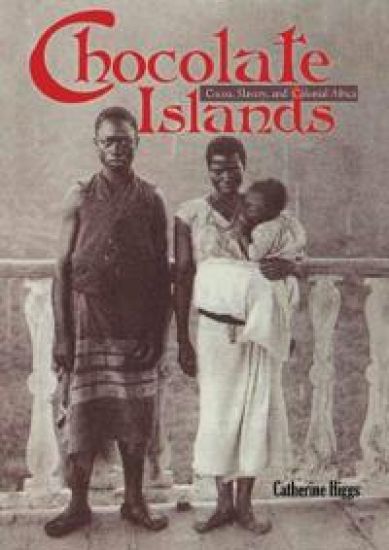
Chocolate Islands

Chocolate Islands

Catherine Higgs

Ohio University Press
2013
pokkari
In Chocolate Islands: Cocoa, Slavery, and Colonial Africa, Catherine Higgs traces the early-twentieth-century journey of the Englishman Joseph Burtt to the Portuguese colony of São Tomé and Príncipe—the chocolate islands—through Angola and Mozambique, and finally to British Southern Africa. Burtt had been hired by the chocolate firm Cadbury Brothers Limited to determine if the cocoa it was buying from the islands had been harvested by slave laborers forcibly recruited from Angola, an allegation that became one of the grand scandals of the early colonial era. Burtt spent six months on São Tomé and Príncipe and a year in Angola. His five-month march across Angola in 1906 took him from innocence and credulity to outrage and activism and ultimately helped change labor recruiting practices in colonial Africa. This beautifully written and engaging travel narrative draws on collections in Portugal, the United Kingdom, and Africa to explore British and Portuguese attitudes toward work, slavery, race, and imperialism. In a story still familiar a century after Burtt's sojourn, Chocolate Islands reveals the idealism, naivety, and racism that shaped attitudes toward Africa, even among those who sought to improve the conditions of its workers.
Chocolate Islands

Chocolate Islands

Catherine Higgs

Ohio University Press
2012
sidottu
In Chocolate Islands: Cocoa, Slavery, and Colonial Africa, Catherine Higgs traces the early-twentieth-century journey of the Englishman Joseph Burtt to the Portuguese colony of São Tomé and Príncipe—the chocolate islands—through Angola and Mozambique, and finally to British Southern Africa. Burtt had been hired by the chocolate firm Cadbury Brothers Limited to determine if the cocoa it was buying from the islands had been harvested by slave laborers forcibly recruited from Angola, an allegation that became one of the grand scandals of the early colonial era. Burtt spent six months on São Tomé and Príncipe and a year in Angola. His five-month march across Angola in 1906 took him from innocence and credulity to outrage and activism and ultimately helped change labor recruiting practices in colonial Africa. This beautifully written and engaging travel narrative draws on collections in Portugal, the United Kingdom, and Africa to explore British and Portuguese attitudes toward work, slavery, race, and imperialism. In a story still familiar a century after Burtt's sojourn, Chocolate Islands reveals the idealism, naivety, and racism that shaped attitudes toward Africa, even among those who sought to improve the conditions of its workers.
The Ghost of Equality

The Ghost of Equality

Catherine Higgs

Ohio University Press
1997
sidottu
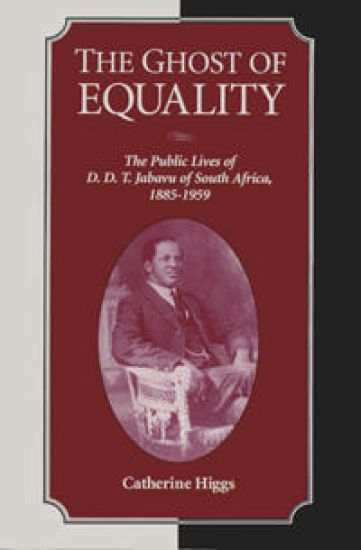
Davidson Don Tengo Jabavu was born in the Cape Colony in British southern Africa on October 20, 1885, when a few African men could vote and the prospects for black equality with the ruling whites seemed promising. He died on August 3, 1959, in the Cape Province of the Union of South Africa, eleven years after the apartheid state had begun stripping blacks of their rights and exorcising the 'ghost of equality' with a completeness unparalleled in the country's history. The 'ghost of equality was the last vestige of the Cape liberal tradition — itself best summed up by the dictum 'equal rights for all civilized men' — finally erased in 1959 with the passage of legislation that would, the following year, remove from parliament the last elected white representatives of Africans.… If D. D. T. Jabavu's life reveals anything about South Africa's political history, it is that this history was not monolithic. It was not simply a lengthly confrontation between a black elite represented by the African National Congress and the white segregationist state. Rather, there was a range of black political opinion and activity, of which Jabavu, an active participant in virtually every government-sponsored and every major extraparliamentary conference between 1920 and the late 1940s, represented one prominent historical strain. This book, however, is about more than D. D. T. Javavu's politics; it is about his public life, or perhaps more accurately, his public lives. The book is arranged thematically, divided according to the parts Jabavu played: student, teacher, Methodist, and politician. — from the introduction by the author