Kirjojen hintavertailu – 12 859 828 kirjaa ja 27 kauppaa

Kirjailija

Catherine Keller

Kirjat ja teokset yhdessä paikassa: 19 kirjaa, julkaisuja vuosilta 2002–2024, suosituimpiin kuuluu Religionens offentlighet : om religionens plats i samhället. Vertaile teosten hintoja ja tarkista saatavuus suomalaisista kirjakaupoista.

19 kirjaa

Kirjojen julkaisuvuodet: 2002–2024.

Religionens offentlighet : om religionens plats i samhället

Religionens offentlighet : om religionens plats i samhället

Anders Bäckström; Urban Claesson; Ulf Zackariasson; Stig Linde; Torkel Jansson; Marie Demker; Johannes (A) van der Ven; Carl-Henrik Grenholm; Dan-Erik Andersson; Diana Mulinari; Eva-Lotta Grantén; Mohammad Fazlhashemi; Elisabeth Gerle; Catherine Keller; Mattias Martinson; Petra Carlsson; Jan Eckerdal; Johanna Gustafsson Lundberg

Artos Norma Bokförlag
2013
nidottu
Religionerna spelar idag en tydlig roll i offentligheten, i Sverige och internationellt. Det är inte längre självklart att religion försvinner i ett modernt samhälle, alternativt blir något vissa ägnar sig åt privat eller i krympande kyrkor. Utvecklingen tar sig många olika uttryck. Ett uttryck är att kyrkor i Sverige offentligt tar ställning för en generös flyktingpolitik eller mot försämringar i den svenska välfärden, ett annat är pressdebatter om religiösa inslag vid skolavslutningar, omskärelse av pojkar och Guds existens. Ytterligare ett uttryck är religiöst legitimerat våld och terror, ett annat är den centrala roll muslimska föreställningar om människans värdighet spelade för demokratiaktivister under den arabiska våren. Religionens offentlighet. Om religionens plats i samhället behandlar denna utveckling och de frågor den väcker ur samhällsvetenskapliga, historiska, filosofiska och religionsvetenskapliga perpektiv. Med förankring i svensk och internationell forskning beskrivs utvecklingen och diskuteras utifrån konkreta exempel. Konstruktiva förslag ges till hur religiösa organisationer och individer kan delta i offentliga samtal och samhälleligt liv.
No Matter What

No Matter What

Catherine Keller

FORDHAM UNIVERSITY PRESS
2024
sidottu
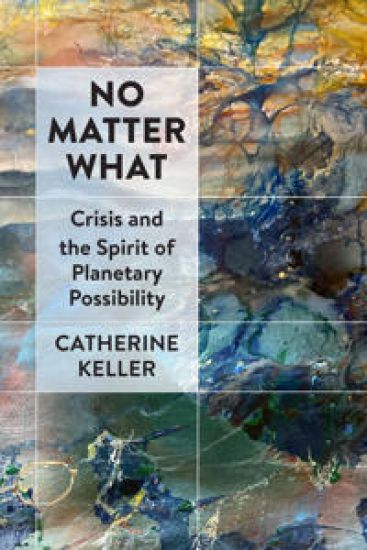
A collection of essays that outline the recent work on ecology, political theology, religion, and philosophy by one of the leading theologians of our age As we face relentless ecological destruction spiraling around a planet of unconstrained capitalism and democratic failure, what matters most? How do we get our bearings and direct our priorities in such a terrestrial scenario? Species, race, sex, politics, and economics will increasingly come tangled in the catastrophic trajectory of climate change. With a sense of urgency and of possibility, Catherine Keller's No Matter What reflects multiple trajectories of planetary crisis. They converge from a point of view formed of the political ecologies of a transdisciplinary theological pluralism. In its work an ancient symbolism of apocalypse deconstructs end-of-the-world narratives, Christian and secular, even as any notion of an all-controlling and good God collapses under the force of internal contradiction. In the place of a once-for-all incarnation, the materiality of unbounded intercarnation, of fragile yet animating relations of mattering earth-bodies, comes into focus. The essays of No Matter What share the preoccupation with matter characteristic of the so-called new materialism. They also root in an older ecotheological tradition, one that has long struggled against the undead legacy of an earth-betraying theology that, with the aid of its white Christian right wing, invests the denigration of matter, its spirit of "no matter," in limitless commodification. The fragile alternative Keller outlines here embraces—no matter what—the mattering of the life of the Earth and of all its spirited bodies. These essays, struggling against Christian and secular betrayals of the spirited matter of Earth, work to materialize the still possible planetary healing.
No Matter What

No Matter What

Catherine Keller

FORDHAM UNIVERSITY PRESS
2024
pokkari

Halvin toimitettuna 33,40 €

A collection of essays that outline the recent work on ecology, political theology, religion, and philosophy by one of the leading theologians of our age As we face relentless ecological destruction spiraling around a planet of unconstrained capitalism and democratic failure, what matters most? How do we get our bearings and direct our priorities in such a terrestrial scenario? Species, race, sex, politics, and economics will increasingly come tangled in the catastrophic trajectory of climate change. With a sense of urgency and of possibility, Catherine Keller's No Matter What reflects multiple trajectories of planetary crisis. They converge from a point of view formed of the political ecologies of a transdisciplinary theological pluralism. In its work an ancient symbolism of apocalypse deconstructs end-of-the-world narratives, Christian and secular, even as any notion of an all-controlling and good God collapses under the force of internal contradiction. In the place of a once-for-all incarnation, the materiality of unbounded intercarnation, of fragile yet animating relations of mattering earth-bodies, comes into focus. The essays of No Matter What share the preoccupation with matter characteristic of the so-called new materialism. They also root in an older ecotheological tradition, one that has long struggled against the undead legacy of an earth-betraying theology that, with the aid of its white Christian right wing, invests the denigration of matter, its spirit of "no matter," in limitless commodification. The fragile alternative Keller outlines here embraces—no matter what—the mattering of the life of the Earth and of all its spirited bodies. These essays, struggling against Christian and secular betrayals of the spirited matter of Earth, work to materialize the still possible planetary healing.
Life Under the Baobab Tree

Life Under the Baobab Tree

Catherine Keller

FORDHAM UNIVERSITY PRESS
2023
pokkari
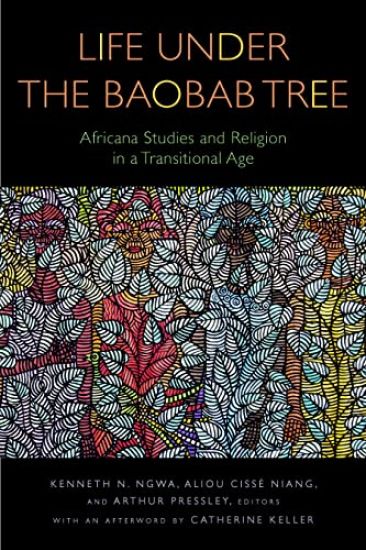
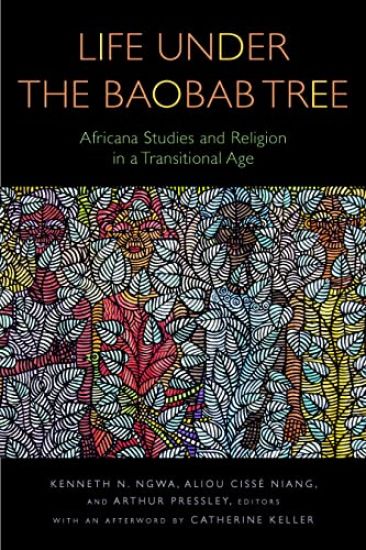
Life Under the Baobab Tree: Africana Studies and Religion in a Transitional Age is a compendium of innovating essays meticulously written by early and later diaspora people of African descent. Their speech arises from the depth of their experiences under the Baobab tree and offers to the world voices of resilience, newness/resurrection, hope, and life. Resolutely journeying on the trails of their ancestors, they speak about setbacks and forward-looking movements of liberation, social transformation, and community formation. The volume is a carefully woven conversation of intellectual substance and structure across time, space, and spirituality that is quintessentially "Africana" in its centering of methodological, theoretical, epistemological, and hermeneutical complexity that assumes nonlinear and dialogical approaches to developing liberating epistemologies in the face of imperialism, colonialism, racism, and religious intolerance. A critical part of this conversation is a reconceptualization and reconfiguration of the concept of religion in its colonial and imperial forms. Life Under the Baobab Tree examines how Africana peoples understand their corporate experiences of the divine not as "religion" apart from its intimate connections to social realities of communal health, economics, culture, politics, environment, violence, war, and dynamic community belonging. To that end Afro-Pessimistic formulations of life placed in dialogic relation Afro-Optimism. Both realities constitute life under the Baobab tree and represent the sturdiness and variation that anchors the deep ruptures that have affected Africana life and the creative responses. The metaphor and substance of the tree resists reductionist, essentialist, and assured conclusions about the nature of diasporic lived experiences, both within the continent of Africa and in the African Diaspora.
Life Under the Baobab Tree

Life Under the Baobab Tree

Catherine Keller

FORDHAM UNIVERSITY PRESS
2023
sidottu
Life Under the Baobab Tree: Africana Studies and Religion in a Transitional Age is a compendium of innovating essays meticulously written by early and later diaspora people of African descent. Their speech arises from the depth of their experiences under the Baobab tree and offers to the world voices of resilience, newness/resurrection, hope, and life. Resolutely journeying on the trails of their ancestors, they speak about setbacks and forward-looking movements of liberation, social transformation, and community formation. The volume is a carefully woven conversation of intellectual substance and structure across time, space, and spirituality that is quintessentially "Africana" in its centering of methodological, theoretical, epistemological, and hermeneutical complexity that assumes nonlinear and dialogical approaches to developing liberating epistemologies in the face of imperialism, colonialism, racism, and religious intolerance. A critical part of this conversation is a reconceptualization and reconfiguration of the concept of religion in its colonial and imperial forms. Life Under the Baobab Tree examines how Africana peoples understand their corporate experiences of the divine not as "religion" apart from its intimate connections to social realities of communal health, economics, culture, politics, environment, violence, war, and dynamic community belonging. To that end Afro-Pessimistic formulations of life placed in dialogic relation Afro-Optimism. Both realities constitute life under the Baobab tree and represent the sturdiness and variation that anchors the deep ruptures that have affected Africana life and the creative responses. The metaphor and substance of the tree resists reductionist, essentialist, and assured conclusions about the nature of diasporic lived experiences, both within the continent of Africa and in the African Diaspora.
Facing Apocalypse

Facing Apocalypse

Catherine Keller

ORBIS BOOKS (USA)
2021
pokkari
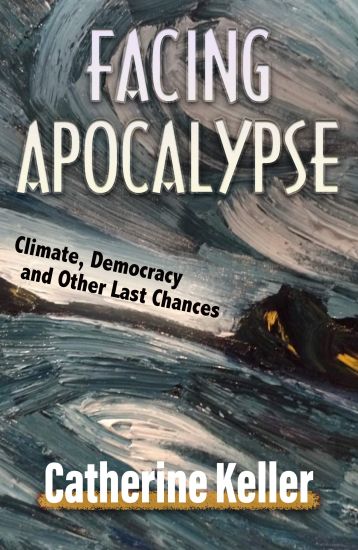
Drawing on John's prophetic Apocalypse, theologian Catherine Keller unveils a "dreamreading" of our current global crisis-particularly the threat of climate change and ecological devastation. She shows that John's gospel is not a foretelling of future events, but a parable of our present reality, which exposes the deep spiritual roots of these threats.
Political Theology of the Earth

Political Theology of the Earth

Catherine Keller

Columbia University Press
2018
pokkari

Halvin toimitettuna 42,50 €

Amid melting glaciers, rising waters, and spreading droughts, Earth has ceased to tolerate our pretense of mastery over it. But how can we confront climate change when political crises keep exploding in the present? Noted ecotheologian and feminist philosopher of religion Catherine Keller reads the feedback loop of political and ecological depredation as secularized apocalypse. Carl Schmitt’s political theology of the sovereign exception sheds light on present ideological warfare; racial, ethnic, economic, and sexual conflict; and hubristic anthropocentrism. If the politics of exceptionalism are theological in origin, she asks, should we not enlist the world’s religious communities as part of the resistance? Keller calls for dissolving the opposition between the religious and the secular in favor of a broad planetary movement for social and ecological justice. When we are confronted by populist, authoritarian right wings founded on white male Christian supremacism, we can counter with a messianically charged, often unspoken theology of the now-moment, calling for a complex new public. Such a political theology of the earth activates the world’s entangled populations, joined in solidarity and committed to revolutionary solutions to the entwined crises of the Anthropocene.
Political Theology of the Earth

Political Theology of the Earth

Catherine Keller

Columbia University Press
2018
sidottu
Amid melting glaciers, rising waters, and spreading droughts, Earth has ceased to tolerate our pretense of mastery over it. But how can we confront climate change when political crises keep exploding in the present? Noted ecotheologian and feminist philosopher of religion Catherine Keller reads the feedback loop of political and ecological depredation as secularized apocalypse. Carl Schmitt’s political theology of the sovereign exception sheds light on present ideological warfare; racial, ethnic, economic, and sexual conflict; and hubristic anthropocentrism. If the politics of exceptionalism are theological in origin, she asks, should we not enlist the world’s religious communities as part of the resistance? Keller calls for dissolving the opposition between the religious and the secular in favor of a broad planetary movement for social and ecological justice. When we are confronted by populist, authoritarian right wings founded on white male Christian supremacism, we can counter with a messianically charged, often unspoken theology of the now-moment, calling for a complex new public. Such a political theology of the earth activates the world’s entangled populations, joined in solidarity and committed to revolutionary solutions to the entwined crises of the Anthropocene.
Sonder: A Collection of Poems

Sonder: A Collection of Poems

Catherine Keller

No Frills Buffalo
2018
nidottu
I wrote this book hoping it would discourage readers from succumbing to their darkest desires. I wanted to use myself as an example of what not to be, to share my struggles and empathize with those who have endured the same. It is meant to be a hedonistic elaboration of what it's like to navigate your emotions, combatting psychological setbacks and continue your craft simultaneously. It allows the reader to peek into my brain as much as I will allow, being honest with myself while struggling to actually have a sense of self. It is self-doubt, self-loathing, and self-sabotaging. As much self-pity as people may perceive, it spews more spitfire. It's meant to show the reality of recovery, how it is always in flux, how everyone's looks different, and we can get there together. It is written with raging intent to create some kind of literary riot and establish a platform for people who have been silenced. Only in my writing do I feel truly free. Free to share frustrations, industrial flaws, injustice and inequality. Liberated from my expectations, free to tell my truth, and indulge myself in the release of writing.
Intercarnations

Intercarnations

Catherine Keller

Fordham University Press
2017
pokkari
Intercarnations is an outstanding collection of provocative, elegantly written essays—many available in print for the first time—by renowned theologian Catherine Keller. Affirmations of body, flesh, and matter pervade current theology and inevitably echo with the doctrine of the incarnation. Yet, in practice, materialism remains contested ground—between Marxist and capitalist, reductive and postmodern iterations. Current theological explorations of our material ecologies cannot elude the tug or drag of the doctrine of "the incarnation." But what if we were to redistribute, rather than repress, that singular body? Might we free it—along with the bodies in which it is boundlessly entangled—from a troubling history of Christian exceptionalism? In these immensely significant, highly original essays, theologian Catherine Keller proposes to liberate the notion of the divine made flesh from the exclusivity of orthodox Christian theology's Jesus of Nazareth. Throughout eleven scintillating essays, she attends to bodies diversely religious, irreligious, social, animal, female, queer, cosmopolitan, and cosmic, highlighting the intermittencies and interdependencies of intra-world relations. According to Keller, when God is cast on the waters of a polydoxical indeterminacy, s/he/it returns manifold. For the many for whom theos has become impossible, Intercarnations exercises new theological possibilities through the diffraction of contextually diverse multiplicities. A groundbreaking work that pulls together a wide range of intersecting topics and methodologies, Intercarnations enriches and challenges current theological thinking. The essays reach back into feminist, process, and postcolonial discourses, and further back into messianic and mystical potentialities. They reach out into Asian as well as inter-Abrahamic comparison and forward toward a political theology of the Earth, queerly entangling climate catastrophe in materializations resistant to every economic, social, and anthropic exceptionalism. According to Keller, Intercarnations offers itself as a transient trope for the mattering of our entangled difference, meaning to stir up practices of a better planetarity. In Intercarnations, with Catherine Keller as their erudite guide, readers gain access to new worlds of theological possibility and perception.
Intercarnations

Intercarnations

Catherine Keller

Fordham University Press
2017
sidottu
Intercarnations is an outstanding collection of provocative, elegantly written essays—many available in print for the first time—by renowned theologian Catherine Keller. Affirmations of body, flesh, and matter pervade current theology and inevitably echo with the doctrine of the incarnation. Yet, in practice, materialism remains contested ground—between Marxist and capitalist, reductive and postmodern iterations. Current theological explorations of our material ecologies cannot elude the tug or drag of the doctrine of "the incarnation." But what if we were to redistribute, rather than repress, that singular body? Might we free it—along with the bodies in which it is boundlessly entangled—from a troubling history of Christian exceptionalism? In these immensely significant, highly original essays, theologian Catherine Keller proposes to liberate the notion of the divine made flesh from the exclusivity of orthodox Christian theology's Jesus of Nazareth. Throughout eleven scintillating essays, she attends to bodies diversely religious, irreligious, social, animal, female, queer, cosmopolitan, and cosmic, highlighting the intermittencies and interdependencies of intra-world relations. According to Keller, when God is cast on the waters of a polydoxical indeterminacy, s/he/it returns manifold. For the many for whom theos has become impossible, Intercarnations exercises new theological possibilities through the diffraction of contextually diverse multiplicities. A groundbreaking work that pulls together a wide range of intersecting topics and methodologies, Intercarnations enriches and challenges current theological thinking. The essays reach back into feminist, process, and postcolonial discourses, and further back into messianic and mystical potentialities. They reach out into Asian as well as inter-Abrahamic comparison and forward toward a political theology of the Earth, queerly entangling climate catastrophe in materializations resistant to every economic, social, and anthropic exceptionalism. According to Keller, Intercarnations offers itself as a transient trope for the mattering of our entangled difference, meaning to stir up practices of a better planetarity. In Intercarnations, with Catherine Keller as their erudite guide, readers gain access to new worlds of theological possibility and perception.
An Insurrectionist Manifesto

An Insurrectionist Manifesto

Ward Blanton; Clayton Crockett; Jeffrey Robbins; Noëlle Vahanian; Peter Rollins; Catherine Keller

Columbia University Press
2016
pokkari
An Insurrectionist Manifesto contains four insurrectionary gospels based on Martin Heidegger's philosophical model of the fourfold: earth and sky, gods and mortals. Challenging religious dogma and dominant philosophical theories, they offer a cooperative, world-affirming political theology that promotes new life through not resurrection but insurrection. The insurrection in these gospels unfolds as a series of miraculous yet worldly practices of vital affirmation. Since these routines do not rely on fantasies of escape, they engender intimate transformations of the self along the very coordinates from which they emerge. Enacting a comparative and contagious postsecular sensibility, these gospels draw on the work of Slavoj Zizek, Giorgio Agamben, Catherine Malabou, Francois Laruelle, Peter Sloterdijk, and Gilles Deleuze yet rejuvenate scholarship in continental philosophy, critical race theory, the new materialisms, speculative realism, and nonphilosophy. They think beyond the sovereign force of the one to initiate a radical politics "after" God.
An Insurrectionist Manifesto

An Insurrectionist Manifesto

Ward Blanton; Clayton Crockett; Jeffrey Robbins; Noëlle Vahanian; Peter Rollins; Catherine Keller

Columbia University Press
2016
sidottu
An Insurrectionist Manifesto contains four insurrectionary gospels based on Martin Heidegger's philosophical model of the fourfold: earth and sky, gods and mortals. Challenging religious dogma and dominant philosophical theories, they offer a cooperative, world-affirming political theology that promotes new life through not resurrection but insurrection. The insurrection in these gospels unfolds as a series of miraculous yet worldly practices of vital affirmation. Since these routines do not rely on fantasies of escape, they engender intimate transformations of the self along the very coordinates from which they emerge. Enacting a comparative and contagious postsecular sensibility, these gospels draw on the work of Slavoj Zizek, Giorgio Agamben, Catherine Malabou, Francois Laruelle, Peter Sloterdijk, and Gilles Deleuze yet rejuvenate scholarship in continental philosophy, critical race theory, the new materialisms, speculative realism, and nonphilosophy. They think beyond the sovereign force of the one to initiate a radical politics "after" God.
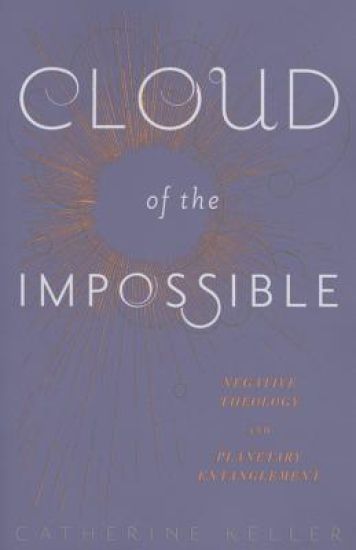
Cloud of the Impossible

Cloud of the Impossible

Catherine Keller

Columbia University Press
2014
sidottu
The experience of the impossible churns up in our epoch whenever a collective dream turns to trauma: politically, sexually, economically, and with a certain ultimacy, ecologically. Out of an ancient theological lineage, the figure of the cloud comes to convey possibility in the face of the impossible. An old mystical nonknowing of God now hosts a current knowledge of uncertainty, of indeterminate and interdependent outcomes, possibly catastrophic. Yet the connectivity and collectivity of social movements, of the fragile, unlikely webs of an alternative notion of existence, keep materializing--a haunting hope, densely entangled, suggesting a more convivial, relational world. Catherine Keller brings process, feminist, and ecopolitical theologies into transdisciplinary conversation with continental philosophy, the quantum entanglements of a "participatory universe," and the writings of Nicholas of Cusa, Walt Whitman, A. N. Whitehead, Gilles Deleuze, and Judith Butler, to develop a "theopoetics of nonseparable difference." Global movements, personal embroilments, religious diversity, the inextricable relations of humans and nonhumans--these phenomena, in their unsettling togetherness, are exceeding our capacity to know and manage. By staging a series of encounters between the nonseparable and the nonknowable, Keller shows what can be born from our cloudiest entanglement.
Cloud of the Impossible

Cloud of the Impossible

Catherine Keller

Columbia University Press
2014
pokkari
The experience of the impossible churns up in our epoch whenever a collective dream turns to trauma: politically, sexually, economically, and with a certain ultimacy, ecologically. Out of an ancient theological lineage, the figure of the cloud comes to convey possibility in the face of the impossible. An old mystical nonknowing of God now hosts a current knowledge of uncertainty, of indeterminate and interdependent outcomes, possibly catastrophic. Yet the connectivity and collectivity of social movements, of the fragile, unlikely webs of an alternative notion of existence, keep materializing--a haunting hope, densely entangled, suggesting a more convivial, relational world. Catherine Keller brings process, feminist, and ecopolitical theologies into transdisciplinary conversation with continental philosophy, the quantum entanglements of a "participatory universe," and the writings of Nicholas of Cusa, Walt Whitman, A. N. Whitehead, Gilles Deleuze, and Judith Butler, to develop a "theopoetics of nonseparable difference." Global movements, personal embroilments, religious diversity, the inextricable relations of humans and nonhumans--these phenomena, in their unsettling togetherness, are exceeding our capacity to know and manage. By staging a series of encounters between the nonseparable and the nonknowable, Keller shows what can be born from our cloudiest entanglement.
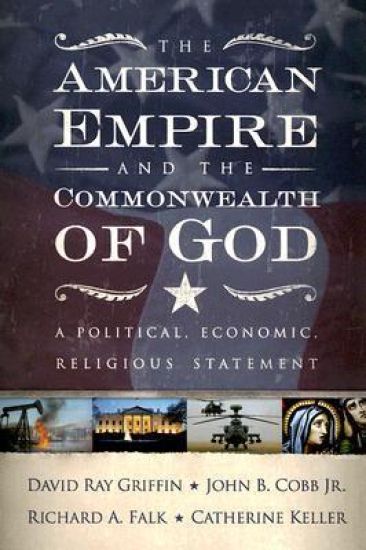
The American Empire and the Commonwealth of God

The American Empire and the Commonwealth of God

David Ray Griffin; John B. Cobb Jr.; Richard A. Falk; Catherine Keller

Westminster/John Knox Press,U.S.
2006
nidottu
In this book, four distinguished scholars level a powerful critique of the rapid expansion of the emerging American empire and its oppressive and destructive political, military, and economic policies. Arguing that a global Pax Americana is internationally disastrous, the authors demonstrate how America's imperialism inevitably leads to rampant irreversible ecological devastation, expanding military force for imperialistic purposes, and a grossly inequitable distribution of goods--all leading to the diminished well-being of human communities.
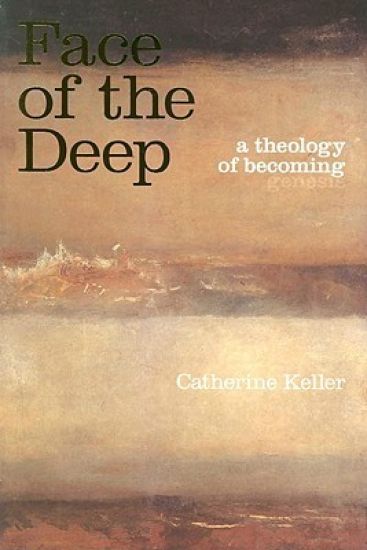
The Face of the Deep

The Face of the Deep

Catherine Keller

Routledge
2002
nidottu

Halvin toimitettuna 61,60 €

This is a groundbreaking, highly original work of postmodern feminist theology from one of the most important authors in the field. The Face of the Deep deconstructs the Christian doctrine of creation which claims that a transcendent Lord unilaterally created the universe out of nothing. Catherine Keller's impassioned, graceful meditation develops an alternative representation of the cosmic creative process, drawing upon Hebrew myths of creation, from chaos, and engaging with the political and the mystical, the literary and the scientific, the sexual and the racial. As a landmark work of immense significance for Jewish and Christian theology, gender studies, literature, philosophy and ecology, The Face of the Deep takes our originary story to a new horizon, rewriting the starting point for Western spiritual discourse.
The Face of the Deep

The Face of the Deep

Catherine Keller

Routledge
2002
sidottu
This is a groundbreaking, highly original work of postmodern feminist theology from one of the most important authors in the field. The Face of the Deep deconstructs the Christian doctrine of creation which claims that a transcendent Lord unilaterally created the universe out of nothing. Catherine Keller's impassioned, graceful meditation develops an alternative representation of the cosmic creative process, drawing upon Hebrew myths of creation, from chaos, and engaging with the political and the mystical, the literary and the scientific, the sexual and the racial. As a landmark work of immense significance for Jewish and Christian theology, gender studies, literature, philosophy and ecology, The Face of the Deep takes our originary story to a new horizon, rewriting the starting point for Western spiritual discourse.