Kirjojen hintavertailu – 12 859 828 kirjaa ja 27 kauppaa

Kirjailija

Catherine Kerrison

Kirjat ja teokset yhdessä paikassa: 5 kirjaa, julkaisuja vuosilta 2005–2021, suosituimpiin kuuluu A Colonial Southern Bookshelf. Vertaile teosten hintoja ja tarkista saatavuus suomalaisista kirjakaupoista.

5 kirjaa

Kirjojen julkaisuvuodet: 2005–2021.

A Colonial Southern Bookshelf

A Colonial Southern Bookshelf

Richard Davis; Catherine Kerrison

UNIVERSITY OF GEORGIA PRESS
2021
pokkari
A Colonial Southern Bookshelf studies popular books among southern readers in eighteenth-century America. From booksellers’ lists and sale catalogs, Richard Beale Davis’s study focuses on three key groups of literature: books in law, politics, and history; books on religious topics; and belles lettres. His examination of the colonial southern library suggests many revealing conclusions: persons of many social and economic levels owned and read books; literacy was more widespread than many historians have perceived; the vast majority of the books in southern libraries were published in England and Europe; and colonial newspapers constituted an important influence on cultural tastes. A Colonial Southern Bookshelf takes a historical look at the popular reading lists of the time and what they say about society in eighteenth-century America. The Georgia Open History Library has been made possible in part by a major grant from the National Endowment for the Humanities: Democracy demands wisdom. Any views, findings, conclusions, or recommendations expressed in this collection, do not necessarily represent those of the National Endowment for the Humanities.

A Colonial Southern Bookshelf

A Colonial Southern Bookshelf

Richard Davis; Catherine Kerrison

UNIVERSITY OF GEORGIA PRESS
2021
sidottu
A Colonial Southern Bookshelf studies popular books among southern readers in eighteenth-century America. From booksellers’ lists and sale catalogs, Richard Beale Davis’s study focuses on three key groups of literature: books in law, politics, and history; books on religious topics; and belles lettres. His examination of the colonial southern library suggests many revealing conclusions: persons of many social and economic levels owned and read books; literacy was more widespread than many historians have perceived; the vast majority of the books in southern libraries were published in England and Europe; and colonial newspapers constituted an important influence on cultural tastes. A Colonial Southern Bookshelf takes a historical look at the popular reading lists of the time and what they say about society in eighteenth-century America. The Georgia Open History Library has been made possible in part by a major grant from the National Endowment for the Humanities: Democracy demands wisdom. Any views, findings, conclusions, or recommendations expressed in this collection, do not necessarily represent those of the National Endowment for the Humanities.
Jefferson's Daughters: Three Sisters, White and Black, in a Young America
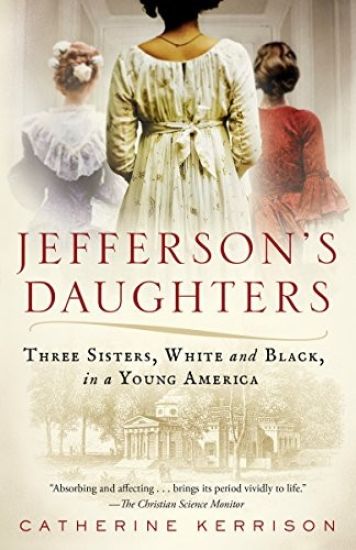
The remarkable untold story of Thomas Jefferson's three daughters--two white and free, one black and enslaved--and the divergent paths they forged in a newly independent America FINALIST FOR THE GEORGE WASHINGTON PRIZE - "Beautifully written . . . To a nuanced study of Jefferson's two white daughters, Martha and Maria, Kerrison] innovatively adds a discussion of his only enslaved daughter, Harriet Hemings."--The New York Times Book Review Thomas Jefferson had three daughters: Martha and Maria by his wife, Martha Wayles Jefferson, and Harriet by his slave Sally Hemings. Although the three women shared a father, the similarities end there. Martha and Maria received a fine convent school education while they lived with their father during his diplomatic posting in Paris. Once they returned home, however, the sisters found their options limited by the laws and customs of early America. Harriet Hemings followed a different path. She escaped slavery--apparently with the assistance of Jefferson himself. Leaving Monticello behind, she boarded a coach and set off for a decidedly uncertain future. For this groundbreaking triple biography, history scholar Catherine Kerrison has uncovered never-before-published documents written by the Jefferson sisters, as well as letters written by members of the Jefferson and Hemings families. The richly interwoven stories of these strong women and their fight to shape their own destinies shed new light on issues of race and gender that are still relevant today--and on the legacy of one of our most controversial Founding Fathers. Praise for Jefferson's Daughters "A fascinating glimpse of where we have been as a nation . . . Catherine Kerrison tells us the stories of three of Thomas Jefferson's children, who, due to their gender and race, lived lives whose most intimate details are lost to time."--USA Today "A valuable addition to the history of Revolutionary-era America."--The Boston Globe "A thought-provoking nonfiction narrative that reads like a novel."--BookPage
Claiming the Pen

Claiming the Pen

Catherine Kerrison

Cornell University Press
2015
pokkari
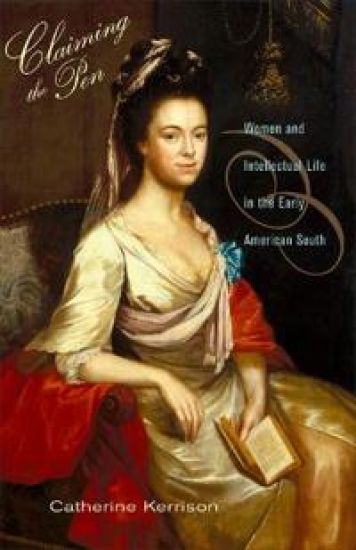
In 1711, the imperious Virginia patriarch William Byrd II spitefully refused his wife Lucy's plea for a book; a century later, Lady Jean Skipwith placed an order that sent the Virginia bookseller Joseph Swan scurrying to please. These vignettes bracket a century of change in white southern women's lives. Claiming the Pen offers the first intellectual history of early southern women. It situates their reading and writing within the literary culture of the wider Anglo-Atlantic world, thus far understood to be a masculine province, even as they inhabited the limited, provincial social circles of the plantation South. Catherine Kerrison uncovers a new realm of female education in which conduct-of-life advice—both the dry pedantry of sermons and the risqué plots of novels—formed the core reading program. Women, she finds, learned to think and write by reading prescriptive literature, not Greek and Latin classics, in impromptu home classrooms, rather than colleges and universities, and from kin and friends, rather than schoolmates and professors. Kerrison also reveals that southern women, in their willingness to "take up the pen" and so claim new rights, seized upon their racial superiority to offset their gender inferiority. In depriving slaves of education, southern women claimed literacy as a privilege of their whiteness, and perpetuated and strengthened the repressive institutions of slavery.
Claiming the Pen

Claiming the Pen

Catherine Kerrison

Cornell University Press
2005
sidottu
In 1711, the imperious Virginia patriarch William Byrd II spitefully refused his wife Lucy's plea for a book; a century later, Lady Jean Skipwith placed an order that sent the Virginia bookseller Joseph Swan scurrying to please. These vignettes bracket a century of change in white southern women's lives. Claiming the Pen offers the first intellectual history of early southern women. It situates their reading and writing within the literary culture of the wider Anglo-Atlantic world, thus far understood to be a masculine province, even as they inhabited the limited, provincial social circles of the plantation South. Catherine Kerrison uncovers a new realm of female education in which conduct-of-life advice—both the dry pedantry of sermons and the risqué plots of novels—formed the core reading program. Women, she finds, learned to think and write by reading prescriptive literature, not Greek and Latin classics, in impromptu home classrooms, rather than colleges and universities, and from kin and friends, rather than schoolmates and professors. Kerrison also reveals that southern women, in their willingness to "take up the pen" and so claim new rights, seized upon their racial superiority to offset their gender inferiority. In depriving slaves of education, southern women claimed literacy as a privilege of their whiteness, and perpetuated and strengthened the repressive institutions of slavery.