Kirjojen hintavertailu – 12 903 725 kirjaa ja 27 kauppaa

Kirjailija

Catherine L. Kling

Kirjat ja teokset yhdessä paikassa: 5 kirjaa, julkaisuja vuosilta 2008–2014, suosituimpiin kuuluu Hypoxia in the Northern Gulf of Mexico. Vertaile teosten hintoja ja tarkista saatavuus suomalaisista kirjakaupoista.

5 kirjaa

Kirjojen julkaisuvuodet: 2008–2014.

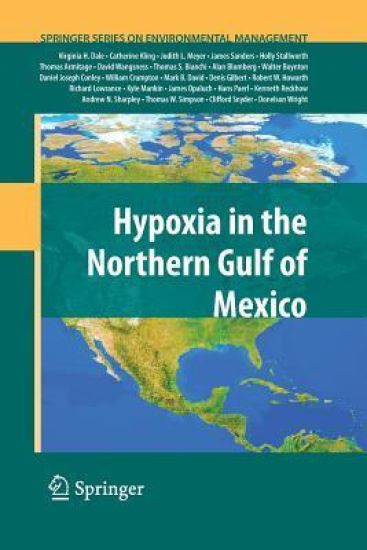
Hypoxia in the Northern Gulf of Mexico

Hypoxia in the Northern Gulf of Mexico

Virginia H. Dale; Catherine L. Kling; Judith L. Meyer; James Sanders; Holly Stallworth; Thomas Armitage; David Wangsness; Thomas Bianchi; Alan Blumberg; Walter Boynton; Daniel J. Conley; William Crumpton; Mark David; Denis Gilbert; Robert W. Howarth; Richard Lowrance; Kyle Mankin; James Opaluch; Hans Paerl; Kenneth Reckhow; Andrew N. Sharpley; Thomas W. Simpson; Clifford S. Snyder; Donelson Wright

Springer-Verlag New York Inc.
2012
nidottu
Since 1985, scientists have been documenting a hypoxic zone in the Gulf of Mexico each year. The hypoxic zone, an area of low dissolved oxygen that cannot s- port marine life, generally manifests itself in the spring. Since marine species either die or ee the hypoxic zone, the spread of hypoxia reduces the available habitat for marine species, which are important for the ecosystem as well as commercial and recreational shing in the Gulf. Since 2001, the hypoxic zone has averaged 2 1 16,500 km during its peak summer months , an area slightly larger than the state 2 2 of Connecticut, and ranged from a low of 8,500 km to a high of 22,000 km . To address the hypoxia problem, the Mississippi River/Gulf of Mexico Watershed Nutrient Task Force (or Task Force) was formed to bring together represen- tives from federal agencies, states, and tribes to consider options for responding to hypoxia. The Task Force asked the White House Of ce of Science and Technology Policy to conduct a scienti c assessment of the causes and consequences of Gulf hypoxia through its Committee on Environment and Natural Resources (CENR).
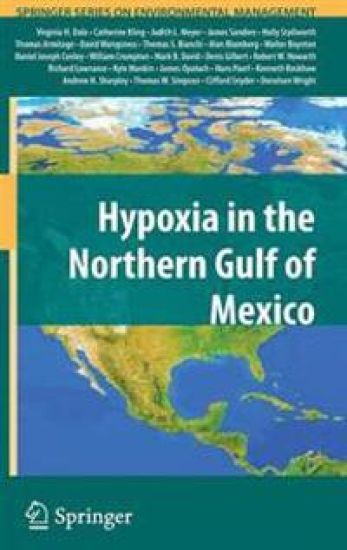
Hypoxia in the Northern Gulf of Mexico

Hypoxia in the Northern Gulf of Mexico

Virginia H. Dale; Catherine L. Kling; Judith L. Meyer; James Sanders; Holly Stallworth; Thomas Armitage; David Wangsness; Thomas Bianchi; Alan Blumberg; Walter Boynton; Daniel J. Conley; William Crumpton; Mark David; Denis Gilbert; Robert W. Howarth; Richard Lowrance; Kyle Mankin; James Opaluch; Hans Paerl; Kenneth Reckhow; Andrew N. Sharpley; Thomas W. Simpson; Clifford S. Snyder; Donelson Wright

Springer-Verlag New York Inc.
2010
sidottu
Since 1985, scientists have been documenting a hypoxic zone in the Gulf of Mexico each year. The hypoxic zone, an area of low dissolved oxygen that cannot s- port marine life, generally manifests itself in the spring. Since marine species either die or ee the hypoxic zone, the spread of hypoxia reduces the available habitat for marine species, which are important for the ecosystem as well as commercial and recreational shing in the Gulf. Since 2001, the hypoxic zone has averaged 2 1 16,500 km during its peak summer months , an area slightly larger than the state 2 2 of Connecticut, and ranged from a low of 8,500 km to a high of 22,000 km . To address the hypoxia problem, the Mississippi River/Gulf of Mexico Watershed Nutrient Task Force (or Task Force) was formed to bring together represen- tives from federal agencies, states, and tribes to consider options for responding to hypoxia. The Task Force asked the White House Of ce of Science and Technology Policy to conduct a scienti c assessment of the causes and consequences of Gulf hypoxia through its Committee on Environment and Natural Resources (CENR).
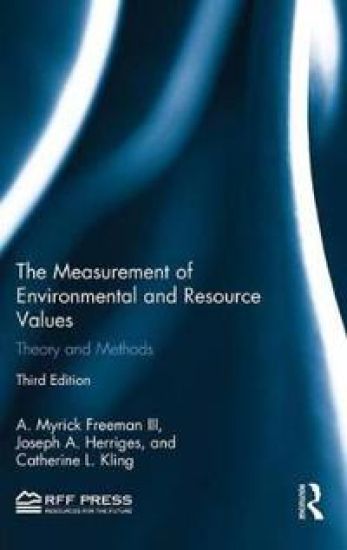
The Measurement of Environmental and Resource Values

The Measurement of Environmental and Resource Values

A. Myrick Freeman III; Joseph A. Herriges; Catherine L. Kling

Routledge
2014
nidottu
The first edition of this important work was the winner of the 2002 Publication of Enduring Quality award by the Association of Environmental and Resource Economists. The continuing premise for the book is that estimates of the economic values of environmental and natural resource services are essential for effective policy-making. As previous editions, the third edition, which includes two additional co-authors, presents a comprehensive treatment of the theory and methods involved in estimating environmental benefits. Researchers, policy-makers, and practitioners will welcome the work as an up-to-date reference on recent developments. Students will gain a better understanding of the contribution that economics as a discipline can make to decisions concerning pollution control and human health, recreation, environmental amenities, and other critical issues concerning the way we use and interact with environmental and natural resource systems. To reflect recent progress in both the theory and practice of non-market valuation, the third edition includes more details on empirical approaches to measurement, expanded discussion of the reasons for divergence between "willingness to pay" and "willingness to accept compensation," and increased coverage of econometric issues encountered in estimation. In keeping with its cutting edge orientation, it also includes more discussion of survey design, equilibrium sorting models, and the implications of behavioral economics for welfare measurements and benefit cost analysis.
The Measurement of Environmental and Resource Values

The Measurement of Environmental and Resource Values

A. Myrick Freeman III; Joseph A. Herriges; Catherine L. Kling

Routledge
2014
sidottu
The first edition of this important work was the winner of the 2002 Publication of Enduring Quality award by the Association of Environmental and Resource Economists. The continuing premise for the book is that estimates of the economic values of environmental and natural resource services are essential for effective policy-making. As previous editions, the third edition, which includes two additional co-authors, presents a comprehensive treatment of the theory and methods involved in estimating environmental benefits. Researchers, policy-makers, and practitioners will welcome the work as an up-to-date reference on recent developments. Students will gain a better understanding of the contribution that economics as a discipline can make to decisions concerning pollution control and human health, recreation, environmental amenities, and other critical issues concerning the way we use and interact with environmental and natural resource systems. To reflect recent progress in both the theory and practice of non-market valuation, the third edition includes more details on empirical approaches to measurement, expanded discussion of the reasons for divergence between "willingness to pay" and "willingness to accept compensation," and increased coverage of econometric issues encountered in estimation. In keeping with its cutting edge orientation, it also includes more discussion of survey design, equilibrium sorting models, and the implications of behavioral economics for welfare measurements and benefit cost analysis.
Revealed Preference Approaches to Environmental Valuation Volumes I and II
In this two volume collection the editors have chosen a sample of some of the most essential and inspirational articles and papers for understanding revealed preference methods to value environmental amenities. The papers cover the gamut of methods that are typically classified as revealed preference approaches - including: recreation demand models, hedonic methods, and averting behavior methods, as well as efforts to combine stated and revealed preferences. While this collection is far from exhaustive, the editors have included papers they believe will represent the state of the art in the theory and application of revealed preference methods, contribute to development of the state of the art, or raise fundamental challenges and insights that will drive the research agenda in the coming years.