Kirjojen hintavertailu – 12 903 725 kirjaa ja 27 kauppaa

Kirjailija

Catherine Prendergast

Kirjat ja teokset yhdessä paikassa: 5 kirjaa, julkaisuja vuosilta 2003–2022, suosituimpiin kuuluu Can I Use I?. Vertaile teosten hintoja ja tarkista saatavuus suomalaisista kirjakaupoista.

5 kirjaa

Kirjojen julkaisuvuodet: 2003–2022.

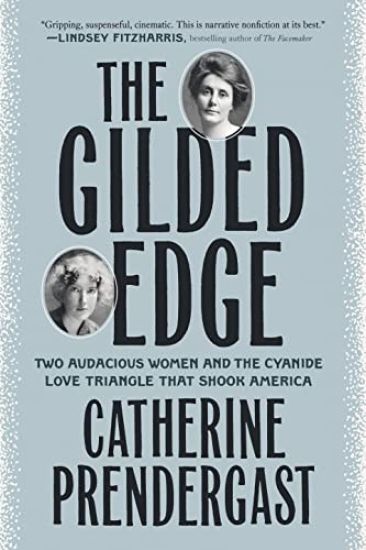
The Gilded Edge: Two Audacious Women and the Cyanide Love Triangle That Shook America
"The Gilded Edge is a compelling read from start to finish. Gripping, suspenseful, cinematic. This is narrative nonfiction at its best."--Lindsey Fitzharris, bestselling author of The Butchering Art Astonishingly well written, painstakingly researched, and set in the evocative locations of earthquake-ravaged San Francisco and the Monterey Peninsula, the true story of two women--a wife and a poet--who learn the high price of sexual and artistic freedom in a vivid depiction of the debauchery of the late Gilded Age Nora May French and Carrie Sterling arrive at Carmel-by-the-Sea at the turn of the twentieth century with dramatically different ambitions. Nora, a stunning, brilliant, impulsive writer in her early twenties, seeks artistic recognition and Bohemian refuge among the most celebrated counterculturalists of the era. Carrie, long-suffering wife of real estate developer George Sterling, wants the opposite: a semblance of the stability she thought her advantageous marriage would offer, threatened now that her philandering husband has taken to writing poetry. After her second abortion, Nora finds herself in a desperate situation but is rescued by an invitation to stay with the Sterlings. To Carrie's dismay, George and the arrestingly beautiful poetess fall instantly into an affair. The ensuing love triangle, which ultimately ends with the deaths of all three, is more than just a wild love story and a fascinating forgotten chapter. It questions why Nora May--in her day a revered poet whose nationally reported suicide gruesomely inspired youths across the country to take their own lives, with her verses in their pockets no less--has been rendered obscure by literary history. It depicts America at a turning point, as the Gilded Age groans in its death throes and young people, particularly women, look toward a brighter, more egalitarian future. In an unfortunately familiar development, this vision proves to be a mirage. But women's rage at the scam redefines American progressivism forever. For readers of Nathalia Holt, Denise Kiernan, and Sonia Purnell, this shocking history with a feminist bite is not to be missed.
The Gilded Edge: Two Audacious Women and the Cyanide Love Triangle That Shook America
"The Gilded Edge is a compelling read from start to finish. Gripping, suspenseful, cinematic. This is narrative nonfiction at its best."--Lindsey Fitzharris, bestselling author of The Butchering Art Astonishingly well written, painstakingly researched, and set in the evocative locations of earthquake-ravaged San Francisco and the Monterey Peninsula, the true story of two women--a wife and a poet--who learn the high price of sexual and artistic freedom in a vivid depiction of the debauchery of the late Gilded Age Nora May French and Carrie Sterling arrive at Carmel-by-the-Sea at the turn of the twentieth century with dramatically different ambitions. Nora, a stunning, brilliant, impulsive writer in her early twenties, seeks artistic recognition and Bohemian refuge among the most celebrated counterculturalists of the era. Carrie, long-suffering wife of real estate developer George Sterling, wants the opposite: a semblance of the stability she thought her advantageous marriage would offer, threatened now that her philandering husband has taken to writing poetry. After her second abortion, Nora finds herself in a desperate situation but is rescued by an invitation to stay with the Sterlings. To Carrie's dismay, George and the arrestingly beautiful poetess fall instantly into an affair. The ensuing love triangle, which ultimately ends with the deaths of all three, is more than just a wild love story and a fascinating forgotten chapter. It questions why Nora May--in her day a revered poet whose nationally reported suicide gruesomely inspired youths across the country to take their own lives, with her verses in their pockets no less--has been rendered obscure by literary history. It depicts America at a turning point, as the Gilded Age groans in its death throes and young people, particularly women, look toward a brighter, more egalitarian future. In an unfortunately familiar development, this vision proves to be a mirage. But women's rage at the scam redefines American progressivism forever. For readers of Nathalia Holt, Denise Kiernan, and Sonia Purnell, this shocking history with a feminist bite is not to be missed.
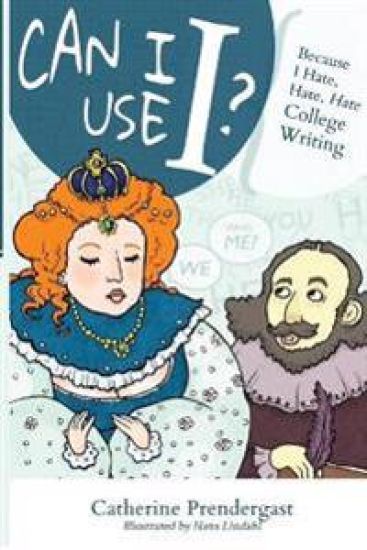
Can I Use I?

Can I Use I?

Catherine Prendergast

Out of Pocket Press
2015
pokkari
Can I use "I" in my college paper? The short answer: Yes. But keep reading. Even if you don't like college writing-no, even if you hate college writing-this guide will get you through it. It offers clear and concise answers to your questions about writing college papers. Find out: What makes a good research question? How do I write a strong thesis statement? What if I don't understand my assignment? How do I write an introduction? How do I answer the "so what" question?
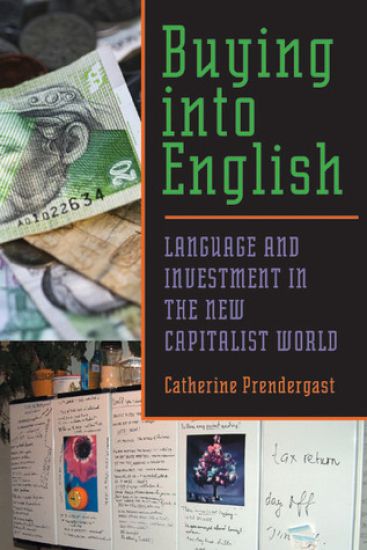
Buying into English

Buying into English

Catherine Prendergast

University of Pittsburgh Press
2008
nidottu
Many developing countries have little choice but to “buy into English” as a path to ideological and material betterment. Based on extensive fieldwork in Slovakia, Prendergast assembles a rich ethnographic study that records the thoughts, aspirations, and concerns of Slovak nationals, language instructors, journalists, and textbook authors who contend with the increasing importance of English to their rapidly evolving world. She reveals how the use of English in everyday life has becomes suffused with the terms of the knowledge and information economy, where language is manipulated for power and profit. Buying into English presents an astute analysis of the factors that have made English so prominent and yet so elusive, and a deconstruction of the myth of guaranteed viability for new states and economies through English.
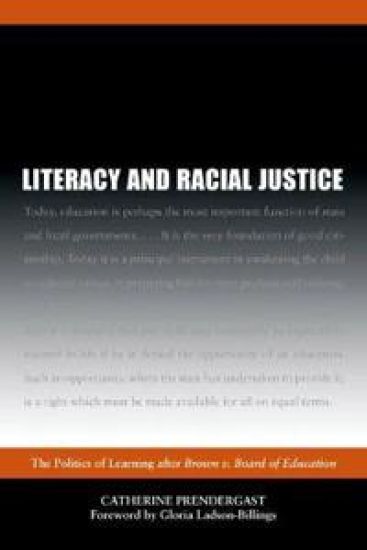
Literacy and Racial Justice

Literacy and Racial Justice

Catherine Prendergast; Gloria Ladson-Billings

Southern Illinois University Press
2003
nidottu
In anticipation of the fiftieth anniversary of the landmark Brown v. Board of Education decision, Catherine Prendergast draws on a combination of insights from legal studies and literacy studies to interrogate contemporary multicultural literacy initiatives, thus providing a sound historical basis that informs current debates over affirmative action, school vouchers, reparations, and high-stakes standardized testing. As a result of Brown and subsequent crucial civil rights court cases, literacy and racial justice are firmly enmeshed in the American imagination— so much so that it is difficult to discuss one without referencing the other. Breaking with the accepted wisdom that the Brown decision was an unambiguous victory for the betterment of race relations, Literacy and Racial Justice: The Politics of Learning after Brown v. Board of Education finds that the ruling reinforced traditional conceptions of literacy as primarily white property to be controlled and disseminated by an empowered majority. Prendergast examines civil rights era Supreme Court rulings and immigration cases spanning a century of racial injustice to challenge the myth of assimilation through literacy. Advancing from Ways with Words, Shirley Brice Heath’ s landmark study of desegregated communities, Prendergast argues that it is a shared understanding of literacy as white property which continues to impact problematic classroom dynamics and education practices. To offer a positive model for reimagining literacy instruction that is truly in the service of racial justice, Prendergast presents a naturalistic study of an alternative public secondary school. Outlining new directions and priorities for inclusive literacy scholarship in America, Literacy and Racial Justice concludes that a literate citizen is one who can engage rather than overlook longstanding legacies of racial strife.