Kirjojen hintavertailu – 12 903 724 kirjaa ja 27 kauppaa

Kirjailija

Ceil Lucas

Kirjat ja teokset yhdessä paikassa: 9 kirjaa, julkaisuja vuosilta 1994–2020, suosituimpiin kuuluu What's Your Sign for Pizza?. Vertaile teosten hintoja ja tarkista saatavuus suomalaisista kirjakaupoista.

9 kirjaa

Kirjojen julkaisuvuodet: 1994–2020.

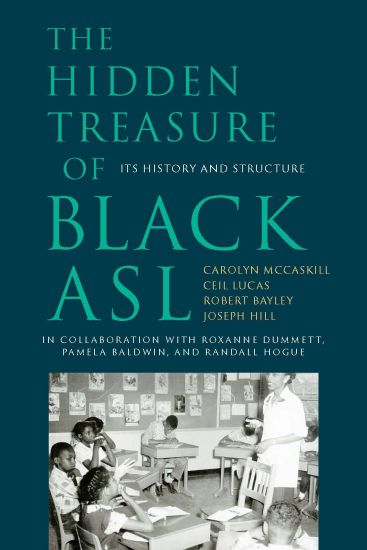
The Hidden Treasure of Black ASL – Its History and  Structure

The Hidden Treasure of Black ASL – Its History and Structure

Carolyn Mccaskill; Ceil Lucas; Robert Bayley; Joseph Christop Hill; Roxanne Dummett

Gallaudet University Press,U.S.
2020
nidottu
Black ASL has long been recognized as a distinct variety of American Sign Language based on abundant anecdotal evidence. The Hidden Treasure of Black ASL, originally published in 2011, presents the first sociohistorical and linguistic study of this language variety. Based on the findings of the Black ASL Project, which undertook this unprecedented research, Hidden Treasure documents the stories and language of the African American Deaf community. With links to online supplemental video content that includes interviews with Black ASL users (formerly on DVD), this volume is a groundbreaking scholarly contribution and a powerful affirmation for Black Deaf people. This paperback edition includes an updated foreword by Glenn B. Anderson, a new preface that reflects on the impact of this research, and an expanded list of references and resources on Black ASL. The supplemental video content is available online at the Gallaudet University Press YouTube Channel. Under Playlists, click “The Hidden Treasure of Black ASL: Companion Video to the Book.” The original Black ASL Project research videos are also available. Featured in the film Signing Black in America: The Story of Black ASL, produced by The Language and Life Project at North Carolina State University (Dr. Walt Wolfram, Executive Producer). Look for it on PBS.
How I Got Here: A Memoir

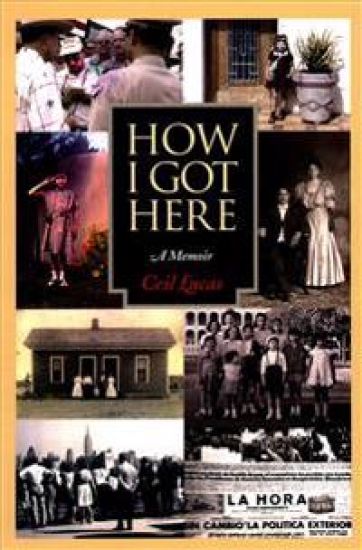
How I Got Here: A Memoir

Ceil Lucas

Book Publishers Network
2020
nidottu
How I Got Here: A Memoir tells about her upbringing in Guatemala and Romeand then as a young adult in America. As a result of her upbringing, upon meetingsomeone new, she invariably says, "I wasn't raised here"--"here" meaning America. But she has also discovered that her first ancestors on her mother's side were amongthe Scottish prisoners of war transported to Maryland's Eastern Shore in 1654; thefirst Lucas to America was a Quaker who sailed to Philadelphia in 1679. The stories ofher ancestors--from Scottish prisoners to slaveholders and beyond--have become herstories and are central to her genealogical memoir. Those stories help explain, in thebroadest sense, how she got here.
What's Your Sign for Pizza?

What's Your Sign for Pizza?

Ceil Lucas; Robert Bayley; Clayton Valli

GALLAUDET UNIVERSITY PRESS,U.S.
2019
pokkari
This introductory text celebrates another dimension of diversity in the United States Deaf community -- variation in the way American Sign Language (ASL) is used by Deaf people all across the nation. The different ways people have of saying or signing the same thing defines variation in language. In spoken English, some people say "soda," others say "pop," "Coke," or "soft drink;" in ASL, there are many signs for "birthday," "Halloween," "early," and of course, "pizza." What's Your Sign for Pizza? derives from an extensive seven-year research project in which more than 200 Deaf ASL users representing different ages, genders, and ethnic groups from seven different regions were filmed sharing their signs for everyday vocabulary. The film clips form a supplemental resource to the text and are referenced in their relevant chapters. The text begins with an explanation of the basic concepts of language and the structure of sign language. Each part of the text concludes with questions for discussion, and the final section offers three supplemental readings that provide further information on variation in both spoken and signed languages. What's Your Sign for Pizza also briefly sketches the development of ASL, which explains the relationships between language varieties throughout the country. The videos are available online at www.youtube.com/GallaudetUniversityPress.
Italia Contemporanea

Italia Contemporanea

Ceil Lucas

Yale University Press
2015
pokkari
This exciting, authentic text will enhance any Italian class or laboratory program. It consists of interviews with ordinary people speaking Italian—among them a farmer, a mechanic, a neurologist, a journalist, a nurse, and a secretary. Each interview focuses on aspects of everyday life: work, housing, soccer, poetry, the role of women in Italian society, politics, the use of language, and many other lively topics. Natural and unscripted, the interviews showcase a variety of accents, including Roman, Florentine, and Milanese. Each interview is included in the online media that accompanies this edition. Designed for use with students at almost any level, Italia Contemporanea is ideal for improving listening and comprehension skills. The text includes complete transcripts of each interview, notes about vocabulary and usage, questions about the content of the interviews, as well as questions about the student’s own experience.
Improve Your English: English in the Workplace (DVD w/ Book)

Improve Your English: English in the Workplace (DVD w/ Book)

Stephen Brown; Ceil Lucas

McGraw-Hill Professional
2008
nidottu
Build your English-speaking skills by simply watching and listeningPeople do not talk like language-learning books are written. They pause, say “um” and “er,” and even forget to finish their sentences! This can be confusing for new speakers of English, but Improve Your English: English in the Workplace helps you understand what your coworkers are saying and gives you confidence to talk with them naturally and easily. The DVD shows speakers of English talking about their careers, job searches, average days, and other work-related topics. These chats are unscripted and unrehearsed, so you'll hear how people really talk around the office or worksite. You will gain confidence in your English skills with help from:A workbook that features a transcript of the DVD, definitions of unfamiliar vocabulary and phrases, and skill-building questions at the end of each chapter to help you remember what you have learnedEnglish speakers from different regions who will expose you to accents and language specific to their areas
Turn-taking, Fingerspelling and Contact in Signed Languages

Turn-taking, Fingerspelling and Contact in Signed Languages

Ceil Lucas

Gallaudet University Press,U.S.
2002
sidottu
In five compelling chapters, this volume elucidates several key factors of the signed languages used in select international Deaf communities. Kristin Mulrooney studies ASL (American Sign Language) users to delve into the reasons behind the perceived differences in how men and women fingerspell. Bruce Sofinski assesses the current state of transliteration from spoken English to manually coded English, disclosing that competent transliterators do not necessarily produce the desired word-for-sign exchange. In the third chapter Paul Dudis comments upon a remarkable aspect of discourse in ASL-grounded blends. He discusses how signers map particular concepts onto their hands and bodies, which allows them to enrich their narrative strategies. By observing meetings of deaf and nonsigning hearing people in the Flemish Deaf community, Mieke Van Herreweghe determines whether interpreters' turn-taking practices allow for equal participation. The final chapter features a respected team of Spanish researchers led by Esperanza Morales-Lopez who investigate the Catalan/Spanish bilingual community in Barcelona. These scholars measure the influence of recent worldwide, Deaf sociopolitical movements advocating signed languages on deaf groups already familiar with bilingual education. These scholars measure the influence of recent worldwide, Deaf sociopolitical movements advocating signed languages on deaf groups already familiar with bilingual education. Turn-Taking, Fingerspelling, and Contact in Signed Languages takes professional and lay readers alike on a scholarly sojourn of eclectic enrichment for all.
Sociolinguistic Variation in American Sign Language

Sociolinguistic Variation in American Sign Language

Ceil Lucas; Robert J. Bayley; Clayton Valli

Gallaudet University Press,U.S.
2001
sidottu
The culmination of a seven-year project, this volume provides a complete description of American Sign Language (ASL) variation. For four decades, linguists have studied how people from varying regions and backgrounds have different ways of saying the same thing. Noted scholars Ceil Lucas, Robert Bayley, and Clayton Valli led a team of exceptional researchers in applying techniques for analyzing spoken language variation to ASL. Their observations at the phonological, lexical, morphological, and syntactic levels demonstrate that ASL variation correlates with many of the same driving social factors of spoken languages, including age, socioeconomic class, gender, ethnic background, region, and sexual orientation. Internal constraints that mandate variant choices for spoken languages have been compared to ASL as well, with intriguing results. Sociolinguistic Variation in American Sign Language stands alone as the new standard for students and scholars committed to this discipline.
Language Diversity and Classroom Discourse

Language Diversity and Classroom Discourse

Ceil Lucas; Denise Glyn Borders

Praeger Publishers Inc
1994
nidottu
This book describes language diversity and classroom discourse: language use in the classroom in which children are dialect speakers. Specifically, the authors observed and videotaped a wide range of activities including whole groups with the teacher, small groups with and without the teacher, and one-on-one interaction, in kindergarten, fourth- and sixth- grade classrooms. The book is a description of what was found. Classroom language use is discussed in terms of language functions. The book also includes a discussion of why dialect is an issue and an overview of how dialect has been dealt with by researchers and practitioners. Finally, dialect diversity in the classroom is considered in light of the relationship between language, education, and society at large. The study is unique in that it provides a quantitative as well as qualitative picture of language use in the classroom with dialect speakers.
Language Diversity and Classroom Discourse

Language Diversity and Classroom Discourse

Ceil Lucas; Denise Glyn Borders

Praeger Publishers Inc
1994
sidottu
This book describes language diversity and classroom discourse: language use in the classroom in which children are dialect speakers. Specifically, the authors observed and videotaped a wide range of activities including whole groups with the teacher, small groups with and without the teacher, and one-on-one interaction, in kindergarten, fourth- and sixth- grade classrooms. The book is a description of what was found. Classroom language use is discussed in terms of language functions. The book also includes a discussion of why dialect is an issue and an overview of how dialect has been dealt with by researchers and practitioners. Finally, dialect diversity in the classroom is considered in light of the relationship between language, education, and society at large. The study is unique in that it provides a quantitative as well as qualitative picture of language use in the classroom with dialect speakers.