Kirjojen hintavertailu – 12 903 725 kirjaa ja 27 kauppaa

Kirjailija

Celia E. Deane-Drummond

Kirjat ja teokset yhdessä paikassa: 9 kirjaa, julkaisuja vuosilta 2001–2026, suosituimpiin kuuluu Morality's Future and the Transcendent. Vertaile teosten hintoja ja tarkista saatavuus suomalaisista kirjakaupoista.

Nimi esiintyy myös muodoissa: Celia E Deane-Drummond

9 kirjaa

Kirjojen julkaisuvuodet: 2001–2026.

Morality's Future and the Transcendent

Morality's Future and the Transcendent

Celia E. Deane-Drummond

Oxford University Press
2026
sidottu
This is the third and final volume of a three-part work exploring the evolution of wisdom, understood broadly to include both practical wisdom and humanity's capacity to connect with the divine. The first volume was primarily concerned with interspecies relationships and the core moral capacities of justice, compassion, and practical wisdom, arguing in the light of that analysis for the need for a different theoretical framing of the moral life, based on evolutionary, theological, and philosophical arguments. The second volume considered the darker side of human nature, the tendency for different vices and their evolutionary trajectories. This third volume focuses on humanity's capacity to reach for the transcendent within an evolutionary context and in dialogue with those moral capabilities associated with the spiritual life, including the theological virtues of faith, hope, and charity, alongside gratitude, wisdom, humility, grace, and joy. The evolution of compassion is now situated within the context of the development of humanity's capacity for mercy. This book weaves together and interrogates philosophical concepts, especially those inspired by the work of Paul Ricoeur, alongside moral psychology and the classic moral theology of the virtues in the work of Thomas Aquinas, considered in dialogue with the work of other theologians such as Karl Rahner. This volume is, therefore, concerned with the fundamental question of what difference the spiritual life makes to human capacities to do good in the light of what we know about our evolutionary past and current psychological theories, while also providing a critique of the latter through theological and philosophical epistemologies. It is relevant to the broader question of how change for the good might be possible in human behaviour, especially in the light of the serious global eco-social challenges facing humanity in the twenty-first century.
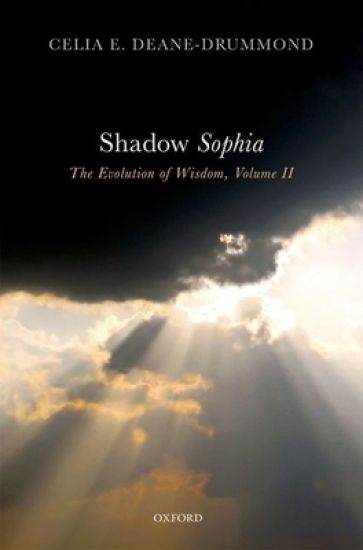
Shadow Sophia

Shadow Sophia

Celia E. Deane-Drummond

Oxford University Press
2021
sidottu
Why do humans who seem to be exemplars of virtue also have the capacity to act in atrocious ways? What are the roots of tendencies for sin and evil? A popular assumption is that it is our animalistic natures that are responsible for human immorality and sin, while our moral nature curtails and contains such tendencies through human powers of freedom and higher reason. This book challenges such assumptions as being far too simplistic. Through a careful engagement with evolutionary and psychological literature, Celia Deane-Drummond argues that tendencies towards vice are, more often than not, distortions of the very virtues that are capable of making us good. After beginning with Augustine's classic theory of original sin, the book probes the philosophical implications of sin's origins in dialogue with the philosophy of Paul Ricoeur. Different vices are treated in both individual and collective settings in keeping with a multispecies approach. Areas covered include selfishness, pride, violence, anger, injustice, greed, envy, gluttony, deception, lying, lust, despair, anxiety, and sloth. The work of Thomas Aquinas helps to illuminate and clarify much of this discussion on vice, including those vices which are more distinctive for human persons in community with other beings. Such an approach amounts to a search for the shadow side of human nature, shadow sophia. Facing that shadow is part of a fuller understanding of what makes us human and thus this book is a contribution to both theological anthropology and theological ethics.
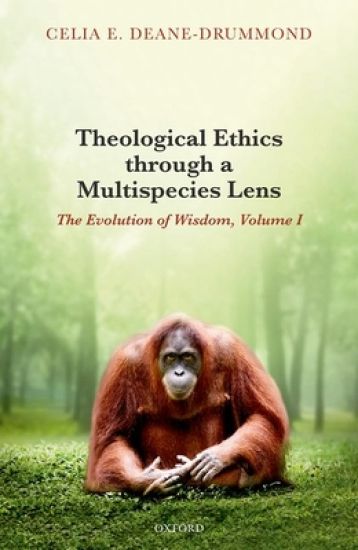
Theological Ethics through a Multispecies Lens

Theological Ethics through a Multispecies Lens

Celia E. Deane-Drummond

Oxford University Press
2019
sidottu
There are two driving questions informing this book. The first is where does our moral life come from? It presupposes that considering morality broadly is inadequate. Instead, different aspects need to be teased apart. It is not sufficient to assume that different virtues are bolted onto a vicious animality, red in tooth and claw. Nature and culture have interlaced histories. By weaving in evolutionary theories and debates on the evolution of compassion, justice and wisdom, it showa a richer account of who we are as moral agents. The second driving question concerns our relationships with animals. Deane-Drummond argues for a complex community-based multispecies approach. Hence, rather than extending rights, a more radical approach is a holistic multispecies framework for moral action. This need not weaken individual responsibility. She intends not to develop a manual of practice, but rather to build towards an alternative philosophically informed approach to theological ethics, including animal ethics. The theological thread weaving through this account is wisdom. Wisdom has many different levels, and in the broadest sense is connected with the flow of life understood in its interconnectedness and sociality. It is profoundly theological and practical. In naming the project the evolution of wisdom Deane-Drummond makes a statement about where wisdom may have come from and its future orientation. But justice, compassion and conscience are not far behind, especially in so far as they are relevant to both individual decision-making and institutions.
A Primer in Ecotheology

A Primer in Ecotheology

Celia E Deane-Drummond

Cascade Books
2017
sidottu
This book serves as an introduction to the burgeoning field of ecothology, illustrating both its variety and its commonality across different Christian theological divides. Some of the questions addressed in this short book include the following: How can the Bible still make sense in the context of climate change and biodiversity loss? Who on earth is Jesus Christ, and what does he mean for us in today's world? How can Christians be faithful to their traditions while responding to pressing calls to be engaged in environmental activism? What is the relationship between theory and practice, and local as well as global demands, and how is this relationship expressed in different ecclesial settings? How can we encourage each other to develop a sense of the earth as divine gift? Written in clear, accessible style, this book walks readers through difficult concepts and shows the way different sources in Christian theology have responded to one of the most significant cultural issues of our time. ""A Primer in Ecotheology offers far more than its modest title suggests. Celia Deane-Drummond is a leading scholar in ecotheology, and while she certainly offers her readers a user-friendly introduction to the field, she also invites them into a deep engagement with a wide range of urgent theological questions. This is a book that will be widely used in courses on ecological theology."" --Denis Edwards, Professorial Fellow at Australian Catholic University ""Regarding human-induced dangerous environmental-and-climatic change as fake or simply a technically soluble problem seems to be a perilous undertaking both for societies and nature. Regarding ecotheology as a marginal subdiscipline of Christian doctrine appears as likewise fatal for the deep understanding of faith. This experienced and merited author offers an elaborated survey of the field, diving into the integral ecology of Pope Francis and our surprising proximity and coevolution with hyenas, elephants, and apes. In a context of life-threatening environmental injustice, this book encourages practical commitment as well as deliberateness, reasonability, and responsibility."" --Sigurd Bergmann, Professor of Religious Studies at the Norwegian University of Science and Technology ""Here finally is an accessible, deeply engaging introduction to ecological theology for undergraduate and graduate students of different levels of familiarity with Christianity. Written by one of today's leading ecological theologians, the book maps the field of ecological theology with great skill and precision. While recognizing the important work of ecological theologies of creation, this book is much more comprehensive in its discussion of eco-theology. It traces the significance of science for ecological theology, provocatively charts emerging trends in the fields of ecological biblical hermeneutics, eco-feminist theology and eco-Christology, and provides a very rich reading of Pope Francis' Encyclical Laudato Si'. This is essential reading for everyone interested in putting Christian theology to work towards a just and sustainable community of life on our fragile planet."" --Hilda P. Koster, Associate Professor of Religion at Concordia College Celia Deane-Drummond is Professor of Theology at the University of Notre Dame and Director of the Center for Theology, Science and Human Flourishing. She is Chair of the European Forum for the Study of Religion and Environment. She is author of Eco-theology (2008) and coeditor of Religion in the Anthropocene (Cascade Books, 2017).
Creaturely Theology

Creaturely Theology

Celia E. Deane-Drummond; David Clough

SCM Press
2009
nidottu
Creaturely Theology is a ground-breaking scholarly collection of essays that maps out the agenda for the future study of the theology of the non-human and the post-human. A wide range of first-rate contributors show that theological reflection on non-human animals and related issues are an important though hitherto neglected part of the agenda of Christian theology and related disciplines. The book offers a genuine interdisciplinary conversation between theologians, philosophers and scientists and will be a standard text on the theology of non-human animals for years to come. Contributors include: Esther D. Reed (Exeter), Rachel Muers (Leeds), Stephen Clark (Liverpool), Neil Messer (Lampeter), Peter Scott (Manchester), Michael Northcott (Edinburgh), Christopher Southgate (Exeter)
Biology and Theology Today

Biology and Theology Today

Celia E. Deane-Drummond

SCM Press
2001
nidottu
Designed as a basic text, for students and non-specialists, in science and religion, this book brings together current advances in both areas in a fruitful dialogue and interchange. Deane-Drummond uses key illustrative examples from contemporary genetic science, ecology and Gaia as a way of probing present practice. She engages readers in theological reflection on recent advances in the biosciences in a way that shows the challenge of modern biological science to theology. As a book designed to promote engagement in dialogue, this one considers the particular contribution of theology to the debate, through an exploration of the philosophical and social basis for current biological science, including the questions raised by contemporary feminists. Specifically, it argues that the theological tradition of wisdom provides critical resources for theological reflection on biological science and emerging ethical issues. Moreover, the book argues that the wisdom motif finds key resources from a range of theological traditions, thus becoming a rich basis for ecumenical dialogue on issues of current social concern.