Kirjojen hintavertailu – 12 903 724 kirjaa ja 27 kauppaa

Kirjailija

Cesar Augusto Rossatto

Kirjat ja teokset yhdessä paikassa: 6 kirjaa, julkaisuja vuosilta 2004–2011, suosituimpiin kuuluu Reinventing Critical Pedagogy. Vertaile teosten hintoja ja tarkista saatavuus suomalaisista kirjakaupoista.

Nimi esiintyy myös muodoissa: César Augusto Rossatto

6 kirjaa

Kirjojen julkaisuvuodet: 2004–2011.

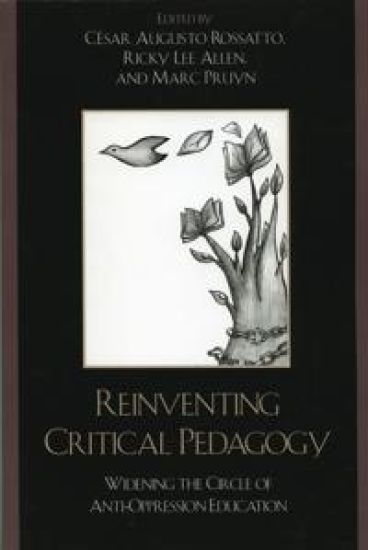
Reinventing Critical Pedagogy

Reinventing Critical Pedagogy

Cesar Augusto Rossatto; Ricky Lee Allen; Marc Pruyn

Rowman Littlefield Publishers
2006
nidottu
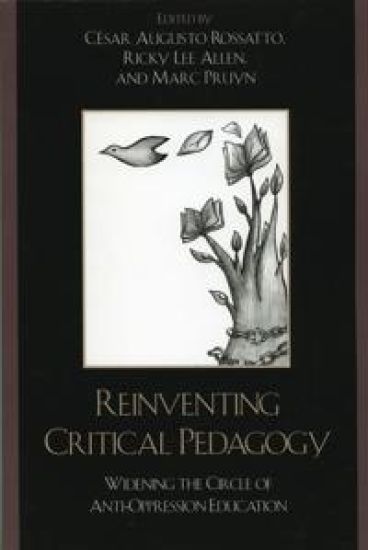
Reinventing Critical Pedagogy offers a fresh perspective from which to read, discuss, and debate recent critical interpretations of schooling and our world at present. The authors build upon past accomplishments of critical pedagogy and critique those elements that contradict the radically democratic orientation of the field. Ultimately, they argue that critical pedagogy needs to welcome a wider representational and ideological base for the oppressed, and that it should do so in a way that makes the field more vital in the preparation for the revolutionary struggles ahead. Reinventing Critical Pedagogy takes a step in that direction because it not only takes to task OexternalO forces such as capitalism, patriarchy, and white supremacy, but also engages the manifestations of these external forces within critical pedagogy itself.
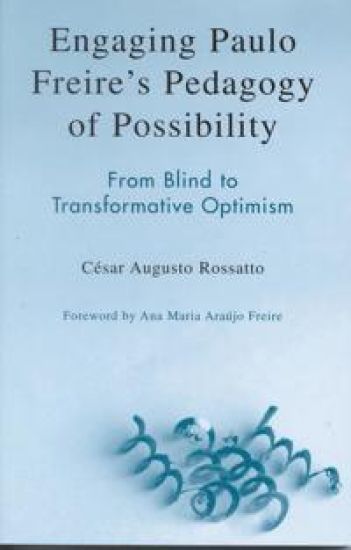
Engaging Paulo Freire's Pedagogy of Possibility

Engaging Paulo Freire's Pedagogy of Possibility

César Augusto Rossatto; Ana Maria Araújo Freire

Rowman Littlefield Publishers
2004
nidottu
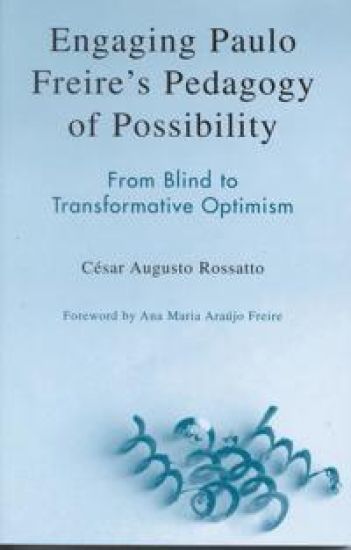
Engaging Paulo Freire's Pedagogy of Possibility is a cross-cultural case study of how people experience schooling in relation to their sense of time and optimism. César Augusto Rossatto examines how real-life situations and social structures influence people's construction of notions of possibilities. Positionality, or perceptions about life and projections of the future, has great impact on students' success in school. These perceptions-how they interpret the past, live in the present, and foresee the future-are, in turn, greatly influenced by their intellectual locality. By the same token, how educators see their position in the world and their classroom 'roles' determines their operandum beliefs. The findings of this study suggest that a curriculum based on Freirean critical pedagogy and time theories can be used to enhance time-consciousness values in contemporary social life.
Teaching for Global Community

Teaching for Global Community

Cesar Augusto Rossatto

Information Age Publishing
2011
nidottu
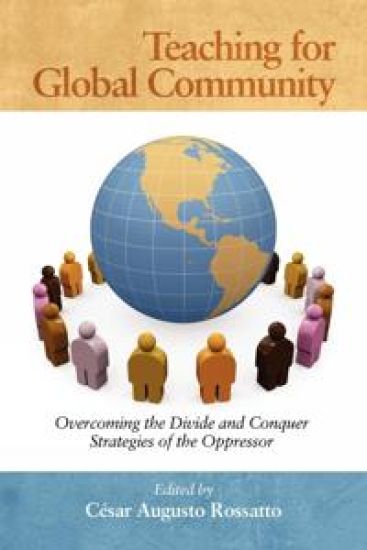
Education has long been viewed as a vehicle for building community. However, the critical role of education and schools for constructing community resistance is undermined by recent trends toward the centralization of educational policy-making (e.g. racial profiling new laws in the US—Arizona and Texas; No Child Left Behind and global racism), the normalization of “globalization” as a vehicle for the advancement of economic neo-liberalism and social hegemony, and the commodification of schooling in the service of corporate capitalism. Alternative visions of schooling are urgently needed to transform these dangerous trends so as to reconstruct public education as an emancipatory social project. Teaching for Global Community: Overcoming the Divide and Conquer Strategies of the Oppressor examines these issues among related others as a way to honor and re-examine Freirean principles and aim to take critical pedagogy in new directions for a new generation. The goal is to build upon past accomplishments of Paulo Freire’s work and critical pedagogy while moving beyond its historical limitations. This includes efforts that revisit and re-evaluate established topics in the field or take on new areas of contestation. Issues related to education, labor, and emancipation, broadly defined and from diverse geographical context, are addressed. The theoretical perspectives used to look at these emerge from critical pedagogy, critical race theory, critiques of globalization and neoliberalism, marxist and neo-marxist perspectives, social constructivism, comparative/international education, postmodernism indigenous perspectives, feminist theory, queer theory, poststructuralism, critical environmental studies, postcolonial studies, liberation theology, with a deep commitment to social justice.
Teaching for Global Community

Teaching for Global Community

Cesar Augusto Rossatto

Information Age Publishing
2011
sidottu
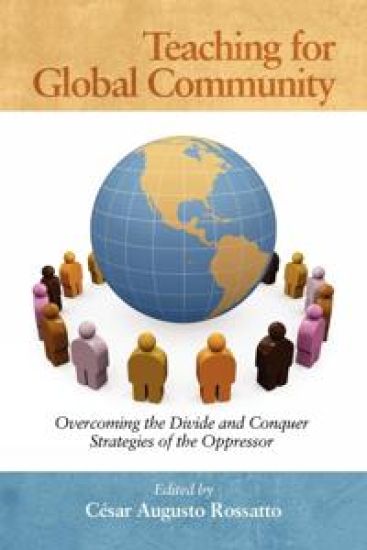
Education has long been viewed as a vehicle for building community. However, the critical role of education and schools for constructing community resistance is undermined by recent trends toward the centralization of educational policy-making (e.g. racial profiling new laws in the US—Arizona and Texas; No Child Left Behind and global racism), the normalization of “globalization” as a vehicle for the advancement of economic neo-liberalism and social hegemony, and the commodification of schooling in the service of corporate capitalism. Alternative visions of schooling are urgently needed to transform these dangerous trends so as to reconstruct public education as an emancipatory social project. Teaching for Global Community: Overcoming the Divide and Conquer Strategies of the Oppressor examines these issues among related others as a way to honor and re-examine Freirean principles and aim to take critical pedagogy in new directions for a new generation. The goal is to build upon past accomplishments of Paulo Freire’s work and critical pedagogy while moving beyond its historical limitations. This includes efforts that revisit and re-evaluate established topics in the field or take on new areas of contestation. Issues related to education, labor, and emancipation, broadly defined and from diverse geographical context, are addressed. The theoretical perspectives used to look at these emerge from critical pedagogy, critical race theory, critiques of globalization and neoliberalism, marxist and neo-marxist perspectives, social constructivism, comparative/international education, postmodernism indigenous perspectives, feminist theory, queer theory, poststructuralism, critical environmental studies, postcolonial studies, liberation theology, with a deep commitment to social justice.
Engaging Paulo Freire's Pedagogy of Possibility

Engaging Paulo Freire's Pedagogy of Possibility

César Augusto Rossatto; Ana Maria Araújo Freire

Rowman Littlefield Publishers
2004
sidottu
Engaging Paulo Freire's Pedagogy of Possibility is a cross-cultural case study of how people experience schooling in relation to their sense of time and optimism. César Augusto Rossatto examines how real-life situations and social structures influence people's construction of notions of possibilities. Positionality, or perceptions about life and projections of the future, has great impact on students' success in school. These perceptions-how they interpret the past, live in the present, and foresee the future-are, in turn, greatly influenced by their intellectual locality. By the same token, how educators see their position in the world and their classroom "roles" determines their operandum beliefs. The findings of this study suggest that a curriculum based on Freirean critical pedagogy and time theories can be used to enhance time-consciousness values in contemporary social life.