Kirjojen hintavertailu – 12 903 725 kirjaa ja 27 kauppaa

Kirjailija

Chad Posick

Kirjat ja teokset yhdessä paikassa: 8 kirjaa, julkaisuja vuosilta 2016–2022, suosituimpiin kuuluu The Development of Criminological Thought. Vertaile teosten hintoja ja tarkista saatavuus suomalaisista kirjakaupoista.

8 kirjaa

Kirjojen julkaisuvuodet: 2016–2022.

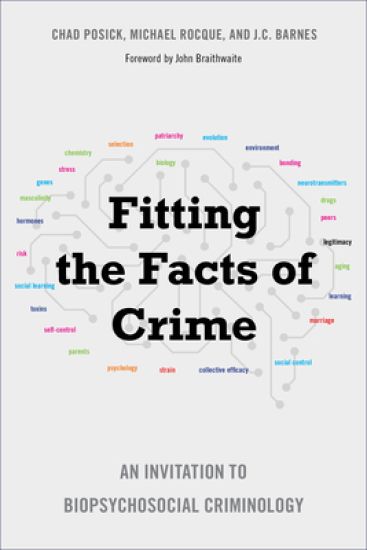
Fitting the Facts of Crime

Fitting the Facts of Crime

Chad Posick; Michael Rocque; J.C. Barnes; John Braithwaite

Temple University Press,U.S.
2022
sidottu
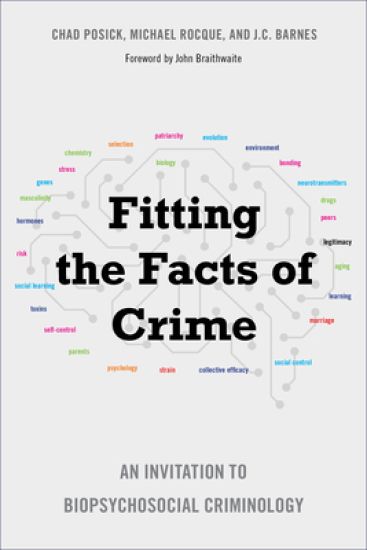
Biosocial criminology-and biosocial criminologists-focuses on both the environmental and biological factors that contribute to antisocial behavior. Importantly, these two domains are not separate parts of an equation but pieces of the same puzzle that fit together for a complete picture of the causes of crime/antisocial behavior. Fitting the Facts of Crime applies a biopsychosocial lens to the “13 facts of crime” identified by John Braithwaite in his classic book, Crime, Shame and Reintegration. The authors unpack established facts-about gender and sex, age, environment, education, class, social bonds and associations, stress, and other influences-providing both empirical research and evidence from biopsychosocial criminology to address the etiology behind these facts and exactly how they are related to deviant behavior. With their approach, the authors show how biopsychosocial criminology can be a unifying framework to enrich our understanding of the most robust and well-established topics in the field. In so doing, they demonstrate how biological and psychological findings can be responsibly combined with social theories to lend new insight into existing inquiries and solutions. Designed to become a standard text for criminology in general, Fitting the Facts of Crime introduces key concepts and applies them to real-world situations.
Fitting the Facts of Crime

Fitting the Facts of Crime

Chad Posick; Michael Rocque; J.C. Barnes; John Braithwaite

Temple University Press,U.S.
2021
nidottu

Halvin toimitettuna 33,40 €

Biosocial criminology-and biosocial criminologists-focuses on both the environmental and biological factors that contribute to antisocial behavior. Importantly, these two domains are not separate parts of an equation but pieces of the same puzzle that fit together for a complete picture of the causes of crime/antisocial behavior. Fitting the Facts of Crime applies a biopsychosocial lens to the “13 facts of crime” identified by John Braithwaite in his classic book, Crime, Shame and Reintegration. The authors unpack established facts-about gender and sex, age, environment, education, class, social bonds and associations, stress, and other influences-providing both empirical research and evidence from biopsychosocial criminology to address the etiology behind these facts and exactly how they are related to deviant behavior. With their approach, the authors show how biopsychosocial criminology can be a unifying framework to enrich our understanding of the most robust and well-established topics in the field. In so doing, they demonstrate how biological and psychological findings can be responsibly combined with social theories to lend new insight into existing inquiries and solutions. Designed to become a standard text for criminology in general, Fitting the Facts of Crime introduces key concepts and applies them to real-world situations.
Great Debates in Criminology

Great Debates in Criminology

Chad Posick; Michael Rocque

Routledge
2018
nidottu
This book explores the role of theory and research in criminology. Adopting a unique and refreshing approach to criminological theory, it focuses on the great debates in criminology from its inception as a field to the present day. It explores the debates that have motivated criminological thought, that have represented turning points in theoretical and empirical trajectories, that have offered mini-paradigm shifts, and that have moved the field forward. Coverage includes:Classical debates, including the work of Lombroso, Durkheim, and Sutherland;Sociological vs. psychological debates in criminology;Control theory and cultural deviance theory;Criminal career and trait-based theory;Theory testing in criminology;Critical theories in criminology;Debates on the state of criminology and criminal justice;Policy issues in criminology. Each chapter explores several key debates, summarizes key points, and offers a discussion of the current empirical status. This book is novel in emphasising the role of debate in criminology and offering an enlightening synthesis of theorists and their perspectives. It is essential reading for students taking courses on criminological theory and teachers of those theories.
Great Debates in Criminology

Great Debates in Criminology

Chad Posick; Michael Rocque

Routledge
2018
sidottu
This book explores the role of theory and research in criminology. Adopting a unique and refreshing approach to criminological theory, it focuses on the great debates in criminology from its inception as a field to the present day. It explores the debates that have motivated criminological thought, that have represented turning points in theoretical and empirical trajectories, that have offered mini-paradigm shifts, and that have moved the field forward. Coverage includes:Classical debates, including the work of Lombroso, Durkheim, and Sutherland;Sociological vs. psychological debates in criminology;Control theory and cultural deviance theory;Criminal career and trait-based theory;Theory testing in criminology;Critical theories in criminology;Debates on the state of criminology and criminal justice;Policy issues in criminology. Each chapter explores several key debates, summarizes key points, and offers a discussion of the current empirical status. This book is novel in emphasising the role of debate in criminology and offering an enlightening synthesis of theorists and their perspectives. It is essential reading for students taking courses on criminological theory and teachers of those theories.
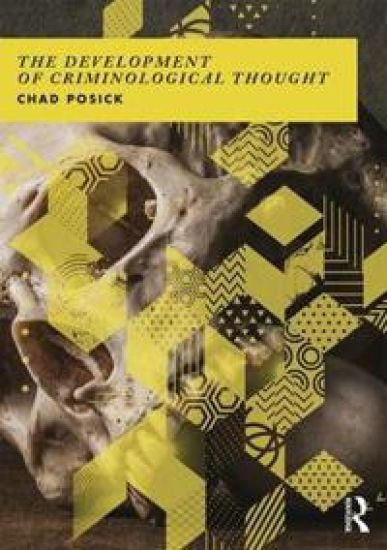
The Development of Criminological Thought
This book focuses on the history and development of criminological thought from the pre-Enlightenment period to the present and offers a detailed and chronological overview of competing theoretical perspectives in criminology in their social and political context. This book covers: A discussion of how major theorists came to espouse their ideas and how the social context of the time influenced the development criminological thought; An exploration of the scientific method and the way in which theories are tested; Details of the origins of each theory as well as their recent developments in scholarship and research; Comparative and international research in theory; The empirical support for theory and the relationship between research and policy; Biosocial and developmental criminology, including the biosocial underpinnings of criminal behavior and the influence of neuroscience and brain psychology; Theoretical applications for explaining different crime types, such as genocide, white-collar crime, and environmental crime; A summary of the current state of criminological knowledge and a vision for the future of criminology. The book includes lists of further reading and chapter summaries, and is supported by timelines of key works and events. This book is essential reading for courses on criminological theory, criminal behaviour, criminal psychology and biosocial criminology.
The Development of Criminological Thought
This book focuses on the history and development of criminological thought from the pre-Enlightenment period to the present and offers a detailed and chronological overview of competing theoretical perspectives in criminology in their social and political context. This book covers: A discussion of how major theorists came to espouse their ideas and how the social context of the time influenced the development criminological thought; An exploration of the scientific method and the way in which theories are tested; Details of the origins of each theory as well as their recent developments in scholarship and research; Comparative and international research in theory; The empirical support for theory and the relationship between research and policy; Biosocial and developmental criminology, including the biosocial underpinnings of criminal behavior and the influence of neuroscience and brain psychology; Theoretical applications for explaining different crime types, such as genocide, white-collar crime, and environmental crime; A summary of the current state of criminological knowledge and a vision for the future of criminology. The book includes lists of further reading and chapter summaries, and is supported by timelines of key works and events. This book is essential reading for courses on criminological theory, criminal behaviour, criminal psychology and biosocial criminology.
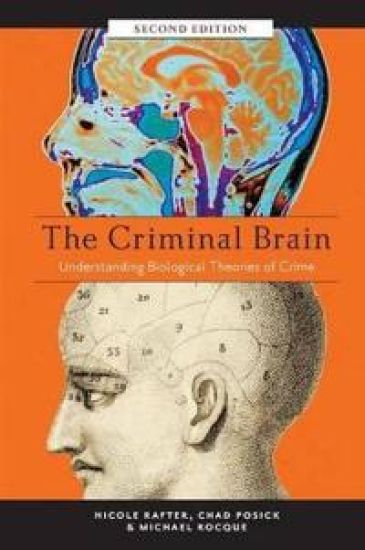
The Criminal Brain

The Criminal Brain

Nicole Rafter; Chad Posick; Michael Rocque

New York University Press
2016
pokkari
A lively, up-to-date overview of the newest research in biosocial criminology What is the relationship between criminality and biology? Nineteenth-century phrenologists insisted that criminality was innate, inherent in the offender's brain matter. While they were eventually repudiated as pseudo-scientists, today the pendulum has swung back. Both criminologists and biologists have begun to speak of a tantalizing but disturbing possibility: that criminality may be inherited as a set of genetic deficits that place one at risk to commit theft, violence, or acts of sexual deviance. But what do these new theories really assert? Are they as dangerous as their forerunners, which the Nazis and other eugenicists used to sterilize, incarcerate, and even execute thousands of supposed "born" criminals? How can we prepare for a future in which leaders may propose crime-control programs based on biology? In this second edition of The Criminal Brain, Nicole Rafter, Chad Posick, and Michael Rocque describe early biological theories of crime and provide a lively, up-to-date overview of the newest research in biosocial criminology. New chapters introduce the theories of the latter part of the 20th century; apply and critically assess current biosocial and evolutionary theories, the developments in neuro-imaging, and recent progressions in fields such as epigenetics; and finally, provide a vision for the future of criminology and crime policy from a biosocial perspective. The book is a careful, critical examination of each research approach and conclusion. Both compiling and analyzing the body of scholarship devoted to understanding the criminal brain, this volume serves as a condensed, accessible, and contemporary exploration of biological theories of crime and their everyday relevance.
The Criminal Brain

The Criminal Brain

Nicole Rafter; Chad Posick; Michael Rocque

New York University Press
2016
sidottu
A lively, up-to-date overview of the newest research in biosocial criminology What is the relationship between criminality and biology? Nineteenth-century phrenologists insisted that criminality was innate, inherent in the offender's brain matter. While they were eventually repudiated as pseudo-scientists, today the pendulum has swung back. Both criminologists and biologists have begun to speak of a tantalizing but disturbing possibility: that criminality may be inherited as a set of genetic deficits that place one at risk to commit theft, violence, or acts of sexual deviance. But what do these new theories really assert? Are they as dangerous as their forerunners, which the Nazis and other eugenicists used to sterilize, incarcerate, and even execute thousands of supposed "born" criminals? How can we prepare for a future in which leaders may propose crime-control programs based on biology? In this second edition of The Criminal Brain, Nicole Rafter, Chad Posick, and Michael Rocque describe early biological theories of crime and provide a lively, up-to-date overview of the newest research in biosocial criminology. New chapters introduce the theories of the latter part of the 20th century; apply and critically assess current biosocial and evolutionary theories, the developments in neuro-imaging, and recent progressions in fields such as epigenetics; and finally, provide a vision for the future of criminology and crime policy from a biosocial perspective. The book is a careful, critical examination of each research approach and conclusion. Both compiling and analyzing the body of scholarship devoted to understanding the criminal brain, this volume serves as a condensed, accessible, and contemporary exploration of biological theories of crime and their everyday relevance.