Kirjojen hintavertailu – 12 903 725 kirjaa ja 27 kauppaa

Kirjailija

Chad R. Trulson

Kirjat ja teokset yhdessä paikassa: 3 kirjaa, julkaisuja vuosilta 2009–2025, suosituimpiin kuuluu First Available Cell. Vertaile teosten hintoja ja tarkista saatavuus suomalaisista kirjakaupoista.

3 kirjaa

Kirjojen julkaisuvuodet: 2009–2025.

Applied Research Methods in Criminal Justice and Criminology

Applied Research Methods in Criminal Justice and Criminology

Eric J. Fritsch; Chad R. Trulson; Ashley G. Blackburn

UNIVERSITY OF NORTH TEXAS PRESS,U.S.
2025
pokkari
The primary objective of this book is to help readers become educated consumers of research. It provides a practical, applied, and user-friendly approach to research methods by consistently applying the concepts learned to real-life examples of research. Each chapter builds upon prior chapters so readers can incrementally learn the dynamics of the research process. Readers will understand how research is one of several sources of knowledge when they are faced with the question “How do we know what we know?” Students will learn core research topics, including sampling methods, survey research, experimental and quasi-experimental designs, field research, and unobtrusive methods. A practical and applied approach to statistics allows readers to engage with the material while they critique, evaluate, and comment on research findings.
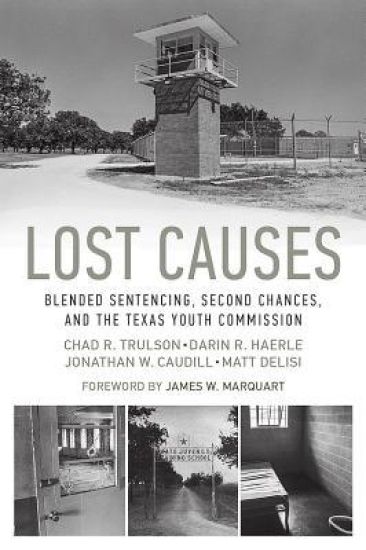
Lost Causes

Lost Causes

Chad R. Trulson; Darin R. Haerle; Jonathan W. Caudill; Matt DeLisi

University of Texas Press
2016
nidottu
What should be done with minors who kill, maim, defile, and destroy the lives of others? The state of Texas deals with some of its most serious and violent youthful offenders through “determinate sentencing,” a unique sentencing structure that blends parts of the juvenile and adult justice systems. Once adjudicated via determinate sentencing, offenders are first incarcerated in the Texas Youth Commission (TYC). As they approach age eighteen, they are either transferred to the Texas prison system to serve the remainder of their original determinate sentence or released from TYC into Texas’s communities. The first long-term study of determinate sentencing in Texas, Lost Causes examines the social and delinquent histories, institutionalization experiences, and release and recidivism outcomes of more than 3,000 serious and violent juvenile offenders who received such sentences between 1987 and 2011. The authors seek to understand the process, outcomes, and consequences of determinate sentencing, which gave serious and violent juvenile offenders one more chance to redeem themselves or to solidify their place as the next generation of adult prisoners in Texas. The book’s findings-that about 70 percent of offenders are released to the community during their most crime-prone years instead of being transferred to the Texas prison system and that about half of those released continue to reoffend for serious crimes-make Lost Causes crucial reading for all students and practitioners of juvenile and criminal justice.
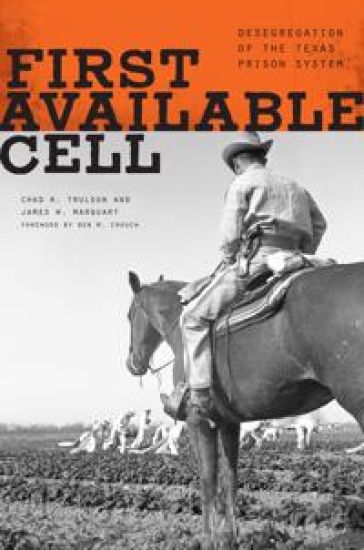
First Available Cell

First Available Cell

Chad R. Trulson; James W. Marquart

University of Texas Press
2009
pokkari
Decades after the U. S. Supreme Court and certain governmental actions struck down racial segregation in the larger society, American prison administrators still boldly adhered to discriminatory practices. Not until 1975 did legislation prohibit racial segregation and discrimination in Texas prisons. However, vestiges of this practice endured behind prison walls. Charting the transformation from segregation to desegregation in Texas prisons-which resulted in Texas prisons becoming one of the most desegregated places in America-First Available Cell chronicles the pivotal steps in the process, including prison director George J. Beto's 1965 decision to allow inmates of different races to co-exist in the same prison setting, defying Southern norms. The authors also clarify the significant impetus for change that emerged in 1972, when a Texas inmate filed a lawsuit alleging racial segregation and discrimination in the Texas Department of Corrections. Perhaps surprisingly, a multiracial group of prisoners sided with the TDC, fearing that desegregated housing would unleash racial violence. Members of the security staff also feared and predicted severe racial violence. Nearly two decades after the 1972 lawsuit, one vestige of segregation remained in place: the double cell. Revealing the aftermath of racial desegregation within that 9 x 5 foot space, First Available Cell tells the story of one of the greatest social experiments with racial desegregation in American history.