Kirjojen hintavertailu – 12 876 696 kirjaa ja 26 kauppaa

Kirjailija

Chaim I. Waxman

Kirjat ja teokset yhdessä paikassa: 5 kirjaa, julkaisuja vuosilta 2000–2019, suosituimpiin kuuluu Social Change and Halakhic Evolution in American Orthodoxy. Vertaile teosten hintoja ja tarkista saatavuus suomalaisista kirjakaupoista.

5 kirjaa

Kirjojen julkaisuvuodet: 2000–2019.

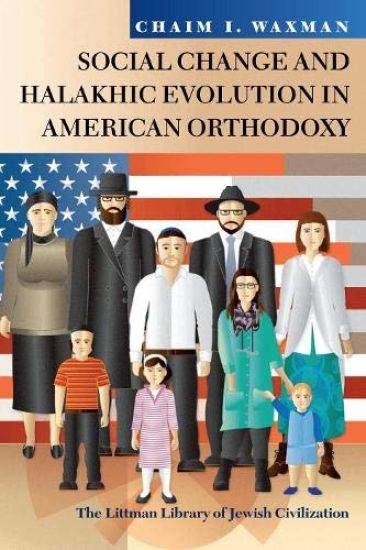
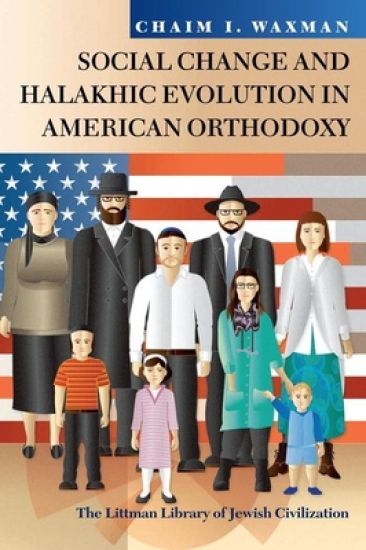
Social Change and Halakhic Evolution in American Orthodoxy

Social Change and Halakhic Evolution in American Orthodoxy

Chaim I. Waxman

Liverpool University Press
2019
nidottu
Chaim Waxman, a prominent sociologist of contemporary Orthodoxy, is one of the keenest observers of American Jewish society. In illustration of how Orthodoxy is adapting to modernity, he presents a detailed discussion of halakhic developments, particularly regarding women’s greater participation in ritual practices and other areas of communal life. He shows that the direction of change is not uniform: there is both greater stringency and greater leniency, and he discusses the many reasons for this, both in the Jewish community and in the wider society. Relations between the various sectors of American Orthodoxy over the past several decades are also considered.
Social Change and Halakhic Evolution in American Orthodoxy

Social Change and Halakhic Evolution in American Orthodoxy

Chaim I. Waxman

The Littman Library of Jewish Civilization
2017
sidottu
Chaim Waxman, a prominent sociologist of contemporary Orthodoxy, is one of the keenest observers of American Jewish society. In illustration of how Orthodoxy is adapting to modernity, he presents a detailed discussion of halakhic developments, particularly regarding women’s greater participation in ritual practices and other areas of communal life. He shows that the direction of change is not uniform: there is both greater stringency and greater leniency, and he discusses the many reasons for this, both in the Jewish community and in the wider society. Relations between the various sectors of American Orthodoxy over the past several decades are also considered.
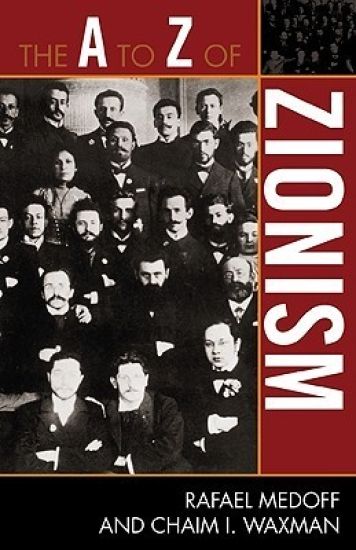
The A to Z of Zionism

The A to Z of Zionism

Rafael Medoff; Chaim I. Waxman

Scarecrow Press
2009
nidottu
The Jewish attachment to Zion is many centuries old. While the modern Zionist movement was organized a little more than a century ago, the roots of the Zionist idea reach back close to 4,000 years ago, to the day that the biblical patriarch Abraham left his home in Ur of the Chaldees to settle in the Promised Land, where the Jewish state subsequently arose. From that day to the establishing of the state of Israel in 1948, the Jewish people have been in a constant struggle to either regain or maintain their homeland. Although 60 years have now passed since the establishment of Israel, many of the political and religious factions that made up the Zionist movement in the pre-state era remain active. The A to Z of Zionism—through its chronology, maps, introductory essay, bibliography, and over 200 cross-referenced dictionary entries on crucial persons, organizations, and events—is a valuable contribution to the appreciation for both the diversity and consensus that characterize the Zionist experience.
Jewish Baby Boomers

Jewish Baby Boomers

Chaim I. Waxman

State University of New York Press
2000
pokkari
A thorough analysis of the religious and ethnic identification of America's Jewish baby boomers. This book critically analyzes American Jewish baby boomers, focusing on the implications of their Jewish identity and identification for the collective American Jewish community. Utilizing data obtained from the 1990 National Jewish Population Survey, the book begins with a demographic portrait of American Jewish baby boomers. Realizing that America's Jews are both a religious and ethnic group, a comparison is made with Protestant and Catholic baby boomers, as well as other ethnic groups. The religious patterns of the Jewish baby boomers and their ethnic patterns are examined in-depth, and placed within the larger contexts of the modern or post-modern character of religion and ethnicity. The book's extensive presentation of detailed quantitative data is consistently complemented by qualitative examinations of their communal implications for Jewish continuity and the organized American Jewish community.