Kirjojen hintavertailu – 12 859 828 kirjaa ja 27 kauppaa

Kirjailija

Chakravarthi Ram-Prasad

Kirjat ja teokset yhdessä paikassa: 9 kirjaa, julkaisuja vuosilta 2002–2021, suosituimpiin kuuluu Religion : i historia, samtid och framtid. Vertaile teosten hintoja ja tarkista saatavuus suomalaisista kirjakaupoista.

9 kirjaa

Kirjojen julkaisuvuodet: 2002–2021.

Religion : i historia, samtid och framtid

Religion : i historia, samtid och framtid

Janne Haaland Matlary; Daniel T. Potts; Julius J. Lipner; Robin Osborne; John Scheid; Martin Goodman; Diarmaid Macculloch; Elaine Pagels; Reza Aslan; Wouter J. Hanegraaff; Gary Lachman; Malise Ruthven; Marco Pasi; William O’Reilly; Ariel Glucklich; Wolfgang Palaver; Mona Siddiqui; Candida R. Moss; Esther Benbassa; Richard Miles; A.N. Wilson; Jessica Frazier; Simon May; Armin W. Geertz; Harvey Whitehouse; Pär Stenbäck; Benedetta Berti; Göran Rosenberg; Jayne Svenungsson; Adrian Wooldridge; Chakravarthi Ram-Prasad

Bokförlaget Stolpe
2020
sidottu
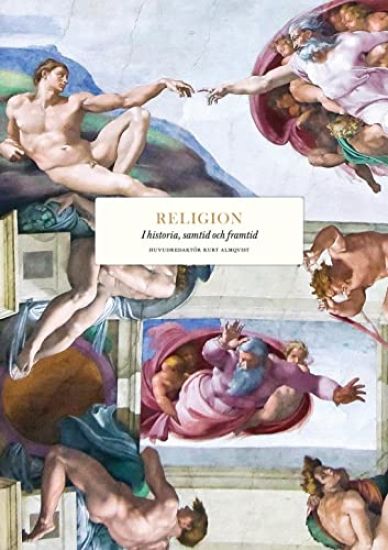
Tron på en styrande, övergripande, himmelsk princip har följt människan genom historien. Mer än 80 procent av världens befolkning har idag en religiös tillhörighet och även i sekulära stater fortsätter religionen att spela en viktig roll. Det går inte att förstå politik och internationella relationer idag utan att inkludera religionen som en aspekt av det kulturella sammanhanget. Essäerna i denna antologi, som härrör från Engelsbergsseminariet 2014, spänner över en mångfald ämnen i dagens såväl som gårdagens samhällen. De utforskar religionen i relation till människans villkor och skildrar hur den manifesterar sig i individens egna upplevelser. För att förstå oss själva behöver vi också förstå religionen.
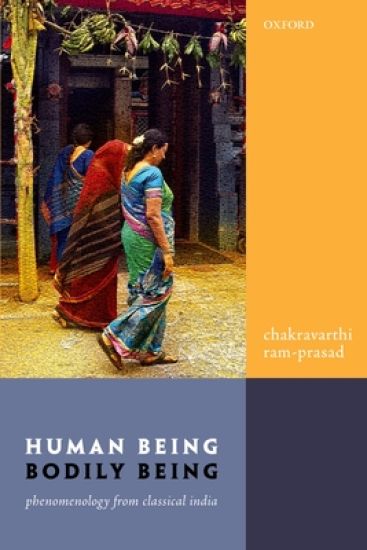
Human Being, Bodily Being

Human Being, Bodily Being

Chakravarthi Ram-Prasad

Oxford University Press
2021
nidottu
Chakravarthi Ram-Prasad offers illuminating new perspectives on contemporary phenomenological theories of body and subjectivity, based on studies of classical Indian texts that deal with bodily subjectivity. Examining four texts from different genres - a medical handbook, epic dialogue, a manual of Buddhist practice, and erotic poetry - he argues for a 'phenomenological ecology' of bodily subjectivity in health, gender, contemplation, and lovemaking. An ecology is a continuous and dynamic system of interrelationships between elements, in which the salience accorded to some type of relationship clarifies how the elements it relates are to be identified. The paradigm of ecological phenomenology obviates the need to choose between apparently incompatible perspectives of the human. The delineation of body is arrived at by working back phenomenologically from the world of experience, with the acknowledgement that the point of arrival - a conception of what counts as bodiliness - is dependent upon the exact motivation for attending to experience, the areas of experience attended to, and the expressive tools available to the phenomenologist. Ecological phenomenology is pluralistic, yet integrates the ways experience is attended to and studied, permitting apparently inconsistent intuitions about bodiliness to be explored in novel ways. Rather than seeing particular framings of our experience as in tension with each other, we should see each such framing as playing its own role according to the local descriptive and analytic concern of a text.
Indian Philosophy and the Consequences of Knowledge

Indian Philosophy and the Consequences of Knowledge

Chakravarthi Ram-Prasad

Taylor Francis Ltd
2021
nidottu
This book presents a collection of essays, setting out both the special concern of classical Indian thought and some of its potential contributions to global philosophy. It presents a number of key arguments made by different schools about this special concern: the way in which attainment of knowledge of reality transforms human nature in a fundamentally liberating way. It also looks in detail at two areas in contemporary global philosophy - the ethics of difference, and the metaphysics of consciousness - where this classical Indian commitment to the spiritually transformative power of knowledge can lead to critical insights, even for those who do not share its presuppositions. Close reading of technical Indian texts is combined with wide-ranging and often comparative analysis of philosophical issues to derive original arguments from the Indian material through an analytic method that is seldom mastered by philosophers of non-western traditions.
Human Being, Bodily Being

Human Being, Bodily Being

Chakravarthi Ram-Prasad

Oxford University Press
2018
sidottu
Chakravarthi Ram-Prasad offers illuminating new perspectives on contemporary phenomenological theories of body and subjectivity, based on studies of classical Indian texts that deal with bodily subjectivity. Examining four texts from different genres - a medical handbook, epic dialogue, a manual of Buddhist practice, and erotic poetry - he argues for a 'phenomenological ecology' of bodily subjectivity in health, gender, contemplation, and lovemaking. An ecology is a continuous and dynamic system of interrelationships between elements, in which the salience accorded to some type of relationship clarifies how the elements it relates are to be identified. The paradigm of ecological phenomenology obviates the need to choose between apparently incompatible perspectives of the human. The delineation of body is arrived at by working back phenomenologically from the world of experience, with the acknowledgement that the point of arrival - a conception of what counts as bodiliness - is dependent upon the exact motivation for attending to experience, the areas of experience attended to, and the expressive tools available to the phenomenologist. Ecological phenomenology is pluralistic, yet integrates the ways experience is attended to and studied, permitting apparently inconsistent intuitions about bodiliness to be explored in novel ways. Rather than seeing particular framings of our experience as in tension with each other, we should see each such framing as playing its own role according to the local descriptive and analytic concern of a text.
Advaita Epistemology and Metaphysics

Advaita Epistemology and Metaphysics

Chakravarthi Ram-Prasad

Routledge
2015
nidottu
Based on original translations of passages from the works of three major thinkers of the classical Indian school of Advaita (Sankara, Vacaspati and Sri Harsa), but addressing issues found in Descartes, Berkeley, Hume, Kant, Wittgenstein and contemporary analytic philosophers, this book argues for a philosophical position it calls 'non-realism'. This is the view that an independent, external world must be assumed if the features of cognition are to be explained, but that it cannot be proved that there is such a world, independently of an appeal to cognition itself. This position is constructed against idealist denials of externality, realist arguments for an independent world and the sceptical denial of the coherence of cognition.
Divine Self, Human Self

Divine Self, Human Self

Chakravarthi Ram-Prasad

Bloomsbury Academic USA
2013
nidottu
Winner of the Best Book in Hindu-Christian Studies Prize (2013/2014) from the Society for Hindu-Christian Studies. The Gita is a central text in Hindu traditions, and commentaries on it express a range of philosophical-theological positions. Two of the most significant commentaries are by Sankara, the founder of the Advaita or Non-Dualist system of Vedic thought and by Ramanuja, the founder of the Visistadvaita or Qualified Non-Dualist system. Their commentaries offer rich resources for the conceptualization and understanding of divine reality, the human self, being, the relationship between God and human, and the moral psychology of action and devotion. This book approaches their commentaries through a study of the interaction between the abstract atman (self) and the richer conception of the human person. While closely reading the Sanskrit commentaries, Ram-Prasad develops reconstructions of each philosophical-theological system, drawing relevant and illuminating comparisons with contemporary Christian theology and Western philosophy.
Divine Self, Human Self

Divine Self, Human Self

Chakravarthi Ram-Prasad

Bloomsbury Academic USA
2013
sidottu
Winner of the Best Book in Hindu-Christian Studies Prize (2013/2014) from the Society for Hindu-Christian Studies. The Gita is a central text in Hindu traditions, and commentaries on it express a range of philosophical-theological positions. Two of the most significant commentaries are by Sankara, the founder of the Advaita or Non-Dualist system of Vedic thought and by Ramanuja, the founder of the Visistadvaita or Qualified Non-Dualist system. Their commentaries offer rich resources for the conceptualization and understanding of divine reality, the human self, being, the relationship between God and human, and the moral psychology of action and devotion. This book approaches their commentaries through a study of the interaction between the abstract atman (self) and the richer conception of the human person. While closely reading the Sanskrit commentaries, Ram-Prasad develops reconstructions of each philosophical-theological system, drawing relevant and illuminating comparisons with contemporary Christian theology and Western philosophy.
Indian Philosophy and the Consequences of Knowledge

Indian Philosophy and the Consequences of Knowledge

Chakravarthi Ram-Prasad

Ashgate Publishing Limited
2007
sidottu
This book presents a collection of essays, setting out both the special concern of classical Indian thought and some of its potential contributions to global philosophy. It presents a number of key arguments made by different schools about this special concern: the way in which attainment of knowledge of reality transforms human nature in a fundamentally liberating way. It also looks in detail at two areas in contemporary global philosophy - the ethics of difference, and the metaphysics of consciousness - where this classical Indian commitment to the spiritually transformative power of knowledge can lead to critical insights, even for those who do not share its presuppositions. Close reading of technical Indian texts is combined with wide-ranging and often comparative analysis of philosophical issues to derive original arguments from the Indian material through an analytic method that is seldom mastered by philosophers of non-western traditions.
Advaita Epistemology and Metaphysics

Advaita Epistemology and Metaphysics

Chakravarthi Ram-Prasad

RoutledgeCurzon
2002
sidottu
Based on original translations of passages from the works of three major thinkers of the classical Indian school of Advaita (Sankara, Vacaspati and Sri Harsa), but addressing issues found in Descartes, Berkeley, Hume, Kant, Wittgenstein and contemporary analytic philosophers, this book argues for a philosophical position it calls 'non-realism'. This is the view that an independent, external world must be assumed if the features of cognition are to be explained, but that it cannot be proved that there is such a world, independently of an appeal to cognition itself. This position is constructed against idealist denials of externality, realist arguments for an independent world and the sceptical denial of the coherence of cognition.