
Kirjojen hintavertailu – 12 859 829 kirjaa ja 27 kauppaa

Kirjailija

Chang-kwon Kang

Kirjat ja teokset yhdessä paikassa: 2 kirjaa, julkaisuja vuosilta 2013–2021, suosituimpiin kuuluu An Introduction to Flapping Wing Aerodynamics. Vertaile teosten hintoja ja tarkista saatavuus suomalaisista kirjakaupoista.

2 kirjaa

Kirjojen julkaisuvuodet: 2013–2021.

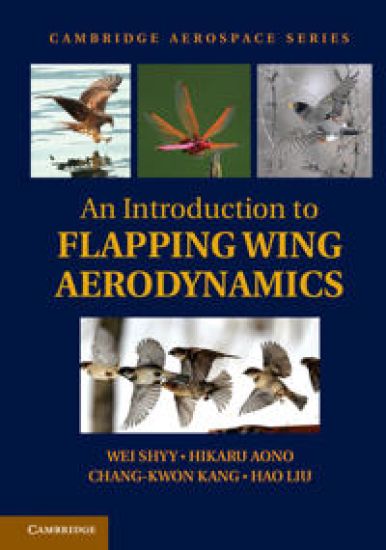
An Introduction to Flapping Wing Aerodynamics

An Introduction to Flapping Wing Aerodynamics

Wei Shyy; Hikaru Aono; Chang-kwon Kang; Hao Liu

Cambridge University Press
2013
sidottu
This is an ideal book for graduate students and researchers interested in the aerodynamics, structural dynamics and flight dynamics of small birds, bats and insects, as well as of micro air vehicles (MAVs), which present some of the richest problems intersecting science and engineering. The agility and spectacular flight performance of natural flyers, thanks to their flexible, deformable wing structures, as well as to outstanding wing, tail and body coordination, is particularly significant. To design and build MAVs with performance comparable to natural flyers, it is essential that natural flyers' combined flexible structural dynamics and aerodynamics are adequately understood. The primary focus of this book is to address the recent developments in flapping wing aerodynamics. This book extends the work presented in Aerodynamics of Low Reynolds Number Flyers (Shyy et al. 2008).
Distinct Aerodynamics of Insect-Scale Flight

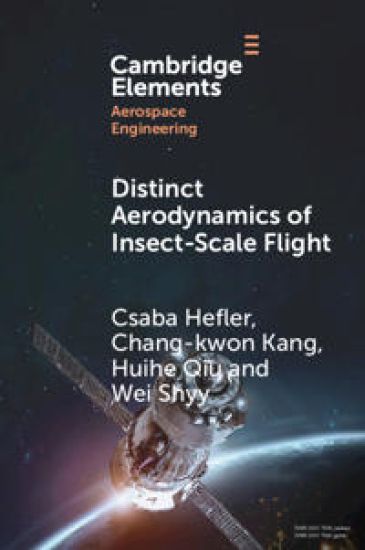
Distinct Aerodynamics of Insect-Scale Flight

Csaba Hefler; Chang-kwon Kang; Huihe Qiu; Wei Shyy

Cambridge University Press
2021
pokkari
Insect-scale flapping wing flight vehicles can conduct environmental monitoring, disaster assessment, mapping, positioning and security in complex and challenging surroundings. To develop bio-inspired flight vehicles, systematic probing based on the particular category of flight vehicles is needed. This Element addresses the aerodynamics, aeroelasticity, geometry, stability and dynamics of flexible flapping wings in the insect flight regime. The authors highlight distinct features and issues, contrast aerodynamic stability between rigid and flexible wings, present the implications of the wing-aspect ratio, and use canonical models and dragonflies to elucidate scientific insight as well as technical capabilities of bio-inspired design.