Kirjojen hintavertailu – 12 903 725 kirjaa ja 27 kauppaa
Kirjailija
Chang Kyung-sup
Kirjat ja teokset yhdessä paikassa: 8 kirjaa, julkaisuja vuosilta 2016–2025, suosituimpiin kuuluu Class, sex and revolutions : Göran Therborn - a critical appraisal. Vertaile teosten hintoja ja tarkista saatavuus suomalaisista kirjakaupoista.
Risto Alapuro; Perry Anderson; Robin Blackburn; Chang Kyung-sup; Gabriella Elgenius; Anita Göransson; Eric Hobsbawm; Sven Hort; Per H. Jensen; Habibul Haque Khondker; Lisa Kings; Zhanna Kravchenko; Aliaksei Lastouski; Åsa Cristina Laurell; Lena Lavinas; Gunnar Olofsson; Bo Rothstein; Anders Stephanson
Soon, Cities of Power: The Urban, the National, the Popular, and the Global by Göran Therborn will be on the market. In between Science, Class and Society (1976) and The Killing Fields of Inequality (2013, Swedish translation: Ojämlikhet dödar, 2016) Göran has consistently challenged received wisdom in politics and the social sciences. His Between Sex and Power (2004) is the current global map of family relations and gender equality. With the 1968 article "From Petrograd to Saigon" he laid the foundation for his worldwide reputation as an innovative public intellectual. His critique of the Frankfurt School had repercussions around Europe. Today his work is spread across six continents, Latin America in particular, and has been translated into more than twenty languages. This book is a critical appraisal of the themes Göran Therborn has pursued up till now, and is introduced by Robin Blackburn, for almost twenty years his editor at New Left Review." Göran's continual alertness to different paths to or through modernity, and to varieties of capitalism, will very soon be tested in a dramatic way." - Ian Gough, London School of Economics"This is a very important project and Göran richly deserves it." - Michael Burawoy, UC BerkeleyCONTENTS: INTRODUCTIONS Robin Blackburn, Göran Therborn and the Old Mole Sven Hort & Gunnar Olofsson, A Portrait of the Sociologist as a Young Rebel SECTION I. Class, Politics and Revolutions Anders Stephanson, On Geopolitics in Therbornism, Early and Late Risto Alapuro, Finnish Demonstrations as Confrontations Per H. Jensen, Origins of Danish Flexicurity Robin Blackburn, From Miliband to Corbyn Aliaksei Lastouski, Nikolay Zakharov & Sven Hort, Belarus - Another "Iceberg Society"? Elisabeth Özdalga, Islam-Oriented Trajectories and Turkey's Fluctuating Encounters with European Modernity Åsa Cristina Laurell, Structural Adjustment, Social Exclusion and Violence Lena Lavinas, The Untold Battlefields Against Inequality in Latin America Chang Kyung-sup, Post-Socialist Class Politics with Chinese Characteristics SECTION II. Sex, Gender and Power Anita Göransson & Karin Widerberg, Göran between Sex and Power Eric Hobsbawm, Retreat of the Male Perry Anderson, Atlas of the Family SECTION III. Global Modernities Immanuel Wallerstein, Empire: Dangerous Slippage of a Concept Habibul Haque Khondker, Entangled Globality Gabriella Elgenius, The Principles and Products of the Identity Market Zhanna Kravchenko, Lisa Kings & Sven Hort, Power Ideology and Transformations of Space Bo Rothstein, Manufacturing Social Solidarity Erik Olin Wright, The Capitalist State and the Possibility of SocialismSamtidigt med denna engelska vänbok till Göran Therborn publiceras en svensk pendang i form av en "festskriftsavdelning" i Arkiv. Tidskrift för samhällsanalys nr 6. Numret finns fritt tillgängligt, gratis att läsa och ladda ned, på www.tidskriftenarkiv.se. Det kan också beställas som tryckt utgåva i de vanliga bokhandelskanalerna och direkt från förlaget.
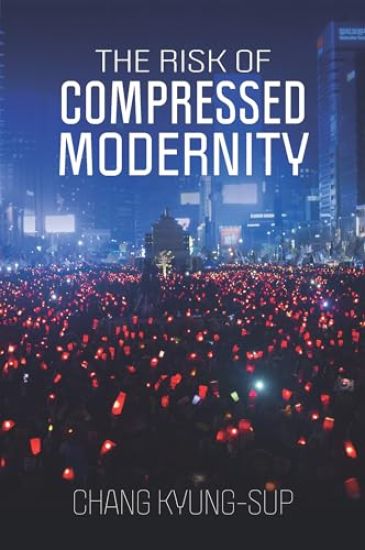
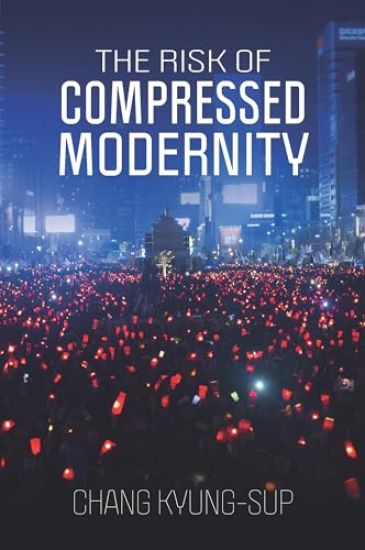
In many Asian societies, the process of modernization often took place in a rapid and highly compressed fashion – not over centuries, as had happened in most Western societies, but in several decades. This enabled Asian societies to achieve high levels of economic growth very quickly, but it also harbored unexpected risks and costs that threatened further development. The very mechanisms and strategies that made their explosive modernization possible tended to produce existentially hazardous consequences in virtually all areas of public and private life, and seemingly insurmountable obstacles to sustained advances in the future. Focusing on South Korea and other Asian countries, this book presents a critical account of compressed modernity and its key structural risks. These include endemic political crises, distorted industrial governance, widespread labor displacement, worsening intellectual and cultural dependency, rampant environmental and physical hazards, and even abrupt demographic meltdown. However, these risks and contradictions have also stimulated structural reforms and adaptations, opening up the possibility for the kind of radical change that Ulrich Beck described as “the metamorphosis of the world.”
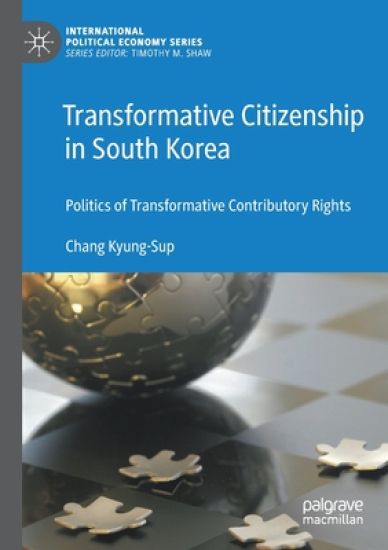
South Korea’s postcolonial history has been replete with dramatic societal transformations through which it has emerged with a fully blown modernity, or compressed modernity. There have arisen the transformation-oriented state, society, and citizenry for which each transformation becomes an ultimate purpose in itself, its processes and means constitute the main sociopolitical order, and the transformation-embedded interests form the core social identity. A distinct mode of citizenship has thereby arisen as transformative contributory rights, namely, effective or legitimate claims to national and social resources, opportunities, and respects that accrue to each citizen’s contributions to the nation’s or society’s collective transformative goals. South Koreans have been exhorted or have exhorted themselves to intensely engage in such collective transformations, so that their citizenship is framed and substantiated by the conditions, processes, and outcomes of such transformative engagements. This book concretely and systematically analyzes how this transformative dynamic has shaped South Koreans’ developmental, social, educational, reproductive, and cultural citizenship.
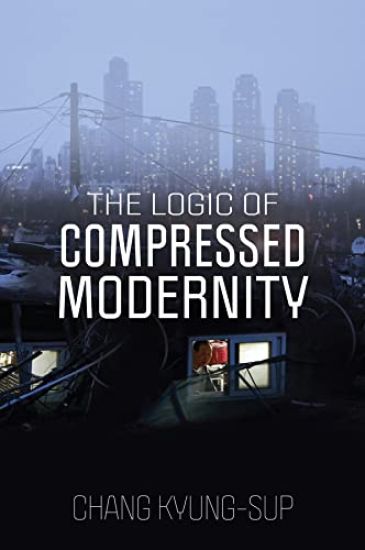
Most theories of modernity are based, explicitly or implicitly, on the development of Western societies since the late medieval period, but these theories are of limited value for understanding the development of societies in Asia and other parts of the world, where the process of modernization took place under different circumstances and often in a rapid and highly compressed fashion – not over centuries but in decades. Asian societies have been propelled into modernity too, but theirs is a compressed modernity, which displays very different traits. In this important book, Chang Kyung-Sup provides a systematic account of this compressed modernity and uses it to analyse the extreme social changes, complexities and imbalances found in South Korea and other East Asian societies. While these changes enabled South Korea to modernize very quickly and achieve high levels of economic growth, they also created a society that is haunted by various developmental and civilizational costs, such as endemic generational conflicts, overloaded family responsibilities and exceptionally high suicide rates. As with other societies that have experienced compressed modernity, the South Korean “miracle” is replete with extreme and contradictory social traits. This pioneering work of the nature and consequences of compressed modernity will be of great interest to students and scholars of sociology, politics and development studies, as well as anyone interested in South Korea, Asia and postcolonial societies.
South Korea’s postcolonial history has been replete with dramatic societal transformations through which it has emerged with a fully blown modernity, or compressed modernity. There have arisen the transformation-oriented state, society, and citizenry for which each transformation becomes an ultimate purpose in itself, its processes and means constitute the main sociopolitical order, and the transformation-embedded interests form the core social identity. A distinct mode of citizenship has thereby arisen as transformative contributory rights, namely, effective or legitimate claims to national and social resources, opportunities, and respects that accrue to each citizen’s contributions to the nation’s or society’s collective transformative goals. South Koreans have been exhorted or have exhorted themselves to intensely engage in such collective transformations, so that their citizenship is framed and substantiated by the conditions, processes, and outcomes of such transformative engagements. This book concretely and systematically analyzes how this transformative dynamic has shaped South Koreans’ developmental, social, educational, reproductive, and cultural citizenship.
This book characterizes South Korea’s pre-neoliberal regime of social governance as developmental liberalism and analyzes the turbulent processes and complex outcomes of its neoliberal degeneration since the mid-1990s. Instead of repeating the politically charged critical view on South Korea’s failure in socially inclusionary and sustainable development, the author closely examines the systemic interfaces of the economic, political, and social constituents of its developmental transformation. South Korea has turned and remained developmentally liberal, rather than liberally liberal (like the United States), in its economic and sociopolitical configuration of social security, labor protection, population, education, and so forth. Initially conceived in the late 1980s, ironically along its democratic restoration, and radically accelerated during the national financial crisis in the late 1990s, South Korea’s neoliberal transition has become incomparably volatile and destructive, due crucially to its various distortive effects on the country’s developmental liberal order.