Kirjojen hintavertailu – 12 903 725 kirjaa ja 27 kauppaa

Kirjailija

Chao Huang

Kirjat ja teokset yhdessä paikassa: 5 kirjaa, julkaisuja vuosilta 2022–2025, suosituimpiin kuuluu Cooperative Control of Multi-Agent Systems with Uncertainties. Vertaile teosten hintoja ja tarkista saatavuus suomalaisista kirjakaupoista.

5 kirjaa

Kirjojen julkaisuvuodet: 2022–2025.

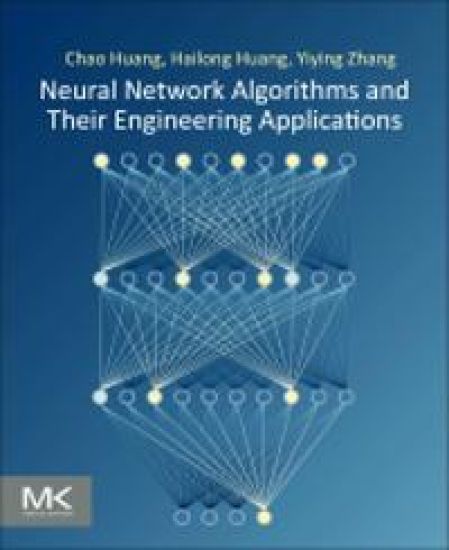
Neural Network Algorithms and Their Engineering Applications

Neural Network Algorithms and Their Engineering Applications

Chao Huang; Hailong Huang; Yiying Zhang

ELSEVIER SCIENCE TECHNOLOGY
2025
nidottu
Neural Network Algorithms and Their Engineering Applications presents the relevant techniques used to improve the global search ability of neural network algorithms in solving complex engineering problems with multimodal properties. The book provides readers with a complete study of how to use artificial neural networks to design a population-based metaheuristic algorithm, which in turn promotes the application of artificial neural networks in the field of engineering optimization. The authors provide a deep discussion for the potential application of machine learning methods in improving the optimization performance of the neural network algorithm, helping readers understand how to use machine learning methods to design improved versions of the algorithm. Users will find a wealth of source code that covers all applied algorithms. Code applications enhance readers' understanding of methods covered and facilitate readers' ability to apply the algorithms to their own research and development projects.

Cooperative Control of Multi-Agent Systems with Uncertainties

Cooperative Control of Multi-Agent Systems with Uncertainties

Hao Zhang; Chao Huang; Zhuping Wang; Huaicheng Yan

Elsevier - Health Sciences Division
2024
nidottu
Cooperative Control of Multi-Agent Systems with Uncertainties proposes a hierarchical design framework that places uncertainties related to system models in the decentralized control layer (bottom layer) and the ones related to the communication (as well as physical interaction) between the agents in the distributed decision-making layer (top layer). The book shows that the two layers meet separation principles under certain conditions so that through the two-layer design framework any challenges can be resolved independently and so that design complexities will not increase with the level of uncertainties. In addition, in order to solve the problem of energy limitation of agents, the book also studies the event-driven cooperative control of multi-agent systems, which can effectively reduce energy consumption of agents and increase their operational lifespan.
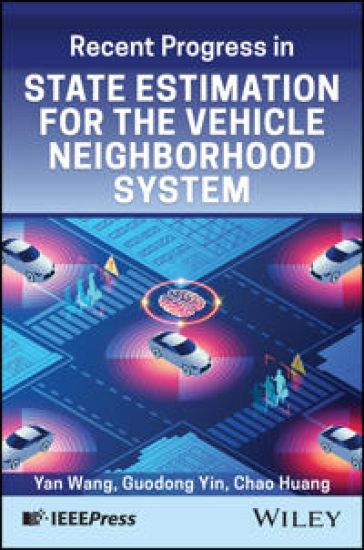
Recent Progress in State Estimation for the Vehicle Neighborhood System

Recent Progress in State Estimation for the Vehicle Neighborhood System

Yan Wang; Guodong Yin; Chao Huang

JOHN WILEY SONS INC
2025
sidottu
Up-to-date discussions of the challenges and solutions in state estimation of vehicle neighborhood systems In Recent Progress in State Estimation for the Vehicle Neighborhood System, a team of distinguished researchers introduces a novel conceptual framework that defines a system comprising vehicles and local road segments within a connected vehicle (V2X) environment—referred to as the vehicle neighborhood system. Creative estimation methods for both states and parameters within this system have been proposed and potential applications of these methods have been discussed. The book places particular emphasis on estimating and analyzing the motion states of the ego vehicle and the preceding vehicle, as well as the tire road friction coefficient. The book covers a wide range of topics in the area of vehicle neighborhood systems, including sensor technologies, data fusion, filtering algorithms, engineering applications, and practical implementations of autonomous driving systems. It also explores common challenges in state and parameter estimation for related nonlinear systems, such as sensor data loss, unknown measurement noise, and model parameter perturbations. Corresponding solutions to these issues are proposed and discussed in detail. The book also includes: A thorough introduction to ego-vehicle state estimation with sensor data lossComprehensive explorations of unknown noise and parameter perturbations in ego-vehicle state estimationPractical discussions of tire-road friction coefficient estimation with parameter mismatch and data lossComplete treatments of preceding vehicle state estimation Perfect for engineers and professionals with an interest in vehicle state estimation, Recent Progress in State Estimation for the Vehicle Neighborhood System will also benefit academics, scientists, and graduate students in areas like robotics, control systems, and autonomous systems.
Autonomous Navigation and Deployment of UAVs for Communication, Surveillance and Delivery

Autonomous Navigation and Deployment of UAVs for Communication, Surveillance and Delivery

Hailong Huang; Andrey V. Savkin; Chao Huang

JOHN WILEY SONS INC
2022
sidottu
Autonomous Navigation and Deployment of UAVs for Communication, Surveillance and Delivery Authoritative resource offering coverage of communication, surveillance, and delivery problems for teams of unmanned aerial vehicles (UAVs) Autonomous Navigation and Deployment of UAVs for Communication, Surveillance and Delivery studies various elements of deployment of networks of unmanned aerial vehicle (UAV) base stations for providing communication to ground users in disaster areas, covering problems like ground traffic monitoring, surveillance of environmental disaster areas (e.g. brush fires), using UAVs in rescue missions, converting UAV video surveillance, and more. The work combines practical problems, implementable and computationally efficient algorithms to solve these problems, and mathematically rigorous proofs of each algorithm’s convergence and performance. One such example provided by the authors is a novel biologically inspired motion camouflage algorithm to covert video surveillance of moving targets by an unmanned aerial vehicle (UAV). All autonomous navigation and deployment algorithms developed in the book are computationally efficient, easily implementable in engineering practice, and based only on limited information on other UAVs of each and the environment. Sample topics discussed in the work include: Deployment of UAV base stations for communication, especially with regards to maximizing coverage and minimizing interferenceDeployment of UAVs for surveillance of ground areas and targets, including surveillance of both flat and uneven areasNavigation of UAVs for surveillance of moving areas and targets, including disaster areas and ground traffic monitoringAutonomous UAV navigation for covert video surveillance, offering extensive coverage of optimization-based navigationIntegration of UAVs and public transportation vehicles for parcel delivery, covering both one-way and round trips Professionals in navigation and deployment of unmanned aerial vehicles, along with researchers, engineers, scientists in intersecting fields, can use Autonomous Navigation and Deployment of UAVs for Communication, Surveillance and Delivery to gain general knowledge on the subject along with practical, precise, and proven algorithms that can be deployed in a myriad of practical situations.
Wireless Communication Networks Supported by Autonomous UAVs and Mobile Ground Robots

Wireless Communication Networks Supported by Autonomous UAVs and Mobile Ground Robots

Hailong Huang; Andrey V. Savkin; Chao Huang

ELSEVIER SCIENCE TECHNOLOGY
2022
nidottu
Wireless Communication Networks Supported by Autonomous UAVs and Mobile Ground Robots covers wireless sensor networks and cellular networks. For wireless sensor networks, the book presents approaches using mobile robots or UAVs to collect sensory data from sensor nodes. For cellular networks, it discusses the approaches to using UAVs to work as aerial base stations to serve cellular users. In addition, the book covers the challenges involved in these two networks, existing approaches (e.g., how to use the public transportation vehicles to play the role of mobile sinks to collect sensory data from sensor nodes), and potential methods to address open questions.