Kirjojen hintavertailu – 12 903 733 kirjaa ja 27 kauppaa
Kirjailija
Char Miller
Kirjat ja teokset yhdessä paikassa: 21 kirjaa, julkaisuja vuosilta 2000–2025, suosituimpiin kuuluu Toward a Natural Forest. Vertaile teosten hintoja ja tarkista saatavuus suomalaisista kirjakaupoista.
While not a biography of legendary American forester and conservationist Gifford Pinchot, On Strawberry Hill: The Transcendent Love of Gifford Pinchot and Laura Houghteling explores a vital and transformative facet of his personal life that, until now, has remained relatively unknown. At its core, Paula Ivaska Robbins’s On Strawberry Hill is a human interest story that cuts a neat slice across nineteenth-century America by bringing into juxtaposition a wide array of topics germane to the period—the national fascination with spiritualism, the death scourge that was tuberculosis, the rise of sanitariums and tourism in the southern highlands, the expansion of railroad travel, the rage for public parklands and playgrounds, and the development of professional forestry and green preservation?all through the very personal love story of two young blue bloods. Born into a wealthy New York family, Gifford Pinchot (1865–1946) served two terms as Pennsylvania’s governor and was the first chief of the US Forest Service, which today manages 192 million acres across the country. Pinchot also created the Society of American Foresters, the organization that oversees his chosen profession, and the Yale School of Forestry and Environmental Studies, the oldest forestry school in America. Ultimately, he and his friend President Theodore Roosevelt made forestry the focus of a national land conservation movement. But before these accomplishments, Gifford Pinchot fell in love with Laura Houghteling, daughter of the head of the Chicago Board of Trade, while she recuperated from “consumption” at Strawberry Hill, the family retreat in Asheville, North Carolina. In his twenties at the time and still a budding forester, Pinchot was working just across the French Broad River at George Vanderbilt’s great undertaking, the Biltmore Estate, when the young couple’s relationship blossomed. Although Laura would eventually succumb to the disease, their brief romance left an indelible mark on Gifford, who recorded his ongoing relationship, and mental conversations, with Laura in his daily diary entries long after her death. He steadfastly remained a bachelor for twenty years while accomplishing the major highlights of his career. This poignant book focuses on that phenomenon of devotion and inspiration, providing a unique window into the private practice of spiritualism in the context of Victorian mores, while offering new perspectives on Pinchot and early American forestry. In addition, preeminent Pinchot biographer Char Miller contributes an excellent foreword.
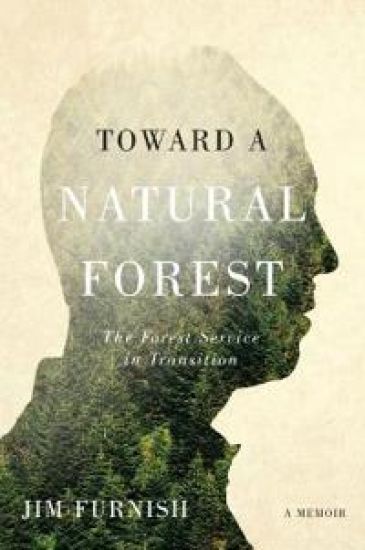
Jim Furnish joined the U. S. Forest Service in 1965, enthusiastic and naive, proud to be part of such a storied and accomplished agency. Nothing could have prepared him for the crisis that would soon rock the agency to its foundation, as a burgeoning environmental movement challenged the Forest Service’s legacy and legitimacy. The Forest Service stumbled in responding to a wave of lawsuits from environmental groups in the late 20th Century—a phenomenon best symbolized by the spotted owl controversy that shut down logging on public forests in the Pacific Northwest in the 1990s. The agency was brought to its knees, pitted between a powerful timber industry that had been having its way with the national forests for decades, and organized environmentalists who believed public lands had been abused and deserved better stewardship. Toward a Natural Forest offers an insider’s view of this tumultuous time in the history of the Forest Service, presenting twin tales of transformation, both within the agency and within the author’s evolving environmental consciousness. While stewarding our national forests with the best of intentions, had the Forest Service diminished their natural essence and ecological values? How could one man confront the crisis while remaining loyal to his employer? In this revealing memoir, Furnish addresses the fundamental human drive to gain sustenance from and protect the Earth, believing that we need not destroy it in the process. Drawing on the author’s personal experience and his broad professional knowledge, Toward a Natural Forest illuminates the potential of the Forest Service to provide strong leadership in global conservation efforts. Those interested in our public lands—environmentalists, natural resource professionals, academics, and historians—will find Jim Furnish’s story deeply informed, thought-provoking, and ultimately inspiring.
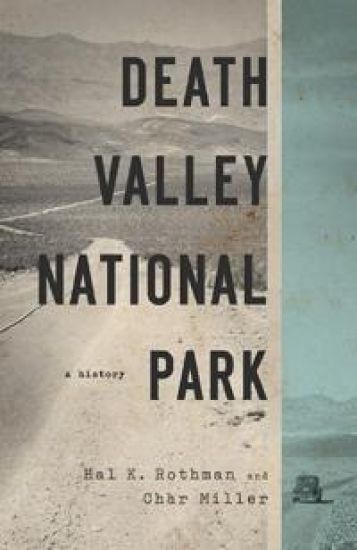
The first comprehensive study of the park, past and present, Death Valley National Park probes the environmental and human history of this most astonishing desert. Established as a national monument in 1933, Death Valley was an anomaly within the national park system. Though many who knew this landscape were convinced that its stark beauty should be preserved, to do so required a reconceptualisation of what a park consists of, grassroots and national support for its creation, and a long and difficult political struggle to secure congressional sanction. This history begins with a discussion of the physical setting, its geography and geology, and descriptions of the Timbisha, the first peoples to inhabit this tough and dangerous landscape. In the nineteenth and early twentieth centuries, new arrivals came to exploit the mineral resources in the region and develop permanent agricultural and resort settlements. Although Death Valley was established as a national monument in 1933, fear of the harsh desert precluded widespread acceptance by both the visiting public and its own administrative agency. As a result, Death Valley lacked both support and resources. This volume details the many debates over the park’s size; conflicts between miners, farmers, the military, and wilderness advocates; the treatment of the Timbisha; and the impact of tourists on its cultural and natural resources. In time, Death Valley came to be seen as one of the great natural wonders of the United States and was elevated to full national park status in 1994. The history of Death Valley National Park embodies the many tensions confronting American environmentalism.
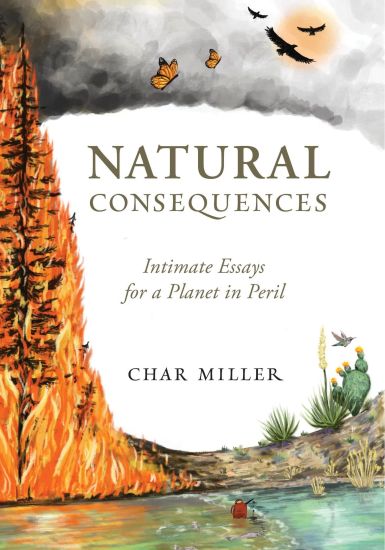
Drought and fires, floods and rising tides: These and other climate-driven forces are compelling us to examine our role as inhabitants of our imperiled planet. In over forty vitally important essays and vignettes, Natural Consequences is Char Miller’s literary tour de force that illuminates the historical background of how we got here, what we need to do now, and how we can thrive into the future. Professor of Environmental Analysis and History, and author of books, articles, and essays, Char Miller’s narratives are not only expansive in scope, but also intimate and personal. Living in Southern California, he walks us through the environmental touchstones of his backyard, through his neighborhood, into the widely varied ecospheres of California, and then the world beyond. The essays encourage readers to look for themselves at the meaning behind environmental disasters and injustices, but also examine the tiniest details that can be encountered simply by taking a walk. As Char Miller wanders, we see the world anew through his eyes and words. And we are better for it.
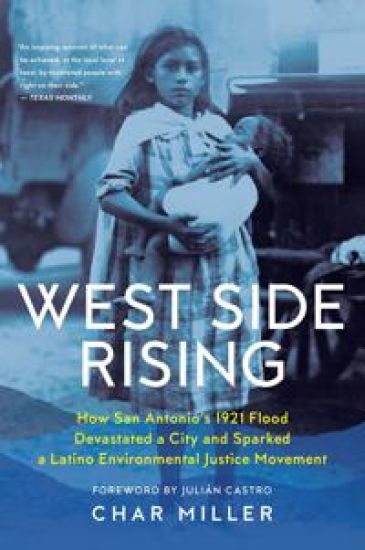
On September 9, 1921, a tropical depression stalled just north of San Antonio and within hours overwhelmed its winding network of creeks and rivers. Floodwaters ripped through the city’s Latino West Side neighborhoods, killing more than eighty people. Meanwhile a wall of water crashed into the central business district on the city’s North Side, wreaking considerable damage. The city’s response to this disaster shaped its environmental policies for the next fifty years, carving new channels of power. Decisions about which communities would be rehabilitated and how thoroughly were made in the political arena, where the Anglo elite largely ignored the interlocking problems on the impoverished West Side that flowed from poor drainage, bad housing, and inadequate sanitation. Instead the elite pushed for the $1.6 million construction of the Olmos Dam, whose creation depended on a skewed distribution of public benefits in one of America’s poorest big cities. The discriminatory consequences, channeled along ethnic and class lines, continually resurfaced until the mid-1970s, when Communities Organized for Public Services, a West Side grassroots organization, launched a successful protest that brought much-needed flood control to often inundated neighborhoods. This upheaval, along with COPS’s emergence as a power broker, disrupted Anglo domination of the political landscape to more accurately reflect the city’s diverse population. West Side Rising is the first book focused squarely on San Antonio’s enduring relationship to floods, which have had severe consequences for its communities of color in particular. Examining environmental, social, and political histories, Char Miller demonstrates that disasters can expose systems of racism, injustice, and erasure and, over time, can impel activists to dismantle these inequities. He draws clear lines between the environmental injustices embedded in San Antonio’s long history and the emergence of grassroots organizations that combated the devastating impact floods could have on the West Side.
Written in the 1950s and discovered by family members years after her death, Margaret Brown Kilik’s shocking coming-of-age novel of the emotional and sexual brutality of young women’s lives in wartime San Antonio deserves a place on the shelf alongside classic novels like Sylvia Plath’s The Bell Jar and Carson McCullers’s The Member of the Wedding. The Duchess of Angus reworks Kilik’s unusual personal history (her mother spent the 1930's running flophouse hotels all over the United States, leaving Margaret to be brought up by a host of relatives) into a riveting portrait of a young woman navigating a conflicted and rapidly changing world, one in which sex promises both freedom from convention and violent subjection to men’s will. Strikingly modern in its depiction of protagonist Jane Davis and her gorgeous, unreadable friend Wade Howell, The Duchess of Anguscovers some of the same emotional territory as novels like Emma Cline’s The Girls and Robyn Wasserman’s Girls on Fire. Includes an introduction by Jenny Davidson and contextual essays by Laura Hernández-Ehrisma and Char Miller.
300 Years of San Antonio & Bexar County captures the iconic stories, moments, people, and places that define one of the oldest communities in the United States. A collection of diverse authors joined forces to produce this richly illustrated and complexly woven thematic telling of the city’s history. From its earliest legacy as home to many indigenous peoples to its municipal founding by the Canary Islanders, a convergence of people from across the globe have settled, sacrificed, and successfully shaped the culture of San Antonio. The result is a 21st-century community that strives to balance diverse heritage with a vibrant economy thanks to stories from the past that provide lessons for the future.
This is the first general history of San Antonio, Texas, the seventh largest city in the nation. Its past is complex and ranges across 300 years, from the community's origins as a tiny Spanish frontier town to its contemporary status as a vital American mega-city. Site of some of the most violent struggles between warring empires and people—historians believe San Antonio may be the most fought-over city in U. S. history—it is perhaps most celebrated for the iconic 1836 Battle of the Alamo. The city is also home to four beautifully restored Spanish missions, which in 2015 UNESCO designated a World Heritage Site and have become integral to San Antonio's robust tourist economy along with the fabled River Walk. This study weaves together a series of environmental, social, political, and cultural pressures that have shaped life in the Alamo City over the last three centuries. Residents have long fought to protect and utilize water and other resources even as they have struggled to achieve equal rights and build a more open and democratic society. Activists from all sectors of this multicultural city have believed deeply in its promise even though they have had to push hard to secure and expand its potential. Their efforts were every bit as intense in the nineteenth and twentieth centuries as they have been in the twenty-first. Written for a general audience, but with a scholarly attention to detail and nuance, San Antonio: A Tricentennial History immerses readers in the city's fascinating and fraught past.
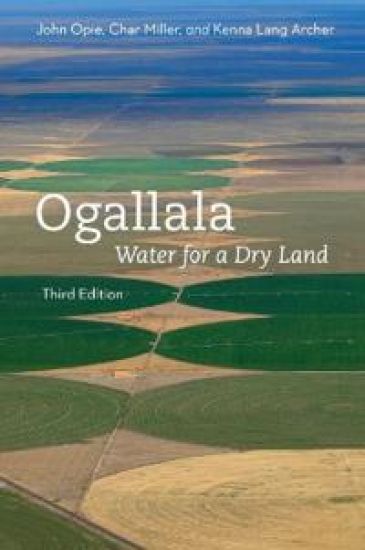
2019 Choice Outstanding Academic Title The Ogallala aquifer, a vast underground water reserve extending from South Dakota through Texas, is the product of eons of accumulated glacial melts, ancient Rocky Mountain snowmelts, and rainfall, all percolating slowly through gravel beds hundreds of feet thick. Ogallala: Water for a Dry Land is an environmental history and historical geography that tells the story of human defiance and human commitment within the Ogallala region. It describes the Great Plains’ natural resources, the history of settlement and dryland farming, and the remarkable irrigation technologies that have industrialized farming in the region. This newly updated third edition discusses three main issues: long-term drought and its implications, the efforts of several key groundwater management districts to regulate the aquifer, and T. Boone Pickens’s failed effort to capture water from the aquifer to supply major Texas urban areas. This edition also describes the fierce independence of Texas ranchers and farmers who reject any governmental or bureaucratic intervention in their use of water, and it updates information about the impact of climate change on the aquifer and agriculture. Read Char Miller's article on theconversation.com to learn more about the Ogallala Aquifer.
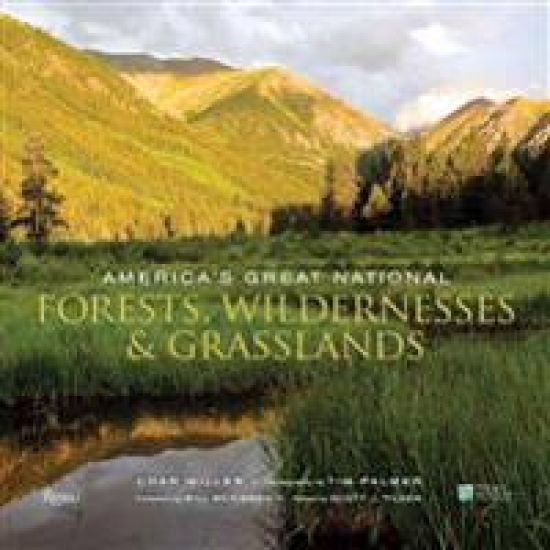
For more than a century, America's national forests have proved an environmental gift and cultural treasure, our spectacular backyard. Under the management of the U. S. Forest Service, this system of public lands encompasses 193 million acres of mountains, prairies, rivers, and canyons-much of it undiscovered, but accessible for hiking, kayaking, fishing, and winter sports. Officially published with the U. S. Forest Service, this book features the thirty most notable national forests- while also celebrating more than one hundred different national forests in forty-four states-from the White Mountains of New Hampshire to the Olympics of Washington. Unlike the national parks, Americans can use these lands for all manner of recreation, truly earning these tremendous resources the moniker of America's backyard. This book is a treasure for all readers who use and cherish these lands.
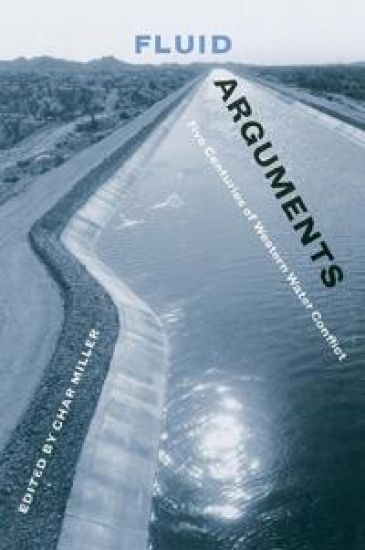
Water— or the lack of it— has shaped the contours of the American West and continues to dominate the region's development. From the incursions of the Spanish conquistadores to the dams of the New Deal era, humans have sought water in these arid lands as the key to survival-and —success. And as the West becomes more urbanized, water is an issue as never before. This book sets contemporary and often bitter debates over water in their historical contexts by examining some of the most contentious issues that have confronted the region over five centuries. Seventeen contributors— representing history, geography, ethnography, political science, law, and urban studies— provide an interdisciplinary perspective on the many dimensions of water in the West: Spanish colonial water law, Native American water rights, agricultural concerns, and dam building. A concluding essay looks toward the future by examining the impact of cities on water and of water marketing on the western economy. As farmers and ranchers from Kansas to California compete for water with powerful urban economies, the West will continue to be reshaped by this scarce and precious resource. Fluid Arguments clearly shows that many of the current disputes over water take place without a real appreciation for the long history of the debate. By shedding new light on how water allocation is established— and who controls it— this book makes a vital contribution to our understanding of water and growth in the region.
The classic study of changing attitudes toward wilderness during American history and the origins of the environmental and conservation movements“The Book of Genesis for conservationists”—Dave Foreman Since its initial publication in 1967, Roderick Nash's Wilderness and the American Mind has received wide acclaim. The Los Angeles Times listed it among the one hundred most influential books published in the last quarter century, Outside Magazine included it in a survey of “books that changed our world,” and it has been called the “Book of Genesis for environmentalists.” For the fifth edition, Nash has written a new preface and epilogue that brings Wilderness and the American Mind into dialogue with contemporary debates about wilderness. Char Miller’s foreword provides a twenty-first-century perspective on how the environmental movement has changed, including the ways in which contemporary scholars are reimagining the dynamic relationship between the natural world and the built environment.
President John F. Kennedy officially dedicated the Pinchot Institute for Conservation Studies on September 24, 1963 to further the legacy and activism of conservationist Gifford Pinchot (1865–1946). Pinchot was the first chief of the United States Forest Service, appointed by Theodore Roosevelt in 1905. During his five-year term, he more than tripled the national forest reserves to 172 million acres. A pioneer in his field, Pinchot is widely regarded as one of the architects of American conservation and an adamant steward of natural resources for future generations. Author Char Miller highlights many of the important contributions of the Pinchot Institute through its first fifty years of operation. As a union of the United States Forest Service and the Conservation Foundation, a private New York-based think tank, the institute was created to formulate policy and develop conservation education programs. Miller chronicles the institution’s founding, a donation of the Pinchot family, at its Grey Towers estate in Milford, Pennsylvania. He views the contributions of Pinchot family members, from the institute’s initial conception by Pinchot’s son, Gifford Bryce Pinchot, through the family’s ongoing participation in current conservation programming. Miller describes the institute’s unique fusion of policy makers, scientists, politicians, and activists to increase our understanding of and responses to urban and rural forestry, water quality, soil erosion, air pollution, endangered species, land management and planning, and hydraulic franking. Miller explores such innovative programs as Common Waters, which works to protect the local Delaware River Basin as a drinking water source for millions; EcoMadera, which trains the residents of Cristobal Col\u00f3n in Ecuador in conservation land management and sustainable wood processing; and the Forest Health-Human Health Initiative, which offers health-care credits to rural American landowners who maintain their carbon-capturing forestlands. Many of these individuals are age sixty-five or older and face daunting medical expenses that may force them to sell their land for timber. Through these and countless other collaborative endeavors, the Pinchot Institute has continued to advance its namesake’s ambition to protect ecosystems for future generations and provide vital environmental services in an age of a burgeoning population and a disruptive climate.
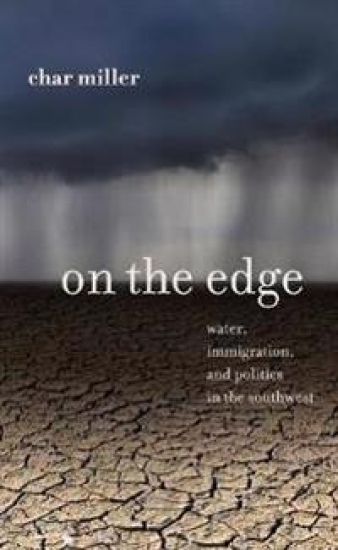
On the Edge grew out of a lifetime spent living and traveling across the American Southwest, from San Antonio to Los Angeles. Char Miller examines this borderland region through a native's eyes and contemplates its considerable conflicts. Internal to the various US states and Mexico's northern tier, there are struggles over water, debates over undocumented immigrants, the criminalizing of the border, and the region's evolution into a no-man's land. The book investigates how we live on this contested land --how we make our place in its oft-arid terrain; an ecosystem that burns easily and floods often and defies our efforts to nestle in its foothills, canyons, and washes. Exploring the challenges in the Southwest of learning how to live within this complex natural system while grasping its historical and environmental frameworks. Understanding these framing devices is critical to reaching the political accommodations necessary to build a more generous society, a more habitable landscape, and a more just community, whatever our documented status or species.
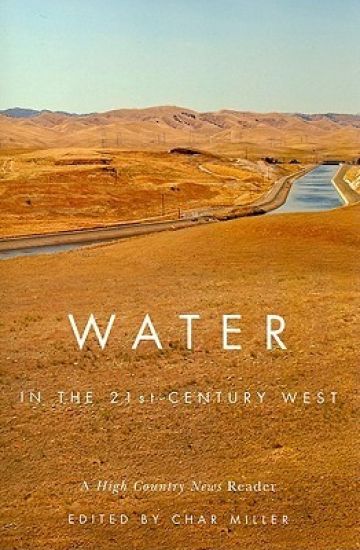
Water in the 21st-Century West offers a timely look at the central issue facing the American West?the region?s diminishing water supply. It collects the best reporting on the subject, drawn from the pages of High Country News, the newspaper that sets the standard for coverage of environmental issues in the West. This book provides compelling perspectives on the water issues and controversies that roil the region, from the Pacific Northwest to the Great Plains, from the interior mountains to the southwestern deserts. The book?s contributors?among them activists, scholars, scientists, and many of the nation?s finest environmental journalists?offer hardhitting analyses of regional dilemmas, including the unpredictable impact of climate change; intense debates over decommissioning dams; emerging Native American water power; toxic threats to groundwater quality; and the escalating urban demands for water in Los Angeles, Las Vegas, Denver, Salt Lake City, and the Bay Area. Water in the 21st-Century West captures the range and nature of the arguments that have defined water politics in the region over the past decade. The collection probes the issues and explores creative attempts to find solutions, bringing a focus and clarity to the most contentious environmental issue the West faces. Water in the 21st-Century West will be an essential primer in assessing and mapping the West?s water future.
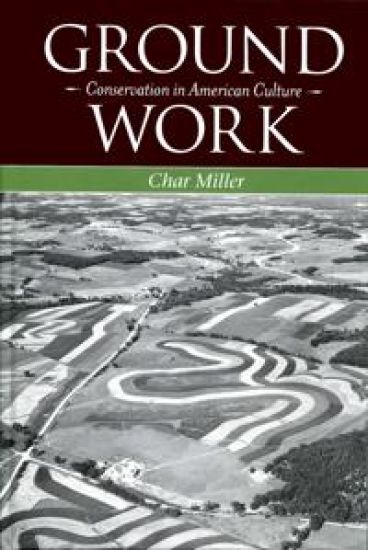
Ground Work offers intriguing insights into American conservation history. Miller demonstrates his remarkable ability as a historian to cast new light on familiar events and figures, such as Bernhard Fernow and Gifford Pinchot, and create a deeper and richer understanding of their significance, both in their times and in our own. Ground Work is a series of vignettes rather than a chronologically continuous tale. It spans topics from the Progressive Era roots of the American conservation movement, on which Miller has proven his virtuosity in earlier works such as Gifford Pinchot and the Making of Modern Environmentalism, to new insights into the impact of documentary films on the environmental perceptions of 21st-century urban America. Advanced undergraduate and graduate courses in environmental and forest history will find these essays stimulating, general nonfiction readers very enlightening.
Char Miller's essays cover a wide range of South Texas topics, from natural and environmental history to urban development to San Antonio's future. Miller uses simple subjectsthe First Friday Art Walks in South Town, for exampleas a springboard for a deeper discussion of urban city planning and an elusive future of sensible growth and diversity. Moving farther afield, he examines the water wars between the U. S. and Mexico, a quarry turned upscale shopping center, and San Antonio's curious attempts to brand itself as a health resort."
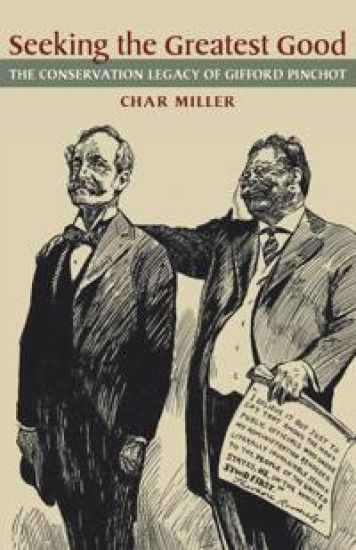
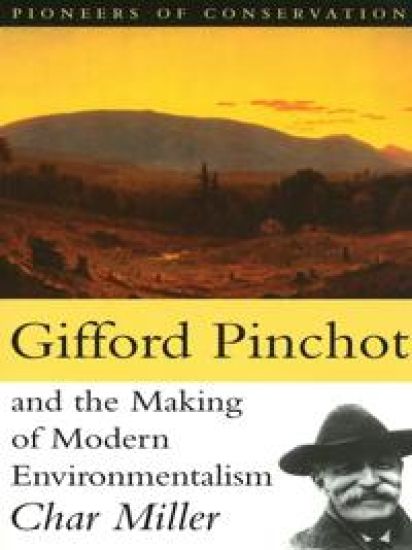
This new biography, the first in more than three decades, offers a fresh interpretation of the life and work of the famed conservationist and Progressive politician. In addition to considering Gifford Pinchot's role in the environmental movement, historian Char Miller sets forth an engaging description and analysis of the man-his character, passions, and personality-and the larger world through which he moved. The author brings together insights from cultural and social history and recently discovered primary sources to support a new interpretation of Gifford Pinchot, whose activism not only helped define environmental politics in early twentieth century America but remains strikingly relevant today.
Miller shows how government institutions changed the meaning of American citizenship during the World War II era. He considers the state's role in creating concepts of citizenship and subjectivity by analyzing the application within military and educational institutions of systems of discipline associated with Frederick W. Taylor and scientific management. Miller also explores a neglected aspect of Michel Foucault's concerns about citizenship and subjectivity when examining the power of institutions and bureaucracies in creating and precluding political identities. Of particular interest to scholars and students involved with American political history and theory and the sociology of work/education/war and conflict.