Kirjojen hintavertailu – 12 903 724 kirjaa ja 27 kauppaa

Kirjailija

Charles A. Beard

Kirjat ja teokset yhdessä paikassa: 44 kirjaa, julkaisuja vuosilta 1969–2026, suosituimpiin kuuluu History of the United States. Vertaile teosten hintoja ja tarkista saatavuus suomalaisista kirjakaupoista.

Nimi esiintyy myös muodoissa: Charles A Beard

44 kirjaa

Kirjojen julkaisuvuodet: 1969–2026.

Contemporary American History, 1877-1913

Contemporary American History, 1877-1913

Charles a. Beard

Createspace Independent Publishing Platform
2017
nidottu
When President Hayes was inaugurated on March 4, 1877, the southern whites had almost shaken off the Republican rule which had been set up under the protection of Federal soldiers at the close of the Civil War. In only two states, Louisiana and South Carolina, were Republican governors nominally in power, and these last "rulers of conquered provinces" had only a weak grip upon their offices, which they could not have maintained for a moment without the aid of Union troops stationed at their capitals. By secret societies, like the Ku Klux Klan, and by open intimidation, the conservative whites had practically recovered from the negroes, whom the Republicans had enfranchised, the political power which had been wrested from the old ruling class at the close of the War. In this nullification of the Fifteenth Amendment to the Federal Constitution and other measures designed to secure the suffrage for the former bondmen, President Grant had acquiesced, and it was openly rumored that Hayes would put an end to the military r gime in Louisiana and South Carolina, leaving the southern people to fight out their own battles.
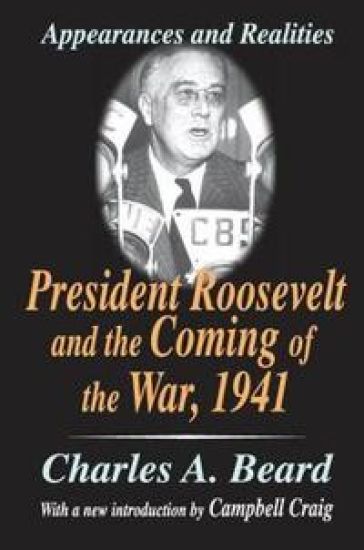
President Roosevelt and the Coming of the War, 1941
Conceived by Charles Beard as a sequel to his provocative study of American Foreign Policy in the Making, 1932-1940, President Roosevelt and the Coming of the War outraged a nation, permanently damaging Beard's status as America's most influential historian. Beard's main argument is that both Democratic and Republican leaders, but Roosevelt above all, worked quietly in 1940 and 1941 to insinuate the United States into the Second World War. Basing his work on available congressional records and administrative reports, Beard concludes that FDR's image as a neutral, peace-loving leader was a smokescreen, behind which he planned for war against Germany and Japan even well before the attack on Pearl Harbor. Beard contends that the distinction between aiding allies in Europe like Great Britain and maintaining strict neutrality with respect to nations like Germany and Japan was untenable. Beard does not argue that all nations were alike, or that some did and others did not merit American support, but rather that Roosevelt chose to aid Great Britain secretly and unconstitutionally rather than making the case to the American public. President Roosevelt shifted from a policy of neutrality to one of armed intervention, but he did so without surrendering the appearance, the fiction of neutrality. This core argument makes the work no less explosive in 2003 than it was when first issued in 1948.