Kirjojen hintavertailu – 12 903 725 kirjaa ja 27 kauppaa
Kirjailija
Charles Brockden Brown
Kirjat ja teokset yhdessä paikassa: 222 kirjaa, julkaisuja vuosilta 1969–2026, suosituimpiin kuuluu A View of the Soil and Climate of the United States of America ... Translated, with Occasional Remarks, by C. B. Brown. with Maps and Plates.. Vertaile teosten hintoja ja tarkista saatavuus suomalaisista kirjakaupoista.
"A light proceeding from the edifice made every part of the scene visible. A gleam diffused itself over the intermediate space, and instantly a loud report, like the explosion of a mine, followed. She uttered an involuntary shriek, but the new sounds that greeted her ear, quickly conquered her surprise. They were piercing shrieks, and uttered without intermission. The gleams which had diffused themselves far and wide were in a moment withdrawn, but the interior of the edifice was filled with rays." From "Weiland," by Charles Brockden Brown.
The 18th century was a wealth of knowledge, exploration and rapidly growing technology and expanding record-keeping made possible by advances in the printing press. In its determination to preserve the century of revolution, Gale initiated a revolution of its own: digitization of epic proportions to preserve these invaluable works in the largest archive of its kind. Now for the first time these high-quality digital copies of original 18th century manuscripts are available in print, making them highly accessible to libraries, undergraduate students, and independent scholars. Western literary study flows out of eighteenth-century works by Alexander Pope, Daniel Defoe, Henry Fielding, Frances Burney, Denis Diderot, Johann Gottfried Herder, Johann Wolfgang von Goethe, and others. Experience the birth of the modern novel, or compare the development of language using dictionaries and grammar discourses. ++++The below data was compiled from various identification fields in the bibliographic record of this title. This data is provided as an additional tool in helping to insure edition identification: ++++British LibraryW004441Preface signed: C. B. B. i.e., Charles Brockden Brown]. The second part was published at New York in 1800. Error in paging: p. iv misnumbered vi. Philadelphia: Printed and published by H. Maxwell, no. 3, Letitia Court--and sold by Messrs. T. Dobson, R. Campbell, H. and P. Rice, A. Dickins, and the principal booksellers in the neighbouring states, 1799. vi i.e., iv], 224 p.; 12
Having trouble finding scholarly sources for your research paper? This Squid Ink Classic includes the full text of the work plus MLA style citations for scholarly secondary sources, peer-reviewed journal articles and critical essays for when your teacher requires extra resources in MLA format for your research paper. Why spend more time looking for your sources than writing your paper? Work smarter not harder with Squid Ink Classics. The smart way to do homework.
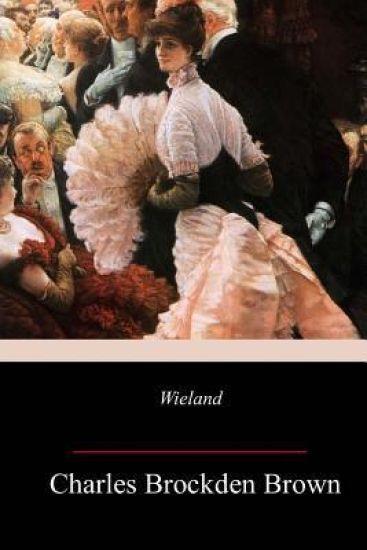
Wieland, named by his father after a German nickname for the devil, inherits both his father's estate and religious susceptibility. His idyllic rural life is disrupted when he falls prey to the ventriloquist Carwin, who convinces Wieland that a divine voice is commanding him to slaughter his family. He is tried for the murders of his wife and children, for which he expresses no remorse. He later escapes prison in an attempt to kill his sister Clara, who narrates the story. Clara and Carwin have an ambiguous relationship of attraction and repulsion. Brown's work was an important precursor to such Gothic masters as Edgar Allan Poe and Mary Shelley.
I feel little reluctance in complying with your request. You know not fully the cause of my sorrows. You are a stranger to the depth of my distresses. Hence your efforts at consolation must necessarily fail. Yet the tale that I am going to tell is not intended as a claim upon your sympathy. In the midst of my despair, I do not disdain to contribute what little I can to the benefit of mankind. I acknowledge your right to be informed of the events that have lately happened in my family. Make what use of the tale you shall think proper. If it be communicated to the world, it will inculcate the duty of avoiding deceit. It will exemplify the force of early impressions, and show the immeasurable evils that flow from an erroneous or imperfect discipline. My state is not destitute of tranquillity. The sentiment that dictates my feelings is not hope. Futurity has no power over my thoughts. To all that is to come I am perfectly indifferent. With regard to myself, I have nothing more to fear. Fate has done its worst. Henceforth, I am callous to misfortune. I address no supplication to the Deity. The power that governs the course of human affairs has chosen his path. The decree that ascertained the condition of my life, admits of no recal. No doubt it squares with the maxims of eternal equity. That is neither to be questioned nor denied by me. It suffices that the past is exempt from mutation. The storm that tore up our happiness, and changed into dreariness and desert the blooming scene of our existence, is lulled into grim repose; but not until the victim was transfixed and mangled; till every obstacle was dissipated by its rage; till every remnant of good was wrested from our grasp and exterminated.
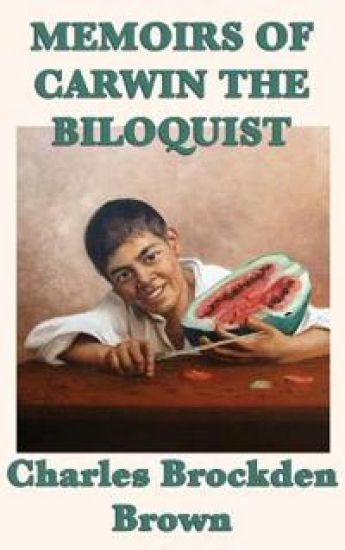
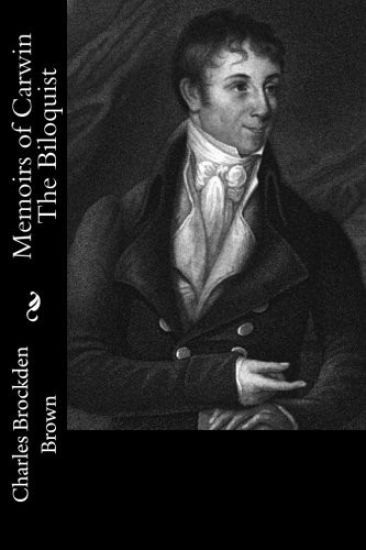
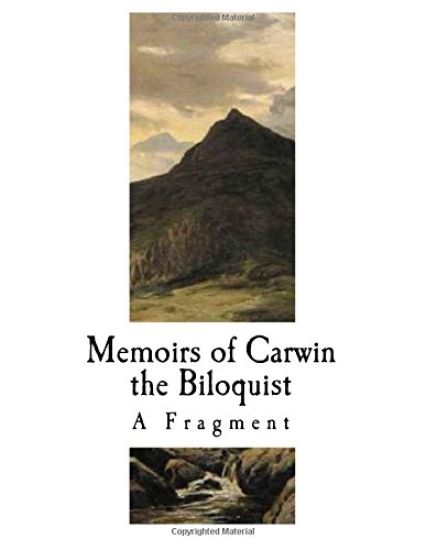
Memoirs of Carwin the Biloquist, A Fragment by Charles Brockden Brown. Memoirs of Carwin, the Biloquist (1803-1805) is a fragment of story written by Charles Brockden Brown published over a period of two years. Memoirs of Carwin, the Biloquist follows the life of a young man by the name of Carwin as he realizes his biloquial, ventriloquist, talents. Carwin develops this ability to perfection, being able to manipulate his own voice to sound like any person he wants. Memoirs of Carwin, the Biloquist begins with Carwin as a young boy, about 14 years old, living on a farm with his father and brother in Pennsylvania. Carwin is evidently different from his family in that he strives to have an education, especially through means of reading books. His father does nothing but discourages this desire, and expects Carwin to settle for a simple life on the farm. As a way to break away from his father's repression, Carwin continuously sneaks out into the woods at night with books to read by the moonlight. It is on one of these experiences that Carwin hears the echo of his own voice in the valley, giving him the inspiration to learn how to manipulate his voice. After several nights of practice, Carwin has the "power to impersonate" different people.
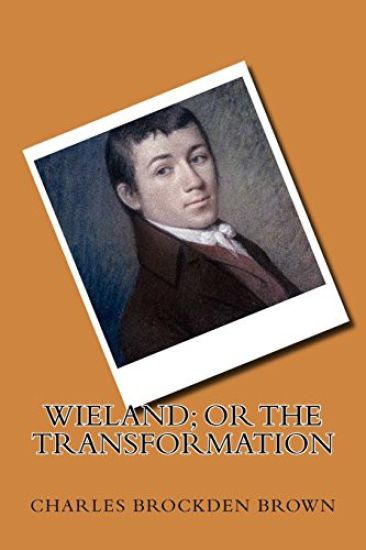
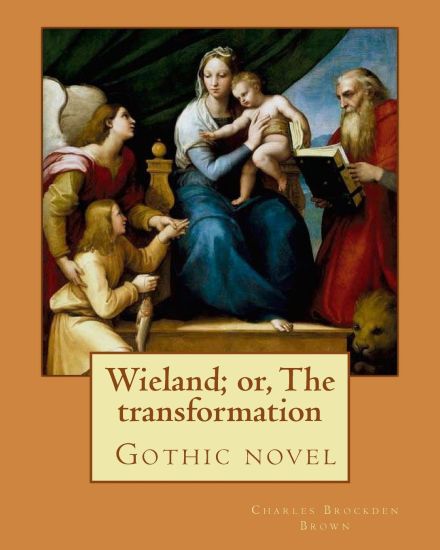
Wieland: or, The Transformation: An American Tale is a Gothic novel by Charles Brockden Brown, first published in 1798. It recounts the terrifying story of how Theodore Wieland is driven to madness and murder by a malign ventriloquist called Carwin.
Wieland unspools as a dark and mysterious American tale. The plot, complex and intricate, begins with a bit of history concerning the immigration of the Wieland family and the somewhat fantastical rise and fall of the father of the novel's protagonists, Clara and her brother, Theodore. Wieland is an epistolary novel. Clara Wieland narrates, presenting the tale as a letter written to a friend.
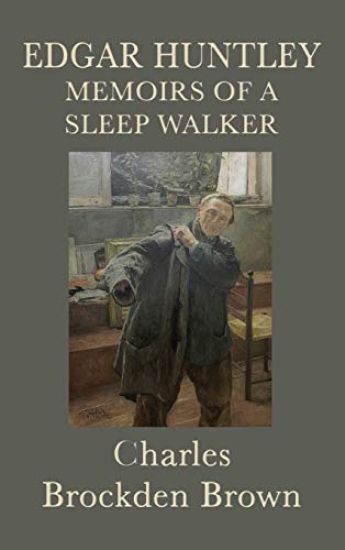
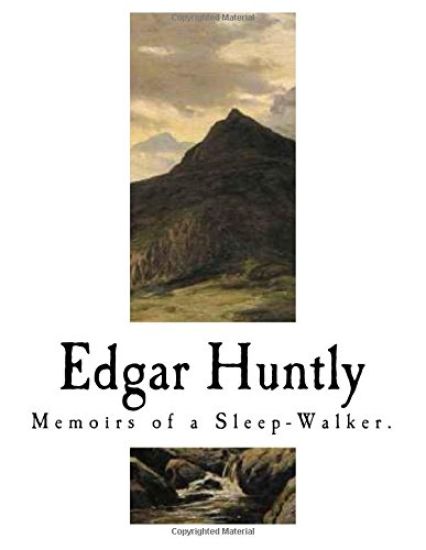
Edgar Huntly; or, Memoirs of a Sleep-Walker by Charles Brockden Brown. Edgar Huntly, Or, Memoirs of a Sleepwalker is a 1799 novel by the American author Charles Brockden Brown. Edgar Huntly, a young man who lives with his uncle and sisters (his only remaining family) on a farm outside Philadelphia, is determined to learn who murdered his friend Waldegrave. Walking near the elm tree under which Waldegrave was killed late one night, Huntly sees Clithero, a servant from a neighboring farm, half-dressed, digging in the ground and weeping loudly. Huntly concludes that Clithero may be the murderer. He also concludes that Clithero is sleepwalking. Huntly decides to follow Clithero when he sleep walks. Clithero leads Huntly through rough countryside, but all this following doesn't lead to Huntly learning much about the murder. Eventually, Huntly confronts Clithero when they are both awake and demands that he confess. Clithero does confess, but not to Waldegrave's murder. Instead he tells a complicated story about his life in Ireland, where he believes he was responsible for the death of a woman who was his patron, after which he fled to Pennsylvania. Clithero claims to know nothing about Waldegrave's murder.
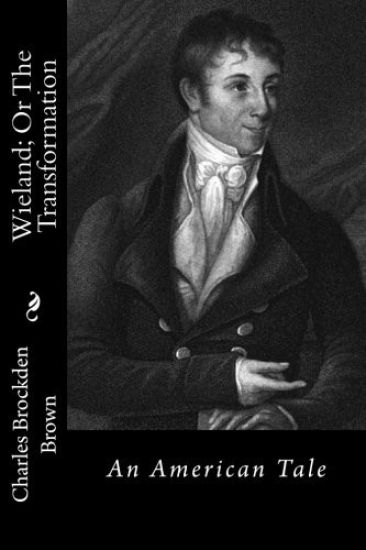
Wielandor the Transformation An American TaleCharles Brockden BrownSet sometime between the French and Indian War and the American Revolutionary War, Wieland details the horrible events that befall Clara Wieland and her brother Theodore's family. Clara and Theodore's father was a German immigrant who founded his own religion; he came to America just before the American Revolution with the conviction to spread his religion to the indigenous people. When he fails at this task, he believes he has also failed his deity. One night, as he worships in his bare, reclusive temple, he seems to spontaneously combust, after which his health rapidly deteriorates and he dies. His children inherit his property, which is divided equally between them. Theodore marries their childhood friend, Catharine Pleyel, and they have four children. Soon, Theodore begins to hear voices and Catharine's brother, Henry Pleyel, begins to hear them, too. Though at first doubtful of the voices that the men claim to hear, Clara also begins to hear a strange voice. The mysterious Carwin appears on the scene, and suggests that the voices may be caused by human mimicry.
Wieland: or, The Transformation: An American Tale, usually simply called Wieland, is the first major work by Charles Brockden Brown. First published in 1798, it distinguishes the true beginning of his career as a writer. Wieland is the first - and most famous - American Gothic novel. It has often been linked to Caleb Williams by William Godwin. Godwin's influence is clear, but Brown's writing is unique in its style Plot: Set sometime between the French and Indian War and the American Revolutionary War, Wieland details the horrible events that befall Clara Wieland and her brother Theodore's family. Clara and Theodore's father was a German immigrant who founded his own religion; he came to America just before the American Revolution with the conviction to spread his religion to the indigenous people. When he fails at this task, he believes he has also failed his deity. One night, as he worships in his bare, reclusive temple, he seems to spontaneously combust, after which his health rapidly deteriorates and he dies. His children inherit his property, which is divided equally between them. Theodore marries their childhood friend, Catharine Pleyel, and they have four children. Soon, Theodore begins to hear voices and Catharine's brother, Henry Pleyel, begins to hear them, too. Though at first doubtful of the voices that the men claim to hear, Clara also begins to hear a strange voice. The mysterious Carwin appears on the scene, and suggests that the voices may be caused by human mimicry. Clara is secretly in love with Pleyel, and makes a plan to tell him so; however, her chance is ruined. When she returns home, she finds Carwin hiding in her closet. He admits he had been planning to rape Clara, but believing her to be under the protection of a supernatural force, leaves her. The next morning, Pleyel accuses Clara of having an affair with Carwin. He leaves quickly, without giving Clara enough time to defend herself. She decides to go to see Pleyel, to tell him he is mistaken, but he does not seem to believe her. On her way home, Clara stops to visit her friend Mrs. Baynton, where Clara finds a letter from Carwin waiting for her, which requests an audience with her. At Theodore's house, Clara finds that everyone seems to be asleep, so she continues on to her own home, where she is to meet with Carwin. When she arrives, there are strange noises and lights, and she sees a glimpse of Carwin's face. In her room, she finds a strange letter from Carwin, and Catharine in her bed - dead. Shocked, she sits in her room until Theodore arrives and threatens Clara. When he hears voices outside, he leaves Clara unharmed. Clara learns that Theodore's children and Louisa Conway have also been killed. Clara falls ill; later, she is able to read the murderer's testimony. The killer is her brother, Theodore. He claims to have been acting under divine orders. Clara is sure that Carwin is the source of Theodore's madness...... Charles Brockden Brown (January 17, 1771 - February 22, 1810) was an American novelist, historian, and editor of the Early National period. He is generally regarded by scholars as the most important American novelist before James Fenimore Cooper. He is the most frequently studied and republished practitioner of the "early American novel," or the US novel between 1789 and roughly 1820. Although Brown was not the first American novelist, as some early criticism claimed, the breadth and complexity of his achievement as a writer in multiple genres (novels, short stories, essays and periodical writings of every sort, poetry, historiography, reviews) makes him a crucial figure in US literature and culture of the 1790s and first decade of the 19th century, and a significant public intellectual in the wider Atlantic print culture and public sphere of the era of the French Revolution.
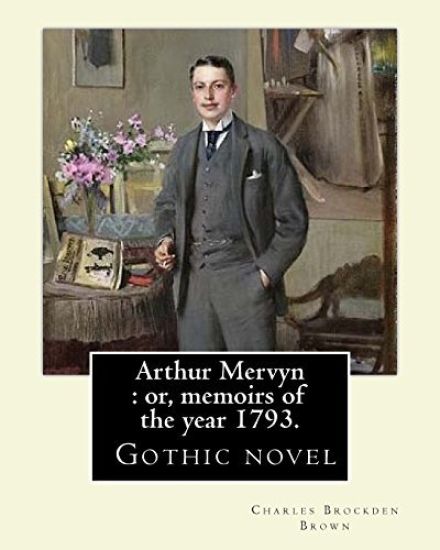
Arthur Mervyn is a novel written by Charles Brockden Brown and published in 1799. It was one of Brown's more popular novels, and is in many ways representative of Brown's dark, gothic style and subject matter. PLOT: Meeting Mervyn Arthur Mervyn is discovered by Dr. Stevens sitting on a bench. He is suffering from yellow fever, and since Dr. Stevens has pity on him, is invited into the Stevens household. A little after he gets better, Mr. Wortley comes over to pay Dr. Stevens a visit, recognizes Arthur Mervyn, and reacts with extreme displeasure at seeing him. Dr. Stevens is of course suspicious of Mervyn now and demands an explanation for Wortley's reaction. Mervyn begins to tell his story in an effort to clear his name in the eyes of Dr. Stevens. This is the frame, and nearly three quarters of the book bring Mervyn's adventures up to this moment in time. The rest of the book continues on after the storytelling, with Mervyn keeping Dr. Stevens informed either in person or via letters of the continuing adventures, all of which revolve around a tightly knit network of people. Arthur Mervyn is a country boy who lived with his father and their servant, Betty, on a farm near Philadelphia. Betty, however, married the father and Mervyn could no longer remain in the house without conflict (there is a rumor he seduced her). Arthur leaves the farm and heads toward the city, where he ends up entirely penniless, as he has been cheated out of all his money on the way there... Arrival in the city Upon arriving in the city he seeks out a friend of his father's, but he never ends up meeting him. Instead he meets a man named Wallace who invites him to stay in his home for the night. Arthur follows Wallace home, and Wallace promptly locks him into a pitch dark room. Realizing that he has been tricked, Arthur tries to escape without being noticed. He does this, but not before he overhears a private conversation between the true occupants of his quarters. When Arthur does manage to escape, he leaves behind only his shoes and some open doors and windows. Without shoes or money he decides to head home (but can't because he can't pay the bridge toll). He decides to beg money from a man he meets on the street, and is promptly hired by this man..... Welbeck introduced The man in question is Welbeck, who is a thief and a forger. The encounter will cost Mervyn more than he stood to gain from begging. Welbeck dresses Mervyn in city clothes, introduces him to Clemenza Lodi, a woman he claims is his daughter and tells him that he will start work the following week. Mervyn soon discovers that Welbeck is a thief and a seducer (Clemenza is pregnant). Not a week has passed before Welbeck is destitute, has killed a man named Watson and buried him in the basement, and escaped from Philadelphia via the river, with Mervyn rowing the boat. Charles Brockden Brown (January 17, 1771 - February 22, 1810) was an American novelist, historian, and editor of the Early National period. He is generally regarded by scholars as the most important American novelist before James Fenimore Cooper. He is the most frequently studied and republished practitioner of the "early American novel," or the US novel between 1789 and roughly 1820. Although Brown was not the first American novelist, as some early criticism claimed, the breadth and complexity of his achievement as a writer in multiple genres (novels, short stories, essays and periodical writings of every sort, poetry, historiography, reviews) makes him a crucial figure in US literature and culture of the 1790s and first decade of the 19th century, and a significant public intellectual in the wider Atlantic print culture and public sphere of the era of the French Revolution.........