Kirjojen hintavertailu – 12 859 828 kirjaa ja 27 kauppaa
Kirjailija
Charles Brown
Kirjat ja teokset yhdessä paikassa: 30 kirjaa, julkaisuja vuosilta 1990–2026, suosituimpiin kuuluu The Romance of Dedications. Vertaile teosten hintoja ja tarkista saatavuus suomalaisista kirjakaupoista.
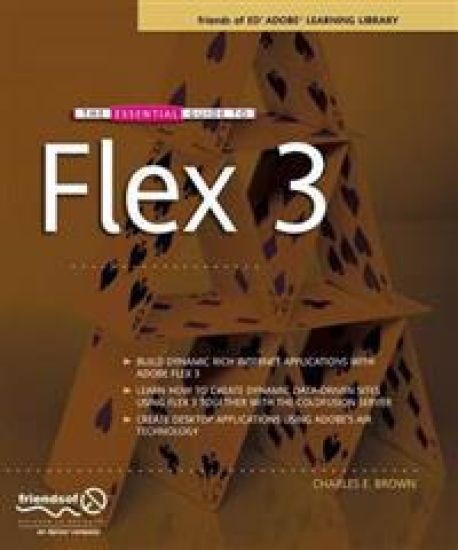
Flex 3 is the next generation of a technology that revolutionized web applications. It is the next evolutionary step of Flash, which has grown from a web animation medium to a powerful enterprise web design and development platform. With nearly 98% of all web browsers, and a growing number of mobile devices, running Flash Player, a knowledge of Flex is indispensible for any serious web developer. This book will show you how to create powerful rich Internet applications using Flex 3. After learning how to install and becoming familiar with the basics of the Flex Builder 3 software, you will explore in-depth how the Flash scripting language, ActionScript 3.0, interacts with Flex's powerful XML-like design language: MXML. You'll learn how to construct your applications using layout and navigation containers, and how to move between various states using transitions. There is coverage of how best to plan your applications and use the Model-View-Controller pattern to keep various aspects of development separated and ease creation of potentially complicated projects. Rich Internet applications rely on data, and this book shows how to bring data from various sources into your Flex application and check its integrity, and how best to display and interact with it. Going farther, applications built for the Flash platform can now exist and function beyond the traditional confines of the web browser. Adobe AIR allows you to take your applications to the desktop, and this book shows how to reapply your Flex skills to take advantage of this new environment. The Essential Guide to Flex 3 takes you through all the powerful features of Flex using a series of stand-alone, practical exercises. The skills acquired throughout the book are then brought together in the form of a full-featured case study application showcasing essential techniques that can easily be applied to your own Flex applications.
Covers the latest Flash development technologies from Adobe--ActionScript 3, Flex, and Flex Builder 2--in a comprehensive tutorial designed to help Flash developers create more powerful applications, covering such topics as Cascading Style Sheets, data connectivity, the fundamentals of MXML, Object Oriented Programming concepts, and more. Original. (Beginner/Intermediate)
Publisher's Note: Products purchased from Third Party sellers are not guaranteed by the publisher for quality, authenticity, or access to any online entitlements included with the product. Take a look at this great application of VBA and learn to expand the capabilities of Access with simple programming. Author Charles E. Brown shows you step-by-step how to create your own code, work with Object-Oriented Programming, and more. Plus, discover and utilize key programming concepts that can be applied beyond VBA.
Macromedia's Fireworks MX 2004 enables users to design, optimize, and add basic interactivity to their graphics and is mainly used for designing and optimizing Web graphics, then exporting them to Web site creation programs like Dreamweaver or Flash. This new handbook shows them how.
Fireworks MX: From Zero To Hero is intended for the majority of readers who don't need to be told when to jump, or ask how high. If you’re new to Fireworks MX, this book will provide you with a fast learning curve to get you swiftly up to speed, and progressing towards the creativity you want to achieve; and if you already have some familiarity with any version of Fireworks, it'll provide many, many exercises and case studies that will extend your knowledge of techniques, tips, and tricks. In addition, the book serves as a handy reference to a reader of any level. Structured in 3 distinctive sections, the aim of this book is to provide as much knowledge and as many skills and techniques as can be fitted into 450 pages. Section One: Fireworks MX Primer. This section will get you familiar with the major tools and functionality of Fireworks MX, by example, and simple-to-understand explanation, and in fewer than 200 pages. Section Two: Projects. Here you’re introduced to case studies and examples that will give you practical, hands-on experience and provide exposure to the more complex tools in Fireworks MX - learning by experience. As well as practicing your new found skills, this is also the place where you’ll learn many tips and tricks of the trade. Section Three: Real-World. In this section we look at Fireworks MX as it’s used in the real world of professional design – not just as a standalone application, but as part of the formation of the designers creative toolbox.
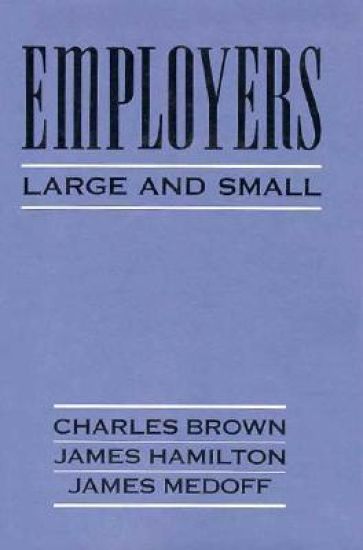
Small business has captured the imagination of both the popular press and politicians. The tradition that has created sympathy for the small entrepreneur has been strengthened in recent years by images of small firms as dynamic, growing, and flexible and of large firms as struggling, outdated, and intractable in the face of changing competitive environments. There is, it appears, an added fervor for America’s support of “the little guy.” Employers Large and Small draws on existing data and new research to create a more complete picture of the roles of large and small employers, challenging much of the conventional wisdom. It argues that the oft-cited achievement of small firms in generating new jobs is primarily a reflection of the fact that industries in which the typical firm is small have grown rapidly in recent years. The authors show that there are striking differences between large and small employers—that in fact large employers pay higher wages, offer better fringe benefits, and on average offer a more attractive package of working conditions and compensation. These differences reflect real challenges faced by small firms: they pay more for their nonlabor inputs and for many fringe benefits if they choose to offer them. Employers Large and Small also goes beyond the workplace, examining the role of large and small employers in politics. Despite the typical portrayal of small business as the underdog in policy disputes, the political resources of small employers are substantial. The PAC contributions of small business, for example, are as large as those of labor unions and nearly two-thirds those of big business. The authors show that the economic and political differences between large and small employers are sizable, are significant influences in the working lives of Americans, and are at odds with current policy assumptions.