
Kirjojen hintavertailu – 12 859 829 kirjaa ja 27 kauppaa

Kirjailija

Charles Casimiro Cavalcante

Kirjat ja teokset yhdessä paikassa: 2 kirjaa, julkaisuja vuosilta 2010–2024, suosituimpiin kuuluu Machine Learning for Spectrum Sharing. Vertaile teosten hintoja ja tarkista saatavuus suomalaisista kirjakaupoista.

2 kirjaa

Kirjojen julkaisuvuodet: 2010–2024.

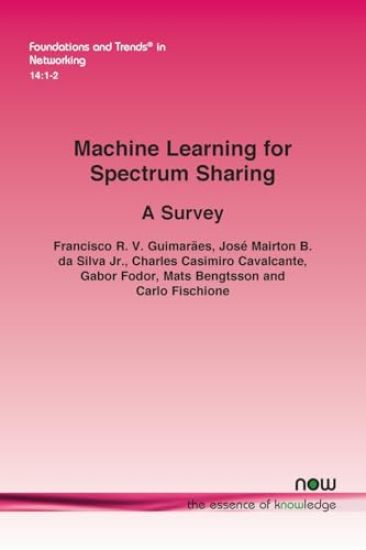
Machine Learning for Spectrum Sharing

Machine Learning for Spectrum Sharing

Francisco R. V. Guimarães; José Mairton B. da Silva; Charles Casimiro Cavalcante; Gabor Fodor; Mats Bengtsson; Carlo Fischione

Now Publishers Inc
2024
nidottu
The 5th generation (5G) of wireless systems is being deployed with the aim to provide many sets of wireless communication services, such as low data rates for a massive amount of devices, broadband, low latency, and industrial wireless access. Such an aim is even more complex in the next generation wireless systems (6G) where wireless connectivity is expected to serve any connected intelligent unit, such as software robots and humans interacting in the metaverse, autonomous vehicles, drones, trains, or smart sensors monitoring cities, buildings, and the environment. As the wireless devices will be orders of magnitude denser than in 5G cellular systems, and due to the complex quality of service requirements, the access to the wireless spectrum will have to be appropriately shared to avoid congestion, poor quality of service, or unsatisfactory communication delays. Spectrum sharing methods have been the objective of intense study through model-based approaches, such as optimization or game theories. However, these methods may fail when facing the complexity of the communication environments in 5G, 6G, and beyond. Recently, there has been significant interest in the application and development of data-driven methods, namely machine learning methods, to handle the complex operation of spectrum sharing. In this monograph, a complete overview of the state-of-the-art of machine learning for spectrum sharing is provided. First, the authors map the most prominent methods that are encountered in spectrum sharing. Then, it is shown how these machine learning methods are applied to the numerous dimensions and sub-problems of spectrum sharing, such as spectrum sensing, spectrum allocation, spectrum access, and spectrum handoff. Finally, several open questions and future trends are highlighted.
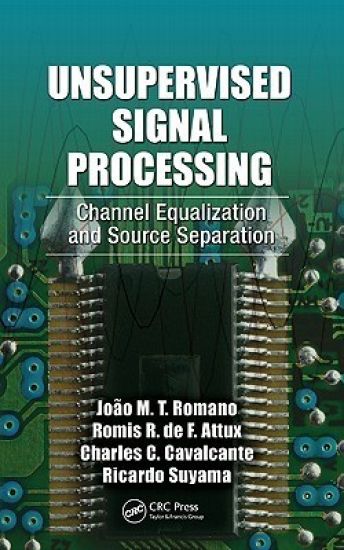
Unsupervised Signal Processing

Unsupervised Signal Processing

João Marcos Travassos Romano; Romis Attux; Charles Casimiro Cavalcante; Ricardo Suyama

CRC Press Inc
2010
sidottu
Unsupervised Signal Processing: Channel Equalization and Source Separation provides a unified, systematic, and synthetic presentation of the theory of unsupervised signal processing. Always maintaining the focus on a signal processing-oriented approach, this book describes how the subject has evolved and assumed a wider scope that covers several topics, from well-established blind equalization and source separation methods to novel approaches based on machine learning and bio-inspired algorithms. From the foundations of statistical and adaptive signal processing, the authors explore and elaborate on emerging tools, such as machine learning-based solutions and bio-inspired methods. With a fresh take on this exciting area of study, this book: Provides a solid background on the statistical characterization of signals and systems and on linear filtering theory Emphasizes the link between supervised and unsupervised processing from the perspective of linear prediction and constrained filtering theoryAddresses key issues concerning equilibrium solutions and equivalence relationships in the context of unsupervised equalization criteriaProvides a systematic presentation of source separation and independent component analysisDiscusses some instigating connections between the filtering problem and computational intelligence approaches. Building on more than a decade of the authors’ work at DSPCom laboratory, this book applies a fresh conceptual treatment and mathematical formalism to important existing topics. The result is perhaps the first unified presentation of unsupervised signal processing techniques—one that addresses areas including digital filters, adaptive methods, and statistical signal processing. With its remarkable synthesis of the field, this book provides a new vision to stimulate progress and contribute to the advent of more useful, efficient, and friendly intelligent systems.