Kirjojen hintavertailu – 12 859 826 kirjaa ja 27 kauppaa

Kirjailija

Charles Darwin

Kirjat ja teokset yhdessä paikassa: 1 236 kirjaa, julkaisuja vuosilta 1859–2027, suosituimpiin kuuluu Lajien synty. Vertaile teosten hintoja ja tarkista saatavuus suomalaisista kirjakaupoista.

1 236 kirjaa

Kirjojen julkaisuvuodet: 1859–2027.

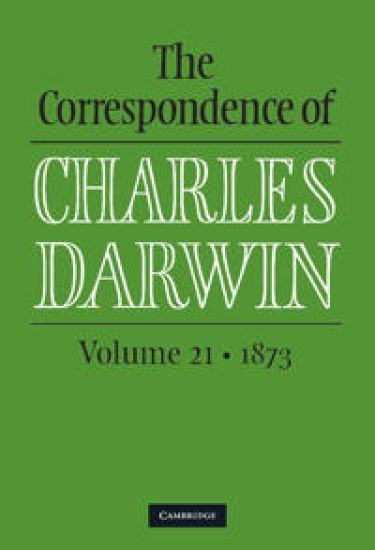
The Correspondence of Charles Darwin: Volume 21, 1873

The Correspondence of Charles Darwin: Volume 21, 1873

Charles Darwin

Cambridge University Press
2014
sidottu
This volume is part of the definitive edition of letters written by and to Charles Darwin, the most celebrated naturalist of the nineteenth century. Notes and appendixes put these fascinating and wide-ranging letters in context, making the letters accessible to both scholars and general readers. Darwin depended on correspondence to collect data from all over the world, and to discuss his emerging ideas with scientific colleagues, many of whom he never met in person. The letters are published chronologically: Volume 21 includes letters from 1873, the year in which Darwin received responses to his work on human and animal expression. Also in this year, Darwin continued his work on carnivorous plants and plant movement, finding unexpected similarities between the plant and animal kingdoms, raised a subscription for his friend Thomas Henry Huxley, and decided to employ a scientific secretary for the first time - his son Francis.
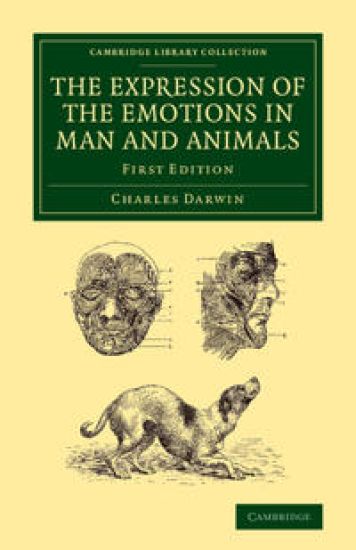
The Expression of the Emotions in Man and Animals

The Expression of the Emotions in Man and Animals

Charles Darwin

Cambridge University Press
2013
pokkari
When this monograph was first published in 1872, there already existed a good deal of thought on facial expression via the study of physiognomy; this work, notes Charles Darwin (1809–82), was full of 'surprising nonsense'. Setting aside the assumption of previous studies that human facial muscles were created specifically for a range of expressions unique to the species, Darwin sets out here to make a systematic study of both human and animal expression. The range of his research is extraordinarily wide: he not only experimented on himself, but observed infants, consulted doctors in psychiatric hospitals and sent out requests to missionaries and travellers for first-hand notes on the expressions of aboriginal peoples. Learned, meticulous and illustrated with an impressive array of drawings, photographs and engravings, Darwin's work stands as an important contribution to the study of human behaviour and its origins.
The Origin of Species

The Origin of Species

Charles Darwin

WW Norton Co
2013
nidottu
As much as anyone in the modern era, Charles Darwin changed the course of human thought. The impact on Western civilization of his seminal work has been broad and deep: not only the biological sciences but also social thought, philosophy, ethics, religion, and literature have all been shaped and reshaped by evolutionary concepts. Here, in what Paul Moody (writing in Victorian Studies) has called "a masterly condensation," is a classic edition of Darwin's The Origin of Species . It retains all of the substance of the original book, but only the essential elements of its profuse detail. Philip Appleman, the editor of Darwin, a Norton Critical Edition ("the best Darwin anthology on the market," according to Stephen Jay Gould), has cut deftly to the essence of Darwin's classic, losing none of the continuity or flavor of the original and making available an edition that modern readers will not find overpowering. This revision includes a new introduction by Professor Appleman that perceptively traces Darwin's influence on the world of ideas as well as three additional chapters from Darwin's work.

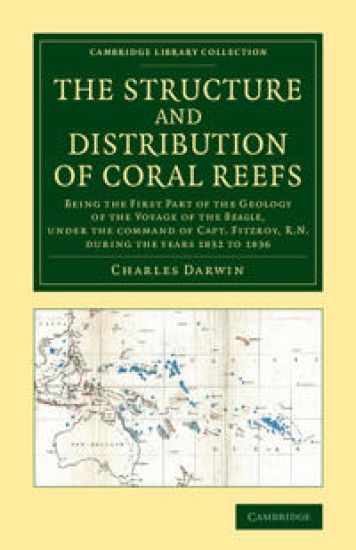
The Structure and Distribution of Coral Reefs

The Structure and Distribution of Coral Reefs

Charles Darwin

Cambridge University Press
2013
pokkari
Published in 1842, this important monograph by Charles Darwin (1809–82) formed the first part of a trilogy of geological studies based on observations made during the celebrated second voyage of the Beagle. Influenced by Charles Lyell's Principles of Geology, Darwin drew in particular on data from the survey of the Keeling Islands in the Indian Ocean to support his theory that subsidence of the ocean floor can account for the formation of coral atolls. He first presented his findings in a paper for the Geological Society of London in 1837, but a heavy workload and illness delayed the appearance of this elegantly argued and illustrated study. For this and his work on barnacles, Darwin would receive the Royal Society's royal medal in 1853. The other studies in the trilogy, Geological Observations on the Volcanic Islands (1844) and Geological Observations on South America (1846), are also reissued in this series.
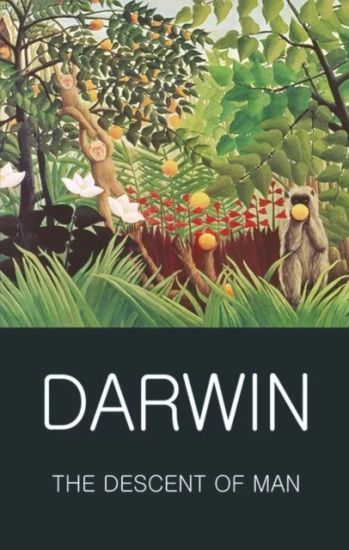
The Descent of Man

The Descent of Man

Charles Darwin

Wordsworth Editions Ltd
2013
nidottu

Halvin toimitettuna 11,90 €

In The Descent of Man Darwin addresses many of the issues raised by his notorious Origin of Species: finding in the traits and instincts of animals the origins of the mental abilities of humans, of language, of our social structures and our moral capacities, he attempts to show that there is no clear dividing line between animals and humans. Most importantly, he accounts for what Victorians called the ‘races’ of mankind by means of what he calls sexual selection. This book presents a full explanation of Darwin’s ideas about sexual selection, including his belief that many important characteristics of human beings and animals have emerged in response to competition for mates. This was a controversial work. Yet Darwin tried hard to avoid being branded as a radical revolutionary. He is steeped in Victorian sensibilities regarding gender and cultural differences: he sees human civilization as a move from barbarous savagery to modern gentlefolk, and women as more emotional and less intellectual than men, thus providing a biological basis for the social assumptions and prejudices of the day. The Descent of Man played a major role in the emergence of social Darwinism. This complete version of the first edition gives the modern reader an unparalleled opportunity to engage directly with Darwin’s proposals, launched in the midst of continuing controversy over On the Origin of Species. Janet Browne is the author of the prize-winning biography, Charles Darwin: Voyaging and Charles Darwin: The Power of Place.
The Correspondence of Charles Darwin: Volume 20, 1872

The Correspondence of Charles Darwin: Volume 20, 1872

Charles Darwin

Cambridge University Press
2013
sidottu
This volume is part of the definitive edition of letters written by and to Charles Darwin, the most celebrated naturalist of the nineteenth century. Notes and appendixes put these fascinating and wide-ranging letters in context, making the letters accessible to both scholars and general readers. Darwin depended on correspondence to collect data from all over the world and to discuss his emerging ideas with scientific colleagues, many of whom he never met in person. The letters are published chronologically: volume 20 includes letters from 1872, the year in which The Expression of the Emotions in Man and Animals was published, making ground-breaking use of photography. Also in this year, the sixth and final edition of On the Origin of Species was published and Darwin resumed his work on carnivorous plants and plant movement, finding unexpected similarities between the plant and animal kingdoms.
El origen de las especies

El origen de las especies

Charles Darwin

Createspace Independent Publishing Platform
2013
nidottu
La teor a de Darwin de la evoluci n se basa en hechos clave y e inferencias extra das de los mismos, que el bi logo Ernst Mayr resumi como sigue: Cada especie es suficientemente f rtil para que si sobreviven todos los descendientes para reproducir la poblaci n crecer . Aunque hay fluctuaciones peri dicas, las poblaciones siguen siendo aproximadamente del mismo tama o. Los recursos como los alimentos son limitados y son relativamente estables en el tiempo. Sobreviene una lucha por la supervivencia (inferencia). Los individuos de una poblaci n var an considerablemente de unos a otros. Gran parte de esta variaci n es heredable. Los individuos menos adecuadas para el medio ambiente tienen menos probabilidades de sobrevivir y menos probabilidades de reproducirse; os individuos m s adaptados al medio ambiente tienen m s probabilidades de sobrevivir y m s posibilidades de reproducirse y de dejar sus rasgos hereditarios a las generaciones futuras, lo que produce el proceso de selecci n natural (inferencia). Este proceso lento resulta en cambios en las poblaciones para adaptarse a sus entornos, y en ltima instancia, estas variaciones se acumulan con el tiempo para formar nuevas especies (inferencia).