Kirjojen hintavertailu – 12 859 826 kirjaa ja 27 kauppaa
Kirjailija
Charles Darwin
Kirjat ja teokset yhdessä paikassa: 1 236 kirjaa, julkaisuja vuosilta 1859–2027, suosituimpiin kuuluu Lajien synty. Vertaile teosten hintoja ja tarkista saatavuus suomalaisista kirjakaupoista.
This pivotal volume in the definitive edition of Charles Darwin's letters covers the year 1871, the year in which Descent of Man, Darwin's first public statement on human evolution, was published. The large number of letters in this year - more than 800 - reflects the excitement this caused. Darwin depended on correspondence to collect data from a growing network of contacts all over the world and to discuss his emerging ideas with colleagues, many of whom he never met in person. This year also saw the marriage of Darwin's daughter Henrietta, the first of his children to marry; the volume includes her personal journal of the year, published here for the first time, which complements letters that hint at her important role in her father's work as both commentator and editor. Notes and appendixes put these fascinating and wide-ranging letters in context, making them accessible to both scholars and general readers.
First published in 1974 as a companion volume to Howard E. Gruber's "Darwin on Man", Paul H. Barrett's transcriptions of Darwin's M and N notebooks served to shed new light on the evolutionist's methods and motivation. Writing in the "New York Times Book Review", Stephen Jay Gould explained: "Darwin kept [these notebooks] primarily in 1838, when he was 29 years old. In them, he recorded his early conviction of evolutionary continuity between humans and all other animals... These notebooks display all the features of humanistic intellect that his detractors denied. We find erudition in his comments on Plato, Locke, Hume, Adam Smith, Whewell, Burke, Montaigne, Lessing and Spencer... We appreciate an artistic bent in his delight with nature and her prophet Wordsworth... We grasp the breadth of his bold attempt to clothe all human thought and behaviour in a new evolutionary garb... Charles Darwin was reconstructing the world and he knew exactly what he was doing."
Now in paperback, this richly illustrated edition of Charles Darwin's paradigm-shattering masterpiece brings Darwin's life and controversial theories into full view. Edited and with an introduction by award-winning science journalist David Quammen, it features more than 300 illustrations, including paintings, personal photographs, botanical and zoological studies, and newspaper engravings. Excerpts from Darwin's other works, especially "The Voyage of the Beagle," and facsimile pages from his letters and diaries invite readers to experience Darwin's journey and scientific breakthrough.
Charles Darwin (1809–82) was the English naturalist famous for the theory of evolution by natural selection. He began studying medicine at the University of Edinburgh, but developed a fascination for natural history and left Edinburgh to attend Christ's College, Cambridge, where he pursued his new interest while taking a Bachelor of Arts degree. After graduating, he had the opportunity to secure a position as ship's naturalist aboard H. M. S. Beagle for a five-year, round-the-world voyage which would make him famous. Published in 1845, this book is the second edition of Darwin's expedition journal, more popularly known as The Voyage of the Beagle. Throughout the journey he made observations and discoveries that would lead him to develop his revolutionary theory of evolution, which later appeared in On the Origin of Species and created a storm in the scientific and religious communities.
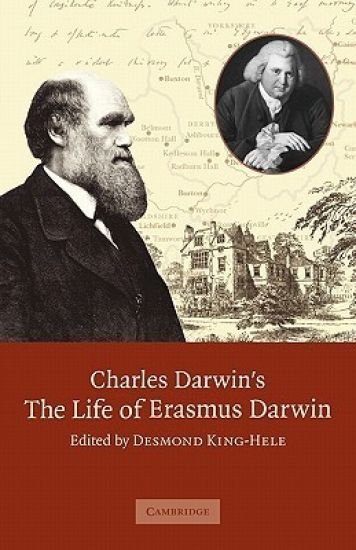
Charles Darwin's book about his grandfather, The Life of Erasmus Darwin, is curiously fascinating. Before publication in 1879, it was shortened by 16%, with several of the cuts directed at its most provocative parts. The cutter, with Charles's permission, was his daughter Henrietta - an example of the strong hidden hand of meek-seeming Victorian women. Originally published in 2003, this first unabridged edition, edited by Desmond King-Hele, includes all that Charles originally intended, the cuts being restored and printed in italics. Erasmus Darwin was one of the leading intellectuals of the eighteenth century. He was a respected physician, a well-known poet, a keen mechanical inventor, and a founding member of the influential Lunar Society. He also possessed an amazing insight into the many branches of physical and biological science. Most notably, he adopted what we now call biological evolution as his theory of life, 65 years prior to Charles Darwin's Origin of Species.
Charles Darwin (1809–1882) published Observations on the Volcanic Islands in 1844. It is one of three major geological works resulting from the voyage of the Beagle, and contains detailed geological descriptions of locations visited by Darwin including the Cape Verde archipelago, Mauritius, Ascension Island, St Helena, the Galápagos, and parts of Australia, New Zealand and South Africa. Chapter 6 discusses the types of lava found on different oceanic islands. There is an appendix of short contributions by two other scholars: descriptions of fossil shells from Cape Verde, St Helena and Tasmania by G. B. Sowerby and of fossil corals from Tasmania by W. Lonsdale. The book is illustrated with woodcuts, maps and sketches of specimens. It provides valuable insights into one of the most important scientific voyages ever made, and the development of Darwin's ideas on geology.
The Descent of Man, Darwin's second landmark work on evolutionary theory (following The Origin of the Species), marked a turning point in the history of science with its modern vision of human nature as the product of evolution. Darwin argued that the noblest features of humans, such as language and morality, were the result of the same natural processes that produced iris petals and scorpion tails.
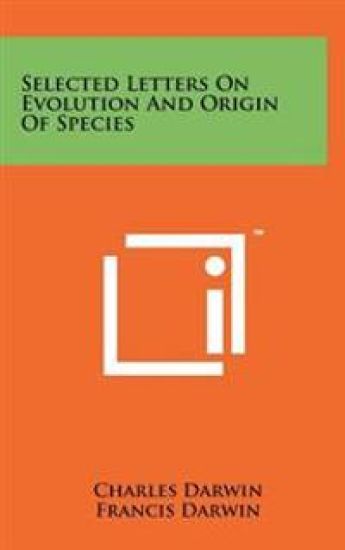
Selected Letters on Evolution and Origin of Species is a collection of correspondence by the renowned naturalist and scientist, Charles Darwin. The book features a selection of letters written by Darwin to his colleagues, friends, and family, covering a period of more than twenty years. The letters offer a fascinating insight into Darwin's thinking and research, and provide a unique perspective on the development of his ideas on evolution and the origin of species. The book is divided into several sections, each of which focuses on a different aspect of Darwin's work. The first section covers his early research on geology and natural history, while the second section explores his interest in the theory of evolution. The third section delves into Darwin's extensive research on the origin of species, including his famous work, On the Origin of Species by Means of Natural Selection. Throughout the book, readers will gain a deeper understanding of Darwin's scientific method, as well as his personal struggles and triumphs. The letters provide a glimpse into the challenges he faced in developing and promoting his ideas, as well as the support he received from his colleagues and friends. Selected Letters on Evolution and Origin of Species is an essential read for anyone interested in the history of science or the development of evolutionary theory. The book is a valuable resource for scholars, students, and anyone who wants to learn more about one of the most influential scientists of all time. This scarce antiquarian book is a facsimile reprint of the old original and may contain some imperfections such as library marks and notations. Because we believe this work is culturally important, we have made it available as part of our commitment for protecting, preserving, and promoting the world's literature in affordable, high quality, modern editions, that are true to their original work.