Kirjailija
Charles Derber
Kirjat ja teokset yhdessä paikassa: 43 kirjaa, julkaisuja vuosilta 1990–2026, suosituimpiin kuuluu Letters to the Resistance. Vertaile teosten hintoja ja tarkista saatavuus suomalaisista kirjakaupoista.
43 kirjaa
Kirjojen julkaisuvuodet: 1990–2026.
When the Women’s March gathered millions just one day after Trump’s inauguration, a new era of progressive action was born. Organizing on the far Right led to Trump’s election, bringing authoritarianism and the specter of neo-fascism, and intensifying corporate capitalism’s growing crises of inequality and injustices. Yet now we see a new universalizing resistance among progressive and left movements for truth, dignity, and a world based on democracy, equality, and sustainability. Derber ?offers the first comprehensive guide to this new era and an original vision and strategy for movement success. He convincingly shows how only a new ?universalizing? wave, a ?progressive? and revolutionary "movement of movements," can counter the world-universalizing economic and cultural forces of intensifying corporate and far-right power. Derber explores the crises and eroding legitimacy of the globalized? capitalist system ?and the right wing movements? that helped create the Trump era??. He shows? how? left universalizing movements can--and must—converge ? to propel a? mass base that can prevent societal, economic, or ecological collapse, stop a resurgent Right, and build a democratic social alternative. He describes tactics and strategies for ?this?new progressive movement. Brief guest "interludes" by Medea Benjamin, Noam Chomsky, Ralph Nader, Bill Fletcher, Juliet Schor, Gar Alperovitz, Chuck Collins, Matt Nelson, Janet Wallace, and other prominent figures tell how to coalesce and universalize activism into a more powerful movement wave—at local, community, national, and international levels. Vivid and highly accessible, this? book is for activists, students, and all ?citizens concerned about the erosion of justice and democracy. It thoroughly illuminates the rationale, theory, practice, ?humanism, love, ?and joy of ?the? ?social transformation that we urgently need.


It’s not just the bully in the schoolyard that we should be worried about. The one-on-one bullying that dominates the national conversation, this timely book suggests, is actually part of a larger problem— a natural outcome of the bullying nature of our national institutions. And as long as the United States embraces militarism and aggressive capitalism, systemic bullying and all its impacts—at home and abroad—will persist as a major crisis. Bullying looks very similar on the personal and institutional levels: it involves an imbalance of power and behavior that consistently undermines its victim, securing compliance and submission and reinforcing the bully’s sense of superiority and legitimacy. The similarity, this book tells us, is not a coincidence. Authors Charles Derber and Yale Magrass argue that individual bullying is an outgrowth—and a necessary function—of a larger social phenomenon. Bullying is seen here as a structural problem arising from systems organized around steep power hierarchies—from the halls of the Pentagon, Congress, and corporate offices to classrooms and playing fields and the environment. Dominant people and institutions need to create a culture in which violence and aggression are seen asnatural and just: one where individuals compete over who will be bully or victim, and each is seen as deserving their fatewithin this hierarchy. The larger the inequalities of power in society, or among nations, or even across species, the morelikely it is that both institutional and personal bullying will become commonplace. The authors see the life-long psychologicalscars interpersonal bullying can bring, but believe it is almost impossible to reduce such bullying without first challenging theinstitutions that breed and encourage it. In the United States a system of intertwined corporations, governments, and military institutions carries out “systemic bullying” to create profits and sustain its own power. While acknowledging the diversity and savagery of many other bully nations, the authors contend that America, as the most powerful nation in the world—and one that aggressively promotes its system as a model—merits special attention. It is only by recognizing the bullying built into this model that we can address the real problem, and in this, Bully Nation makes a hopeful beginning.
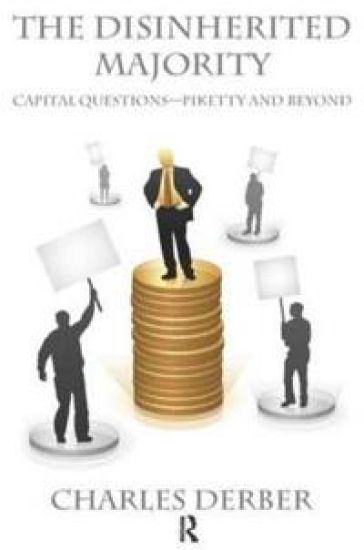
Thomas Piketty's blockbuster 2014 book, Capital in the 21st Century, may prove to be a game-changer, one of those rare books such as Friedan's The Feminine Mystique, which helped spark a new feminist movement. The world-wide flood of commentary suggests Piketty's book has already opened a new conversation not only about inequality, but about class, capitalism and social justice. Inherited wealth is at the heart of Capital in the 21st Century, and Derber shows how the 'disinherited majority' is likely to affect the future. In his new book, Derber shows that there are actually 'two Pikettys' - different voices of the author on the 1%, inheritance, and capitalism itself - that create a fascinating and unacknowledged hidden debate and conversation within the book. Drawing on Piketty's discussion, Derber raises fourteen 'capital questions' - with new perspectives on caste and class warfare, the Great Recession, the decline of the American Dream and the Occupy movement - that can guide a new conversation about the past and future of capitalism. The Disinherited Majority will catalyse a conversation beyond Piketty already emerging in colleges and universities, town halls, coffee shops, workplaces and political parties and social movements; an essential class for all Americans.
Before there was economics, there was political economy, an interdisciplinary adventure boldly and critically seeking to understand capitalism. Over time, the social sciences evolved into specific disciplines - economics, sociology, political science - that less often questioned capitalist perspectives and the state. Contrasting three traditions - neoclassicism, Keynesianism, and neo-Marxism - Capitalism: Should You Buy It? traces the historical development of each and evaluates whether they view capitalism as the root cause of or the solution to the pressing problems now facing humanity. This accessible and hopeful book is a call to everyone - citizen, student, public intellectual - to revive the critical edge towards capitalism.
Charles Derber introduces and vividly explains the idea of a sociopathic society and why the idea has become necessary to understand today s world. Sociopathic society is rooted in governments and economies, not psychiatry. The book offers a new sociology of societies organized around antisocial values, which ultimately lead to societal and planetary self-destruction. Most of the sociopathic behaviors are perfectly legal and are perpetrated by governments, financial institutions, and corporate capitalism. Focusing on the United States, Derber connects the dots of Wall Street meltdown, guns and murder, uninhibited greed, the 1% and the 99%, a new crisis of unemployable surplus people, Hurricane Sandy and global warming, cheating scandals, and more including the war on democracy itself. Although the book brings together a breathtaking set of stories of a system run wild, it also offers hope, showing pathways for confronting and avoiding the many ways a society can commit sociocide. FEATURES OF THE BOOK"
The Surplus American considers a future where increasing numbers of Americans will be rendered jobless and redundant. Exploring the ongoing crisis of 'surplus people' today, authors Charles Derber and Yale Magrass show that the jobless are merely the tip of the iceberg. Drawing on the work of economists and highlighting new trends, the book identifies a number of primary groups within the category of 'surplus' including the underemployed, people forcibly removed or induced to leave the labour force and retirees. Derber and Magrass argue that a majority of the US public is now part of the surplus population constituting an integral part of the economy. The authors conclude that these movements will be essential to solving the crisis of surplus people and redirecting the economy in a more positive direction.
Renowned American sociologist Charles Derber imagines a surprise encounter with Karl Marx's ghost in London's Highgate cemetery, leading to a night-long conversation about the problems plaguing the world. The economic crisis, climate change, war, the future of capitalism and the 'Arab Spring' are all discussed. The ghost reconsiders his theories as he speaks eloquently about American labour, environmental, gender and anti-racist struggles. The engrossing, funny and provocative conversation, with appearances from other ghosts such as John Maynard Keynes, offers new insights into the relevance and flaws of Marx's thought, indicating how we can get to a better world.
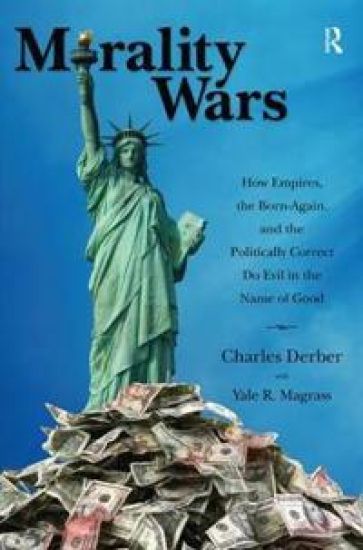
Is patriotism a good thing in an empire? Did General Petraeus betray us or did Moveon? Does morality often serve immoral purposes? Morality Wars shows us how to understand the subtext of these questions and of all the debates about moral values and liberal versus conservative ideology. Derber and Magrass show that the moral problem today is not just lying but "immoral morality," doing evil in the name of good (e.g., Bush preemptively invading Iraq to spread liberty). The authors explore three ancient codes of immoral morality frighteningly resurrected in America today -those of empire, the politically correct, and the born again. Although the right today has recrafted historic arguments that empires bring peace, and fundamentalists battle moral decay, the authors show the Democratic Party and the left have their own IM, with Democrats supporting empire and the left its own political correctness. America's political divide today is a backlash to the progressive revolution of the 1960s and 1970s-secular, antiwar, and feminist-that created a radical break from traditional values and set the stage for current morality wars. In the spirit of de Tocqueville, this powerful book offers a rich and vivid portrait of America's political landscape, exploring ideas that can help move the nation to a new morality and politics.
This book shows how we can solve the climate change crisis, which is the greatest threat humanity has faced. Charles Derber, a prominent sociologist and political economist, shows that global warming is a symptom of deep pathologies in global capitalism. In conversational and passionate writing, Derber shows that climate change is capitalism's time bomb, certain to explode unless we rapidly transform our economy and create a new green American Dream Derber shows there is hope in the financial meltdown and Great Recession we are now suffering. The economic crisis has raised deep questions about Wall Street and the US capitalist model. Derber systematically explores the causal links between capitalism and climate change, a taboo subject in the U. S, and opens up new thinking to solve both the economic and climate crises.
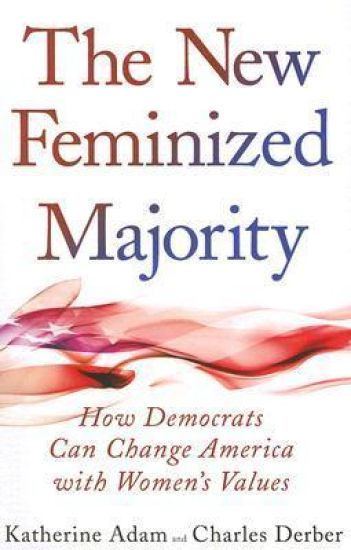
Building beyond Lakoff's election-year best-seller, Don't Think of an Elephant, this new book shows how the values of American voters are dramatically shifting. With the arrival of the 2008 election year, a rising "feminized majority"-made up of both women and men-is emerging as the pivotal force in American politics. Emerging trends show these values are broadly progressive and address not just the needs of women but the general interests of society. They are held by women substantially more than by men but have become the values held by a majority of all voters, including millions of men. Like earlier eras in American history, such as the New Deal, the rise of the feminized majority today presents an opportunity for the Democrats to become the governing party for decades to come. Looking beyond the 2008 election, Adam and Derber describe a new political strategy that targets the feminized base and opens up a window for major social justice movements to make progressive change. Like Lakoff's, this striking new book-perfectly timed for election year 2008-offers a new vocabulary for every citizen who wants to understand (and reimagine) American politics. It will intrigue and provoke readers, stirring new conversation among progressives and new insights for every citizen interested in politics, morality, religion, values, and social justice.
Is patriotism a good thing in an empire? Did General Petraeus betray us or did Moveon? Does morality often serve immoral purposes? Morality Wars shows us how to understand the subtext of these questions and of all the debates about moral values and liberal versus conservative ideology. Derber and Magrass show that the moral problem today is not just lying but "immoral morality," doing evil in the name of good (e.g., Bush preemptively invading Iraq to spread liberty). The authors explore three ancient codes of immoral morality frighteningly resurrected in America today -those of empire, the politically correct, and the born again. Although the right today has recrafted historic arguments that empires bring peace, and fundamentalists battle moral decay, the authors show the Democratic Party and the left have their own IM, with Democrats supporting empire and the left its own political correctness. America's political divide today is a backlash to the progressive revolution of the 1960s and 1970s-secular, antiwar, and feminist-that created a radical break from traditional values and set the stage for current morality wars. In the spirit of de Tocqueville, this powerful book offers a rich and vivid portrait of America's political landscape, exploring ideas that can help move the nation to a new morality and politics.
America has been run as a corporate regime for several years -- a merger of big business and government that makes profits more important than human rights and erodes the democratic tradition. Costly wars abroad, a national debt that grows exponentially year after year, and the inability to deliver stable work and essential social services are undermining the legitimacy of the regime -- opening the door to a new period of regime change. Today, new grass roots progressive movements are mobilizing, becoming a catalyst for change. In Hidden Power, author Charles Derber shows how these movements can transform the political landscape, breaking the Democratic party out of its corporate shell and moving it toward a new unifying vision of how to create real democracy in a world run by big money.