Kirjojen hintavertailu – 12 859 827 kirjaa ja 27 kauppaa
Kirjailija
Charles Dickens
Kirjat ja teokset yhdessä paikassa: 4 944 kirjaa, julkaisuja vuosilta 1843–2027, suosituimpiin kuuluu Saiturin joulu. Vertaile teosten hintoja ja tarkista saatavuus suomalaisista kirjakaupoista.
Notice: This Book is published by Historical Books Limited (www.publicdomain.org.uk) as a Public Domain Book, if you have any inquiries, requests or need any help you can just send an email to [email protected] This book is found as a public domain and free book based on various online catalogs, if you think there are any problems regard copyright issues please contact us immediately via [email protected]
La novela trata sobre la vida de Nell Trent y de su abuelo, que viven en Londres en la Tienda de Antig edades. El t rmino ingl s Shop suele traducirse como tienda o comercio, mientras old curiosity evoca alg n art culo curioso y de cierta antig edad, de ah el nombre.
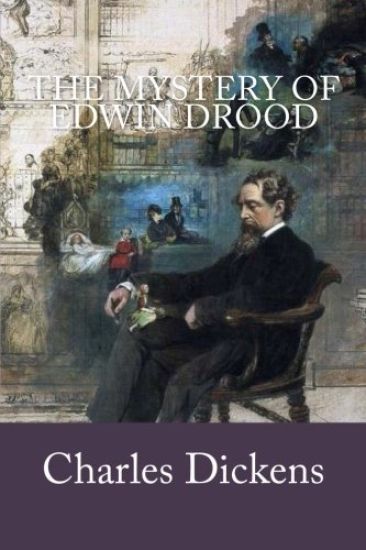
The Mystery of Edwin Drood is the final novel by Charles Dickens. The novel was unfinished at the time of Dickens's death (9 June 1870) and his ending for it is unknown. Though the novel is named after the character Edwin Drood, the story focuses on Drood's uncle, precentor, choirmaster and opium addict, John Jasper, who is in love with his pupil, Rosa Bud. Miss Bud, Drood's fianc e, has also caught the eye of the high-spirited and hot-tempered Neville Landless, who comes from Ceylon with his twin sister, Helena. Landless and Drood take an instant dislike to one another. Drood later disappears under mysterious circumstances. The story is set in Cloisterham, a lightly disguised Rochester. Mr Crisparkle, for example, lives in a clergy house in Minor Canon Corner, which corresponds to a genuine address within the precincts of Rochester Cathedral, namely Minor Canon Row.
This is the Collector's edition with restored illustrations. Hard to find, we have limited copies available. A Tale of Two Cities (1859) is a novel by Charles Dickens, set in London and Paris before and during the French Revolution. The novel tells the story of the French Doctor Manette, his 18-year-long imprisonment in the Bastille in Paris and his release to life in London with his daughter Lucie, whom he had never met; Lucie's marriage and the collision between her beloved husband and the people who caused her father's imprisonment; and Monsieur and Madame Defarge, sellers of wine in a poor suburb of Paris. The story is set against the conditions that led up to the French Revolution and the Reign of Terror.
The writer of these humble lines being a Waiter, and having come of a family of Waiters, and owning at the present time five brothers who are all Waiters, and likewise an only sister who is a Waitress, would wish to offer a few words respecting his calling; first having the pleasure of hereby in a friendly manner offering the Dedication of the same unto Joseph, much respected Head Waiter at the Slamjam Coffee-house, London, E. C., than which a individual more eminently deserving of the name of man, or a more amenable honour to his own head and heart, whether considered in the light of a Waiter or regarded as a human being, do not exist.
Great Expectations is Charles Dickens's thirteenth novel. It is his second novel, after David Copperfield, to be fully narrated in the first person. Great Expectations is a bildungsroman, or a coming-of-age novel, and it is a classic work of Victorian literature. It depicts the growth and personal development of an orphan named Pip. The novel was first published in serial form in Dickens's weekly periodical All the Year Round, from 1 December 1860 to August 1861. In October 1861, Chapman and Hall published the novel in three volumes. Dickens originally intended Great Expectations to be twice as long, but constraints imposed by the management of All the Year Round limited the novel's length. The novel is collected and dense, with a conciseness unusual for Dickens. According to G. K. Chesterton, Dickens penned Great Expectations in "the afternoon of his] life and fame." It was the penultimate novel Dickens completed, preceding Our Mutual Friend. It is set among the marshes of Kent and in London in the early to mid-1800s. The novel contains some of Dickens most memorable scenes, including its opening, in a graveyard, when the young orphan Pip is accosted by the escaped convict, Abel Magwitch. Great Expectations is a graphic book, full of extreme imagery, poverty, prison ships ("the hulks"), barriers and chains, and fights to the death. Upon its release, Thomas Carlyle spoke of "All that Pip's nonsense." Later, George Bernard Shaw praised the novel as "All of one piece and consistently truthfull." Dickens felt Great Expectations was his best work, calling it "a very fine idea," and was very sensitive to compliments from his friends: "Bulwer, who has been, as I think you know, extraordinarily taken by the book." Great Expectations has a colourful cast that has entered popular culture: the capricious Miss Havisham, the cold and beautiful Estella, Joe the kind and generous blacksmith, the dry and sycophantic Uncle Pumblechook, Mr. Jaggers, Wemmick with his dual personality, and the eloquent and wise friend, Herbert Pocket. Throughout the narrative, typical Dickensian themes emerge: wealth and poverty, love and rejection, and the eventual triumph of good over evil. Great Expectations has become very popular and is now taught as a classic in many English classes. It has been translated into many languages and adapted many times in film and other media.
"David Copperfield" or "The Personal History, Adventures, Experience and Observation of David Copperfield the Younger of Blunderstone Rookery" was first published in 1850. Like all except five of his works, it originally appeared in serial form. Many elements within the novel follow events in Dickens' own life, and it is probably the most autobiographical of all of his novels. It is also Dickens' "favorite child."
The Life and Adventures of Nicholas Nickleby Left penniless by the death of his improvident father, young Nicholas Nickleby assumes responsibility for his mother and sister and seeks help from his Scrooge-like Uncle Ralph. Instantly disliking Nicholas, Ralph sends him to teach in a school run by the stupidly sadistic Wackford Squeers. Nicholas decides to escape, taking with him the orphan Smike, one of Squeers's most abused young charges, and the two embark on a series of adventurous encounters with an array of humanity's worst and best-greedy fools, corrupt lechers, cheery innocents, and selfless benefactors.
El argumento trata de una anciana, Sophonisba, que detecta se ales de vida en una desvencijada casa supuestamente deshabitada -la casa que da nombre al cuento-, situada enfrente de la suya, e induce a su admirador Jabez Jarber y a su sirviente Trottle a que investiguen qu est pasando en la casa.