
Kirjailija
Charles Dickens
Kirjat ja teokset yhdessä paikassa: 4 944 kirjaa, julkaisuja vuosilta 1843–2027, suosituimpiin kuuluu Saiturin joulu. Vertaile teosten hintoja ja tarkista saatavuus suomalaisista kirjakaupoista.
Nimi esiintyy myös muodoissa: Charles Dickens.
4 944 kirjaa
Kirjojen julkaisuvuodet: 1843–2027.

Originally published in 1865, Dr. Marigold was extremely successful, as were Dickens's public performances of a play based on the story - fascinating and easy to read. Doctor (it is his given name) Marigold is a "Cheap Jack" or what we would call a street peddler. Doctor Marigold's fortunes reverse when he adopts a deaf and mute girl whose mother is dead and whose stepfather, owner of a traveling circus, beats her. Dr Marigold recalls an overwhelming passion across two cultures - hearing and deaf. This classic title has been published by RADLEY BOOKS. Each RADLEY CLASSIC is a meticulously restored, luxurious and faithful reproduction of a classic book; produced with elegant text layout, clarity of presentation, and stylistic features that make reading a true pleasure. Special attention is given to legible fonts and adequate letter sizing, correct line length for readability, generous margins and triple lead (lavish line separation); plus we do not allow any mistakes/changes/additions to creep into the author's words. Visit RADLEY BOOKS at www.radleybooks.com (or search RADLEY CLASSIC on Amazon) to see more classic book titles in this series.
Charles Dickens needs no formal introduction, having been the most popular English writer of the 19th century and still one of the most popular writers in history today. Dickens' upbringing was a mixture of happy times and sad: when he recalled his father being sent to debtor's prison in his memoirs, his tears actually left marks on the page. Nevertheless, Dickens was obsessed with reading, making him a natural journalist by the age of 20, when he began a career in journalism. Along the way, he also began writing his own short stories and materials, often serializing them in monthly installments in publications, a popular method of publishing in the 19th century. Unlike most writers, Dickens would not write an entire story before it began its serialization, allowing him to work on the fly and leave plot lines up in the air with each opportunity. By the time he died at the relatively young age of 58 from a stroke, he was already Europe's most famous writer. His obituary noted that Dickens was a "sympathizer with the poor, the suffering, and the oppressed." Dickens was interred in Westminster Abbey, a rare honor bestowed only among the greatest and most accomplished Britons. This classic title has been published by RADLEY BOOKS. Each RADLEY CLASSIC is a meticulously restored, luxurious and faithful reproduction of a classic book; produced with elegant text layout, clarity of presentation, and stylistic features that make reading a true pleasure. Special attention is given to legible fonts and adequate letter sizing, correct line length for readability, generous margins and triple lead (lavish line separation); plus we do not allow any mistakes/changes/additions to creep into the author's words. Visit RADLEY BOOKS at www.radleybooks.com (or search RADLEY CLASSIC on Amazon) to see more classic book titles in this series.

The Letters of Charles Dickens
Charles Dickens; Mamie Dickens; Georgina Hogarth
Hansebooks
2017
pokkari
The Letters of Charles Dickens - Vol. III (1836 - 1870) is an unchanged, high-quality reprint of the original edition of 1882. Hansebooks is editor of the literature on different topic areas such as research and science, travel and expeditions, cooking and nutrition, medicine, and other genres. As a publisher we focus on the preservation of historical literature. Many works of historical writers and scientists are available today as antiques only. Hansebooks newly publishes these books and contributes to the preservation of literature which has become rare and historical knowledge for the future.
The Letters of Charles Dickens
Charles Dickens; Mamie Dickens; Georgina Hogarth
Hansebooks
2017
pokkari

The Letters of Charles Dickens
Charles Dickens; Mamie Dickens; Georgina Hogarth
Hansebooks
2017
pokkari
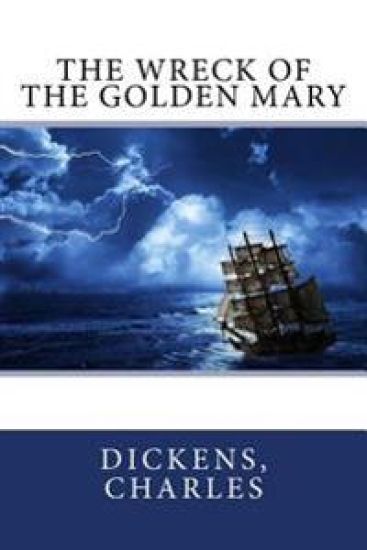
The Wreck of the Golden Mary
Charles Dickens
Createspace Independent Publishing Platform
2017
nidottu
Charles John Huffam Dickens was an English writer and social critic. He created some of the world's best-known fictional characters and is regarded by many as the greatest novelist of the Victorian era. His works enjoyed unprecedented popularity during his lifetime, and by the 20th century critics and scholars had recognised him as a literary genius. His novels and short stories enjoy lasting popularity. Dickens was regarded as the literary colossus of his age. His 1843 novella, A Christmas Carol, remains popular and continues to inspire adaptations in every artistic genre. Oliver Twist and Great Expectations are also frequently adapted, and, like many of his novels, evoke images of early Victorian London. His 1859 novel, A Tale of Two Cities, set in London and Paris, is his best-known work of historical fiction.

The Uncommercial Traveller is a collection of literary sketches and reminiscences written by Charles Dickens. In 1859 Dickens founded a new journal called All the Year Round and the Uncommercial Traveller articles would be among his main contributions. He seems to have chosen the title and persona of the Uncommercial Traveller as a result of a speech he gave on 22 December 1859 to the Commercial Travellers' School London in his role as honorary chairman and treasurer. The persona sits well with a writer who liked to travel, not only as a tourist, but also to research and report what he found; visiting Europe, America and giving book readings throughout Britain. He does not seem content to rest late in his career when he had attained wealth and comfort and continued travelling locally, walking the streets of London in the mould of the flAneur, a 'gentleman stroller of city streets'. He often suffered from insomnia and his night-time wanderings gave him an insight into some of the hidden aspects of Victorian London, details of which he also incorporated into his novels.
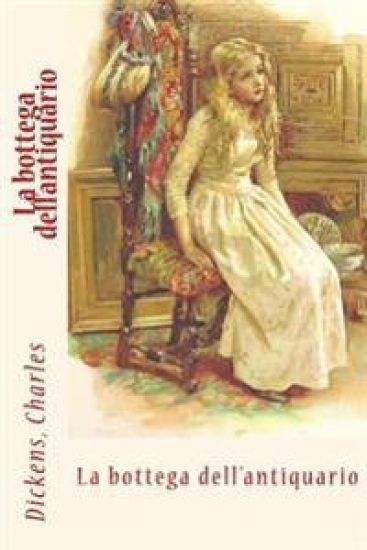
Nell, da quando si ritrovata senza genitori, vive col nonno materno, unico parente rimastole al mondo oltre al fratello maggiore (che per vive lontano), conducendo un'esistenza solitaria ed appartata, quasi interamente dedicata al prendersi amorevolmente cura del caro vecchio. Il suo unico amico Kit, giovane commesso di bottega a cui lei cerca d'insegnar a scrivere.
MOST of us see some romances in life. In my capacity as Chief Manager of a Life Assurance Office, I think I have within the last thirty years seen more romances than the generality of men, however unpromising the opportunity may, at first sight, seem. As I have retired, and live at my ease, I possess the means that I used to want, of considering what I have seen, at leisure. My experiences have a more remarkable aspect, so reviewed, than they had when they were in progress. I have come home from the Play now, and can recall the scenes of the Drama upon which the curtain has fallen, free from the glare, bewilderment, and bustle of the Theatre. Let me recall one of these Romances of the real world. There is nothing truer than physiognomy, taken in connection with manner. The art of reading that book of which Eternal Wisdom obliges every human creature to present his or her own page with the individual character written on it, is a difficult one, perhaps, and is little studied. It may require some natural aptitude, and it must require (for everything does) some patience and some pains. That these are not usually given to it, -that numbers of people accept a few stock commonplace expressions of the face as the whole list of characteristics, and neither seek nor know the refinements that are truest, -that You, for instance, give a great deal of time and attention to the reading of music, Greek, Latin, French, Italian, Hebrew, if you please, and do not qualify yourself to read the face of the master or mistress looking over your shoulder teaching it to you, -I assume to be five hundred times more probable than improbable. Perhaps a little self-sufficiency may be at the bottom of this; facial expression requires no study from you, you think; it comes by nature to you to know enough about it, and you are not to be taken in.
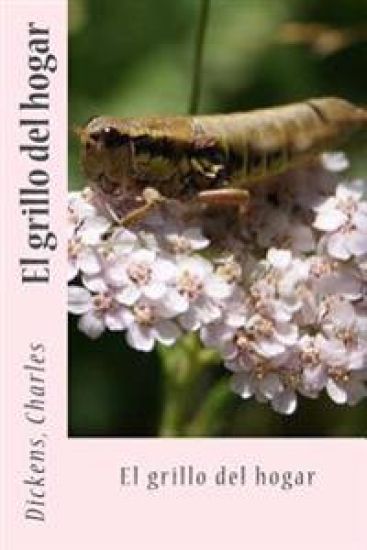
John Peerybingle, un carretero, vive con su joven esposa Dot, su hijo y la ni era, Tilly Slowboy. Un grillo canta en el hogar y act a como ngel guardi n de la familia. Un d a, un anciano misterioso les visita y se queda a vivir con los Peerybingle durante unos d as. La vida de la familia Peerybingle se cruza con la de Caleb Plummer, un juguetero pobre que trabaja para el avaro Mr. Tackleton. Caleb tiene una hija ciega llamada Bertha, y un hijo, Edward, que viaj a Am rica del Sur y se le cree muerto.
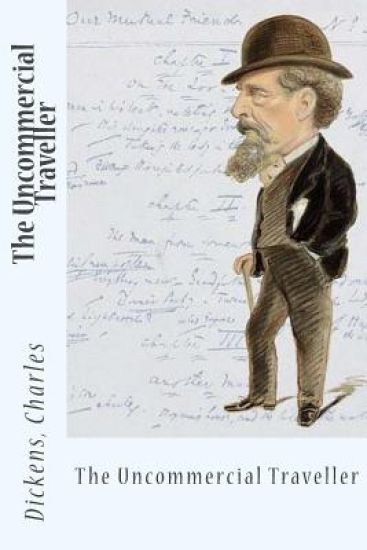
The Uncommercial Traveller is a collection of literary sketches and reminiscences written by Charles Dickens. In 1859 Dickens founded a new journal called All the Year Round and the Uncommercial Traveller articles would be among his main contributions. He seems to have chosen the title and persona of the Uncommercial Traveller as a result of a speech he gave on 22 December 1859 to the Commercial Travellers' School London in his role as honorary chairman and treasurer.
The Haunted Man and the Ghost's Bargain
Charles Dickens
Createspace Independent Publishing Platform
2017
nidottu
My father's family name being Pirrip, and my Christian name Philip, my infant tongue could make of both names nothing longer or more explicit than Pip. So, I called myself Pip, and came to be called Pip. I give Pirrip as my father's family name, on the authority of his tombstone and my sister, -Mrs. Joe Gargery, who married the blacksmith. As I never saw my father or my mother, and never saw any likeness of either of them (for their days were long before the days of photographs), my first fancies regarding what they were like were unreasonably derived from their tombstones. The shape of the letters on my father's, gave me an odd idea that he was a square, stout, dark man, with curly black hair. From the character and turn of the inscription, "Also Georgiana Wife of the Above," I drew a childish conclusion that my mother was freckled and sickly. To five little stone lozenges, each about a foot and a half long, which were arranged in a neat row beside their grave, and were sacred to the memory of five little brothers of mine, -who gave up trying to get a living, exceedingly early in that universal struggle, -I am indebted for a belief I religiously entertained that they had all been born on their backs with their hands in their trousers-pockets, and had never taken them out in this state of existence. Ours was the marsh country, down by the river, within, as the river wound, twenty miles of the sea. My first most vivid and broad impression of the identity of things seems to me to have been gained on a memorable raw afternoon towards evening. At such a time I found out for certain that this bleak place overgrown with nettles was the churchyard; and that Philip Pirrip, late of this parish, and also Georgiana wife of the above, were dead and buried; and that Alexander, Bartholomew, Abraham, Tobias, and Roger, infant children of the aforesaid, were also dead and buried; and that the dark flat wilderness beyond the churchyard, intersected with dikes and mounds and gates, with scattered cattle feeding on it, was the marshes; and that the low leaden line beyond was the river; and that the distant savage lair from which the wind was rushing was the sea; and that the small bundle of shivers growing afraid of it all and beginning to cry, was Pip. "Hold your noise " cried a terrible voice, as a man started up from among the graves at the side of the church porch. "Keep still, you little devil, or I'll cut your throat " A fearful man, all in coarse gray, with a great iron on his leg. A man with no hat, and with broken shoes, and with an old rag tied round his head. A man who had been soaked in water, and smothered in mud, and lamed by stones, and cut by flints, and stung by nettles, and torn by briars; who limped, and shivered, and glared, and growled; and whose teeth chattered in his head as he seized me by the chin. "Oh Don't cut my throat, sir," I pleaded in terror.