Kirjojen hintavertailu – 12 859 827 kirjaa ja 27 kauppaa
Kirjailija
Charles Dickens
Kirjat ja teokset yhdessä paikassa: 4 944 kirjaa, julkaisuja vuosilta 1843–2027, suosituimpiin kuuluu Saiturin joulu. Vertaile teosten hintoja ja tarkista saatavuus suomalaisista kirjakaupoista.
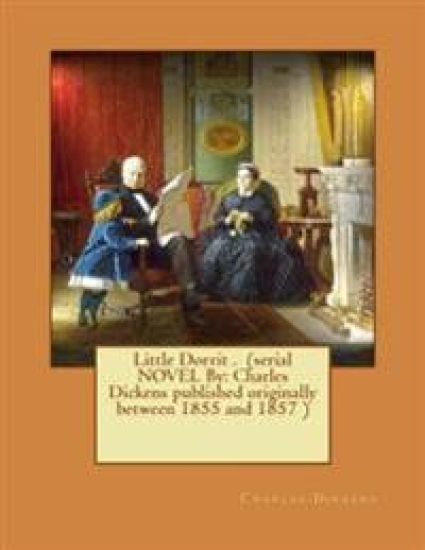
Originally published as a novel in serial form between 1855 and 1857, Little Dorrit satirises the shortcomings of both government and society, including the institution of debtors' prisons, where debtors were imprisoned, unable to work, until they repaid their debts. The prison in this case is the Marshalsea, where Dickens's own father had been imprisoned. Dickens is also critical of the lack of a social safety net, the treatment and safety of industrial workers, as well the bureaucracy of the British Treasury, in the form of his fictional "Circumlocution Office". In addition he satirises the stratification of society that results from the British class system.
In the case of "Hunted Down," a first-person narrative in the manner of Wilkie Collins, the motivation was decidedly pecuniary. "Its subject has been taken from the life of a notorious criminal . . ., and its principal claim to notice was the price paid for it. For a story not longer than half of one of the numbers of Chuzzlewit or Copperfield, he had received a thousand pounds" (Forster 344). For John Forster, the installment of a novel was worth more aesthetically than a short story, representative of a genre that he seems to regard as an inferior. In fact, Dickens's biographers from Forster to Ackroyd have paid scant attention to "Hunted Down," aside from the large sum paid for it and the possible connection between the story's antagonist and such real-life models as the poisoners Thomas Wainewright. Another notorious criminal who may have sat for the story's villainous Slinkton, according to Philip Collins, is " Dr.] Palmer of Rugeley another wholesale murderer of persons.
In the case of "Hunted Down," a first-person narrative in the manner of Wilkie Collins, the motivation was decidedly pecuniary. "Its subject has been taken from the life of a notorious criminal . . ., and its principal claim to notice was the price paid for it. For a story not longer than half of one of the numbers of Chuzzlewit or Copperfield, he had received a thousand pounds" (Forster 344). For John Forster, the installment of a novel was worth more aesthetically than a short story, representative of a genre that he seems to regard as an inferior. In fact, Dickens's biographers from Forster to Ackroyd have paid scant attention to "Hunted Down," aside from the large sum paid for it and the possible connection between the story's antagonist and such real-life models as the poisoners Thomas Wainewright. Another notorious criminal who may have sat for the story's villainous Slinkton, according to Philip Collins, is " Dr.] Palmer of Rugeley another wholesale murderer of persons...
Originally published as a novel in serial form between 1855 and 1857, Little Dorrit satirises the shortcomings of both government and society, including the institution of debtors' prisons, where debtors were imprisoned, unable to work, until they repaid their debts. The prison in this case is the Marshalsea, where Dickens's own father had been imprisoned. Dickens is also critical of the lack of a social safety net, the treatment and safety of industrial workers, as well the bureaucracy of the British Treasury, in the form of his fictional "Circumlocution Office". In addition he satirises the stratification of society that results from the British class system.
John Peerybingle, a carrier, lives with his young wife Dot, their baby boy and their nanny Tilly Slowboy. A cricket chirps on the hearth and acts as a guardian angel to the family. One day a mysterious elderly stranger comes to visit and takes up lodging at Peerybingle's house for a few days. The life of the Peerybingles intersects with that of Caleb Plummer, a poor toymaker employed by the miser Mr. Tackleton. Caleb has a blind daughter Bertha, and a son Edward, who travelled to South America and is thought to be dead. The miser Tackleton is now on the eve of marrying Edward's sweetheart, May, but she does not love Tackleton. Tackleton tells John Peerybingle that his wife Dot has cheated on him, and shows him a clandestine scene in which Dot embraces the mysterious lodger; the latter, who is in disguise, is actually a much younger man than he seems. John is cut to the heart over this as he loves his wife dearly, but decides after some deliberations to relieve his wife of their marriage contract. In the end, the mysterious lodger is revealed to be none other than Edward who has returned home in disguise. Dot shows that she has indeed been faithful to John. Edward marries May hours before she is scheduled to marry Tackleton. However, Tackleton's heart is melted by the festive cheer (in a manner reminiscent of Ebenezer Scrooge), and he surrenders May to her true love. The Cricket on the Hearth: A Fairy Tale of Home is a novella by Charles Dickens, published by Bradbury and Evans, and released 20 December 1845 with illustrations by Daniel Maclise, John Leech, Richard Doyle, Clarkson Stanfield and Edwin Henry Landseer. Dickens began writing the book around 17 October 1845 and finished it by 1 December. Like all of Dickens's Christmas books, it was published in book form, not as a serial. Dickens described the novel as "quiet and domestic ...] innocent and pretty." It is subdivided into chapters called "Chirps", similar to the "Quarters" of The Chimes or the "Staves" of A Christmas Carol. It is the third of Dickens's five Christmas books, preceded by A Christmas Carol (1843) and The Chimes (1844), and followed by The Battle of Life (1846) and The Haunted Man and the Ghost's Bargain (1848).