Kirjojen hintavertailu – 12 859 818 kirjaa ja 27 kauppaa

Kirjailija

Charles Drazin

Kirjat ja teokset yhdessä paikassa: 10 kirjaa, julkaisuja vuosilta 2000–2022, suosituimpiin kuuluu The Journals Volume 1. Vertaile teosten hintoja ja tarkista saatavuus suomalaisista kirjakaupoista.

10 kirjaa

Kirjojen julkaisuvuodet: 2000–2022.

Making Hollywood Happen

Making Hollywood Happen

Charles Drazin

UNIVERSITY OF WISCONSIN PRESS
2022
sidottu
Filmmaking is a business—someone has to pay the bills. For much of the industry’s history, that role was shouldered by the studios. The rise of independent filmmakers then led to the rise of independent financiers. But what happens if bad weather closes down a production or a director’s vision pays no heed to the limitations of time and money? Enter Film Finances. The company was founded in London in 1950 to insure against the risk that a film would exceed its original budget or not be completed on time. Its pioneering development of the “completion guarantee”—the financial instrument that provides the essential security for investors to support independent filmmaking—ultimately led to the creation of many thousands of films, including some of the most celebrated ever made: Moulin Rouge (1953), Dr. No (1962), The Outsiders (1982), Pulp Fiction (1994), Slumdog Millionaire (2008), La La Land (2016), and more. Film Finances’s role in filmmaking was little known outside the industry until 2012, when it opened its historical archive to scholars. Drawing on these previously private documents as well as interviews with its executives, Making Hollywood Happen tells the company’s story through seven decades of postwar cinema history and chronicles the growth of the international independent film industry. Focusing on a business that has operated at the meeting point between money and art for more than seventy years, this lavishly illustrated book goes to the heart of how the movie business works.

The Faber Book of French Cinema

The Faber Book of French Cinema

Charles Drazin

Faber Faber
2018
pokkari
In The Faber Book of French Cinema, Charles Drazin explores the rich film culture and history of the country that first established the cinema as the most important mass medium of the twentieth century. Offering portraits of such key figures as the Lumière brothers, Georges Méliès, Charles Pathé and Léon Gaumont, he looks at the early pioneers who transformed a fairground novelty into a global industry. The crisis caused by the First World War led France to surrender her position as the world's dominant film-making power, but French cinema forged a new role for itself as a beacon of cinematic possibility and achievement. Suggesting a Gallic attitude that has always considered the cinema to be as much a cause as a business, Drazin looks at the extraordinary resilience of the French film industry during the Second World War when, in spite of the national catastrophe of defeat and occupation, it was still able to produce such classics as Le Corbeau and Les Enfants du Paradis. Finally, he traces its remarkable post-war regeneration. He looks at the seminal impact of the New Wave of film-makers - typified by Truffaut and Godard - but also at the other waves that have followed since. As he brings the story into the twenty-first century - with Jacques Audaird's award-winning A Prophet - he seeks to capture the essence of the French film tradition and why it continues to matter to anyone who cares about the cinema.
Mapping the Past

Mapping the Past

Charles Drazin

Cornerstone
2017
pokkari
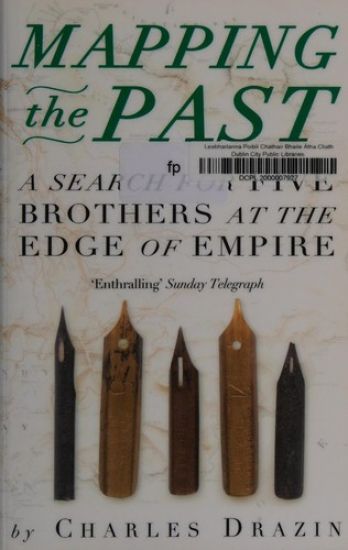
The author knew little about his mother's father - only that he had been a military surveyor who mapped great swathes of the British Empire. This is the story of five brothers who, mapping the world, lived up to the Royal Engineers' motto of Everywhere. It is the story of Ireland, and of the Empire from which it broke away.
Korda

Korda

Charles Drazin

I.B. Tauris
2011
nidottu
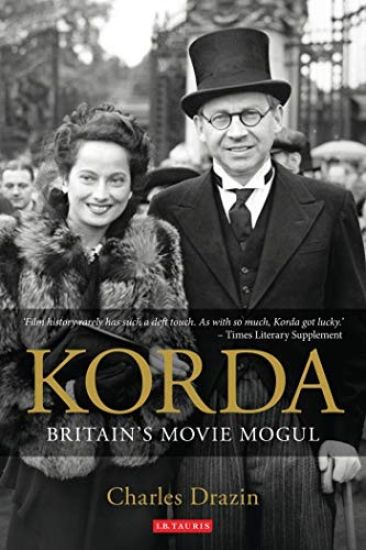
The producer behind such celebrated films as The Four Feathers and The Third Man is one of the most colourful and important figures in the history of the British cinema. This gripping biography tells how with extraordinary ambition, enterprise and showmanship, Alexander Korda established in Britain a film industry that rivalled Hollywood, built Europe's biggest studio, and created world-class stars, including Charles Laughton and Vivien Leigh. The biography traces Korda's path from his rural childhood in a remote part of Hungary to a British knighthood. Korda's legacy, it argues, was a film industry that dared to dream on the largest possible scale. But he also exemplified the pattern of boom and bust that dogged the British cinema ever since he first came into the limelight in 1933 with the international success of The Private Life of Henry VIII. To understand his often turbulent career is to gain a profound insight into the nature of the British cinema both then and now.
Man Who Outshone The Sun King

Man Who Outshone The Sun King

Charles Drazin

Arrow Books Ltd
2009
pokkari
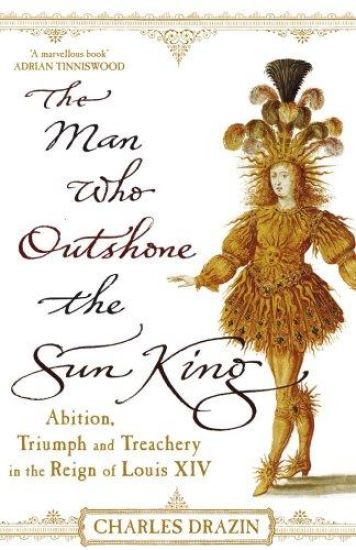
*In 1664, the musketeer D'Artagnan rode beside a heavily-armoured carriage as it rumbled slowly southwards from Paris, carrying his great friend Nicolas Foucquet to internal exile and life imprisonment in the fortress of Pignerol.
The Journals Volume 1

The Journals Volume 1

John Fowles; Charles Drazin

NORTHWESTERN UNIVERSITY PRESS
2009
nidottu
John Fowles gained international recognition in 1963 with his first published novel, The Collector, but his labor on what may be his greatest literary undertaking, his journals, commenced over a decade earlier. Fowles, whose works include The Maggot, The French Lieutenant's Woman, and The Ebony Tower, is among the most inventive and influential English novelists of the twentieth century. The first volume begins in 1949 with Fowles' final year at Oxford. It reveals his intellectual maturation, chronicling his experiences as a university lecturer in France and as a schoolteacher on the Greek island of Spetsai. Simultaneously candid and eloquent, Fowles' journals also expose the deep connection between his personal and scholarly lives as Fowles struggled to win literary acclaim. From his affair with Elizabeth, the married woman who would become his first wife, to his passion for film, ornithology, travel, and book collecting, the journals present a portrait of a man eager to experience life. The second and final volume opens in 1966, as Fowles, already an international success, navigates his newfound fame and wealth. With absolute honesty, his journals map his inner turmoil over his growing celebrity and his hesitance to take on the role of a public figure. Fowles recounts his move from London to a secluded house on England's Dorset coast, where discontented with society's voracious materialism he led an increasingly isolated life. Great works in their own right, Fowles' journals elucidate the private thoughts that gave rise to some of the greatest writing of our time.
The Journals Volume 1

The Journals Volume 1

John Fowles; Charles Drazin

NORTHWESTERN UNIVERSITY PRESS
2009
nidottu
John Fowles gained international recognition in 1963 with his first published novel, The Collector, but his labor on what may be his greatest literary undertaking, his journals, commenced over a decade earlier. Fowles, whose works include The Maggot, The French Lieutenant's Woman, and The Ebony Tower, is among the most inventive and influential English novelists of the twentieth century. The first volume begins in 1949 with Fowles' final year at Oxford. It reveals his intellectual maturation, chronicling his experiences as a university lecturer in France and as a schoolteacher on the Greek island of Spetsai. Simultaneously candid and eloquent, Fowles' journals also expose the deep connection between his personal and scholarly lives as Fowles struggled to win literary acclaim. From his affair with Elizabeth, the married woman who would become his first wife, to his passion for film, ornithology, travel, and book collecting, the journals present a portrait of a man eager to experience life. The second and final volume opens in 1966, as Fowles, already an international success, navigates his newfound fame and wealth. With absolute honesty, his journals map his inner turmoil over his growing celebrity and his hesitance to take on the role of a public figure. Fowles recounts his move from London to a secluded house on England's Dorset coast, where discontented with society's voracious materialism he led an increasingly isolated life. Great works in their own right, Fowles' journals elucidate the private thoughts that gave rise to some of the greatest writing of our time.
Boo Hoo

Boo Hoo

Charles Drazin; Erik Portanger; Ernst Malmsten

Cornerstone
2002
pokkari
boo hoo is a gripping, insider's account of the rise and fall of this most controversial of internet startups - a global, online retailer of sports and designer clothes.
"Blue Velvet"

"Blue Velvet"

Charles Drazin

Bloomsbury Publishing PLC
2000
nidottu
"Blue Velvet" is perhaps David Lynch's best film to date, and certainly his most well-known. Beneath its tranquil, small-town ambience lies violence and depravity on a hideous scale, with Dennis Hopper as Frank at its core. This work covers everything one could possibly want to know about the film.
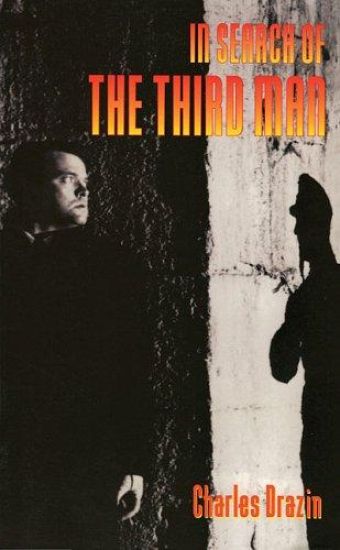
In Search of The Third Man

In Search of The Third Man

Charles Drazin

Limelight Editions
2000
pokkari
Half a century after its opening, The Third Man remains an unquestioned masterpiece of film artistry and, for many, the greatest British movie ever made. Whether it is Harry Lime's magical first appearance or the celebrated cuckoo clock speech or the climactic chase through the sewers beneath Vienna or the haunting theme music of Anton Karas, the film contains some of the most memorable moments in screen history. Drawing on both contemporary documents and accounts of the people involved, In Search of The Third Man explores the many myths that over the years have grown around this extraordinary film, and seeks to unravel the facts from the fiction. ..."you'll want to read The Third Man... The story of the film's creation is as intriguing as the film itself" -Leonard Maltin, Playboy