Kirjojen hintavertailu – 12 903 735 kirjaa ja 27 kauppaa
Kirjailija
Charles E. Cotherman
Kirjat ja teokset yhdessä paikassa: 4 kirjaa, julkaisuja vuosilta 2019–2026, suosituimpiin kuuluu Strip Mine Jesus. Vertaile teosten hintoja ja tarkista saatavuus suomalaisista kirjakaupoista.
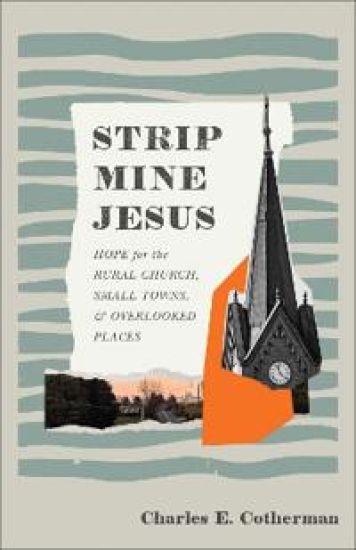
Many young people entering ministry believe success requires them to leave their communities. After all, the fastest-growing congregations and highest-profile ministries are in big cities or their wealthy suburbs, aren't they? But Jesus didn't ignore the small, the exploited, or the overlooked--and neither should his followers. In Strip Mine Jesus, pastor and executive director of the Center for Rural Ministry Charles E. Cotherman challenges our assumptions through stories that showcase the power and beauty of a faithful presence in seemingly "insignificant" places. Drawing on his lifetime of experience in rural communities and churches, Cotherman demonstrates the outsized impact we can have when we have the courage to stay, root where we're planted, and serve God with joy. Whether your community is rural or in the rust belt, whether you're surrounded by endless corn or abandoned mining operations, Jesus still sees you and has a plan for your ministry. Discover how you can make a difference right where you are--starting now.
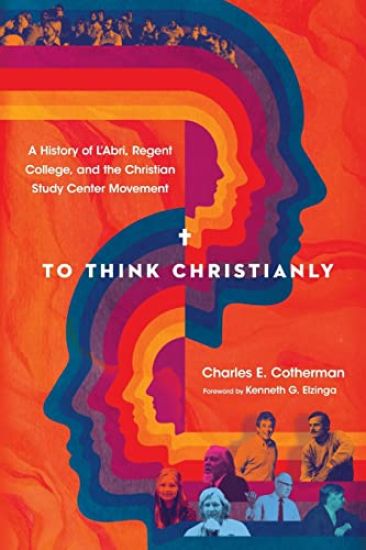
2020 ECPA Top Shelf Book Cover Award In the late 1960s and on into the next decade, the American pastor and bestselling author Francis Schaeffer regularly received requests from evangelicals across North America seeking his help to replicate his innovative learning community, L'Abri, within their own contexts. At the same time, an innovative school called Regent College had started up in Vancouver, British Columbia, led by James Houston and offering serious theological education for laypeople. Before long, numerous admirers and attendees of L'Abri and of Regent had launched Christian "study centers" of their own—often based on or near university campuses—from Berkeley to Maryland. For evangelical baby boomers coming of age in the midst of unprecedented educational opportunity and cultural upheaval, these multifaceted communities inspired a generation to study, pray, and engage culture more faithfully—in the words of James M. Houston, "to think Christianly." In this compelling and comprehensive history, Charles Cotherman traces the stories of notable study centers and networks, as well as their influence on a generation that would reshape twentieth-century Christianity. Beginning with the innovations of L'Abri and Regent College, Cotherman elucidates the histories of The C. S. Lewis Institute near Washington, DCR. C. Sproul's Ligonier Valley Study Center in Stahlstown, PennsylvaniaNew College BerkeleyThe Center for Christian Study at the University of VirginiaThe Consortium of Christian Study Centers, which now includes dozens of institutions Each of these projects owed something to Schaeffer's and Houston's approaches, which combined intellectual and cultural awareness with compelling spirituality, open-handed hospitality, relational networks, and a deep commitment to the gospel's significance for all fields of study—and all of life. Cotherman argues that the centers' mission of lay theological education blazed a new path for evangelicals to fully engage the life of the mind and culture. Built on a rich foundation of original interviews, archival documents, and contemporary sources, To Think Christianly sheds new light on this set of defining figures and places in evangelicalism's life of the mind.
2020 ECPA Top Shelf Book Cover Award In the late 1960s and on into the next decade, the American pastor and bestselling author Francis Schaeffer regularly received requests from evangelicals across North America seeking his help to replicate his innovative learning community, L'Abri, within their own contexts. At the same time, an innovative school called Regent College had started up in Vancouver, British Columbia, led by James Houston and offering serious theological education for laypeople. Before long, numerous admirers and attendees of L'Abri and of Regent had launched Christian "study centers" of their own—often based on or near university campuses—from Berkeley to Maryland. For evangelical baby boomers coming of age in the midst of unprecedented educational opportunity and cultural upheaval, these multifaceted communities inspired a generation to study, pray, and engage culture more faithfully—in the words of James M. Houston, "to think Christianly." In this compelling and comprehensive history, Charles Cotherman traces the stories of notable study centers and networks, as well as their influence on a generation that would reshape twentieth-century Christianity. Beginning with the innovations of L'Abri and Regent College, Cotherman elucidates the histories of The C. S. Lewis Institute near Washington, DCR. C. Sproul's Ligonier Valley Study Center in Stahlstown, PennsylvaniaNew College BerkeleyThe Center for Christian Study at the University of VirginiaThe Consortium of Christian Study Centers, which now includes dozens of institutions Each of these projects owed something to Schaeffer's and Houston's approaches, which combined intellectual and cultural awareness with compelling spirituality, open-handed hospitality, relational networks, and a deep commitment to the gospel's significance for all fields of study—and all of life. Cotherman argues that the centers' mission of lay theological education blazed a new path for evangelicals to fully engage the life of the mind and culture. Built on a rich foundation of original interviews, archival documents, and contemporary sources, To Think Christianly sheds new light on this set of defining figures and places in evangelicalism's life of the mind.
Church planting is hard work. Planters face a thousand pressures related to leadership, finances, identity, and more. Quick fixes don't produce sustainability. How can church planters and their congregations flourish for the long haul? Sent to Flourish is a unique guide to accompany current and prospective church planters as they respond to this essential but sometimes daunting call. Theologically grounded while remaining practically oriented, it combines biblical patterns and practice to equip men and women planters to develop their own holistic planting plans. Written by a diverse team of scholar-practitioners who have planted churches in a variety of contexts, cultures, and church traditions, this book provides a tested roadmap based on Fuller Theological Seminary's renowned church-planting program. In addition to coeditors Len Tang and Charlie Cotherman, contributors include: Carrie Boren HeadingtonJohn LoTim MoreyJohnny Ramírez-JohnsonScott W. SunquistNick WarnesJR Woodward Every church planter needs a healthy "root system" of three interwoven components: a biblical theology of church planting, personal spiritual formation, and robust intercultural competencies to navigate diverse ministry contexts. Each section of this book delves into these areas in turn, covering topics such as biblical, cultural, historical, and contemporary dimensions of church plantingthe missiology of Jesus' ministry and teaching on the kingdom of Godresources to sustain the spiritual formation of church planters, leadership teams, and church membershow to contextualize the gospel message and planting methods in different cultures and communities Filled with real-world insights, stories, and questions for reflection and discussion, Sent to Flourish gives church planters and their teams the tools to be theologically reflective, spiritually grounded, and missionally agile.