Kirjojen hintavertailu – 12 903 737 kirjaa ja 27 kauppaa

Kirjailija

Charles F. Walker

Kirjat ja teokset yhdessä paikassa: 8 kirjaa, julkaisuja vuosilta 1999–2020, suosituimpiin kuuluu Witness to the Age of Revolution. Vertaile teosten hintoja ja tarkista saatavuus suomalaisista kirjakaupoista.

Nimi esiintyy myös muodoissa: Charles F Walker

8 kirjaa

Kirjojen julkaisuvuodet: 1999–2020.

Witness to the Age of Revolution

Witness to the Age of Revolution

Charles F. Walker; Liz Clarke

Oxford University Press Inc
2020
nidottu
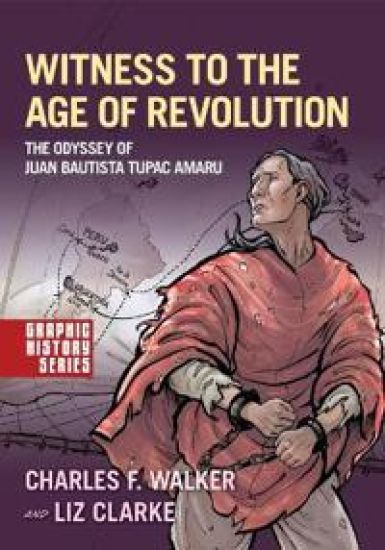
The Tupac Amaru rebellion of 1780-1783 began as a local revolt against colonial authorities and grew into the largest rebellion in the history of Spain's American empire-more widespread and deadlier than the American Revolution. An official collector of tribute for the imperial crown, José Gabriel Condorcanqui had seen firsthand what oppressive Spanish rule meant for Peru's Indian population and, under the Inca royal name Tupac Amaru, he set events in motion that would transform him into one of Latin America's most iconic revolutionary figures. While he and the rebellion's leaders were put to death, his half-brother, Juan Bautista Tupac Amaru, survived but paid a high price for his participation in the uprising. This work in the Graphic History series is based on the memoir written by Juan Bautista about his odyssey as a prisoner of Spain. He endured forty years in jails, dungeons, and presidios on both sides of the Atlantic. Juan Bautista spent two years in jail in Cusco, was freed, rearrested, and then marched 700 miles in chains over the Andes to Lima. He spent two years aboard a ship travelling around Cape Horn to Spain. Subsequently, he endured over thirty years imprisoned in Ceuta, Spain's much-feared garrison city on the northern tip of Africa. In 1822, priest Marcos Durán Martel and Maltese-Argentine naval hero Juan Bautista Azopardo arranged to have him freed and sent to the newly independent Argentina, where he became a symbol of Argentina's short-lived romance with the Incan Empire. There he penned his memoirs, but died without fulfilling his dream of returning to Peru. This stunning graphic history relates the life and legacy of Juan Bautista Tupac Amaru, enhanced by a selection of primary sources, and chronicles the harrowing and extraordinary life of a firsthand witness to the Age of Revolution. .
Colonialismo en ruinas

Colonialismo en ruinas

Charles F Walker

Instituto de Estudios Peruanos
2018
pokkari
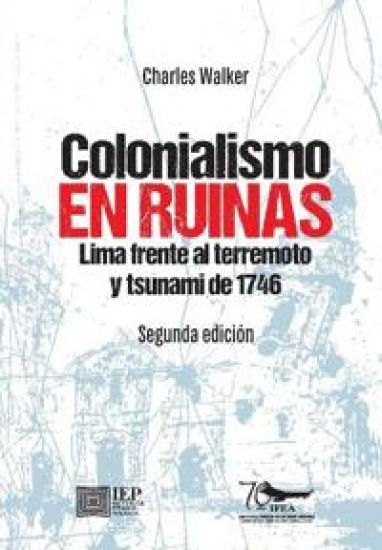
Colonialismo en ruinas analiza las consecuencias del terremoto y tsunami que devastaron Lima y el Callao en octubre de 1746, no solo entre quienes lo sufrieron en carne propia sino su repercusi n en el Imperio espa ol. Con una ciudad en ruinas y miles de personas damnificadas y otras tantas sepultadas bajo los escombros, el libro nos permite aproximarnos a una realidad que no nos es ajena, dada la regularidad de los sismos y tsunamis ocurridos en los ltimos a os en diversas partes del mundo. Qu tan vulnerables seguimos siendo doscientos cincuenta a os despu s? Qu rol les corresponde al Estado y la sociedad civil para enfrentar estos desastres? Estas son algunas preguntas que se desprenden del libro y cuyo autor nos invita a plantearnos a trav s de las experiencias de quienes vivieron y trataron de aprovechar el terremoto y tsunami de 1746: las autoridades con sus planes de reconstrucci n y control social, los religiosos y sus profec as, y las clases populares y sus sue os de rebeli n contra la dominaci n espa ola.
The Tupac Amaru Rebellion

The Tupac Amaru Rebellion

Charles F. Walker

The Belknap Press
2016
nidottu
The largest rebellion in the history of Spain's American empire—a conflict greater in territory and costlier in lives than the contemporaneous American Revolution—began as a local revolt against colonial authorities in 1780. As an official collector of tribute for the imperial crown, José Gabriel Condorcanqui had seen firsthand what oppressive Spanish rule meant for Peru's Indian population. Adopting the Inca royal name Tupac Amaru, he set events in motion that would transform him into Latin America's most iconic revolutionary figure. Tupac Amaru's political aims were modest at first. He claimed to act on the Spanish king's behalf, expelling corrupt Spaniards and abolishing onerous taxes. But the rebellion became increasingly bloody as it spread throughout Peru and into parts of modern-day Bolivia, Chile, and Argentina. By late 1780, Tupac Amaru, his wife Micaela Bastidas, and their followers had defeated the Spanish in numerous battles and gained control over a vast territory. As the rebellion swept through Indian villages to gain recruits and overthrow the Spanish corregidors, rumors spread that the Incas had returned to reclaim their kingdom. Charles Walker immerses readers in the rebellion's guerrilla campaigns, propaganda war, and brutal acts of retribution. He highlights the importance of Bastidas—the key strategist—and reassesses the role of the Catholic Church in the uprising's demise. The Tupac Amaru Rebellion examines why a revolt that began as a multiclass alliance against European-born usurpers degenerated into a vicious caste war—and left a legacy that continues to influence South American politics today.
La rebeli n de T pac Amaru

La rebeli n de T pac Amaru

Charles F. Walker

Instituto de Estudios Peruanos
2015
nidottu
La ejecuci n del corregidor Antonio de Arriaga al sur del Cuzco el 10 de noviembre de 1780 inici la m s grande sublevaci n del continente americano. Durante los siguientes seis meses, Tupac Amaru, su esposa Micaela Bastidas, sus familiares y seguidores pondr an en vilo al Imperio espa ol y abrir an una brecha que otros continuar an acentuando por m s de dos a os. Lo que parec a ser otro levantamiento local termin convirti ndose en una guerra de exterminio, con un saldo de aproximadamente cien mil v ctimas, en un rea que cubri desde el Cuzco hasta Potos . Walker nos sumerge en la sublevaci n con las herramientas de la historia, pero con el coraz n y la prosa de un reportero de guerra. Es minucioso, objetivo, y desde el inicio entendemos que para auscultar la rebeli n hace falta comprender la contrarrebeli n. Escalamos y bajamos monta as con ambos bandos, conocemos desde la pupila insurgente y desde la realista los asedios a Cusco, Puno, La Paz, entre otras; somos part cipes del hambre, fr o y enfermedades que cada parte sufre y se nos muestran las decisiones que cada bando debi tomar, movidos siempre por el terror de las circunstancias antes que por ideolog as preestablecidas. La gran virtud epistemol gica y narrativa del libro es, entonces, extirparle certezas al relato, no sugerir claves de un designio que no existe, y conseguir que los lectores avancemos en la lectura al igual que rebeldes y realistas: heridos, como dec a la canci n, por las flechas de la incertidumbre . Alberto Vergara (diario El Comercio)
Shaky Colonialism

Shaky Colonialism

Charles F. Walker

Duke University Press
2008
pokkari
Contemporary natural disasters such as Hurricane Katrina are quickly followed by disagreements about whether and how communities should be rebuilt, whether political leaders represent the community’s best interests, and whether the devastation could have been prevented. Shaky Colonialism demonstrates that many of the same issues animated the aftermath of disasters more than 250 years ago. On October 28, 1746, a massive earthquake ravaged Lima, a bustling city of 50,000, capital of the Peruvian Viceroyalty, and the heart of Spain’s territories in South America. Half an hour later, a tsunami destroyed the nearby port of Callao. The earthquake-tsunami demolished churches and major buildings, damaged food and water supplies, and suspended normal social codes, throwing people of different social classes together and prompting widespread chaos. In Shaky Colonialism, Charles F. Walker examines reactions to the catastrophe, the Viceroy’s plans to rebuild the city, and the opposition he encountered from the Church, the Spanish Crown, and Lima’s multiracial population. Through his ambitious rebuilding plan, the Viceroy sought to assert the power of the colonial state over the Church, the upper classes, and other groups. Agreeing with most inhabitants of the fervently Catholic city that the earthquake-tsunami was a manifestation of God’s wrath for Lima’s decadent ways, he hoped to reign in the city’s baroque excesses and to tame the city’s notoriously independent women. To his great surprise, almost everyone objected to his plan, sparking widespread debate about political power and urbanism. Illuminating the shaky foundations of Spanish control in Lima, Walker describes the latent conflicts-about class, race, gender, religion, and the very definition of an ordered society-brought to the fore by the earthquake-tsunami of 1746.
Shaky Colonialism

Shaky Colonialism

Charles F. Walker

Duke University Press
2008
sidottu
Contemporary natural disasters such as Hurricane Katrina are quickly followed by disagreements about whether and how communities should be rebuilt, whether political leaders represent the community’s best interests, and whether the devastation could have been prevented. Shaky Colonialism demonstrates that many of the same issues animated the aftermath of disasters more than 250 years ago. On October 28, 1746, a massive earthquake ravaged Lima, a bustling city of 50,000, capital of the Peruvian Viceroyalty, and the heart of Spain’s territories in South America. Half an hour later, a tsunami destroyed the nearby port of Callao. The earthquake-tsunami demolished churches and major buildings, damaged food and water supplies, and suspended normal social codes, throwing people of different social classes together and prompting widespread chaos. In Shaky Colonialism, Charles F. Walker examines reactions to the catastrophe, the Viceroy’s plans to rebuild the city, and the opposition he encountered from the Church, the Spanish Crown, and Lima’s multiracial population. Through his ambitious rebuilding plan, the Viceroy sought to assert the power of the colonial state over the Church, the upper classes, and other groups. Agreeing with most inhabitants of the fervently Catholic city that the earthquake-tsunami was a manifestation of God’s wrath for Lima’s decadent ways, he hoped to reign in the city’s baroque excesses and to tame the city’s notoriously independent women. To his great surprise, almost everyone objected to his plan, sparking widespread debate about political power and urbanism. Illuminating the shaky foundations of Spanish control in Lima, Walker describes the latent conflicts-about class, race, gender, religion, and the very definition of an ordered society-brought to the fore by the earthquake-tsunami of 1746.
Smoldering Ashes

Smoldering Ashes

Charles F. Walker

Duke University Press
1999
pokkari
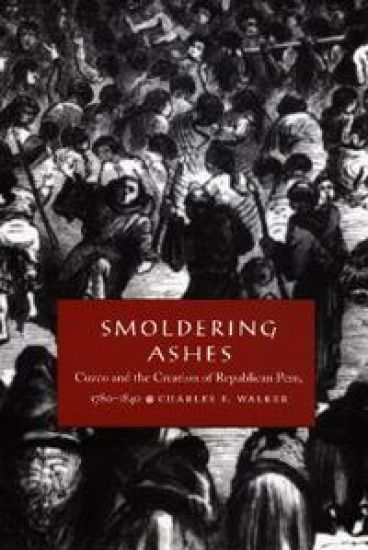
In Smoldering Ashes Charles F. Walker interprets the end of Spanish domination in Peru and that country’s shaky transition to an autonomous republican state. Placing the indigenous population at the center of his analysis, Walker shows how the Indian peasants played a crucial and previously unacknowledged role in the battle against colonialism and in the political clashes of the early republican period. With its focus on Cuzco, the former capital of the Inca Empire, Smoldering Ashes highlights the promises and frustrations of a critical period whose long shadow remains cast on modern Peru. Peru’s Indian majority and non-Indian elite were both opposed to Spanish rule, and both groups participated in uprisings during the late colonial period. But, at the same time, seething tensions between the two groups were evident, and non-Indians feared a mass uprising. As Walker shows, this internal conflict shaped the many struggles to come, including the Tupac Amaru uprising and other Indian-based rebellions, the long War of Independence, the caudillo civil wars, and the Peru-Bolivian Confederation. Smoldering Ashes not only reinterprets these conflicts but also examines the debates that took place-in the courts, in the press, in taverns, and even during public festivities-over the place of Indians in the republic. In clear and elegant prose, Walker explores why the fate of the indigenous population, despite its participation in decades of anticolonial battles, was little improved by republican rule, as Indians were denied citizenship in the new nation-an unhappy legacy with which Peru still grapples. Informed by the notion of political culture and grounded in Walker’s archival research and knowledge of Peruvian and Latin American history, Smoldering Ashes will be essential reading for experts in Andean history, as well as scholars and students in the fields of nationalism, peasant and Native American studies, colonialism and postcolonialism, and state formation.
Smoldering Ashes

Smoldering Ashes

Charles F. Walker

Duke University Press
1999
sidottu
In Smoldering Ashes Charles F. Walker interprets the end of Spanish domination in Peru and that country’s shaky transition to an autonomous republican state. Placing the indigenous population at the center of his analysis, Walker shows how the Indian peasants played a crucial and previously unacknowledged role in the battle against colonialism and in the political clashes of the early republican period. With its focus on Cuzco, the former capital of the Inca Empire, Smoldering Ashes highlights the promises and frustrations of a critical period whose long shadow remains cast on modern Peru. Peru’s Indian majority and non-Indian elite were both opposed to Spanish rule, and both groups participated in uprisings during the late colonial period. But, at the same time, seething tensions between the two groups were evident, and non-Indians feared a mass uprising. As Walker shows, this internal conflict shaped the many struggles to come, including the Tupac Amaru uprising and other Indian-based rebellions, the long War of Independence, the caudillo civil wars, and the Peru-Bolivian Confederation. Smoldering Ashes not only reinterprets these conflicts but also examines the debates that took place-in the courts, in the press, in taverns, and even during public festivities-over the place of Indians in the republic. In clear and elegant prose, Walker explores why the fate of the indigenous population, despite its participation in decades of anticolonial battles, was little improved by republican rule, as Indians were denied citizenship in the new nation-an unhappy legacy with which Peru still grapples. Informed by the notion of political culture and grounded in Walker’s archival research and knowledge of Peruvian and Latin American history, Smoldering Ashes will be essential reading for experts in Andean history, as well as scholars and students in the fields of nationalism, peasant and Native American studies, colonialism and postcolonialism, and state formation.