Kirjojen hintavertailu – 12 859 829 kirjaa ja 27 kauppaa

Kirjailija

Charles Foster

Kirjat ja teokset yhdessä paikassa: 60 kirjaa, julkaisuja vuosilta 2000–2027, suosituimpiin kuuluu Donald Brian. Vertaile teosten hintoja ja tarkista saatavuus suomalaisista kirjakaupoista.

60 kirjaa

Kirjojen julkaisuvuodet: 2000–2027.

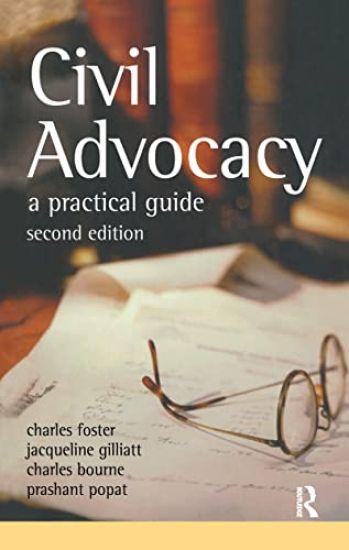
Civil Advocacy

Civil Advocacy

Charles Foster; Jacqueline Gillatt; Charles Bourne; Popat Prashant

CRC Press
2016
sidottu
This book is a practical guide to practice and procedure in courts and tribunals. It is aimed at the recently qualified practitioner,pupil barristers, trainee solicitors, or lawyers unversed in advocacy and procedure. It provides a guide to applications in most areas of the law, with brief discussions of the relevant law, rules of procedure and practical tips. The applications covered are those which practitioners are likely to encounter in their first years of practice. In addition, each chapter attempts to anticipate likely pitfalls, with suggested solutions. The court system and techniques of advocacy are also covered. This is not a legal textbook, and provides no substitute for legal research. It is designed to be starting point for advocates faced with an unfamiliar task.
Being a Beast

Being a Beast

Charles Foster

Profile Books Ltd
2016
pokkari

Halvin toimitettuna 16,80 €

LONGLISTED FOR THE BAILLIE GIFFORD PRIZE 2016 Charles Foster wanted to know what it was like to be a beast: a badger, an otter, a deer, a fox, a swift. What it was really like. And through knowing what it was like he wanted to get down and grapple with the beast in us all. So he tried it out; he lived life as a badger for six weeks, sleeping in a dirt hole and eating earthworms, he came face to face with shrimps as he lived like an otter and he spent hours curled up in a back garden in East London and rooting in bins like an urban fox. A passionate naturalist, Foster realises that every creature creates a different world in its brain and lives in that world. As humans, we share sensory outputs, lights, smells and sound, but trying to explore what it is actually like to live in another of these worlds, belonging to another species, is a fascinating and unique neuro-scientific challenge. For Foster it is also a literary challenge. Looking at what science can tell us about what happens in a fox's or badger's brain when it picks up a scent, he then uses this to imagine their world for us, to write it through their eyes or rather through the eyes of Charles the beast. An intimate look at the life of animals, neuroscience, psychology, nature writing, memoir and more, it is a journey of extraordinary thrills and surprises, containing wonderful moments of humour and joy, but also providing important lessons for all of us who share life on this precious planet.
Altruism, Welfare and the Law

Altruism, Welfare and the Law

Charles Foster; Jonathan Herring

Springer International Publishing AG
2015
nidottu
This book is an assault on the notion that it is empirically accurate and legally and philosophically satisfactory to see humans as atomistic entities. It contends that our welfare is inextricably entangled with that of others, and accordingly law and ethics, in determining our best interests, should recognise the central importance of relationality, the performance of obligations, and (even apparently injurious) altruism.
Medical Law

Medical Law

Charles Foster

Oxford University Press
2013
nidottu
Medical law is concerned with our bodies, and what happens to them during and after our lives. When things go wrong with our bodies, we want to know what our rights are, and what governs the conduct of the clinicians into whose hands we put our lives and limbs. Dealing with matters of life and death, it can therefore have a fundamental impact on medical practice. Headlines in the media often involve the core issues of medical law - organ transplantation, abortion, withdrawal of treatment, euthanasia, confidentiality, research on humans - these are topics that affect us all. Headlines can misrepresent, however. In order to fully understand the issues and their relevance, we have to delve into the cases and into the principles behind them. In this highly readable Very Short Introduction, Charles Foster explores different examples to illustrate the key problems and principles of medical law. ABOUT THE SERIES: The Very Short Introductions series from Oxford University Press contains hundreds of titles in almost every subject area. These pocket-sized books are the perfect way to get ahead in a new subject quickly. Our expert authors combine facts, analysis, perspective, new ideas, and enthusiasm to make interesting and challenging topics highly readable.
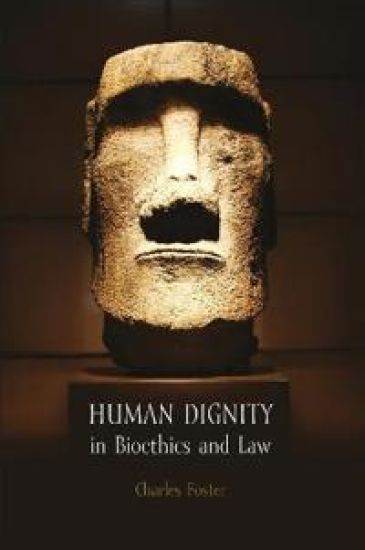
Human Dignity in Bioethics and Law

Human Dignity in Bioethics and Law

Charles Foster

Hart Publishing
2011
nidottu
Dignity is often denounced as hopelessly amorphous or incurably theological: as feel-good philosophical window-dressing, or as the name given to whatever principles give you the answer that you think is right. This is wrong, says Charles Foster: dignity is not only an essential principle in bioethics and law; it is really the only principle. In this ambitious, paradigm-shattering but highly readable book, he argues that dignity is the only sustainable Theory of Everything in bioethics. For most problems in contemporary bioethics, existing principles such as autonomy, beneficence, non-maleficence, justice and professional probity can do a reasonably workmanlike job if they are all allowed to contribute appropriately. But these are second order principles, each of which traces its origins back to dignity. And when one gets to the frontiers of bioethics (such as human enhancement), dignity is the only conceivable language with which to describe and analyse the strange conceptual creatures found there. Drawing on clinical, anthropological, philosophical and legal insights, Foster provides a new lexicon and grammar of that language which is essential reading for anyone wanting to travel in the outlandish territories of bioethics, and strongly recommended for anyone wanting to travel comfortably anywhere in bioethics or medical law.
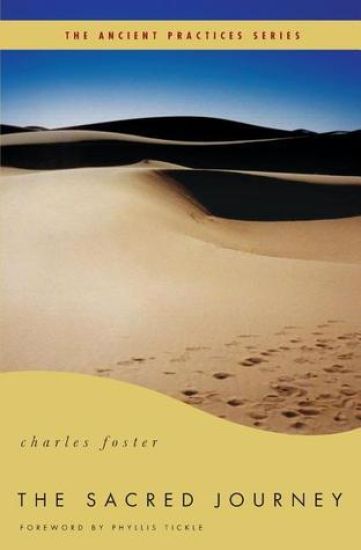
The Sacred Journey

The Sacred Journey

Charles Foster

Thomas Nelson Publishers
2010
nidottu
“When Yahweh became a man, he was a homeless vagrant. He walked through Palestine proclaiming that a mysterious kingdom had arrived... He called people to follow him, and that meant walking.”— Charles FosterHumans are built to wander. History is crisscrossed by their tracks. Sometimes there are obvious reasons for it: to get better food for themselves or their animals; to escape weather, wars, or plague. But sometimes they go—at great expense and risk—in the name of God, seeking a place that feels sacred, that speaks to the heart. God himself seems to have a bias toward the nomad. The road is a favored place — a place of epiphany. That’s all very well if you are fit and free. But what if you are paralyzed by responsibility or disease? What if the only journey you can make is to the office, the school, or the bathroom? Best-selling English author and adventurer Charles Foster has wandered quite a bit, and he knows what can be found (and lost) on a sacred journey. He knows that pilgrimage involves doing something with whatever faith you have. And faith, like muscle, likes being worked. Exploring the history of pilgrimage across cultures and religions, Foster uses tales of his own travels to examine the idea of approaching each day as a pilgrimage, and he offers encouragement to anyone who wants to experience a sacred journey. The result is an intoxicating, highly readable blend of robust theology and lyrical anecdote — an essential guidebook for every traveler in search of the truth about God, himself, and the world. When Jesus said “Follow me,” he meant us to hit the road with him. The Sacred Journey will show you how. The Ancient PracticesThere is a hunger in every human heart for connection, primitive and raw, to God. To satisfy it, many are beginning to explore traditional spiritual disciplines used for centuries . . . everything from fixed-hour prayer to fasting to sincere observance of the Sabbath. Compelling and readable, the Ancient Practices series is for every spiritual sojourner, for every Christian seeker who wants more.
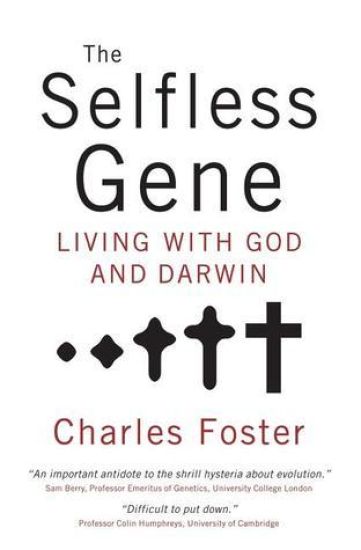
The Selfless Gene: Living with God and Darwin
If evolutionary theory is correct, what does that say about creator God? Ever since the famous debate on Darwinism between Huxley and Wilberforce in 1860, there has been little real conversation between the scientific community and much of the Christian world. This book offers the prospect of reconciliation between what are seen as two opposing worldviews. With remarkable insight and skill, Foster shows that most evolutionary theory and its consequences are easily reconciled with Christian orthodoxy and explores the ethical problems of natural selection in a fresh and invigorating way. Charles Foster insists on getting to the heart of the topic and succeeds through a scientific and biblical analysis that is second to none. The Selfless Gene has the potential to become required reading for theologians and laypeople alike.
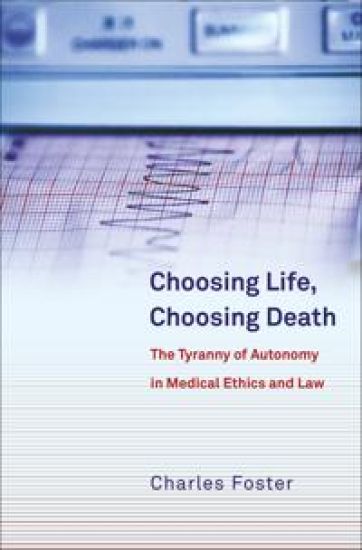
Choosing Life, Choosing Death

Choosing Life, Choosing Death

Charles Foster

Hart Publishing
2009
nidottu
Autonomy is a vital principle in medical law and ethics. It occupies a prominent place in all medico-legal and ethical debate. But there is a dangerous presumption that it should have the only vote, or at least the casting vote. This book is an assault on that presumption, and an audit of autonomy's extraordinary status. This book surveys the main issues in medical law, noting in relation to each issue the power wielded by autonomy, asking whether that power can be justified, and suggesting how other principles can and should contribute to the law. It concludes that autonomy's status cannot be intellectually or ethically justified, and that positive discrimination in favour of the other balancing principles is urgently needed in order to avoid some sinister results. 'This book is a sustained attack on the hegemony of the idea of autonomy in medical ethics and law. Charles Foster is no respecter of authority, whether of university professors or of law Lords. He grabs his readers by their lapels and shakes sense into them through a combination of no-nonsense rhetoric and subtle argument that is difficult to resist.' Tony Hope, Professor of Medical Ethics, Oxford University 'This book is unlikely to be in pristine state by the time you have finished reading it. Whether that is because you have thrown it in the air in celebration or thrown it across the room in frustration will depend on your perspective. But this book cannot leave you cold. It is a powerful polemic on the dominance of autonomy in medical law, which demands a reaction. Charles Foster sets out a powerful case that academic medical lawyers have elevated autonomy to a status it does not deserve in either ethical or legal terms. In a highly engaging, accessible account, he challenges many of the views which have become orthodox within the academic community. This will be a book which demands and will attract considerable debate.' Jonathan Herring, Exeter College, Oxford University 'This is a learned, lively and thought-provoking discussion of problems central to the courts' approach to ethical issues in medical law. What principles are involved? More significantly, which really underlie and inform the process of seeking justice in difficult cases? Charles Foster persuasively argues, and demonstrates, that respect for autonomy is but one of a number of ethical principles which interact and may conflict. He also addresses the sensitive issue of the extent to which thoughts and factors which go to influence legal decisions may not appear in the judgments.' Adrian Whitfield QC. 'Introducing the Jake La Motta of medical ethics. Foster is an academic street-fighter who has bloodied his hands in the court room. He provides a stinging, relentless, ground attack on the Goliath of medical ethics: the central place of autonomy in liberal medical ethics. This is now the first port of call for those who feel that medical ethics has become autonomized.' Julian Savulescu, Uehiro Chair in Practical Ethics, University of Oxford. "This important book offers a robust challenge to anyone, whether lawyer or 'ethicist', who sees respect for autonomy as the only game in town. It argues eloquently and effectively that, on the one hand, despite the reverence paid to it by judges, in practice the law, even in the context of consent, weaves together a number of moral threads of which autonomy is merely one, in the pursuit of a good decision. It argues on the other hand, that were the day-to-day practice of law to be guided primarily by respect for autonomy, this would be wrong. Foster concludes that whilst, 'any society that does not have laws robustly protecting autonomy is an unsafe and unhappy one', so too would be a society in which too much emphasis was placed on respect for autonomy at the expense of other important moral principles. This is essential reading for anyone interested in the role of autonomy and indeed of medical ethics, in the law." Michael Parker, Professor of Bioethics, University of Oxford

Breaking the Dams

Breaking the Dams

Charles Foster

Pen Sword Aviation
2008
sidottu
This is the story of the author's uncle, David Maltby and the crew with whom he flew on the famous Dam Raid in 1943. Just five months later, on their return from an aborted mission to bomb the Dortmund Ems Canal, they all died when their aircraft went down in the North Sea. Only David's body was recovered, washed ashore a day later, and identified by his 18 year old sister - the author's mother. David was the pilot of the fifth Lancaster, J-Johnny' to drop a bomb on the Mohne Dam and cause the final breach in the dam. He was then just 23 years of age, but already had 30 operations and a DFC to his name. This book tells the story of the crew, what made them join the RAF when they new the risk was so high, how fate threw them together, what it was like for one crew to take part in the raid and what happened to them in the five months between Operation Chastise and their deaths. It goes beyond the raid to look at what happened afterwards and how the families left behind were affected. Their sons, brothers and fathers might have become famous but they had to cope with life and loss in the same way as did thousands of other British families.
Regulating Healthcare Quality

Regulating Healthcare Quality

John Tingle; Charles Foster; Kay Wheat

Butterworth-Heinemann Ltd
2004
nidottu
The key focus of this edited text is on the legal and professional conflicts and issues that can arise from regulating health care quality. Doctors and nurses all increasingly face a number of dilemmas with regulating health quality issues such as increasing levels of complaints and litigation, scarcity of resources, under-staffing, professional discipline, clinical governance, clinical risk management etc. This book spells out and discusses these issues, taking an academic approach, though this will be tempered with a practical focus on issues. Discusses ethical approaches to regulating health care quality Examines health care rights in the UK Looks at complaints procedures in the new NHS Presents alternatives to the present clinical negligence system Compares health care regulation in the US and UK
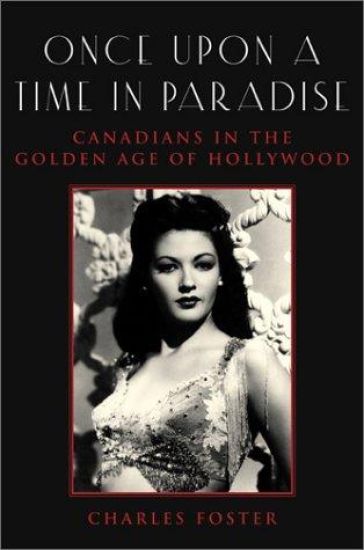
Once Upon a Time in Paradise

Once Upon a Time in Paradise

Charles Foster

Dundurn Group Ltd
2003
sidottu
When sound arrived in Hollywood in the late 1920s, Canadians were already holding some of the most important roles in the motion picture industry. Louis B. Mayer, from New Brunswick, was boss at MGM; Jack Warner, from Ontario, was head of Warner Bros. Studio; and Mack Sennett, from Quebec, was still King of Comedy. Canadians like Mary Pickford, Marie Dressler, and Norma Shearer moved easily from silents to talkies - this illustrious trio won the first three Academy Awards for Best Actress. Canadians arriving in sunny California in the 1930s and 1940s were principally actors, including Yvonne de Carlo, Walter Pidgeon, Ruby Keeler, and many others. You will be amazed at the Canadian influence on Hollywood's Golden Age.
Civil Advocacy

Civil Advocacy

Charles Foster; Jacqueline Gillatt; Charles Bourne; Popat Prashant

Birkbeck Law Press
2001
nidottu
This book is a practical guide to practice and procedure in courts and tribunals. It is aimed at the recently qualified practitioner,pupil barristers, trainee solicitors, or lawyers unversed in advocacy and procedure. It provides a guide to applications in most areas of the law, with brief discussions of the relevant law, rules of procedure and practical tips. The applications covered are those which practitioners are likely to encounter in their first years of practice. In addition, each chapter attempts to anticipate likely pitfalls, with suggested solutions. The court system and techniques of advocacy are also covered. This is not a legal textbook, and provides no substitute for legal research. It is designed to be starting point for advocates faced with an unfamiliar task.
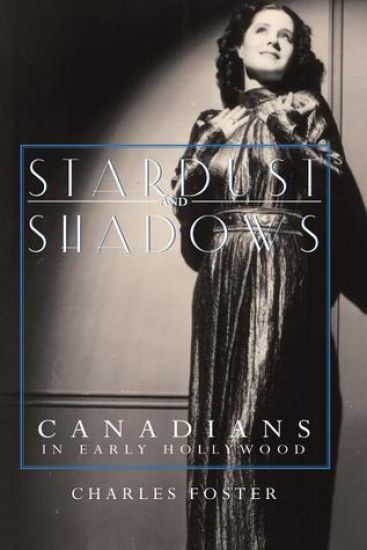
Stardust and Shadows

Stardust and Shadows

Charles Foster

Dundurn Group Ltd
2000
sidottu
"You'll like Louis Mayer," Mary Pickford told Charles Foster in 1943. "He is from Canada, too." As Foster was soon to discover, Mayer was not alone: a great many of those who helped shape Hollywood into the movie capital of the world were Canadian. Stardust and Shadows brings together the stories of 18 Canadians who were celebrities during Hollywood's formative years. Most of those profiled were known to Foster, and stories they told him about Hollywood's early days, enhanced by many years of research and interviews with other living performers and directors from the silent movie era, reveal a never-before-seen look at what the movie industry was really like in those early days. This is Canadian history that has never been told, and many of the startling stories and secrets of Hollywood's past are revealed here for the first time. Celebrities profiled: May Irwin, Al and Charles Christie, Joe and Sam De Grasse, Marie Dressler, Allan Dwan, Florence La Badie, Florence Lawrence, Del Lord, Louis B. Mayer, Sidney Olcott, Jack Pickford, Mary Pickford, Marie Prevost, Mack Sennett, Douglas Shearer, Norma Shearer.