Kirjojen hintavertailu – 12 903 724 kirjaa ja 27 kauppaa

Kirjailija

Charles Freeman

Kirjat ja teokset yhdessä paikassa: 21 kirjaa, julkaisuja vuosilta 1997–2024, suosituimpiin kuuluu Why Did the Rise of the Nazis Happen?. Vertaile teosten hintoja ja tarkista saatavuus suomalaisista kirjakaupoista.

21 kirjaa

Kirjojen julkaisuvuodet: 1997–2024.

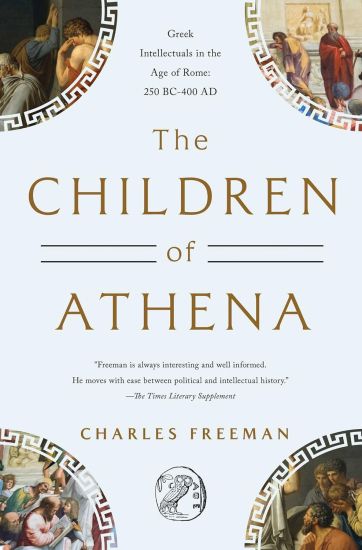
The Children of Athena

The Children of Athena

Charles Freeman

BLOOMSBURY PUBLISHING PLC
2024
nidottu

Halvin toimitettuna 17,00 €

The remarkable story of how Greek-speaking writers and thinkers sustained and developed the intellectual legacy of Classical Greece under the rule of Rome. In 146 BC, Greece yielded to the military might of the Roman Republic; some sixty years later, when Athens and other Greek city-states rebelled against Rome, the general Lucius Cornelius Sulla destroyed the city of Socrates and Plato, laying waste the famous Academy where Aristotle had studied. However, the traditions of Greek cultural life would continue to flourish – across the eastern Mediterranean world and beyond – during the centuries of Roman rule that followed, in the lives and work of a distinguished array of philosophers, rhetoricians, historians, doctors, scientists, geographers and theologians. Charles Freeman's accounts of such luminaries as the polymathic physician Galen, the soldier-botanist Dioscorides, the Alexandrian geographer and astronomer Ptolemy and the Neoplatonic philosopher Plotinus are interwoven with 'interludes' that counterpoint and contextualise a sequence of unjustly neglected and richly influential lives. This is the story of a vibrant, constantly evolving tradition of intellectual inquiry across a period of more than five hundred years, from the second century BC to the start of the fifth century ad – one that would help shape the intellectual landscape of the Middle Ages and long after. The Children of Athena is a cultural history on an epic scale.
The Children of Athena: Greek Intellectuals in the Age of Rome: 150 Bc0-400 AD
A brilliant, fascinating portrait of the intellectual tradition of Greek writers and thinkers during the Age of Rome. In 146 BC, Greece yielded to the military might of the Roman Republic; sixty years later, when Athens and other Greek city-states rebelled against Rome, the Roman general Lucius Cornelius Sulla destroyed the city of Socrates and Plato, laying waste to the famous Academy where Aristotle had studied. However, the traditions of Greek cultural life continued to flourish during the centuries of Roman rule that followed--in the lives and work of a distinguished array of philosophers, doctors, scientists, geographers, and theologians. Charles Freeman's accounts of such luminaries as the physician Galen, the geographer Ptolemy, and the philosopher Plotinus are interwoven with contextual "interludes" that showcase a sequence of unjustly neglected and richly influential lives. A cultural history on an epic scale, The Children of Athena presents the story of a rich and vibrant tradition of Greek intellectual inquiry across a period of more than five hundred years, from the second century BC to the start of the fifth century AD.
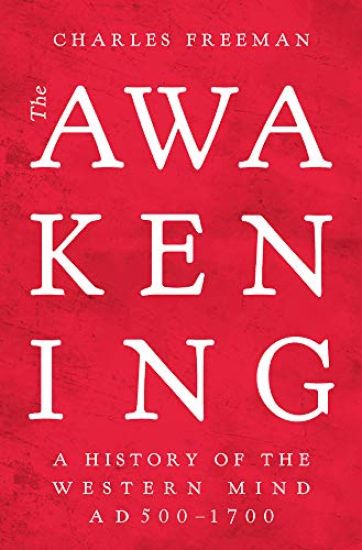
The Awakening

The Awakening

Charles Freeman

Apollo
2024
nidottu

Halvin toimitettuna 21,20 €

A monumental and exhilarating history of European thought, from the fall of Rome in the fifth century AD to the Scientific Revolution thirteen centuries later. The Awakening traces the recovery and refashioning of Europe's classical heritage from the ruins of the Roman Empire. The process of preservation of surviving texts, fragile at first, was strengthened under the Christian empire founded by Charlemagne in the eighth century; later, during the High Middle Ages, universities were founded and the study of philosophy was revived. Renewed interest in ancient Greek and Roman thought provided the intellectual impetus for the Renaissance of the fifteenth and sixteenth centuries, whose ideas – aesthetic, political and scientific – were disseminated across Europe by the invention of the printing press. Equally momentous was Europe's encounter with the New World, and the resulting maritime supremacy which conferred global reach on Europe's merchants and colonists. Vivid in detail and informed by the latest scholarship, The Awakening is powered not by the fate of kings or the clash of arms but by deeper currents of thought, inquiry and discovery, which first recover and then surpass the achievements of classical antiquity, and lead the West to the threshold of the Age of Reason. Charles Freeman takes the reader on an enthralling journey, and provides us with a vital key to understanding the world we live in today. Praise for The Awakening: 'The Awakening is a work of serious scholarship by an author who has clearly been everywhere, seen everything and read voraciously. But it is also a work written with great elan and, given its scope, undertaken with considerable courage' Christopher Lloyd, Surveyor of the Queen's Pictures, 1988-2005'The Awakening recounts the slow evolution of Western thought that restored legitimacy to independent examination and analysis, that eventually led to a celebration, albeit a cautious one, of reason over blind faith.' Stan Prager'The Awakening is a very timely book and an excellently written and produced one. Freeman is a good host, a superb narrator and tells his story with aplomb' International Times
The Children of Athena: Greek Intellectuals in the Age of Rome: 150 Bc0-400 Ad
A brilliant, fascinating portrait of the intellectual tradition of Greek writers and thinkers during the Age of Rome. In 146 BC, Greece yielded to the military might of the Roman Republic; sixty years later, when Athens and other Greek city-states rebelled against Rome, the Roman general Lucius Cornelius Sulla destroyed the city of Socrates and Plato, laying waste to the famous Academy where Aristotle had studied. However, the traditions of Greek cultural life continued to flourish during the centuries of Roman rule that followed--in the lives and work of a distinguished array of philosophers, doctors, scientists, geographers, and theologians. Charles Freeman's accounts of such luminaries as the physician Galen, the geographer Ptolemy, and the philosopher Plotinus are interwoven with contextual "interludes" that showcase a sequence of unjustly neglected and richly influential lives. A cultural history on an epic scale, The Children of Athena presents the story of a rich and vibrant tradition of Greek intellectual inquiry across a period of more than five hundred years, from the second century BC to the start of the fifth century AD.
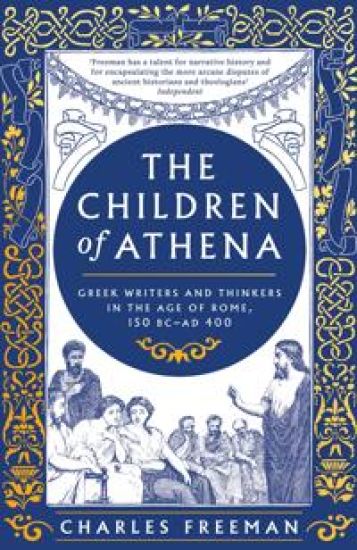
The Children of Athena

The Children of Athena

Charles Freeman

BLOOMSBURY PUBLISHING PLC
2023
sidottu
The remarkable story of how Greek-speaking writers and thinkers sustained and developed the intellectual legacy of Classical Greece under the rule of Rome. In 146 BC, Greece yielded to the military might of the Roman Republic; some sixty years later, when Athens and other Greek city-states rebelled against Rome, the general Lucius Cornelius Sulla destroyed the city of Socrates and Plato, laying waste the famous Academy where Aristotle had studied. However, the traditions of Greek cultural life would continue to flourish – across the eastern Mediterranean world and beyond – during the centuries of Roman rule that followed, in the lives and work of a distinguished array of philosophers, rhetoricians, historians, doctors, scientists, geographers and theologians. Charles Freeman's accounts of such luminaries as the polymathic physician Galen, the soldier-botanist Dioscorides, the Alexandrian geographer and astronomer Ptolemy and the Neoplatonic philosopher Plotinus are interwoven with 'interludes' that counterpoint and contextualise a sequence of unjustly neglected and richly influential lives. This is the story of a vibrant, constantly evolving tradition of intellectual inquiry across a period of more than five hundred years, from the second century BC to the start of the fifth century ad – one that would help shape the intellectual landscape of the Middle Ages and long after. The Children of Athena is a cultural history on an epic scale.
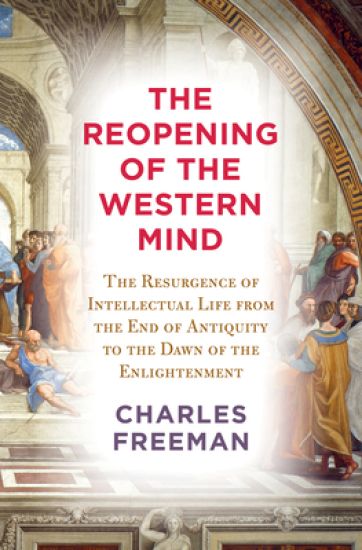
The Reopening of the Western Mind: The Resurgence of Intellectual Life from the End of Antiquity to the Dawn of Theenlightenment
A monumental and exhilarating history of European thought from the end of Antiquity to the beginning of the Enlightenment--500 to 1700 AD--tracing the arc of intellectual history as it evolved, setting the stage for the modern era. With more than 140 illustrations; 90 in full-color. Charles Freeman, lauded historical scholar and author of The Closing of the Western Mind ("A triumph"--The Times London]), explores the rebirth of Western thought in the centuries that followed the demise of the classical era. As the dominance of Christian teachings gradually subsided over time, a new open-mindedness made way for the ideas of morality and theology, and fueled and formed the backbone of the Western mind of the late Middle Ages, the Renaissance, and beyond. In this wide-ranging history, Freeman follows the immense intellectual development that culminated in the Enlightenment, from political ideology to philosophy and theology, as well as the fine arts and literature. He writes, in vivid detail, of how Europeans progressed from the Christian-minded thinking of Saint Augustine to the more open-minded later scholars, such as Michel de Montaigne, leading to a broader, more "humanist" way of thinking. He explores how the discovery of America fundamentally altered European conceptions of humanity, religion, and science; how the rise of Protestantism and the Reformation profoundly influenced the tenor of politics and legal systems, with enormous repercussions; and how the radical Christianity of philosophers such as Spinoza affected a rethinking of the concept of religious tolerance that has influenced the modern era ever since.
The Awakening

The Awakening

Charles Freeman

Apollo
2020
sidottu
A monumental and exhilarating history of European thought, from the fall of Rome in the fifth century AD to the Scientific Revolution thirteen centuries later. The Awakening traces the recovery and refashioning of Europe's classical heritage from the ruins of the Roman Empire. The process of preservation of surviving texts, fragile at first, was strengthened under the Christian empire founded by Charlemagne in the eighth century; later, during the High Middle Ages, universities were founded and the study of philosophy was revived. Renewed interest in ancient Greek and Roman thought provided the intellectual impetus for the Renaissance of the fifteenth and sixteenth centuries, whose ideas – aesthetic, political and scientific – were disseminated across Europe by the invention of the printing press. Equally momentous was Europe's encounter with the New World, and the resulting maritime supremacy which conferred global reach on Europe's merchants and colonists. Vivid in detail and informed by the latest scholarship, The Awakening is powered not by the fate of kings or the clash of arms but by deeper currents of thought, inquiry and discovery, which first recover and then surpass the achievements of classical antiquity, and lead the West to the threshold of the Age of Reason. Charles Freeman takes the reader on an enthralling journey, and provides us with a vital key to understanding the world we live in today. Praise for The Awakening: 'The subject of this stimulating and erudite book is nothing less than the development of the Western mind from the demise of classical civilisation in the fifth century AD, through the Middle Ages and Renaissance, to the Scientific Revolution of the seventeenth century. The Awakening is a work of serious scholarship by an author who has clearly been everywhere, seen everything and read voraciously. But it is also a work written with great elan and, given its scope, undertaken with considerable courage... An arrestingly clear design, combined with numerous judiciously chosen illustrations, completes an extraordinary achievement' Christopher Lloyd, Surveyor of the Queen's Pictures, 1988-2005'The Awakening recounts the slow evolution of Western thought that restored legitimacy to independent examination and analysis, that eventually led to a celebration, albeit a cautious one, of reason over blind faith. In the process, Freeman reminds us that quality, engaging narrative history has not gone extinct, while demonstrating that it is possible to produce a work that is so well-written it is readable by a general audience while meeting the rigorous standards of scholarship demanded by academia' Stan Prager'The Awakening is a very timely book and an excellently written and produced one. Freeman is a good host, a superb narrator and tells his story with aplomb... His elegant prose is a treat for the mind and the accompanying illuminations a treat for the eye' International Times
Egypt, Greece, and Rome

Egypt, Greece, and Rome

Charles Freeman

Oxford University Press
2014
sidottu
Egypt, Greece, and Rome is regarded as one of the best general histories of the ancient world, having sold more than 80,000 copies in its first two editions. It is written for the general reader and the student coming to the subject for the first time and provides a reliable and highly accessible point of entry to the period. Beginning with the early Middle Eastern civilizations of Sumer, and continuing right through to the Islamic invasions and the birth of modern Europe after the collapse of the Roman empire, the book ranges beyond political history to cover art and architecture, philosophy, literature, society, and economy. A wide range of maps, illustrations, and photographs complements the text. This third edition has been extensively revised to appeal to the general reader with several chapters completely rewritten and a great deal of new material added, including a new selection of images.
Egypt, Greece, and Rome

Egypt, Greece, and Rome

Charles Freeman

Oxford University Press
2014
nidottu
Egypt, Greece, and Rome is regarded as one of the best general histories of the ancient world, having sold more than 80,000 copies in its first two editions. It is written for the general reader and the student coming to the subject for the first time and provides a reliable and highly accessible point of entry to the period. Beginning with the early Middle Eastern civilizations of Sumer, and continuing right through to the Islamic invasions and the birth of modern Europe after the collapse of the Roman empire, the book ranges beyond political history to cover art and architecture, philosophy, literature, society, and economy. A wide range of maps, illustrations, and photographs complements the text. This third edition has been extensively revised to appeal to the general reader with several chapters completely rewritten and a great deal of new material added, including a new selection of images.
Holy Bones, Holy Dust

Holy Bones, Holy Dust

Charles Freeman

Yale University Press
2012
pokkari

Halvin toimitettuna 31,00 €

A richly textured history spanning a thousand years of holy relics across Europe Relics were everywhere in medieval society. Saintly morsels such as bones, hair, teeth, blood, milk, and clothes, and items like the Crown of Thorns, coveted by Louis IX of France, were thought to bring the believer closer to the saint, who might intercede with God on his or her behalf. In the first comprehensive history in English of the rise of relic cults, Charles Freeman takes readers on a vivid, fast-paced journey from Constantinople to the northern Isles of Scotland over the course of a millennium. In Holy Bones, Holy Dust, Freeman illustrates that the pervasiveness and variety of relics answered very specific needs of ordinary people across a darkened Europe under threat of political upheavals, disease, and hellfire. But relics were not only venerated—they were traded, collected, lost, stolen, duplicated, and destroyed. They were bargaining chips, good business and good propaganda, politically appropriated across Europe, and even used to wield military power. Freeman examines an expansive array of relics, showing how the mania for these objects deepens our understanding of the medieval world and why these relics continue to capture our imagination.
A New History of Early Christianity

A New History of Early Christianity

Charles Freeman

Yale University Press
2011
pokkari

Halvin toimitettuna 23,60 €

This stimulating history of early Christianity revisits the extraordinary birth of a world religion and gives a new slant on a familiar story The relevance of Christianity is as hotly contested today as it has ever been. A New History of Early Christianity shows how our current debates are rooted in the many controversies surrounding the birth of the religion and the earliest attempts to resolve them. Charles Freeman’s meticulous historical account of Christianity from its birth in Judaea in the first century A. D. to the emergence of Western and Eastern churches by A. D. 600 reveals that it was a distinctive, vibrant, and incredibly diverse movement brought into order at the cost of intellectual and spiritual vitality. Against the conventional narrative of the inevitable “triumph” of a single distinct Christianity, Freeman shows that there was a host of competing Christianities, many of which had as much claim to authenticity as those that eventually dominated. Looking with fresh eyes at the historical record, Freeman explores the ambiguities and contradictions that underlay Christian theology and the unavoidable compromises enforced in the name of doctrine. Tracing the astonishing transformation that the early Christian church underwent—from sporadic niches of Christian communities surviving in the wake of a horrific crucifixion to sanctioned alliance with the state—Charles Freeman shows how freedom of thought was curtailed by the development of the concept of faith. The imposition of "correct belief," religious uniformity, and an institutional framework that enforced orthodoxy were both consolidating and stifling. Uncovering the difficulties in establishing the Christian church, he examines its relationship with Judaism, Gnosticism, Greek philosophy and Greco-Roman society, and he offers dramatic new accounts of Paul, the resurrection, and the church fathers and emperors.
Why Did the Rise of the Nazis Happen?

Why Did the Rise of the Nazis Happen?

Charles Freeman

Gareth Stevens Publishing
2010
sidottu
Following their defeat during World War I, the Germans were looking for new leadership. Nazi Germany, also called the Third Reich, began when Adolf Hitler became Chancellor of Germany under the National Socialist German Worker's Party (NSDAP) whose followers were called Nazis. Why the Germans embraced the Nazis rise to power is examined in this thoughtful book, which includes panels featuring subject-matter expert opinions to encourage critical thinking.
China`s Rise – Challenges and Opportunities

China`s Rise – Challenges and Opportunities

C. Fred Bergsten; Charles Freeman; Nicholas Lardy; Derek Mitchell

The Peterson Institute for International Economics
2009
nidottu
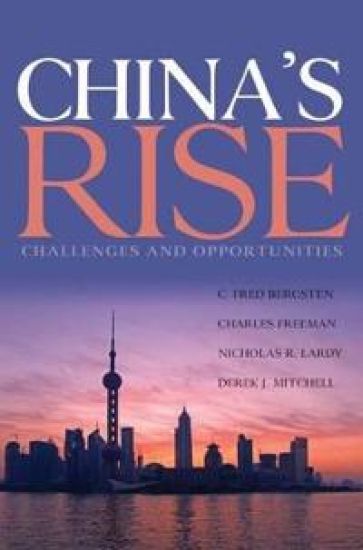
China has emerged as an economic powerhouse (projected to have the largest economy in the world in a little over a decade) and is taking an ever-increasing role on the world stage. China's Rise: Challenges and Opportunities will help the United States and the rest of the world better comprehend the facts and dynamics underpinning China's rise-an understanding that becomes more and more important with each passing day. Additionally, the authors suggest actions both China and the United States can take that will not only maximize the opportunities for China's constructive integration into the international community but also help form a domestic consensus that will provide a stable foundation for such policies. Filled with facts for policymakers, this much anticipated book's narrative-driven, accessible style will appeal to the general reader. This book is unique in that it analyzes the authoritative data on China's economy, foreign and domestic policy, and national security. The expert judgments in this book paint a picture of a China confronting domestic challenges that are in many ways side effects of its economic successes, while simultaneously trying to take advantage of the foreign policy benefits of those same successes. China's Rise: Challenges and Opportunities from The China Balance Sheet Project, a joint, multiyear project of the Center for Strategic and International Studies and the Peterson Institute, discusses China's military modernization, China's increasing soft power influence in Asia and around the world, China's policy toward Taiwan, domestic political development, Beijing's political relations with China's provincial and municipal authorities, corruption and social unrest, rebalancing China's economic growth, the exchange rate controversy, energy and the environment, industrial policy, trade disputes, and investment issues. This book is part of the CSIS-IIE China Balance Sheet project. For more information about this project, please visit www.chinabalancesheet.org.
AD 381

AD 381

Charles Freeman

Vintage
2009
pokkari

Halvin toimitettuna 37,10 €

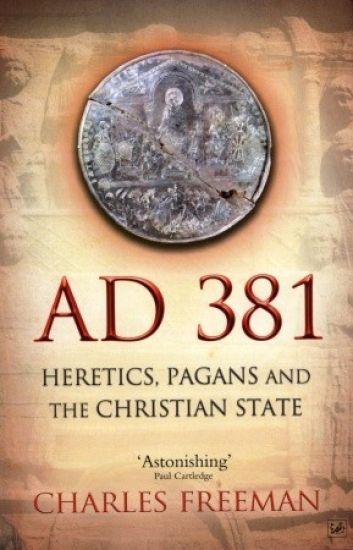
In AD 381, Theodosius, emperor of the eastern Roman empire, issued a decree in which all his subjects were required to subscribe to a belief in the Trinity of the Father, Son and Holy Spirit.
China's Rise – Challenges and Opportunities

China's Rise – Challenges and Opportunities

C. Fred Bergsten; Charles Freeman; Nicholas Lardy; Derek Mitchell

The Peterson Institute for International Economics
2008
sidottu
China has emerged as an economic powerhouse (projected to have the largest economy in the world in a little over a decade) and is taking an ever-increasing role on the world stage. China's Rise: Challenges and Opportunities will help the United States and the rest of the world better comprehend the facts and dynamics underpinning China's rise-an understanding that becomes more and more important with each passing day. Additionally, the authors suggest actions both China and the United States can take that will not only maximize the opportunities for China's constructive integration into the international community but also help form a domestic consensus that will provide a stable foundation for such policies. Filled with facts for policymakers, this much anticipated book's narrative-driven, accessible style will appeal to the general reader. This book is unique in that it analyzes the authoritative data on China's economy, foreign and domestic policy, and national security. The expert judgments in this book paint a picture of a China confronting domestic challenges that are in many ways side effects of its economic successes, while simultaneously trying to take advantage of the foreign policy benefits of those same successes. China's Rise: Challenges and Opportunities from The China Balance Sheet Project, a joint, multiyear project of the Center for Strategic and International Studies and the Peterson Institute, discusses China's military modernization, China's increasing soft power influence in Asia and around the world, China's policy toward Taiwan, domestic political development, Beijing's political relations with China's provincial and municipal authorities, corruption and social unrest, rebalancing China's economic growth, the exchange rate controversy, energy and the environment, industrial policy, trade disputes, and investment issues. This book is part of the CSIS-IIE China Balance Sheet project. For more information about this project, please visit www.chinabalancesheet.org.
The Horses Of St Marks

The Horses Of St Marks

Charles Freeman

Abacus
2005
nidottu
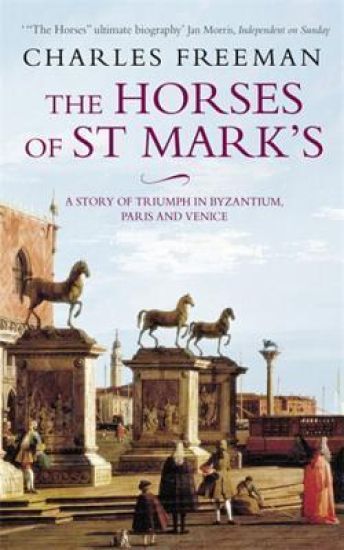
In July 1798, a triumphant procession made its way through the streets of Paris. Echoing the parades of Roman emperors many years before, Napoleon Bonaparte was proudly displaying the spoils of his recent military adventures. There were animals - caged lions and dromedaries - as well as tropical plants such as banana and coconut trees. And among the works of art on show, one stood out: four horses of gilded metal, taken by Napoleon from their home in Venice. The Horses of St Mark's are among art's finest creations - and certainly one with a story like no other. For these are statues that have found themselves at the heart of European history time and time again: in Constantinople, at both its founding and sacking in the Fourth Crusade; in Venice, at both the height of its greatness and fall in 1797; in the Paris of Napoleon, and the revolutions of 1848; and back in Venice, the most romantic city in the world. Charles Freeman's remarkable new book is a fascinating account of both the statues and the societies through which they been displayed. As European society has developed from antiquity to the present day, so these four horses have stood and watched impassively. This is the story of their - and our - times.
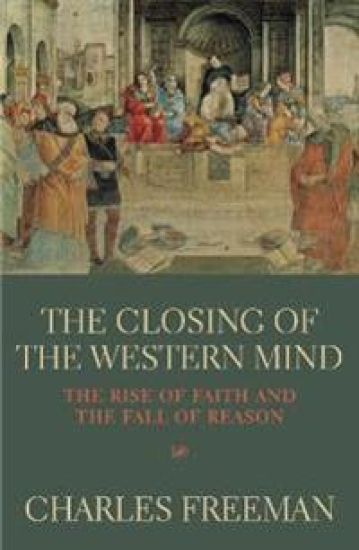
The Closing of the Western Mind: The Rise of Faith and the Fall of Reason
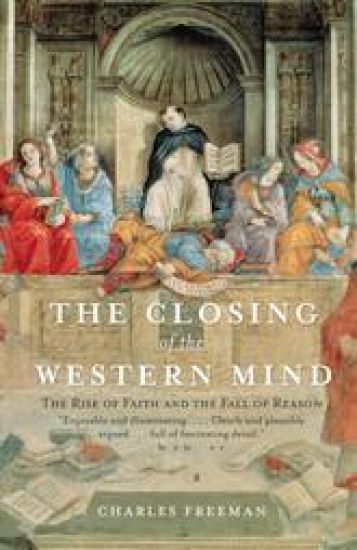
A radical and powerful reappraisal of the impact of Constantine's adoption of Christianity on the later Roman world, and on the subsequent development both of Christianity and of Western civilization. When the Emperor Contstantine converted to Christianity in 368 AD, he changed the course of European history in ways that continue to have repercussions to the present day. Adopting those aspects of the religion that suited his purposes, he turned Rome on a course from the relatively open, tolerant and pluralistic civilization of the Hellenistic world, towards a culture that was based on the rule of fixed authority, whether that of the Bible, or the writings of Ptolemy in astronomy and of Galen and Hippocrates in medicine. Only a thousand years later, with the advent of the Renaissance and the emergence of modern science, did Europe begin to free itself from the effects of Constantine's decision, yet the effects of his establishment of Christianity as a state religion remain with us, in many respects, today. Brilliantly wide-ranging and ambitious, this is a major work of history.