Kirjojen hintavertailu – 12 903 725 kirjaa ja 27 kauppaa

Kirjailija

Charles Godfrey Leland

Kirjat ja teokset yhdessä paikassa: 228 kirjaa, julkaisuja vuosilta 2003–2026, suosituimpiin kuuluu A Journal of a Young Man of Massachusetts, 2nd ed. ; Late A Surgeon On Board An American Privateer, Who Was Captured At Sea By The British, In May, Eighteen Hundred And Thirteen, And Was Confined First, At Melville Island, Halifax, Then At Chatham, In England ... And Last, At Dartmoor Prison. Interspersed With Observations, Anecdotes And Remarks, Tending To Illustrate The Moral And Political Characters Of Three Nations. To Which Is Added, A Correct Engraving Of Dartmoor Prison, Representing T.... Vertaile teosten hintoja ja tarkista saatavuus suomalaisista kirjakaupoista.

228 kirjaa

Kirjojen julkaisuvuodet: 2003–2026.

Songs of the Sea and Lays of the Land (1895). By: Charles Godfrey Leland: Charles Godfrey Leland (August 15, 1824 - March 20, 1903) was an American hu
Charles Godfrey Leland (August 15, 1824 - March 20, 1903) was an American humorist, writer, and folklorist, born in Philadelphia, Pennsylvania. He was educated at Princeton University and in Europe. Leland worked in journalism, travelled extensively, and became interested in folklore and folk linguistics, publishing books and articles on American and European languages and folk traditions. He worked in a wide variety of trades, achieved recognition as the author of the comic Hans Breitmann's Ballads, fought in two conflicts, and wrote what was to become a primary source text for Neopaganism half a century later, Aradia, or the Gospel of the Witches. Early life: Leland was born to Charles Leland, a commission merchant, and Charlotte Godfrey, on 15 August 1824 in Philadelphia, Pennsylvania. Leland told a story that shortly after his birth his nurse took him to the family attic and performed a ritual involving a Bible, a key, a knife, lighted candles, money and salt to ensure a long life as a "scholar and a wizard", a fact which his biographers have commented upon as foreshadowing his interest in folk traditions and magic. Leland's early education was in the United States, and he attended college at Princeton University. During his schooling, Leland studied languages, wrote poetry, and pursued a variety of other interests, including Hermeticism, Neoplatonism, and the writings of Rabelais and Villon. After college, Leland went to Europe to continue his studies, first in Germany, at Heidelberg and Munich, and in 1848 at the Sorbonne in Paris. He got involved in the revolution that year, fighting at constructed barricades against the King's soldiers as a captain in the revolution. Leland was also a pioneer of art and design education, becoming an important influence on the Arts and Crafts movement. In his memoirs he wrote, "The story of what is to me by far the most interesting period of my life remains to be written. This embraces an account of my labour for many years in introducing Industrial Art as a branch of education in schools" He was involved in a series of books on industrial arts and crafts, including a title he co-authored in 1876 with Thomas Bolas, entitled "Pyrography or burnt-wood etching" (revised by Frank H Ball and G J Fowler in 1900). He was, more significantly, the founder and first director of the Public School of Industrial Art in Philadelphia. This originated as a school to teach crafts to disadvantaged children and became widely known when it was praised by Oscar Wilde, who predicted his friend would be "recognised and honoured as one of the great pioneers and leaders of the art of the future." The Home Arts and Industries Association was founded in imitation of this initiative. His biography was written by his niece Elizabeth Robins Pennell, an American who also settled in London and made her living in part by writing about travels in Europe. Leland had encouraged her as a young woman to consider writing as a career, which she did with some success...............
Legends of Florence: Collected from the People And. By: Charles Godfrey Leland: Charles Godfrey Leland (August 15, 1824 - March 20, 1903) W
Charles Godfrey Leland (August 15, 1824 - March 20, 1903) was an American humorist, writer, and folklorist, born in Philadelphia, Pennsylvania. He was educated at Princeton University and in Europe. Leland worked in journalism, travelled extensively, and became interested in folklore and folk linguistics, publishing books and articles on American and European languages and folk traditions. He worked in a wide variety of trades, achieved recognition as the author of the comic Hans Breitmann's Ballads, fought in two conflicts, and wrote what was to become a primary source text for Neopaganism half a century later, Aradia, or the Gospel of the Witches. Early life: Leland was born to Charles Leland, a commission merchant, and Charlotte Godfrey, on 15 August 1824 in Philadelphia, Pennsylvania. Leland told a story that shortly after his birth his nurse took him to the family attic and performed a ritual involving a Bible, a key, a knife, lighted candles, money and salt to ensure a long life as a "scholar and a wizard", a fact which his biographers have commented upon as foreshadowing his interest in folk traditions and magic. Leland's early education was in the United States, and he attended college at Princeton University. During his schooling, Leland studied languages, wrote poetry, and pursued a variety of other interests, including Hermeticism, Neoplatonism, and the writings of Rabelais and Villon. After college, Leland went to Europe to continue his studies, first in Germany, at Heidelberg and Munich, and in 1848 at the Sorbonne in Paris. He got involved in the revolution that year, fighting at constructed barricades against the King's soldiers as a captain in the revolution. Leland was also a pioneer of art and design education, becoming an important influence on the Arts and Crafts movement. In his memoirs he wrote, "The story of what is to me by far the most interesting period of my life remains to be written. This embraces an account of my labour for many years in introducing Industrial Art as a branch of education in schools" He was involved in a series of books on industrial arts and crafts, including a title he co-authored in 1876 with Thomas Bolas, entitled "Pyrography or burnt-wood etching" (revised by Frank H Ball and G J Fowler in 1900). He was, more significantly, the founder and first director of the Public School of Industrial Art in Philadelphia. This originated as a school to teach crafts to disadvantaged children and became widely known when it was praised by Oscar Wilde, who predicted his friend would be "recognised and honoured as one of the great pioneers and leaders of the art of the future." The Home Arts and Industries Association was founded in imitation of this initiative. His biography was written by his niece Elizabeth Robins Pennell, an American who also settled in London and made her living in part by writing about travels in Europe. Leland had encouraged her as a young woman to consider writing as a career, which she did with some success.
Etruscan Roman Remains in Popular Tradition (1892). By: Charles Godfrey Leland: Charles Godfrey Leland (August 15, 1824 - March 20, 1903) was an Ameri
Charles Godfrey Leland (August 15, 1824 - March 20, 1903) was an American humorist, writer, and folklorist, born in Philadelphia, Pennsylvania. He was educated at Princeton University and in Europe. Leland worked in journalism, travelled extensively, and became interested in folklore and folk linguistics, publishing books and articles on American and European languages and folk traditions. He worked in a wide variety of trades, achieved recognition as the author of the comic Hans Breitmann's Ballads, fought in two conflicts, and wrote what was to become a primary source text for Neopaganism half a century later, Aradia, or the Gospel of the Witches. Early life: Leland was born to Charles Leland, a commission merchant, and Charlotte Godfrey, on 15 August 1824 in Philadelphia, Pennsylvania. Leland told a story that shortly after his birth his nurse took him to the family attic and performed a ritual involving a Bible, a key, a knife, lighted candles, money and salt to ensure a long life as a "scholar and a wizard", a fact which his biographers have commented upon as foreshadowing his interest in folk traditions and magic. Leland's early education was in the United States, and he attended college at Princeton University. During his schooling, Leland studied languages, wrote poetry, and pursued a variety of other interests, including Hermeticism, Neoplatonism, and the writings of Rabelais and Villon. After college, Leland went to Europe to continue his studies, first in Germany, at Heidelberg and Munich, and in 1848 at the Sorbonne in Paris. He got involved in the revolution that year, fighting at constructed barricades against the King's soldiers as a captain in the revolution. Leland was also a pioneer of art and design education, becoming an important influence on the Arts and Crafts movement. In his memoirs he wrote, "The story of what is to me by far the most interesting period of my life remains to be written. This embraces an account of my labour for many years in introducing Industrial Art as a branch of education in schools" He was involved in a series of books on industrial arts and crafts, including a title he co-authored in 1876 with Thomas Bolas, entitled "Pyrography or burnt-wood etching" (revised by Frank H Ball and G J Fowler in 1900). He was, more significantly, the founder and first director of the Public School of Industrial Art in Philadelphia. This originated as a school to teach crafts to disadvantaged children and became widely known when it was praised by Oscar Wilde, who predicted his friend would be "recognised and honoured as one of the great pioneers and leaders of the art of the future." The Home Arts and Industries Association was founded in imitation of this initiative. His biography was written by his niece Elizabeth Robins Pennell, an American who also settled in London and made her living in part by writing about travels in Europe. Leland had encouraged her as a young woman to consider writing as a career, which she did with some success................
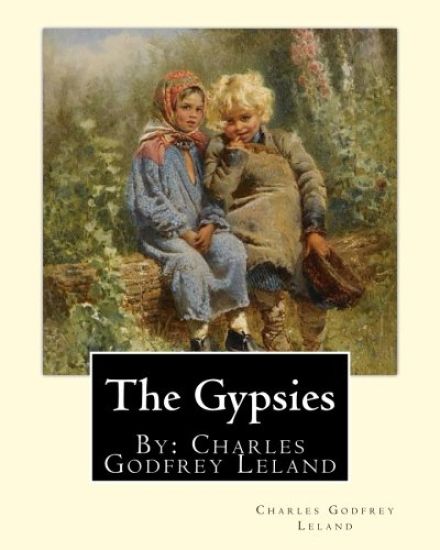
The Gypsies. By: Charles Godfrey Leland: Charles Godfrey Leland (August 15, 1824 - March 20, 1903) was an American humorist, writer, an
Charles Godfrey Leland (August 15, 1824 - March 20, 1903) was an American humorist, writer, and folklorist, born in Philadelphia, Pennsylvania. He was educated at Princeton University and in Europe. Leland worked in journalism, travelled extensively, and became interested in folklore and folk linguistics, publishing books and articles on American and European languages and folk traditions. He worked in a wide variety of trades, achieved recognition as the author of the comic Hans Breitmann's Ballads, fought in two conflicts, and wrote what was to become a primary source text for Neopaganism half a century later, Aradia, or the Gospel of the Witches. Early life: Leland was born to Charles Leland, a commission merchant, and Charlotte Godfrey, on 15 August 1824 in Philadelphia, Pennsylvania. Leland told a story that shortly after his birth his nurse took him to the family attic and performed a ritual involving a Bible, a key, a knife, lighted candles, money and salt to ensure a long life as a "scholar and a wizard", a fact which his biographers have commented upon as foreshadowing his interest in folk traditions and magic. Leland's early education was in the United States, and he attended college at Princeton University. During his schooling, Leland studied languages, wrote poetry, and pursued a variety of other interests, including Hermeticism, Neoplatonism, and the writings of Rabelais and Villon. After college, Leland went to Europe to continue his studies, first in Germany, at Heidelberg and Munich, and in 1848 at the Sorbonne in Paris. He got involved in the revolution that year, fighting at constructed barricades against the King's soldiers as a captain in the revolution. Leland was also a pioneer of art and design education, becoming an important influence on the Arts and Crafts movement. In his memoirs he wrote, "The story of what is to me by far the most interesting period of my life remains to be written. This embraces an account of my labour for many years in introducing Industrial Art as a branch of education in schools" He was involved in a series of books on industrial arts and crafts, including a title he co-authored in 1876 with Thomas Bolas, entitled "Pyrography or burnt-wood etching" (revised by Frank H Ball and G J Fowler in 1900). He was, more significantly, the founder and first director of the Public School of Industrial Art in Philadelphia. This originated as a school to teach crafts to disadvantaged children and became widely known when it was praised by Oscar Wilde, who predicted his friend would be "recognised and honoured as one of the great pioneers and leaders of the art of the future." The Home Arts and Industries Association was founded in imitation of this initiative. His biography was written by his niece Elizabeth Robins Pennell, an American who also settled in London and made her living in part by writing about travels in Europe. Leland had encouraged her as a young woman to consider writing as a career, which she did with some success..........
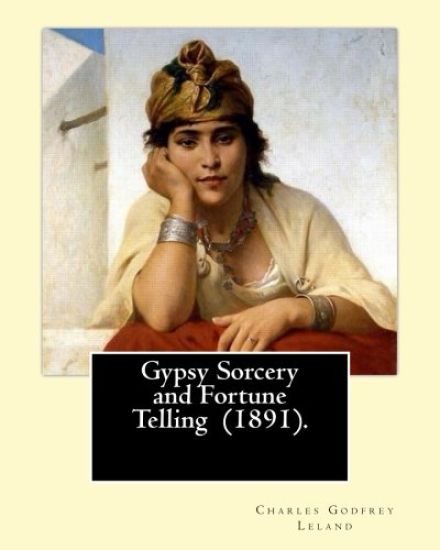
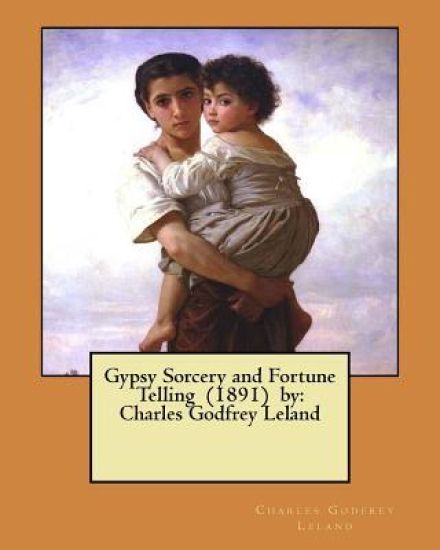
Gypsy Sorcery and Fortune Telling (1891). By: Charles Godfrey Leland: Charles Godfrey Leland (August 15, 1824 - March 20, 1903) was an American humori
Charles Godfrey Leland (August 15, 1824 - March 20, 1903) was an American humorist, writer, and folklorist, born in Philadelphia, Pennsylvania. He was educated at Princeton University and in Europe. Leland worked in journalism, travelled extensively, and became interested in folklore and folk linguistics, publishing books and articles on American and European languages and folk traditions. He worked in a wide variety of trades, achieved recognition as the author of the comic Hans Breitmann's Ballads, fought in two conflicts, and wrote what was to become a primary source text for Neopaganism half a century later, Aradia, or the Gospel of the Witches. Early life: Leland was born to Charles Leland, a commission merchant, and Charlotte Godfrey, on 15 August 1824 in Philadelphia, Pennsylvania. Leland told a story that shortly after his birth his nurse took him to the family attic and performed a ritual involving a Bible, a key, a knife, lighted candles, money and salt to ensure a long life as a "scholar and a wizard", a fact which his biographers have commented upon as foreshadowing his interest in folk traditions and magic. Leland's early education was in the United States, and he attended college at Princeton University. During his schooling, Leland studied languages, wrote poetry, and pursued a variety of other interests, including Hermeticism, Neoplatonism, and the writings of Rabelais and Villon. After college, Leland went to Europe to continue his studies, first in Germany, at Heidelberg and Munich, and in 1848 at the Sorbonne in Paris. He got involved in the revolution that year, fighting at constructed barricades against the King's soldiers as a captain in the revolution. Leland returned to America after the money given to him by his father for travel had run out, and passed the bar in Pennsylvania. Instead of practicing law, he instead began a career in journalism. As a journalist, Leland wrote for The Illustrated News in New York, the Evening Bulletin in Philadelphia and eventually took on editorial duties for Graham's Magazine, and the Philadelphia Press. In 1856 Leland married Eliza Bella "Isabel" Fisher. Leland was also an editor for the Continental Monthly, a pro-Union Army publication. He enlisted in the Union Army in 1863, and fought at the Battle of Gettysburg. Leland coined the term "emancipation" as an alternative to "abolition" to refer to the anti-slavery position. His biography was written by his niece Elizabeth Robins Pennell, an American who also settled in London and made her living in part by writing about travels in Europe. Leland had encouraged her as a young woman to consider writing as a career, which she did with some success....
Legends of Florence

Legends of Florence

Charles Godfrey Leland

Hansebooks
2017
pokkari
Legends of Florence - Second Series is an unchanged, high-quality reprint of the original edition of 1896. Hansebooks is editor of the literature on different topic areas such as research and science, travel and expeditions, cooking and nutrition, medicine, and other genres. As a publisher we focus on the preservation of historical literature. Many works of historical writers and scientists are available today as antiques only. Hansebooks newly publishes these books and contributes to the preservation of literature which has become rare and historical knowledge for the future.
The Life and Adventures of James P. Beckwourth

The Life and Adventures of James P. Beckwourth

Charles Godfrey Leland; James Pierson Beckwourth; Thomas D Bonner

Hansebooks
2017
pokkari
The Life and Adventures of James P. Beckwourth - Mountaineer, Scout, Pioneer, and Chief of the Crow Nation of Indians is an unchanged, high-quality reprint of the original edition of 1892. Hansebooks is editor of the literature on different topic areas such as research and science, travel and expeditions, cooking and nutrition, medicine, and other genres. As a publisher we focus on the preservation of historical literature. Many works of historical writers and scientists are available today as antiques only. Hansebooks newly publishes these books and contributes to the preservation of literature which has become rare and historical knowledge for the future.
Hans Breitmann's Barty and Other Ballads

Hans Breitmann's Barty and Other Ballads

Charles Godfrey Leland

Hansebooks
2017
pokkari
Hans Breitmann's Barty and Other Ballads is an unchanged, high-quality reprint of the original edition of 1877. Hansebooks is editor of the literature on different topic areas such as research and science, travel and expeditions, cooking and nutrition, medicine, and other genres. As a publisher we focus on the preservation of historical literature. Many works of historical writers and scientists are available today as antiques only. Hansebooks newly publishes these books and contributes to the preservation of literature which has become rare and historical knowledge for the future.
Voodoo Tales

Voodoo Tales

Charles Godfrey Leland; Mary Alicia Owen

Hansebooks
2017
pokkari
Voodoo Tales - As Told Among the Negroes of the South-West is an unchanged, high-quality reprint of the original edition of 1893. Hansebooks is editor of the literature on different topic areas such as research and science, travel and expeditions, cooking and nutrition, medicine, and other genres. As a publisher we focus on the preservation of historical literature. Many works of historical writers and scientists are available today as antiques only. Hansebooks newly publishes these books and contributes to the preservation of literature which has become rare and historical knowledge for the future.
Pidgin-English Sing-Song

Pidgin-English Sing-Song

Charles Godfrey Leland

Hansebooks
2017
pokkari
Pidgin-English Sing-Song - Or, Songs and Stories in the China-English Dialect is an unchanged, high-quality reprint of the original edition of 1876. Hansebooks is editor of the literature on different topic areas such as research and science, travel and expeditions, cooking and nutrition, medicine, and other genres. As a publisher we focus on the preservation of historical literature. Many works of historical writers and scientists are available today as antiques only. Hansebooks newly publishes these books and contributes to the preservation of literature which has become rare and historical knowledge for the future.
Abraham Lincoln and the abolition of slavery in the United States
Abraham Lincoln and the abolition of slavery in the United States is an unchanged, high-quality reprint of the original edition of 1879. Hansebooks is editor of the literature on different topic areas such as research and science, travel and expeditions, cooking and nutrition, medicine, and other genres. As a publisher we focus on the preservation of historical literature. Many works of historical writers and scientists are available today as antiques only. Hansebooks newly publishes these books and contributes to the preservation of literature which has become rare and historical knowledge for the future.