Kirjojen hintavertailu – 12 859 828 kirjaa ja 27 kauppaa

Kirjailija

Charles Guthrie

Kirjat ja teokset yhdessä paikassa: 6 kirjaa, julkaisuja vuosilta 2007–2023, suosituimpiin kuuluu Autobiography of Thomas Guthrie. Vertaile teosten hintoja ja tarkista saatavuus suomalaisista kirjakaupoista.

6 kirjaa

Kirjojen julkaisuvuodet: 2007–2023.

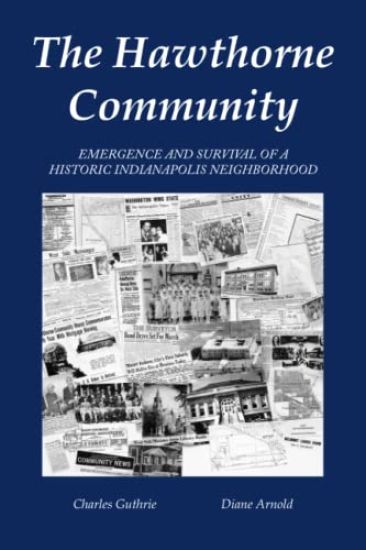
The Hawthorne Community

The Hawthorne Community

Charles Guthrie; Diane Arnold

Authorhouse
2022
pokkari
Local leaders and residents of urban neighborhoods across the country have mourned the loss of community that once existed in clearly defined neighborhoods. This book tells the story of such a loss. But it also tells about this community's decades of building and success, of hard work and sharing, of creativity and celebration. Hawthorne emerged as a residential working class neighborhood on the fringe of Indianapolis, Indiana. It began in the early 20th century as new arrivals settled on a remaining strip of open farmland two miles from the city's center. An stable society of churches, schools, businesses and social groups evolved and prospered well into the post-WW II era. From the early 1960s to the late 1990s the residents' expectations of permanence gave way to a gradual but devastating series of developments over which they had no control. Many of the residents and the institutions that had supported them either closed or moved away opening the space for newcomers and rentals. Ultimately the neighborhood lost the network of local institutions that had anchored the community for decades. The Hawthorne Community Center, left virtually alone, continued its work and adapted its programs for a changing neighborhood. It was forced to assume the multiple roles of advocate, primary source for the residents in need, and intermediary between the neighborhood and external sources of support. The Hawthorne story provides a useful context for any discussions about the future of constantly changing historic neighborhoods and their relationship with the larger urban establishment. Local histories such as this one also offer a valuable tool to help both residents and outsiders free themselves from the negative stereotypes that tend to blame victims for their current situation.
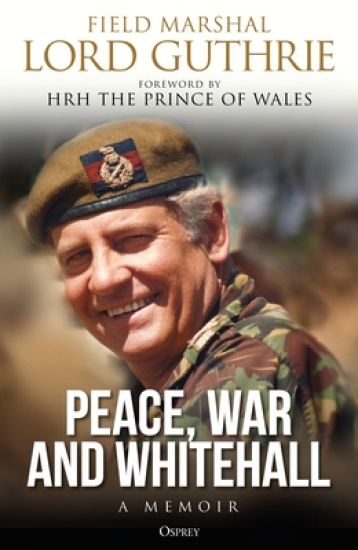
Peace, War and Whitehall

Peace, War and Whitehall

Charles Guthrie

Osprey Publishing
2021
sidottu
'Charles Guthrie has been one of Britain’s foremost soldiers as well as a terrific personality throughout his remarkable life. It is great that he is now telling his own story.' - Sir Max Hastings Field Marshal the Lord Guthrie commanded at every level in the British Army from platoon to army group, and was Britain’s senior military commander at a time of great change. He oversaw the modernization of the armed forces following the Cold War years and led Britain’s military involvement in operations in the Balkans and Sierra Leone. Charles Guthrie was commissioned into the British Army in 1959 at a time when Britain’s influence was shrinking throughout the world, and Peace, War and Whitehall describes his operational experience with both the Welsh Guards and 22 SAS in Aden, Malaya, East Africa, Cyprus and Northern Ireland. As a senior officer he commanded the Welsh Guards during an operational tour of the Bandit Country of South Armagh at the height of the Troubles, before leading an armoured brigade in Germany in the midst of the Cold War, and eventually being appointed Commander-in-Chief of the British Army of the Rhine and Northern Army Group as the Cold War ended and the former Yugoslavia began to disintegrate into savage internecine warfare. Peace, War and Whitehall details Lord Guthrie’s extraordinary career from a young platoon commander through to Chief of the Defence Staff.
My Jump from Heaven

My Jump from Heaven

Charles Guthrie

Montezuma Publishing
2017
nidottu
I had a dream I was out to dinner with Emily, John, and Willie. They were interested in our modern life and asked if men and women still broke each other's hearts? "Yeah," I told them, "You guys could still make a good living on earth." Then I stopped and said, "You are, maybe better than in the day. Emily, you too." They looked at me as if they understood their importance and Willie said, "Well, we were the greatest poets on earth and for some strange reason we are here in your dream What the hell have you written?" I replied, "I've written some poems over the years and maybe you'd like to read them." Ignoring me, Emily said, "So we still don't know where we came from." Keats replied, "Yeah, you would think if we could go to the moon we would know more about ourselves. You guys are still on the shore of the world, thinking until nothingness sinks." Then Willie looked at me and said, "So this is the dream in death that comes and in that dream you want us to read your poetry." John laughed, and said, "Wake this guy up so we can get out of here " I told them not to get upset. I didn't intend them to be in my dream. Exasperated Emily said, "This is a wild night in a dream. We don't have a compass or map to chart our way out." I grabbed John's arm and told him I flunked out of San Diego State University because of him. I got an "F" in ballroom dancing. It was 1962, I was a college freshman playing football without a scholarship and washing dishes in the cafeteria. Time I should have been studying for classes I spent reading poems in the library and trying to write an essay about the urn. You see, the final examination in my ballroom dancing class was graded on how well you danced with a girl. Dancing with girls was the reason I took the class; but, you would be graded dancing with your partner, and I didn't want a girl to get a bad grade; so I didn't show for the final. I asked Emily and Willie to consider I got the "F" because of one of their favorite virtues, chivalry. They looked at me as if to ask, "Dancing is a college course?" "But I did it for love," I told them. "I was proud of my "F" in ballroom dancing; and the reason I flunked out was I spent all my time studying your poetry. Do you know how many Cs you have to make to bring up 1/2munit of F to a C? During my divorces my ex-wives didn't object to getting the houses and me getting my poems. At the time I thought it was a steal. The three poets looked at me like I was a fool. "But, I did it for my poetry," I told them. They laughed. I explained I'd written poems all my life, kept them under beds, in suitcases, lugged them to wherever I lived and worked. Kept them in school and police department lockers; in law office filing cabinets, even pulled them to safety out of the trunks of wrecked and impounded cars. My poems have been the most steady thing in my life, sometimes the only thing. Willie said, "Screw your poems We want back to life and out of your goddamned dream." John pushed me and yelled, "Wake up " Then Emily screamed, "No, don't wake him If you wake him, what will happen to us? If he wakes, we might cease to exist anymore; we might go back from where we came."

Just War

Just War

Charles Guthrie; Michael Quinlan

Bloomsbury Publishing PLC
2007
nidottu
Every society and every period of history has had to face the reality of war. War inevitably yields situations in which the normal ethical rules of society have to be overridden. The Just War tradition has evolved over the centuries as a careful endeavour to impose moral discipline and humanity on resort to war and in its waging, and the tradition deserves our attention now as much as ever. Just War traces the origin and nature of the tradition from its roots in Christian thinking and provides a clear summary of its principles, which are accessible to all beliefs. As the circumstances and necessities of war have changed over time, so too have the practical interpretations of the tradition. Drawing examples from Kosovo, Afghanistan and the wars in Iraq, Charles Guthrie and Michael Quinlan look at the key concepts in relation to modern armed conflict. The tradition sets rational limits and respects the adversary's humanity amid the chaos of war, and provides systematic questions which governments and armed forces must ask themselves before they engage in war. This short but powerful book is a timely re-examination of its tenets and their relevance in the twenty-first century, setting out the case for a workable and credible moral framework for modern war before, while and after it is waged.