Kirjojen hintavertailu – 12 903 725 kirjaa ja 27 kauppaa

Kirjailija

Charles Hudson

Kirjat ja teokset yhdessä paikassa: 34 kirjaa, julkaisuja vuosilta 1978–2025, suosituimpiin kuuluu Speech of Mr. Chas. Hudson, of Mass., on the Three Million Appropriation Bill. Vertaile teosten hintoja ja tarkista saatavuus suomalaisista kirjakaupoista.

34 kirjaa

Kirjojen julkaisuvuodet: 1978–2025.

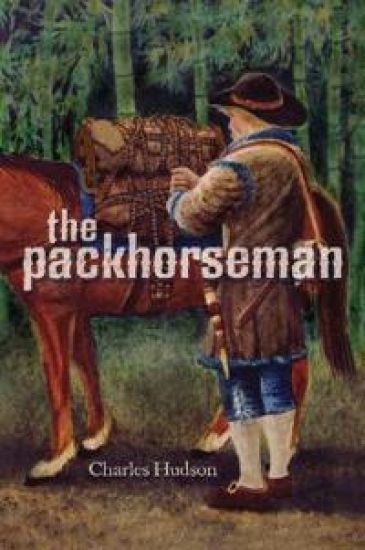
The Packhorseman

The Packhorseman

Charles Hudson

The University of Alabama Press
2009
nidottu
In April 1735, twenty-year-old William MacGregor, possessing little more than a bottle of Scotch whiskey and a set of Shakespeare's plays, arrives in Charles Town, South Carolina, to make his fortune in the New World. The Scottish Highlands, while dear to his heart, were in steep economic decline and hopelessly entangled in dangerous political intrigue. With an uncle in Carolina, the long ocean voyage seemed his best chance for a new start. He soon discovers that the Jacobite politics of Scotland extend to Carolina, and when his mouth gets him in trouble with the Charles Town locals, dimming his employment opportunities, he seizes the one option still open for him and takes a job as a frontier packhorseman. Soon young MacGregor is on the Cherokee trail to Indian country, where he settles in as a novice in the deerskin trade. Along the way William learns not only the arts of managing a pack train and trading with the Indians, but of reading the land and negotiating cultural differences with the Cherokee - whose clan system is much different from the Scottish clans of his homeland. William also learns that the Scottish enlightenment he so admires has not made much headway in the Carolina back-country, where the real challenges are to survive, day to day, during the tense times after the Yamasee War and to remember that while in Indian country...it is their country. A scholar of the native Southeast, Charles Hudson has turned his hand to this work of historical fiction, bringing to life the pack-horsemen, Indian traders, and southeastern Indians of the early 18th-century Carolina. With a comfortable and engaging style, Hudson peoples the Carolina frontier with believable characters, all caught up in a life and time that is historically well-documented but little-known to modern popular readers.

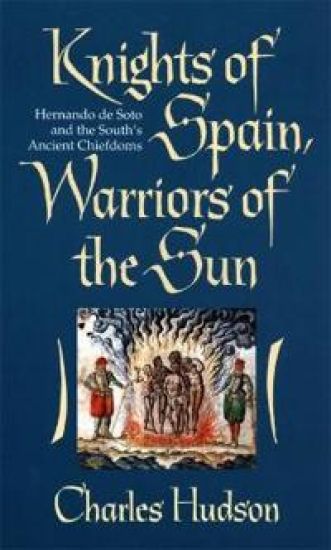
Knights of Spain, Warriors of the Sun

Knights of Spain, Warriors of the Sun

Charles Hudson

University of Georgia Press
1998
nidottu
Between 1539 and 1542 Hernando de Soto led a small army on a desperate journey of exploration across the Southeast. His path has been one of history's most intriguing mysteries. With ""Knights of Spain, Warriors of the Sun"", Charles Hudson offers a solution to the question. ""Where did De Soto go?"" Blending archaeology, history and geography, this book offers a clearly written narrative that unfolds against the exotic backdrop of a now extinct landscape.
The De Soto Chronicles Vol 2 Volume 2

The De Soto Chronicles Vol 2 Volume 2

Charles Hudson; John E. Worth; Eugene Lyon; Jeffrey P. Brain; John H. Hann; Frances G. Crowley; David Bost; Rocio Sanchez Rubio; Charmion Shelby; Eduardo Kortright; James A. Robertson; Paul Hoffman

THE UNIVERSITY OF ALABAMA PRESS
1995
nidottu
1993 Choice Outstanding Academic Book, sponsored by Choice Magazine. The De Soto expedition was the first major encounter of Europeans with North American Indians in the eastern half of the United States. De Soto and his army of over 600 men, including 200 cavalry, spent four years traveling through what is now Florida, Georgia, Alabama, North and South Carolina, Tennessee, Mississippi, Louisiana, Arkansas, and Texas. For anthropologists, archaeologists, and historians the surviving De Soto chronicles are valued for the unique ethnological information they contain. These documents, available here in a two volume set, are the only detailed eyewitness records of the most advanced native civilization in North America—the Mississippian culture—a culture that vanished in the wake of European contact.
The De Soto Chronicles Vol 1 Volume 1

The De Soto Chronicles Vol 1 Volume 1

Charles Hudson; John E. Worth; Eugene Lyon; Jeffrey P. Brain; John H. Hann; Frances G. Crowley; David Bost; Rocio Sanchez Rubio; Charmion Shelby; Eduardo Kortright; James A. Robertson; Paul Hoffman

THE UNIVERSITY OF ALABAMA PRESS
1995
nidottu
1993 Choice Outstanding Academic Book, sponsored by Choice Magazine. The De Soto expedition was the first major encounter of Europeans with North American Indians in the eastern half of the United States. De Soto and his army of over 600 men, including 200 cavalry, spent four years traveling through what is now Florida, Georgia, Alabama, North and South Carolina, Tennessee, Mississippi, Louisiana, Arkansas, and Texas. For anthropologists, archaeologists, and historians the surviving De Soto chronicles are valued for the unique ethnological information they contain. These documents, available here in a two volume set, are the only detailed eyewitness records of the most advanced native civilization in North America—the Mississippian culture—a culture that vanished in the wake of European contact.
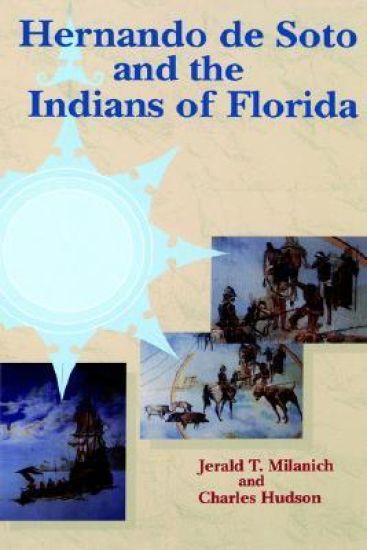
Hernando de Soto and the Indians of Florida

Hernando de Soto and the Indians of Florida

Jerald T. Milanich; Charles Hudson

University Press of Florida
1992
sidottu
Hernando de Soto, the Spanish conquistador, is legendary in the United States today: counties, cars, caverns, shopping malls and bridges all bear his name. This work explains the historical importance of his expedition, a journey that began at Tampa Bay in 1539 and ended in Arkansas in 1543. De Soto's explorations, the first European penetration of eastern North America, preceded a demographic disaster for the aboriginal peoples in the region. Old World diseases, perhaps introduced by the de Soto expedition and certainly by other Europeans in the 16th and 17th centuries, killed many thousands of Indians. By the middle of the 18th century only a few remained alive. The de Soto narratives provide the first European account of many of these Indian societies as they were at the time of European contact. This work interprets these and other 16th-century accounts in the light of new archaeological information, resulting in a more comprehensive view of the native peoples. Matching de Soto's camps to sites where artifacts from the de Soto era have been found, the authors reconstruct his route in Florida and at the same time clarify questions about the social geography and political relationships of the Florida Indians. They link names once known only from documents (for example, the Uzita, who occupied territory at the de Soto landing site, and the Aguacaleyquen of north peninsular Florida) to actual archaeological remains and sites.